
Thank goodness it’s finally here, the best month of the year in the garden, when all the plotting, sowing, moving and dividing pays off into a crescendo of gloriousness. Roses are doing what they do best, (though they’ve taken quite the bashing with the rains haven’t they?!) the perennials are romping away, climbers are…well, climbing and I find myself desperately trying to stop time and stretch out our summer days as long as possible. I will keep reminding you too, do remember to try and enjoy your garden at some point in amongst all this gardening, perhaps sit in it for a bit with a glass of something cold?! I am truly atrocious at remembering to do this, there’s always a weed that needs pulling or spent blooms which need deadheading but it does rather defeat the point of all the hard work if we don’t stop and savour it.
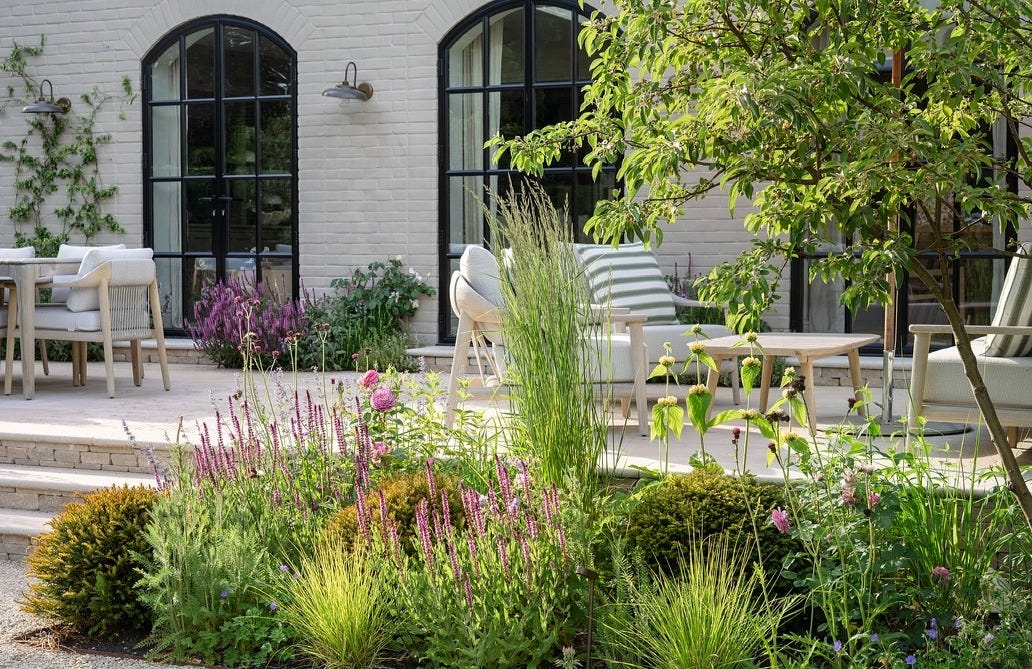
I have two super simple but very important things you can do this month which are going to be really helpful for our planting plans before we dive into the next planting design course topic, these are:
1) Take photos of your planting borders. Odds are they are at their absolute fullest right now, so now is a great way to identify what’s working, what’s not, and where the big gaps are. When it comes to drawing up your border list it also means you will have a photographic inventory of what plants you already have, that you might want to keep. Also, things like Clematis can be identified by when they flower, (near impossible to do come winter!) so having a log of this by flowering month is super helpful in identifying what you have. So, take photos this month, and next, and August and September. This is going to be so handy in the depths of winter I promise you, and it will instantly tell you your weaker months in terms of interest (my moneys on September of all of these).
2) Take note of the light in your garden. NOW, in midsummer is the key time to do this. Set an alarm on your phone for every hour from when you get up to when the sun goes down (Do this - if you don’t I promise you will get distracted and miss hours) and go note where is in sun and where is in shade. I’m not interested in you telling me ‘its south facing’ so no need. No garden is that simple - they have nooks and crannies and shady corners and trees and neighbouring houses, so aspect often means nothing unless you live in a flat open space with no walls, trees or fences, so MAP YOUR SUN DAMMIT.

With that admin out of the way we move on to our next planting design lesson and with much of summer covered in the last lesson, we are now going to turn our attention to defending against an empty and boring late summer, autumn and arguably even winter garden by focusing on the plants that you absolutely, 100%, non negotiably, need in your garden if you want it to look good from July to December, and these are:
Comments
Nothing yet. Say the first thing.
Sign in to join the conversation.