
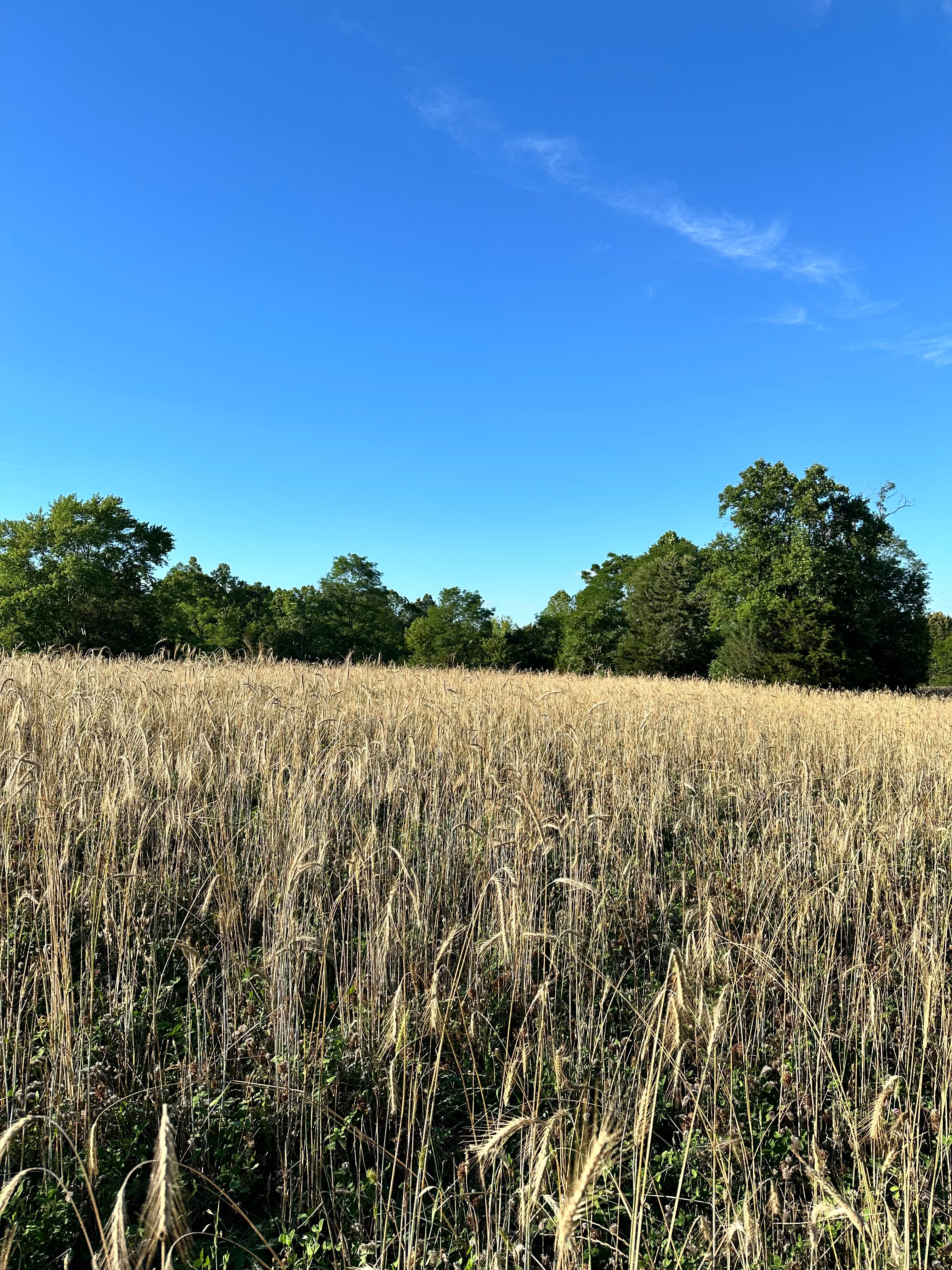
Lectionary for July 19 (Track 2)
24He put before them another parable: “The kingdom of heaven may be compared to someone who sowed good seed in his field; 25but while everybody was asleep, an enemy came and sowed weeds among the wheat, and then went away. 26So when the plants came up and bore grain, then the weeds appeared as well. 27And the slaves of the householder came and said to him, ‘Master, did you not sow good seed in your field? Where, then, did these weeds come from?’ 28He answered, ‘An enemy has done this.’ The slaves said to him, ‘Then do you want us to go and gather them?’ 29But he replied, ‘No; for in gathering the weeds you would uproot the wheat along with them. 30Let both of them grow together until the harvest; and at harvest time I will tell the reapers, Collect the weeds first and bind them in bundles to be burned, but gather the wheat into my barn.’” 36Then he left the crowds and went into the house. And his disciples approached him, saying, “Explain to us the parable of the weeds of the field.” 37He answered, “The one who sows the good seed is the Son of Man; 38the field is the world, and the good seed are the children of the kingdom; the weeds are the children of the evil one, 39and the enemy who sowed them is the devil; the harvest is the end of the age, and the reapers are angels. 40Just as the weeds are collected and burned up with fire, so will it be at the end of the age.41The Son of Man will send his angels, and they will collect out of his kingdom all causes of sin and all evildoers, 42and they will throw them into the furnace of fire, where there will be weeping and gnashing of teeth. 43Then the righteous will shine like the sun in the kingdom of their Father. Let anyone with ears listen!
Matthew 13:24-30, 36-43
There is a problem with parables…those stories that we have become so familiar with…the stories Jesus tells to help highlight a point, to teach a lesson, to connect faith to everyday life. In fact, there are 22 parables in the book of Matthew alone and today we have the 2nd (The parable of the weeds) out of 7 parables in chapter 13 alone. That’s a lot. And because we are so familiar with many of the parables, we may gloss over the deeper meaning that Jesus was trying to teach.
This week, I found that to be true for myself and then I read a text from Colossians chapter 1. I found myself connecting these two texts in some very rich ways. So I wanted to share that exploration with you in hopes that you may find some new connections with this parable for your own life.
In Colossians, Paul is writing to the early church…folks who are trying to understand the nature of Christ more fully especially in relation to how they are supposed to live their lives. And so Paul writes this prayer to them…
Colossians 1:9-12
…we have not ceased praying for you and asking that you may be filled with the knowledge of God’s will in all spiritual wisdom and understanding, 10so that you may lead lives worthy of the Lord, fully pleasing to him, as you bear fruit in every good work and as you grow in the knowledge of God. 11May you be made strong with all the strength that comes from his glorious power, and may you be prepared to endure everything with patience, while joyfully 12giving thanks to the Father, who has enabled you to share in the inheritance of the saints in the light.
Here is why I wanted to use this text this morning…Paul is speaking to the people in Colossae about the very same things Jesus is teaching in his parable of the weeds from Matthew. It’s a beautiful look at common themes through two different lenses.
Paul names a few critical elements to a life of following Christ. Things like:
- The discernment of God’s wisdom and understanding through prayer
- The importance of leading a life worthy of God
- Bearing fruit through good works as you grow in God
- Gaining strength and preparation to endure difficult times
- Being patient, joyful, and grateful
Let’s see if we can notice those same themes in our parable.
Weeds come up with the grain. The master is told of the problem. It is recognized that an enemy has planted the weeds but the master instructs the slaves to not pull the weeds up because if they do so it will also uproot the wheat. Instead, he wants them to grow together until they can harvest the grain. At that time, they will separate the wheat from the weeds and they will burn the weeds and use the weeds for fuel.
That’s the story. Now, can we uncover the themes that Paul highlights in Colossians?
Here is the first thing I notice…The Master says to wait before pulling up the weeds. Don’t go for the quick fix. By pausing immediate action he is inviting the workers to discern. Discern what is truly good and what isn’t. To allow God to enter into the situation.
Ever want to do it all on your own? To not trust God when things are hard? To doubt that God is with you when life presents you with difficult choices or circumstances?
In the parable, the problem is evident, there are indeed weeds – there is no denying that fact, but the solution takes patience and prayer. The Master wants a good harvest and to get the fruitfulness he desires, the wheat and the weeds have to coexist for a while. They have to work together even though it may seem counterintuitive.
Ever want to judge a person or a situation too quickly? Ever want to shut out an opinion other than your own? Ever want to blame someone or something for the problems in your life before looking inward at yourself?
Jesus teaches that by our patience and openness to discern and to be with the difficulty will in time bear fruit and will create opportunities to use both the good and the bad for important purposes in the harvest. For Matthew, what seemed like a bleak situation was actually one full of grace.
Ever take the time to listen and learn from someone or something you disagreed with? Ever tried to find common ground? And did that ever result in a much deeper understanding than you expected? Were bridges built? Did anger cease? Did healing start to emerge?
The image of the field reminds us that our first reaction in a difficult situation is to often judge and determine who is right and who is wrong. We don’t like to sit with uncertainty and we don’t like to co-exist with things that we disagree with or that threaten us in any way. We want clarity and clean lines. We want to pull up the weeds.
This is the crux of the parable. We often act too quickly to pull up what we don’t like BEFORE we have ever discerned what God desires of us. Maybe you are wondering…well, why is that a problem? Bad is bad. Wrong is wrong. Doesn’t that matter?
Yes, it does but consider two things:
Don’t we all encompass both good and bad? Do any of us have the monopoly on righteousness?
Is it our place to judge or is it God’s? If we want God to love us through our own shortcomings, can we also allow God to do the same for our enemy?
So instead of pulling up the weeds in haste, stop and ask one simple question…God, what would you have me do? What good do you want to grow out of this situation?
Steve Garnaas-Holmes writes poetry every week based upon the lectionary and he wrote a beautiful poem that breaks down Jesus’ parable in applicable ways to our lives. Let me close with this excerpt…
Maybe, though we’d love to get rid of those we hate, Maybe we should go easy on our judgments because Maybe it’s not that we shouldn’t judge Maybe resisting evil and injustice is so hard Maybe the stuff in your life that seems bad Maybe God is so present in everything
we shouldn’t, because we actually also depend on them,
and removing them would uproot us, too.
we have no idea what wounds or burdens people bear,
so that what seems evil to us is actually pretty good for them.
but that we can’t: we can’t know
what grace lurks in even the worst person or situation.
because there are weeds of hate and fear in our own hearts
and sorting that out is hard and humbling.
is also graced, and your work is
to glean the fruit from it.
that even despite the vilest wrong
grace is always possible.1
The parable reminds us that in the midst of our own field God calls us to have courage to live with hard questions. To cultivate the longing to seek and to know God. To grow the desire to be patient. To harvest a willingness to love.
https://unfoldinglight.net/2023/07/18/wheat-among-the-weeds/
Comments
Nothing yet. Say the first thing.
Sign in to join the conversation.