
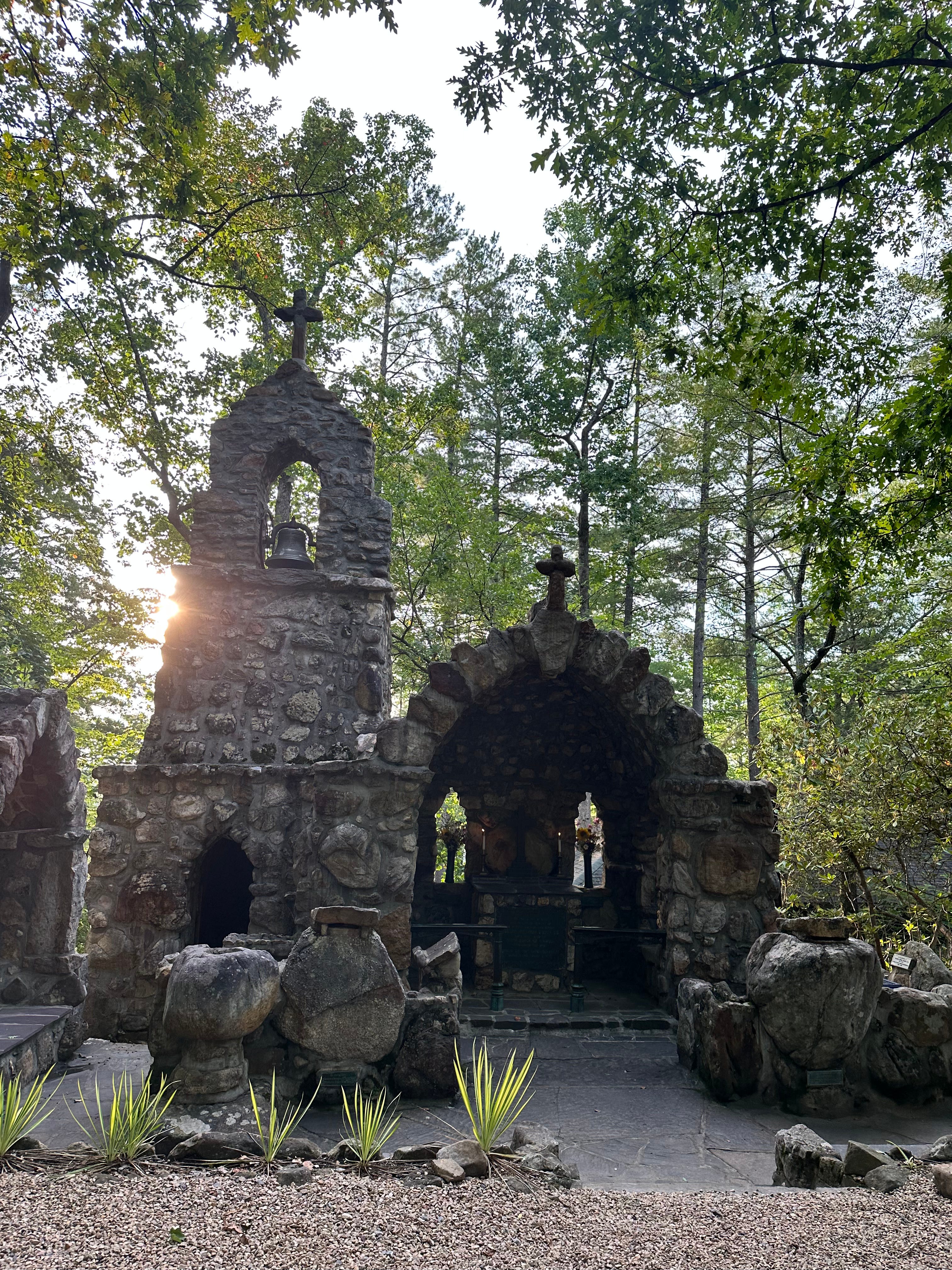
This past week, a group of folks from my parish went on retreat to mark the conclusion of a yearlong commitment to practice daily Morning Prayer.
**For Episcopalians, Morning Prayer is part of the Daily Office from the Book of Common Prayer. Here are two great resources: Forward Day by Day and The Daily Office
I’m not great at daily prayer. I know I should be. Priests are supposed to be proficient at these sorts of things. At least I think we are. So it pains me to admit that my prayer practice is rather remedial. It’s not that I don’t pray. I actually pray all the time. But more often than not my prayer emerges as a breath, a whisper, an inner longing. Something that is without words or structure but that is deep in knowing and connection.
And yet, here was this group of people from my parish coming together, united by specific words and rhythms, day in and day out. Words that have been said by generations of faithful people seeking to know God. Longing to hear God. Trusting that these words would be their words spoken from the heart.
As much as I struggle to put structure to my prayer, I will be the first to admit that there is something profoundly intuitive about the prayers from our prayer book…written in another time and place, during some other moment in history. It could easily be the case that such old words might fall short of what we long for today, that they fail to name the needs and concerns of our times.
But when you come back to the Book of Common Prayer day in and day out, you begin to notice words and phrases that seem to be written just for you. A description of your soul that was documented hundreds of years ago and that suddenly re-emerged as you knelt with wonder and spoke those holy words.
It’s the kind of wonder that shows itself when you come back to prayer with consistency. When you commit to noticing and listening and opening your heart to something divine. And that’s when you start to hear.
On our final day of the retreat, I heard.
I heard something I had never heard before. That’s how these old prayers work. Each time you encounter them they allow a new part of themselves to speak. Maybe it’s a word or phrase you said hundreds of times before but had somehow never lingered long enough to listen. Maybe it’s an image that finally came into view. Maybe it was the right time for you to say “yes” to what was being communicated.
To cultivate our hearing on retreat, I led our group in the practice of Lectio Divina…the practice of divine listening to a sacred text. (I’ve included a simple outline of the practice below). I chose The General Thanksgiving which is a prayer that is said at the conclusion of Morning Prayer. Remember…these were words my group had been saying every day for an entire year.
Might they hear something different now?
The General Thanksgiving
Almighty God, Father of all mercies,
we your unworthy servants give you humble thanks
for all your goodness and loving-kindness
to us and to all whom you have made.
We bless you for our creation, preservation,
and all the blessings of this life;
but above all for your immeasurable love
in the redemption of the world by our Lord Jesus Christ;
for the means of grace, and for the hope of glory.
And, we pray, give us such an awareness of your mercies,
that with truly thankful hearts we may show forth your praise,
not only with our lips, but in our lives,
by giving up ourselves to your service,
and by walking before you
in holiness and righteousness all our days;
through Jesus Christ our Lord,
to whom, with you and the Holy Spirit,
be honor and glory throughout all ages. Amen.
As for me, the practice of Lectio Divina uncovered the voice of God in a new way that I had not expected. I thought I knew The General Thanksgiving and yet, this time, it spoke to me with a strong conviction. One phrase come into focus.
We bless you for our creation.
Then I heard these words…God, I bless you for my creation.
Tears came to my eyes. I had never blessed God for my creation. I had never blessed God for my life.
And then I started to think about what this blessing meant. As I sat with these words I realized that the implication was the greatest gift and the greatest challenge I had ever received. This blessings isn’t relegated to moments of joy or goodness or achievement or ease. Those kinds of moments are easy to bestow blessings on God.
But what about moments of sorrow or grief? What about those times I wrestled with depression or divorce? What about when I felt the devastating blow of family systems of abuse and estrangement? What about the times of scarcity or illness?
God, I bless you for my creation.
Then I found myself wondering…well, what am I supposed to do with that?
Honestly, at first, I wanted to throw those words back at God. Those aren’t moments I want to bless God for.
But then I heard…this blessing isn’t about claiming some false sense of acceptance for such difficult seasons. Instead, this blessing offered to God is the blessing that simply says…thank you God for loving me through it all.
Because this blessing is the acknowledgement that my life is worth everything to God. No matter how flawed. No matter how broken. My creation is God’s creation.
To bless God for my creation means I bless God for my life…in all of its beauty and brokenness.
God, I bless you for my creation.
How had I never noticed this one phrase? Now it follows me, every step, every breath. Full of hope and gratitude. Full of life. I’m so glad I listened.
So, now it’s your turn. Here is the practice of Lectio Divina and The General Thanksgiving. What do you hear?
The Practice of Lectio Divina (a simple outline)
Step 1: Lectio (Read)
Read the prayer aloud, slowly and deliberately. Listen for a word or phrase that calls to you or grabs your attention. Don’t force yourself to notice. Simply notice what emerges.
Step 2: Meditatio (Meditate)
Read the prayer again. This time, focus more intently on the word or phrase that caught your attention. Allow the word or phrase to enter your imagination. Place yourself within the words and let your senses engage with them. What do you smell? What do you hear? What do you see? What is the Spirit saying to you?
Step 3: Oratio (Pray)
Read the prayer a third time. Then, speak to God (out loud or in writing)…anything that comes to mind is just fine. Share your feelings, memories, hopes or concerns that the prayer has stirred up in you.
Step 4: Contemplatio (Contemplate)
Finally, let go of words. Set aside images and thoughts. Rest in God’s presence. Spend time in silence, letting this practice settle into your heart. Carry the message your heard with you into the week ahead.
The General Thanksgiving
Almighty God, Father of all mercies,
we your unworthy servants give you humble thanks
for all your goodness and loving-kindness
to us and to all whom you have made.
We bless you for our creation, preservation,
and all the blessings of this life;
but above all for your immeasurable love
in the redemption of the world by our Lord Jesus Christ;
for the means of grace, and for the hope of glory.
And, we pray, give us such an awareness of your mercies,
that with truly thankful hearts we may show forth your praise,
not only with our lips, but in our lives,
by giving up ourselves to your service,
and by walking before you
in holiness and righteousness all our days;
through Jesus Christ our Lord,
to whom, with you and the Holy Spirit,
be honor and glory throughout all ages. Amen.
Comments
Nothing yet. Say the first thing.
Sign in to join the conversation.