
Lectionary for August 23 (Track 2)
Who do you say that I am?
I love that Jesus asks this question. It follows his first more general question in our text this morning which is…What are other people saying about me? What have you heard? But then Jesus turns to a more personal inquiry. One that doesn’t focus on what the disciples may have heard but on what they know to be true in their own hearts.
What do you know about me?
My guess is that if asked, we could all give a fairly good description of Jesus, of who he was, of what he stood for. But the deeper implication of this question is more challenging. It begs a more in depth response…what are you doing with what you know?
Because knowing who Jesus is, is one thing. But interpreting what that means for our lives can be a bit confusing. Why? Because we function under different values, we have different priorities and opinions about the world we live in. Therefore when we take the teachings of Jesus (the things we say about him) and apply them to our various perspectives…social norms, political affiliations, and cultural backgrounds, the application of Jesus’ teaching gets muddled and re-interpreted based upon where we are standing.
And if we are honest, no matter where we are coming from, we want Jesus to fit neatly into the world we have constructed. In fact, there are over 45,000 Christian denominations worldwide, all claiming to have the right-fitting Jesus. Denominations who have all kinds of responses as to what they are doing with what they know about Jesus.
It’s no wonder that Peter found the interpretation of Jesus to be devastatingly difficult. In our text this morning, he chimes in with such initial clarity…he knows who Jesus is, he’s got the definition down pat. “You are the Messiah, the Son of the living God!” And Peter doesn’t mind telling people what he knows about Jesus. Because it’s good news! The greatest news! Peter is on board!
Until…that good news didn’t fit so well. Until it cost him something.
In just a few verses, Peter will reverse course. His enthusiasm will wane. When his testimony about Jesus puts him at risk, he denies Jesus. Not once, but three times. Claiming Jesus as Messiah was empowering…at first. It gave him an identity, a purpose, a voice of authority. But when it required something of him, Peter was the first to turn his back on the values he once claimed to be central to who he was.
You might say he wanted a better fitting Jesus.
But I don’t want to demonize Peter for his back tracking. Because if I am honest, I have been like Peter more times than I would like to admit. Claiming Jesus on the one hand, but living a more comfortable existence on the other hand. Trying to find work-arounds to the challenges of what Jesus requires of me.
In fact, I wonder how often we all turn and run…just like Peter when we realize our faith requires more of us than just a comfortable, beneficial, well-placed statement of belief.
Because…living as Jesus taught us to live takes more than our good intent. It takes more than a good testimony. It takes courage and strength and commitment. Sometimes, it takes a community of support, a discerning heart, and an openness to make the necessary changes in our lives to be action oriented faithful followers of Christ.
And when asked…what are you doing with what you have learned…we can honestly answer…it’s a work in progress. And that to me is the perfect answer.
We are, like Peter, a work in progress.
In our text from Romans, Paul talks about our progress on this path. The Greek word he uses is soma, the body, which conveys something so much deeper than just our physical presence. Paul is talking about our entire being as the work in progress. Our whole self. Our heart and mind and strength.
Theologian Amy Frykholm describes it as…“your unique self with its unique talents, unique perceptions, unique ways of walking and speaking. The total, vulnerable, flawed humanness that is you. This whole self — which can take a lifetime even to encounter, let alone offer — is what is being invited into a relationship with the Creator….”[1]
Soma…your whole self.
Romans outlines this growth curve as the ability to gradually uncover the will of God. It’s a process of discernment, and it’s the kind of discernment that flourishes when it is part of a communal process of becoming. That’s why our faith communities are so important. We are to understand God’s will as something not just for us as individuals but for us as a community. We who are many are one body in Christ. And that one body should bring us to a more common understanding of not only what we are saying about Jesus but how we are living as a result of that knowledge. We help each other in our progress making.
Rabbi Lawrence Kushner describes our oneness as a two circle metaphor. We can imagine one big circle (representing God) and one small circle (representing humanity). We can hold these two circles in a vertical relationship…God above. Humanity below. Separate but in relation. But, he argues that a more impactful image would be placing the small circle inside the big circle understanding that humanity has been a part of God all along. Not separate but essentially within.
What’s important about this image is that it eliminates our boundaries and unites us as a greater whole of creation.[2] There is no one person or group of people outside of God’s circle. It is full inclusion, a beloved creation, encircled by a loving God.
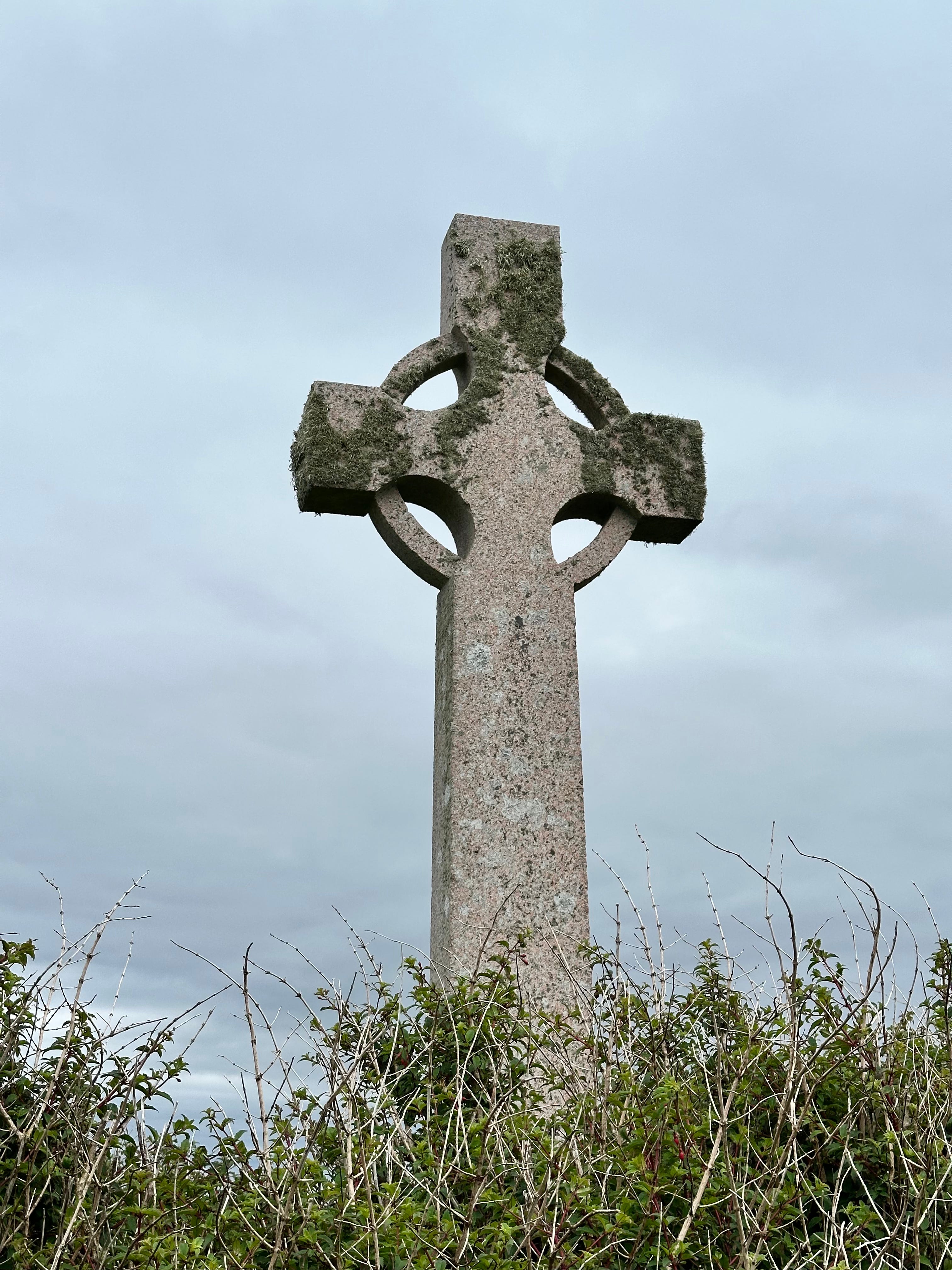
John Philip Newell describes this same idea in his book Christ of the Celts. He tells the story of one lecture where he was describing the true light of God which enlightens everyone coming into the world. When we gaze upon one another, it is that Light of the divine that is the essence within our hearts. At the end of the talk a Mohawk elder came up to him and said, “I have been wondering where I would be today…where my people would be today…if the mission that came to us from Europe centuries ago had come expecting to find Light in us.”[3]
What both Rabbi Kushner and Newell are describing is the ability to look at one another and see the love of God within them. Not as separate from God, or as separate from one another. But as a unified humanity sharing in the Light that has been given to us.
For we who are many are one body in Christ.
Where would we be today or tomorrow if we began seeing that Light within one another?
Because once we can look at the world through that lens, when we are asked…what are you doing with what you know about Jesus…the answer becomes a little clearer. Living as Christ taught us takes on new meaning. We start to uncover not who we want Jesus to be for us but who we want to be for Jesus.
[1] https://www.journeywithjesus.net/essays/4249-be-transformed
[2] Tippett, K. (Host). (2019, March 21). Lawrence Kushner — Kabbalah and everyday mysticism [Audio podcast episode]. In On Being. The On Being Project. onbeing.org
[3] Newell, J. Philip. Christ of the Celts: The Healing of Creation. Jossey-Bass, 2008. P.14.
Comments
Nothing yet. Say the first thing.
Sign in to join the conversation.