
Every time the cruise industry is in the news, it’s seemingly for some terrible reason. Every week it’s another outbreak or contagion spreading across the world. Hantavirus. The ‘poop cruise.’ Patrons quarantined at sea for yet another norovirus outbreak. You get the picture.
While once upon a time cruises were a luxury reserved for a select few, now they’ve become a global phenomena reaching every corner of the Seven Seas. As of 2026, leisure cruises are more popular than ever. The global cruise market is estimated to be worth over 9.8 Billion USD and only seems to be growing. As more people than ever board these floating cities bound for far-off destinations, we must ask ourselves, what is the real impact of the cruise industry?
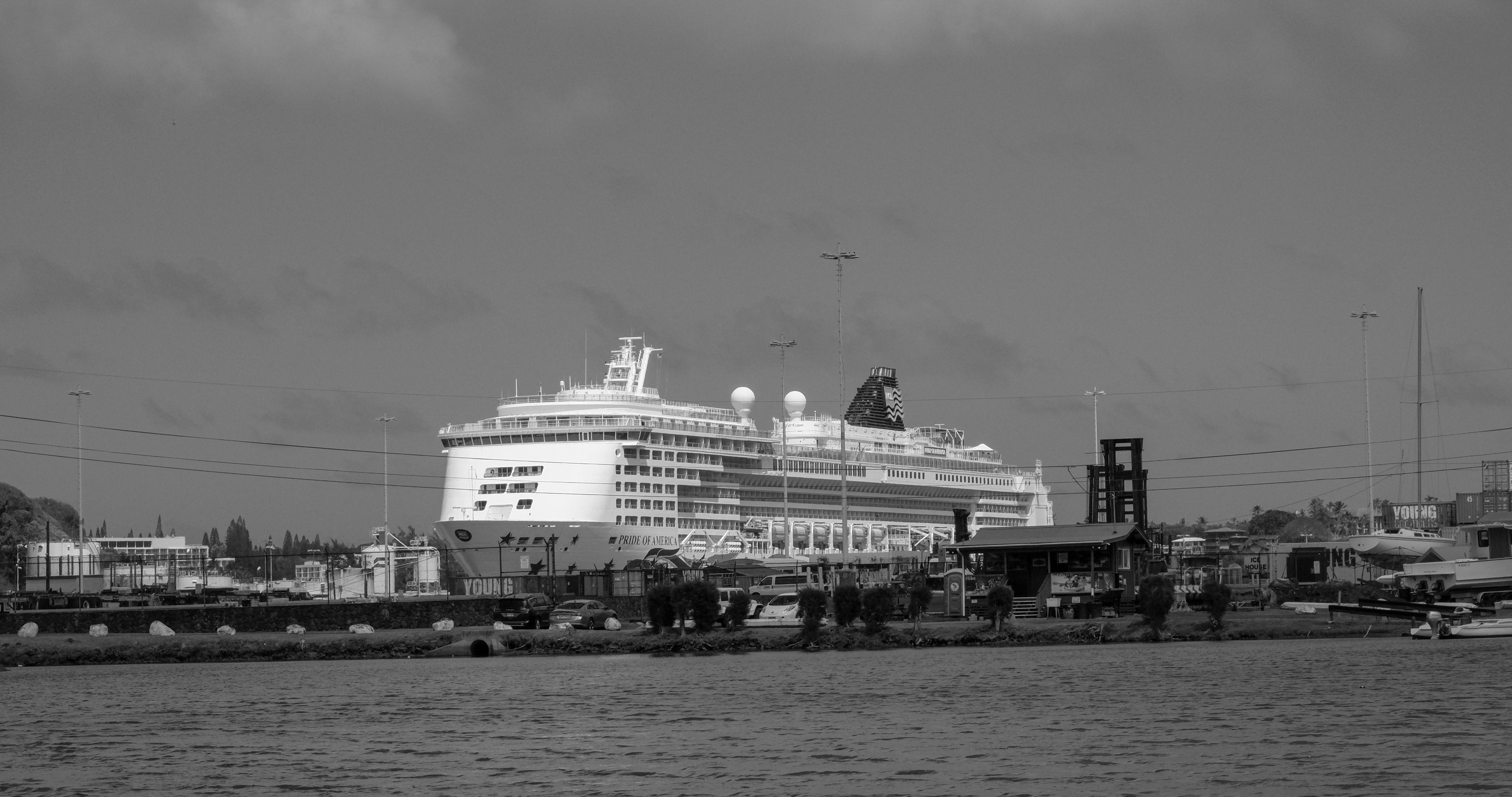
While the impact of cruises are overwhelmingly negative, it’s worth noting some of the positive aspects of cruising, including increased accessibility for travelers. Cruise ships can make travel more accessible for people with mobility issues or who find plane, train, or car travel restrictive. One of my family members was involved in an accident which has left him in a wheelchair. He is planning a cruise as his first trip post-accident as it allows him much more freedom and ease of movement.
Yes. By a long shot.
Cruise ships on average produce three times more carbon emissions than flying on a commercial aircraft. A cruise ship’s daily emissions are the equivalent to that of 12,000 automobiles, and about 36 times greater than the carbon emissions of a Eurostar train ticket. No matter how you break it down, cruises are simply one of the most carbon-intensive ways to travel.
Carbon dioxide is not the only substance that cruise ships emit. Cruise ships also release tons of other gases, including Sulfur Oxides (SOx), Nitrogen Oxides (NOx), and Particulate Matter (PM2.5), which are tiny soot particles. The sulfur oxide emitted by cruise ships are known to contribute to the formation of acid rain, which is harmful to both ecosystems and human health. One report published by Transport and Environment found that Europe’s luxury cruise ships emit as much sulfur as 1 billion cars.
When you think of the cruise industry, you might already think of human waste. Thanks to the infamous ‘poop cruise’ and stomach-churning films like the Triangle of Sadness, images of poor sewage maintenance are ubiquitous with these floating cesspools.
Cruise ships produce several types of wastewater including sewage, grey water (such as contaminated sink water), bilge, and ballast water. All of this water needs to go somewhere, and while some of it is treated on board all of it eventually ends up in the same place: The Ocean.
Cruise ships deal with tons of shit. Literally. One week on a single medium-sized cruise ship can generate up to 210,000 gallons (nearly 800,000 litres) of human sewage, or black water. While in the past many cruise ships have been known to dump untreated sewage overboard, nowadays sewage from cruise ships is processed through mandated Advanced Wastewater Treatment Systems (AWTS) onboard. While these systems process solid waste and filter harmful bacteria, they are often far from perfect and often still release harmful contaminants. Even treated sewage from cruise can cause algae blooms which lower oxygen levels and create marine dead zones in which no marine life can flourish.
According to reports published by Friends of the Earth, treated cruise sewage has routinely been found to not adequately meet water quality standards set by the U.S. Environmental Protection Agency. Improper and illegal dumping has been a rampant problem across the industry, as well as poor regulations around the treatment of gray water.
In addition to black and gray water, cruise ships also filters through tons of sea water on board.
Bilge water, or sea water that is used to clean or cool much of the cruise ship’s machinery, often contains fuel, oil, and wastewater from the ship’s engines. It can also include solid wastes such as rags, paint, glass, and cleaner residue. On average, a cruise ship produces up to eight metric tons of oily bilge water every day. While cruise ships are legally obligated to treat their bilge water before releasing it into the sea, violations are common and rarely enforced.
Another wastewater produced by cruise ships is ballast water. Ballast water is the water that is filtered through the ship’s ballast, which keeps the ship upright. However, recent studies have found that disinfection by-products from ballast water treatment on board may be more toxic than the ballast water itself. This water has also been known to spread harmful marine organisms and pathogens in fragile marine environments.
Cruise ships routinely dump their waste directly into the ocean. While there are regulations prohibiting cruise staff from throwing physical waste overboard, many cruise companies have been known to do so, often without any legal repercussions.
Additionally, remember all of that food from the ship’s endless selection of restaurants and buffets? All that waste is ground up and released directly into the ocean.
Another thing we have to consider is the impact that cruise ships have on the communities they visit. Cruises, understandably, visit many of the world’s tourist hot spots. Venice. Barcelona. Many places that also experience rampant overtourism.
The problem that many destinations face with cruise travellers is that because they don’t spend the night in these places, they don’t contribute economically to local guest houses and hotel businesses. Likewise, since many cruises are all-inclusive, guests might be less incentivised to eat at local restaurants or eateries.
So already-popular destinations have a near daily influx of crowds who put strain on resources like water and transportation, but do not actually contribute to the local economy. Because cruises are often only docked in a city for a day or two, patrons often resort to “speed run” visits that take them to the most popular sites in a place.
In recent years, some cruise companies have begun to transition to more environmentally-efficient fuels like Liquefied Natural Gas (LNG) that provide a less carbon-intensive alternative to traditional fuel. These LNG-based fuels produce 25% fewer emissions than diesel-based marine fuel, however many environmental activists are wary of these fuels, which have been known to release methane into the atmosphere. Methane, a greenhouse gas, is notably more than 80 times more potent at trapping heat in the atmosphere than CO2.
Between its carbon emissions, egregious environmental waste, and contributions to over tourism, one thing stands for certain: we need more independent oversight of the cruise ship industry. Stricter regulations and penalties for noncompliance are needed to prevent cruise companies from routinely damaging marine environments . Likewise, we need limits and caps on the number of cruises allowed to dock at any port or destination.
One promising avenue for decarbonizing the cruise industry is the development of green-hydrogen based fuels that provide a less carbon-intensive alternative to diesel without the risk of releasing methane.
Some major tourist destinations have begun to stand up against the cruise industry. After Venice banned large cruise ships in 2021, air pollutants in the city’s port fell by over 80%. Even if a city does not want to ban cruise ship arrivals outright, there are still some ways they can mitigate some of the harmful impacts of the industry, such as forcing ships to plug into electricity at the port instead of running their engine while docked.
As for us consumers, while there is no perfect form of travel, we must make our own informed decisions as to what travel experiences best suits our needs and climate commitments. Maybe that means avoiding cruise ships and advocating for stricter environmental protections.
No posts
Comments
Nothing yet. Say the first thing.
Sign in to join the conversation.