
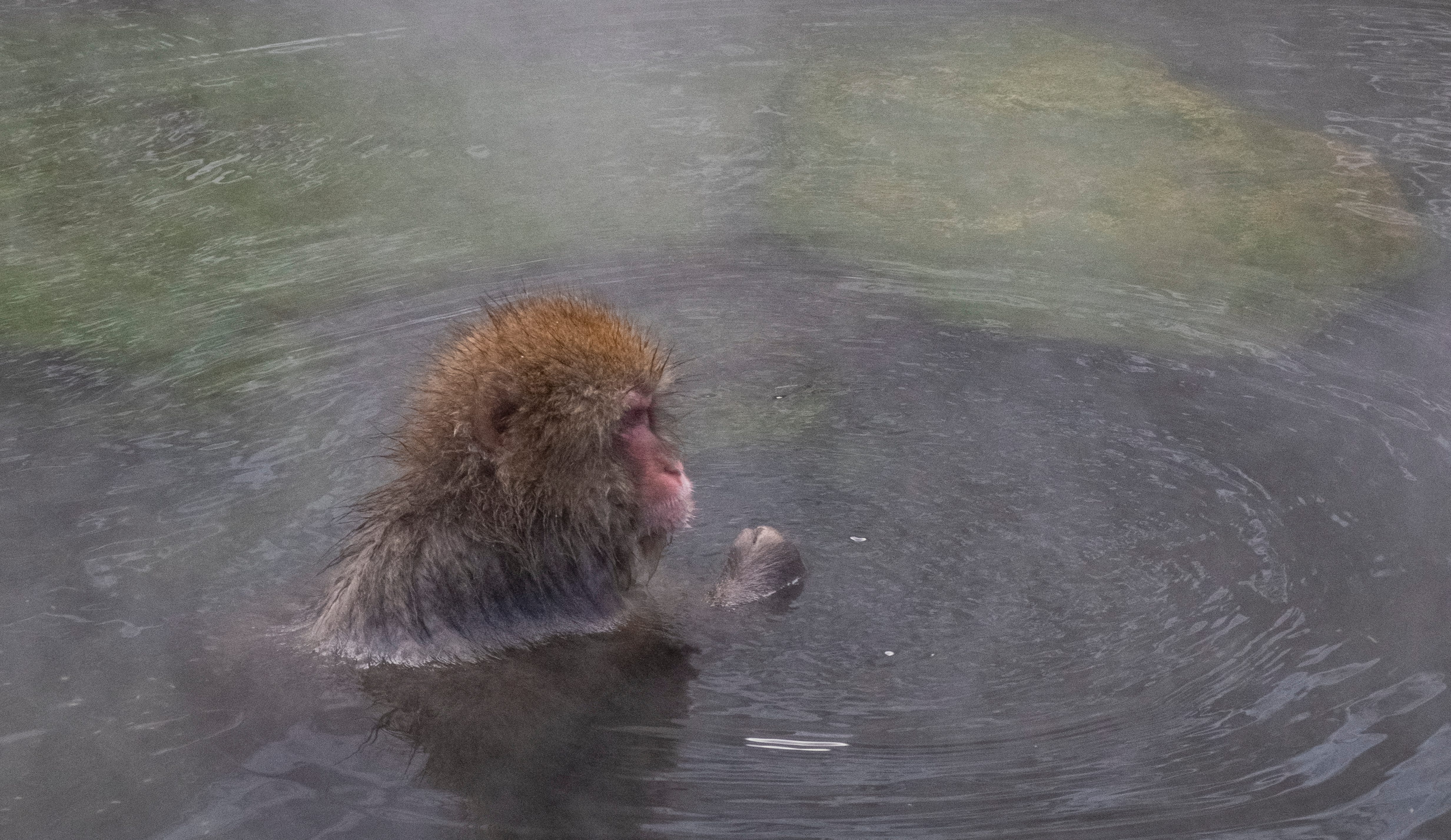
Up in the mountains outside of Nagano, nestled in the snowy Japanese alps, lives a pod of bathing monkeys.
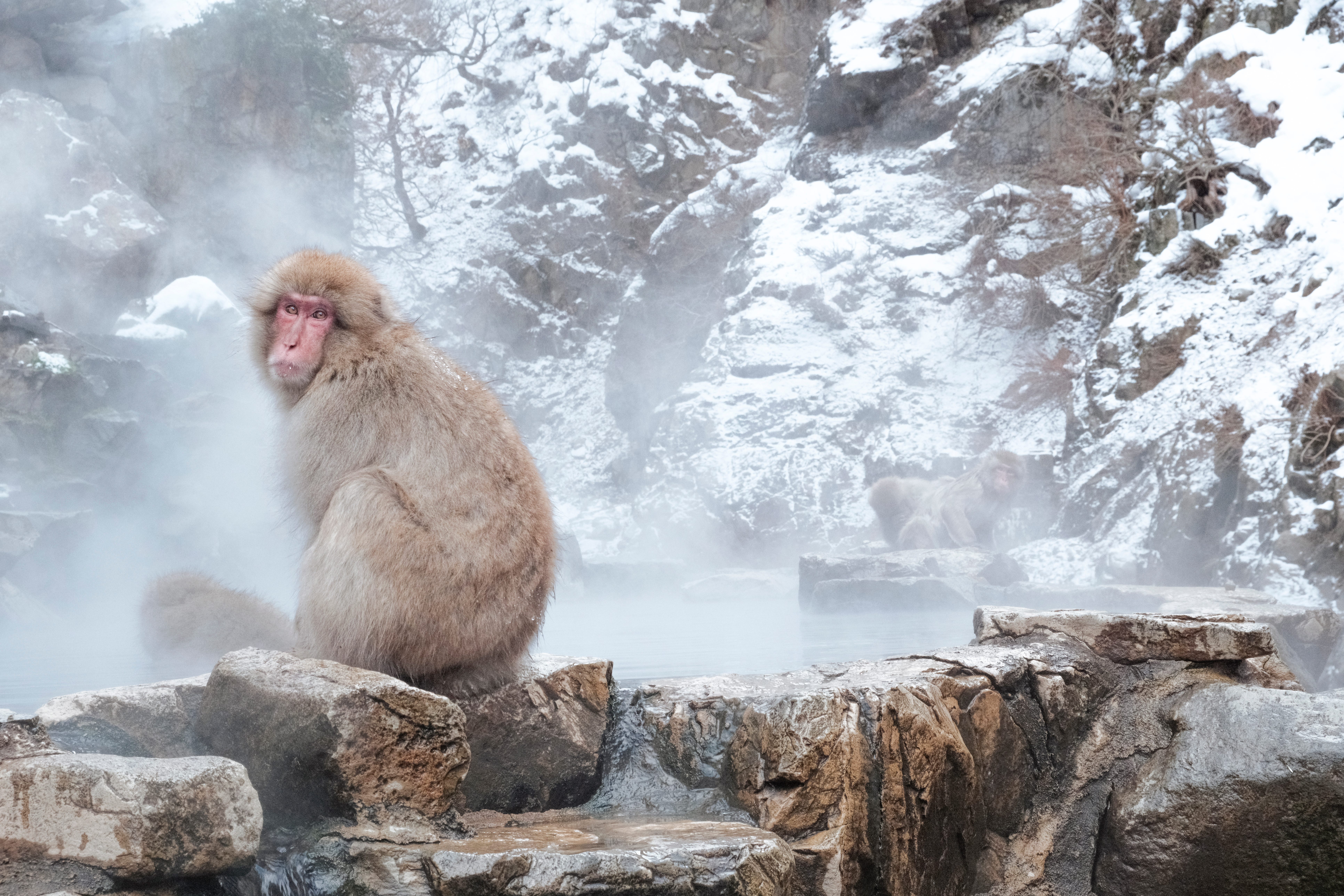
The “snow monkeys” of Japan have become one of the country’s most recognizable and adorable creatures. I mean, just look at them. They’re essentially monkeys in a hot tub. Surrounded by a winter wonderland no less. What’s not to love?
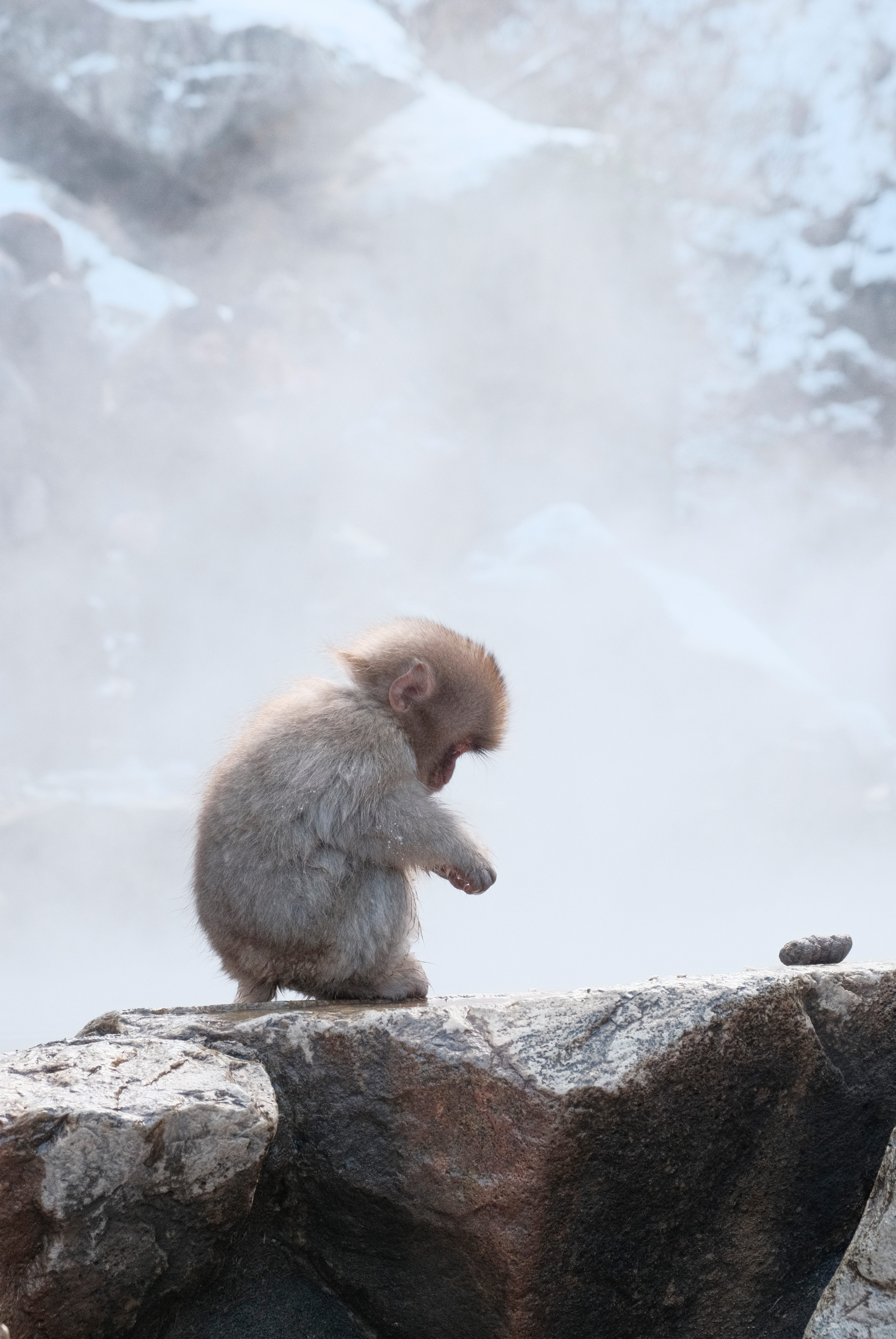
The snow monkeys of Japan boomed in popularity after they graced the 1970 cover of TIME magazine. From then, their fluffy faces have attracted tourists from all over the world. The advent of social media has exponentially increased interest in this peculiar band of Japanese macaques—last year the Jigokudani Monkey Park welcomed over 250,000 visitors.
The monkeys of Jigokudani have not always bathed in onsen (natural mineral hot springs) as they do today. While there are different tales of how the first monkey dipped his toes into the onsen (some say he fell in while chasing an apple, others say he saw a young human child in the bath and chose to mimic him), they generally have the same gist:
Decades ago a little lone monkey jumped into the onsen and decided he really liked hot baths. The behavior caught on with the other monkeys in his pod and then was passed down to younger generations. Now, decades later, Japan has a population of monkeys who naturally come down from their mountain homes to take a nice hot soak.
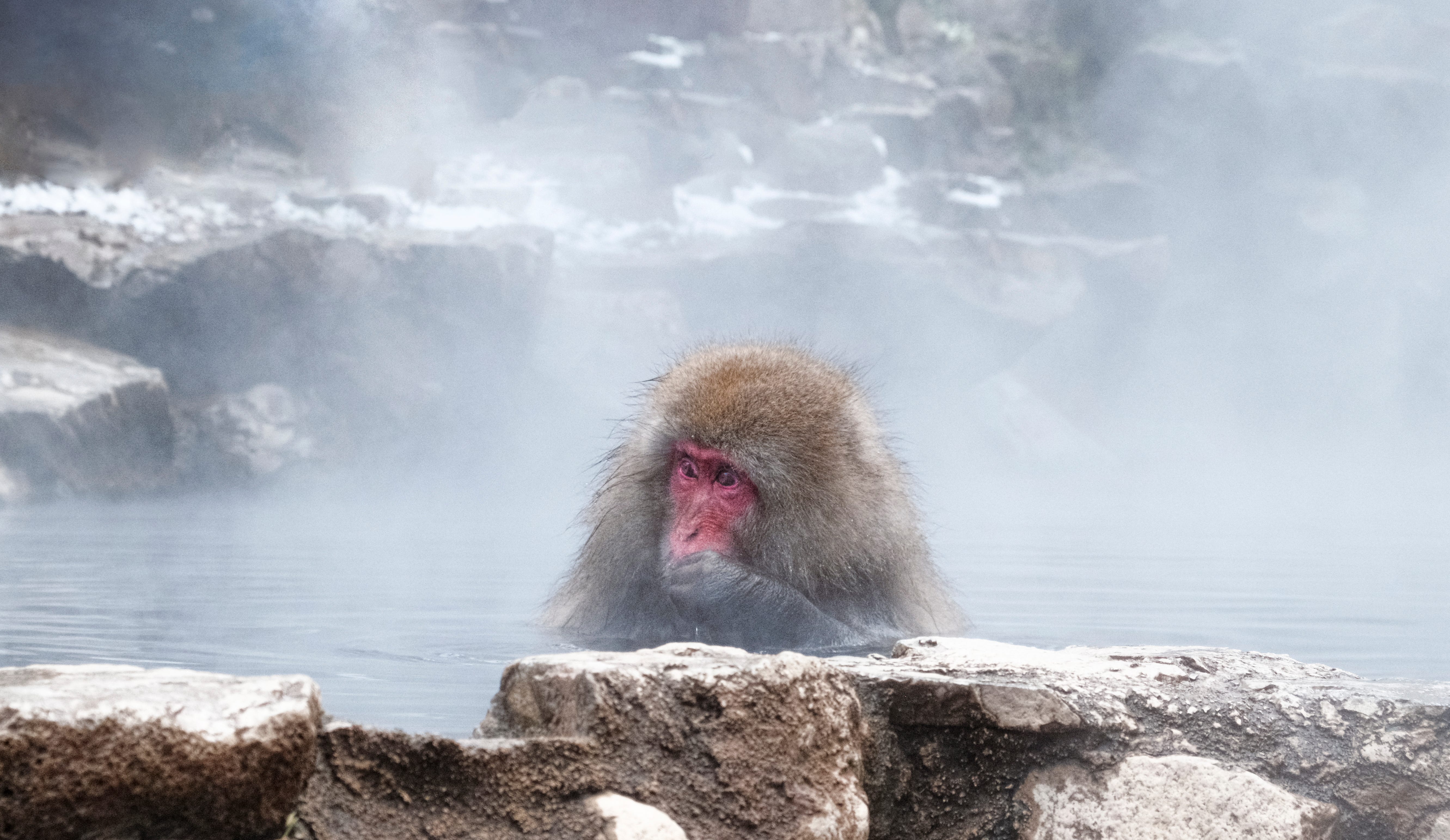
Tourists looking to catch a glimpse of these famed monkeys can do so at the ever-popular Jigokudani Monkey Park. The park itself has an equally interesting origin story: back in the 1960’s, after human settlements in the area began to expand and monkeys started venturing further down the mountains, conflicts broke out between humans and the macaques.
Many farmers wanted to kill the monkeys for disturbing their crops. One local nature enthusiast, Sogo Hara, decided he wanted to protect these monkeys, so he created the Jigokudani Monkey Park in 1964. Here, the snow monkeys are able to come down the mountain and partake in bathing on their own time and were protected from disgruntled farmers.
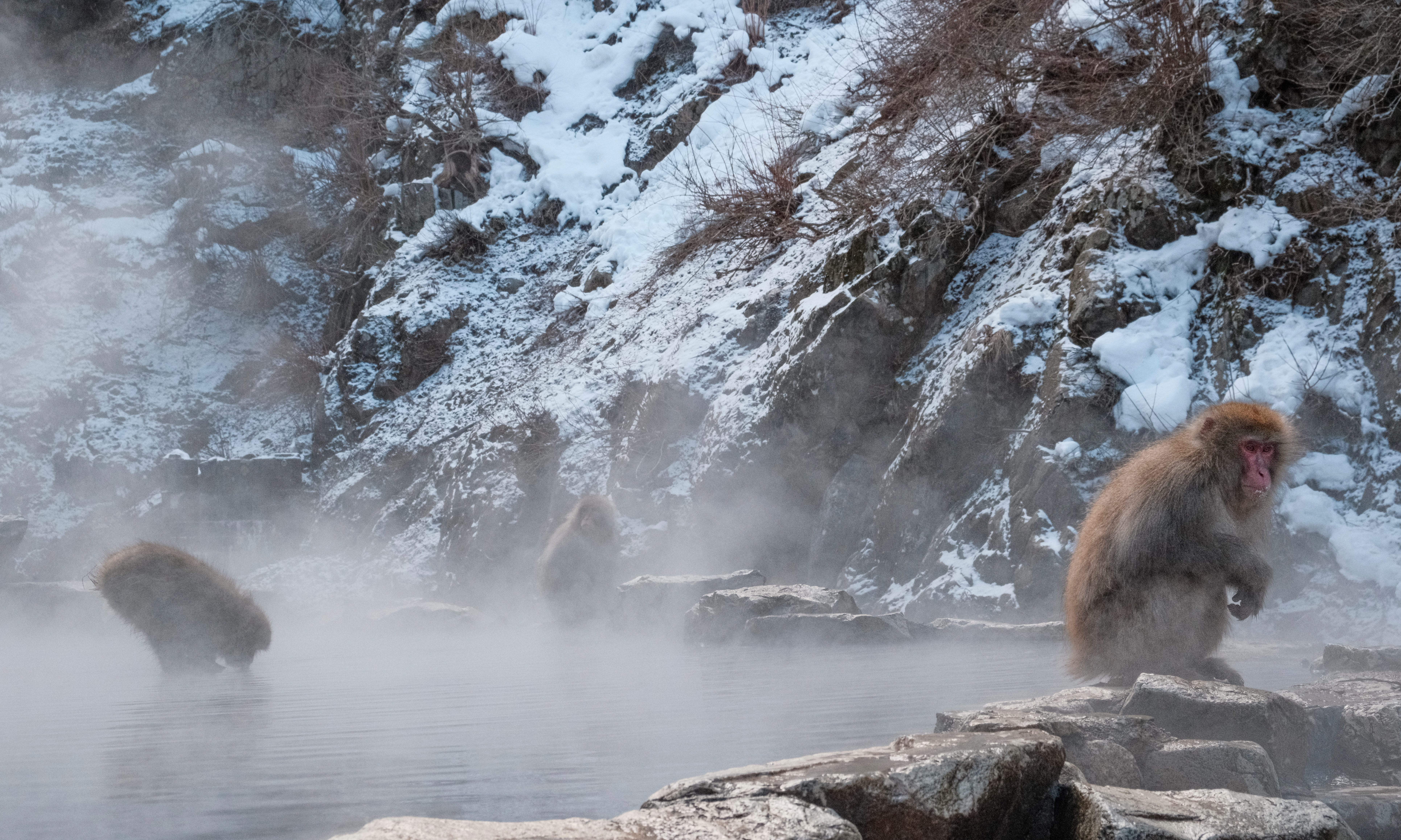
In many ways, the park saved the macaques from a horrific fate. The park became a haven for these monkeys and also allowed the community to generate income from these monkeys’ strange, yet adorable behavior.
Especially considering Japan’s track record with rather questionable animal tourism experiences (i.e capybara cafés in the middle of Tokyo), the Jigokudani Monkey Park sounds like a dream. And in many ways it is: the monkeys are able to move freely and come and go as they please. The park has a strong educational focus where visitors can learn about the lives of macaques, and the whole experience was rooted in a conservation ethos.
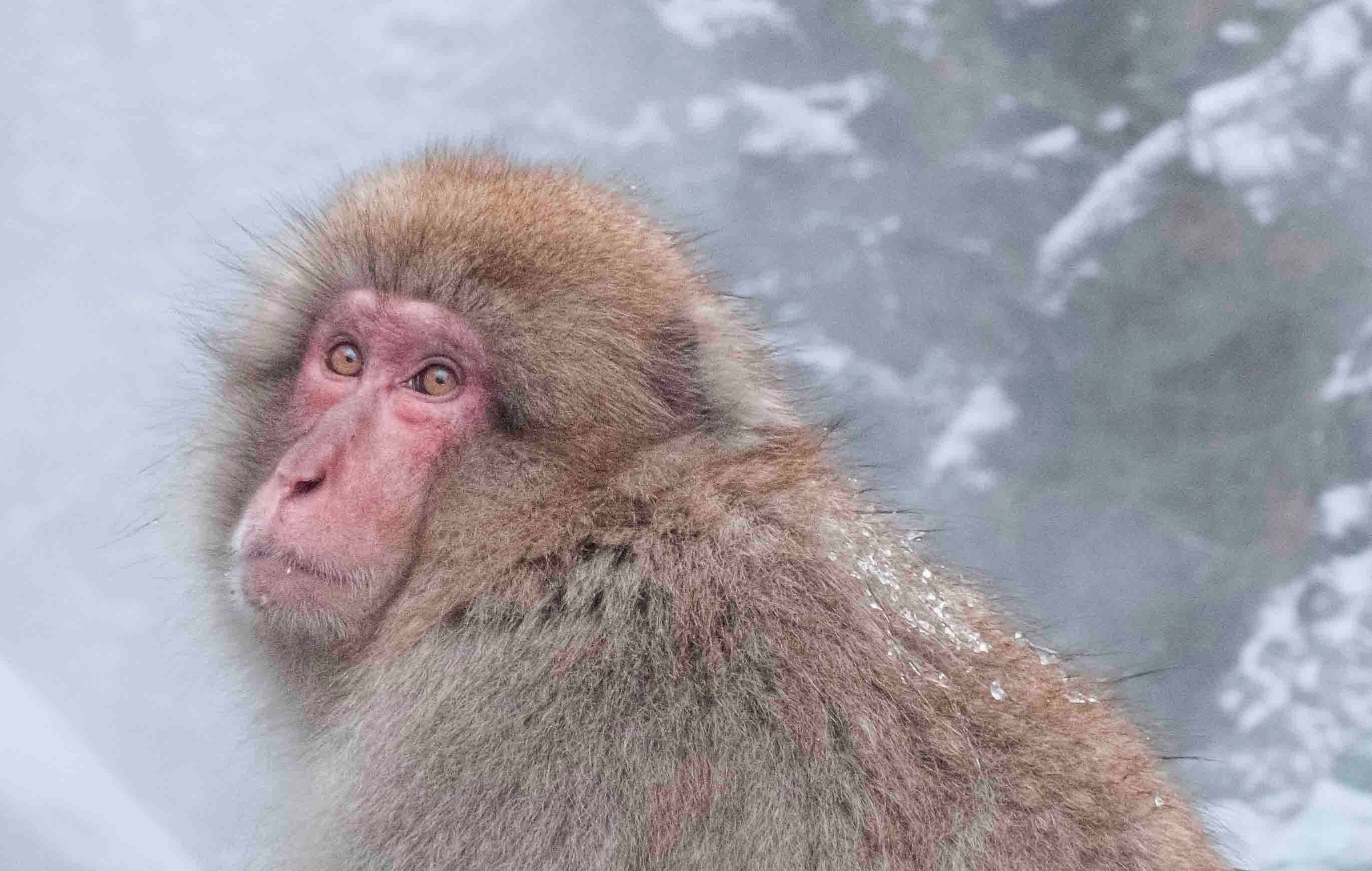
Like many things in this life, however, it’s a bit more complicated than that.
While the park is presented as a minimally-invasive way to experience monkeys in their natural habitat, the overwhelming presence of humans has inevitably affected the monkeys’ behavior.
Firstly, the “snow monkeys” are swarmed by tourists at all hours during their bath. While the Jigokudani Monkey Park does not have an cap for the number of visitors entering the park at any given time, they have a live-stream camera that shows when the monkeys come down to the onsen to bathe. Once the monkeys head down the mountain for their bathing ritual, they are sure to be surrounded by curious tourists and their camera phones.
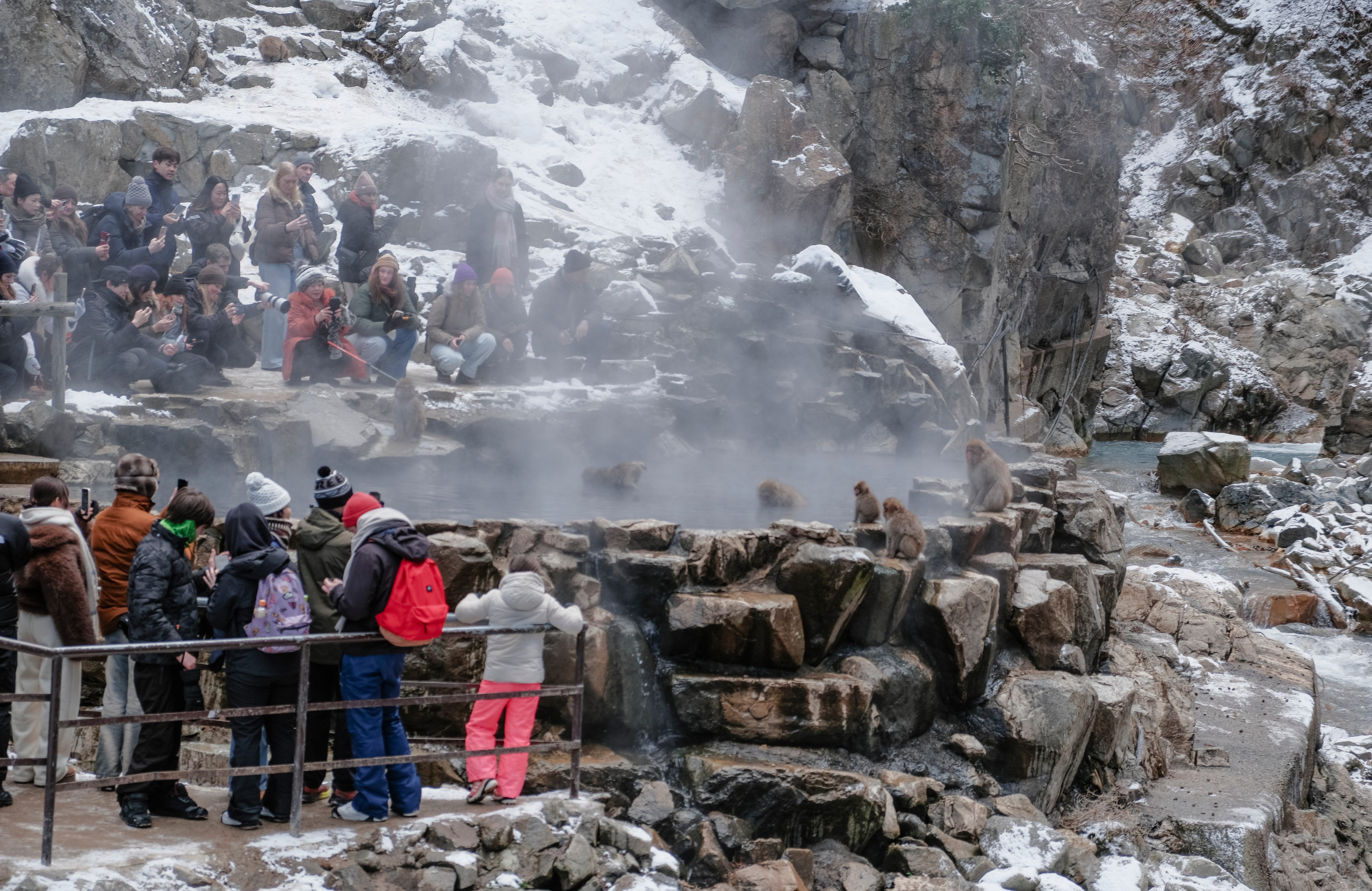
The monkeys, remarkably, pay little mind to the hoards of tourists crowding their onsen. It is a stark contrast to experiences like the Sacred Monkey Forest in Bali, where macaques are primed and ready to attack humans at the slightest hint of food.
Visitors to the Jigokudani Monkey Park are prohibited from feeding monkeys, however, much to my own surprise, the park staff conduct daily feedings for the monkeys. Once these attendants bring out their food buckets, the monkeys swarm them for their lunch.
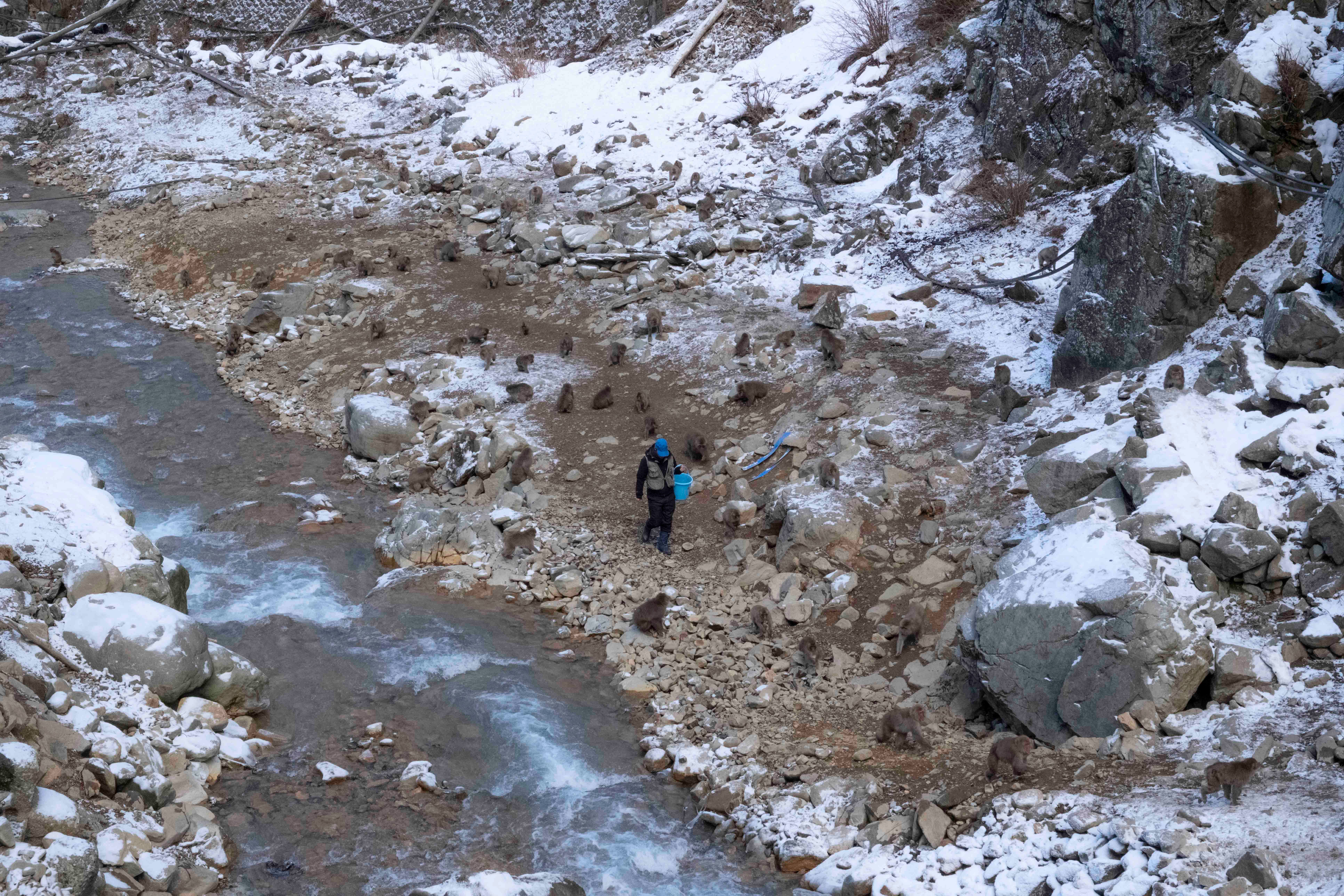
Having a constant food source impacts the daily life and social dynamics of the macaques. Because they no longer have to forage for their own food, they can lose their ability to find food in the wild, and in turn deepen their reliance on humans. They now come down the mountain on human schedules for feeding so tourists can get a closer look at them.
Macaque experts warn that feedings macaques and bringing them into closer contact with humans could potentially cause conflicts between humans and monkeys. Despite how undeniably adorable and cuddly they seem, these monkeys are still wild animals. They have natural instincts. Having them in increasing proximity to humans creates more opportunities for potentially violent conflicts.
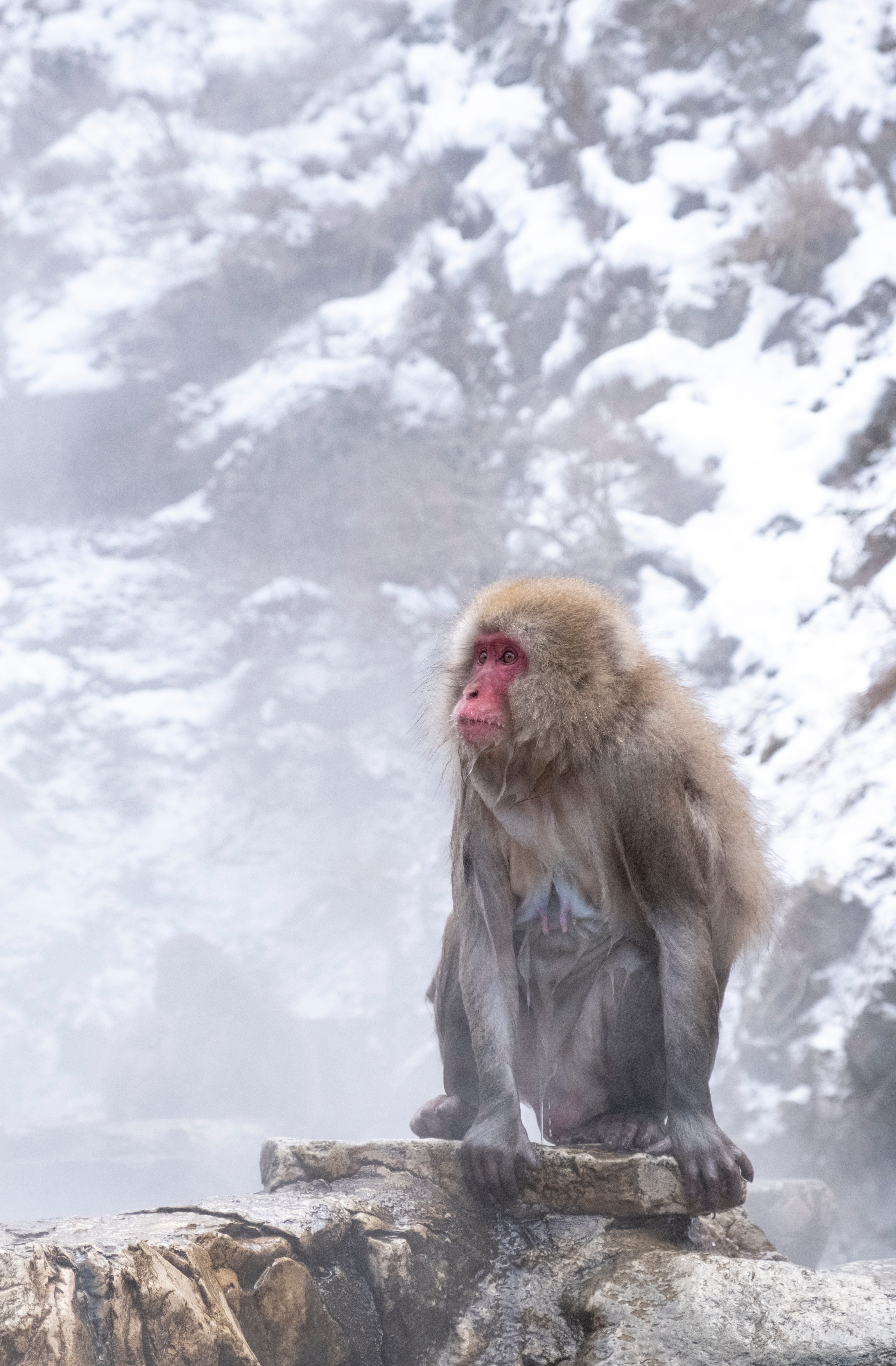
While Japan’s snow monkey experience is not perfect, it would be unfair to write off the experience as a whole. As far as animal tourism venues go, the Jigokudani Monkey Park is one of the more hands-off and respectful providers in Japan.
However, there are always ways we can improve our experiences to be more mindful of animals and the natural world around us. Having limited, timed slots for visitors would help address the overcrowding issues. Likewise, getting rid of scheduled feedings and instead promote the macaque’s natural foraging behavior would also make the experience more respectful and hands-off.
Animal tourism experiences can help promote wildlife conservation initiatives and support local livelihoods. But at what point do these attractions do more harm than good?
No posts
Comments
Nothing yet. Say the first thing.
Sign in to join the conversation.