
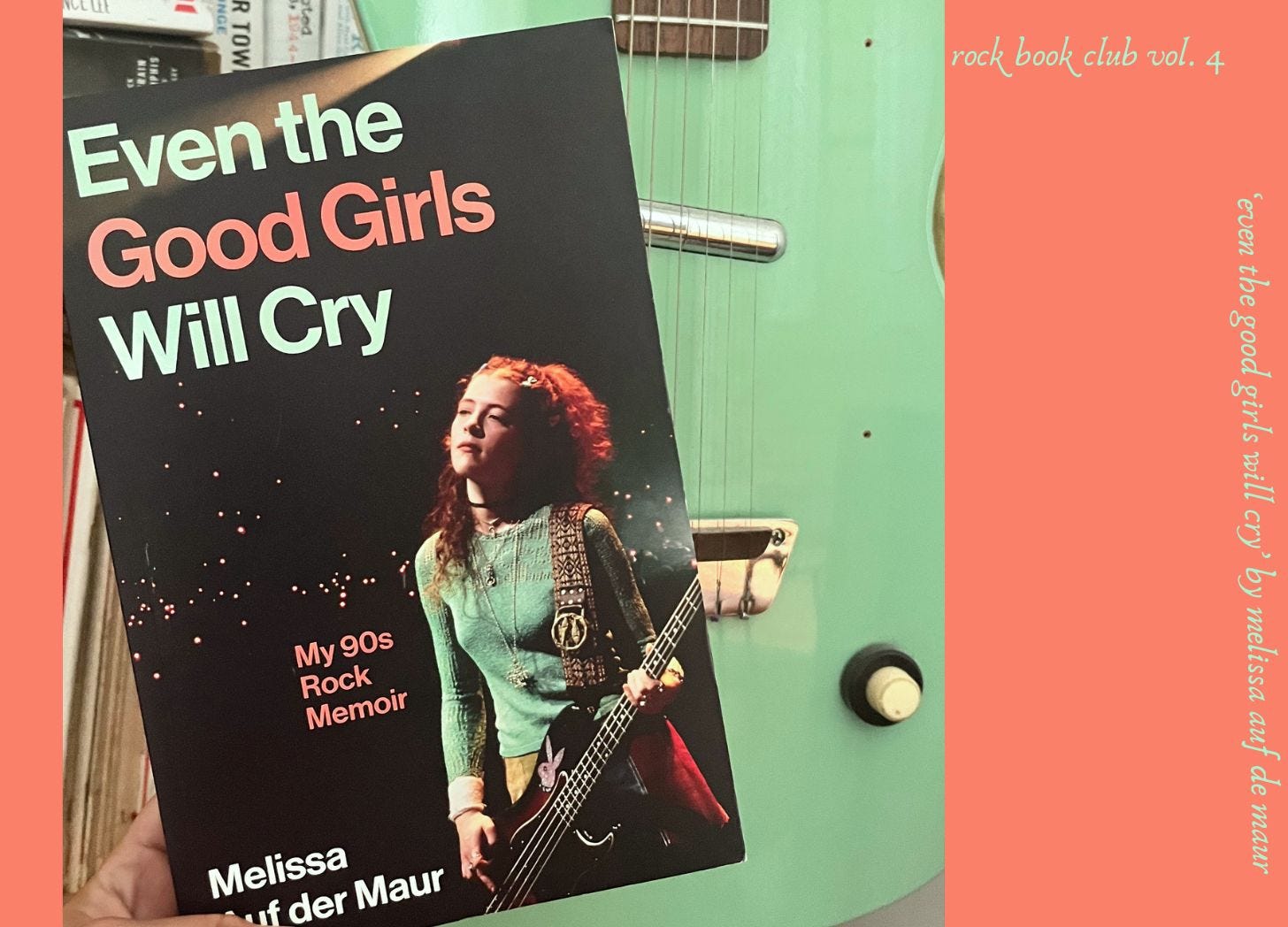
“This is Melissa Auf der Maur from Montreal!”
I don’t even need to close my eyes to hear it. It’s an announcement, a tone, a feeling archived permanently in the dusty files of my teenage memories. Decades later, I can still smell the stage dust, see the chipped paint on the balcony’s crown molding, and picture the candelabra with its missing charms.
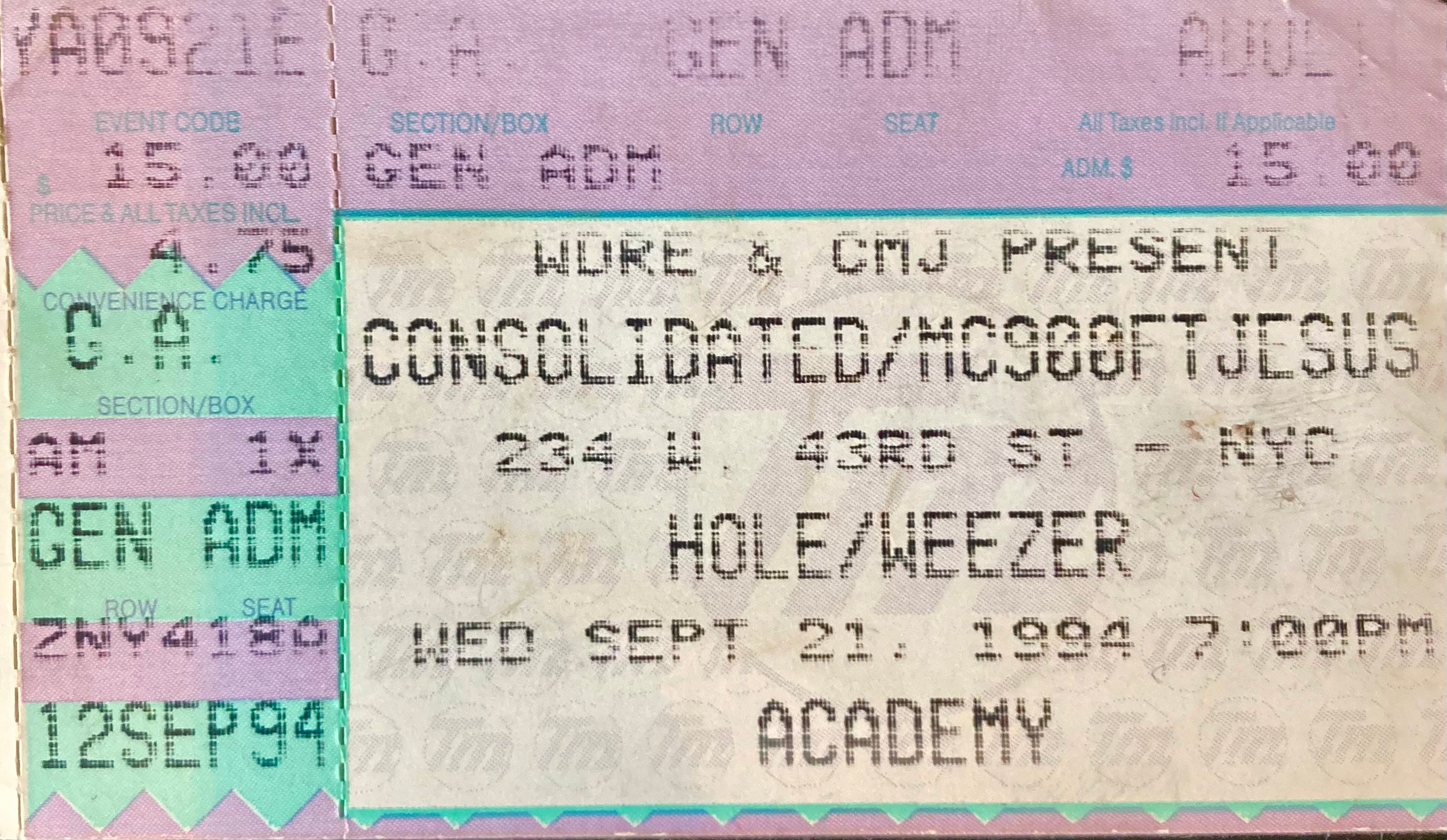
It’s September 21st, 1994. I’m at my very first rock show. And the band is Hole.
For context: “Doll Parts” was not yet an MTV Buzzbin video. The curiosity surrounding Courtney Love had less to do with music than with the image of the enigmatic widow, working through a private trauma out loud. That would shortly change, but this was the temperature on that first day of autumn in 1994.
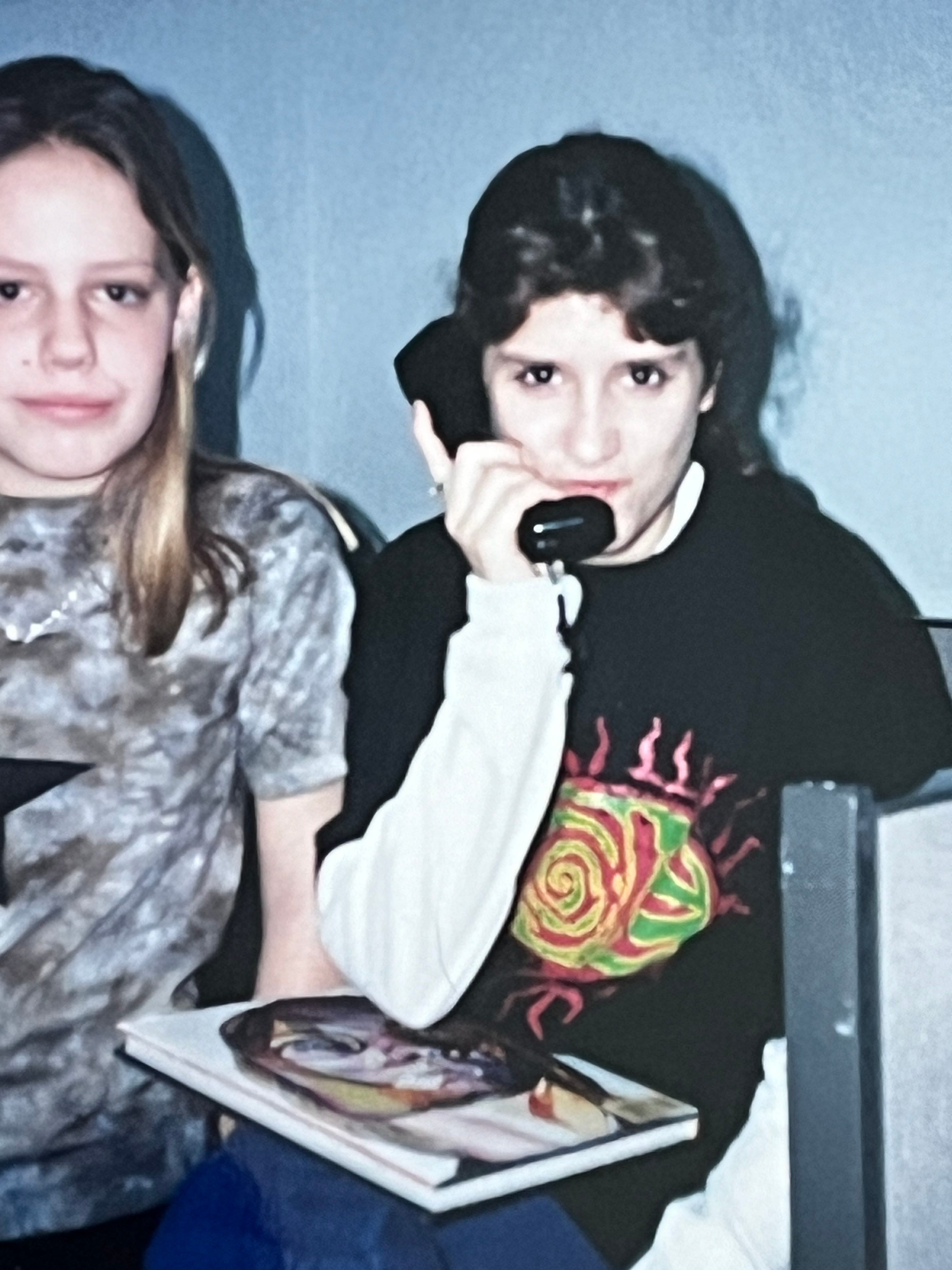
As a thirteen-year-old with braces and a faded purple backpack, I was adrift in a sea of college-aged trendsetters and industry tastemakers. I stood out as the youngest person there. I also stood out because I was with my mom.
In an era before smartphones documented our experiences, I still carry every detail of that night in memory, a true coming-of-age moment.
My mind’s eye sees the time-worn marquee announcing the CMJ lineup: Hole, MC 900 Ft. Jesus, and the opening band, Weezer. The venue faced the loading docks of the old New York Times building, where delivery trucks idled beneath the paper’s motto: “All the News That’s Fit to Print.” I remember a college-aged guy in line in front of me scoff to his friend, “All the lies that’s fit to print, they mean.” I had no idea what he meant, but having such a fervent opinion on a newspaper passed as deeply sophisticated to my freshly thirteen-year-old mind.
Maybe it was because it was my first show, or simply the circumstances, but I never felt that same anticipatory energy before a rock concert again. The moment Hole took the stage, you could feel the entire room register the importance of the moment, fully aware that history was unfolding in real time. Courtney was not merely famous but a lightning rod to the culture. Seeing her this up close in such a chaotic while exciting (at least to us fans) time in music and pop culture history was not lost on anyone there.
She came out in ruffled white chiffon and red lips; her charisma didn’t drain the room, it energized it.
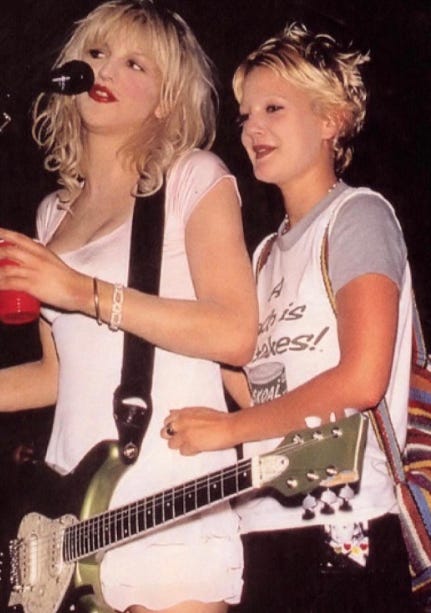
She talked about owing people money (my mom laughed at this), introduced us to Drew Barrymore, smoked cigarettes. And beside her stood the new bassist in a baby tee with red curls, a cool contrast to the madness.
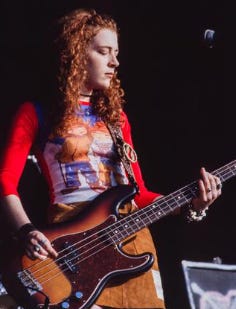
“This is Melissa Auf der Maur from Montreal!” she announced with arms outstretched, wrists twisting, and a cigarette dangling from her fingers.
“Oh, she’s a baby,” my mom said in her thick Long Island accent as I looked over my shoulder, hoping the New York Times guy wasn’t nearby, or worse, that Courtney would see a mom in the crowd, momentarily forgetting that she herself was one.
Packed into a relatively small rock club full of twenty-somethings and music writers, having Courtney talk to us, seeing Drew Barrymore, being introduced to bassists, I felt like I was being initiated into something far bigger than high school. This was rock ‘n’ roll. And I was there.
High school was never quite the same after that night.
I felt like I was being initiated into something far bigger than high school. This was rock ‘n’ roll. And I was there.
When I discovered that this mysterious bassist had penned a memoir, Even the Good Girls Will Cry, I knew I was in for a story that would finally answer all my teenage questions. In the spirit of 1994, I didn’t turn to a screen. Instead, I walked to my local librairie in my small village outside of Paris and placed an order. No Amazon. No “add to cart.” I wanted to keep the experience as analog as that first concert. The book didn’t come the next day but two weeks later as this what it was like to live in that world. When it arrived, the bookstore owner called and said, “Melissa est arrivée!”
Indeed she has.
Reading her account pulls you into a particular 1990s vacuum of long, lonely days on tour with a dysfunctional band whose mystique often felt larger than its music. Like Melissa, I am also a daughter of alcoholism and so I related with an aching heart at her avoiding conflict, disappearing into daydreams and favorite albums, and at times, trying to “fix it” by trying to understand it. It takes life experience and loss to realize that you cannot.
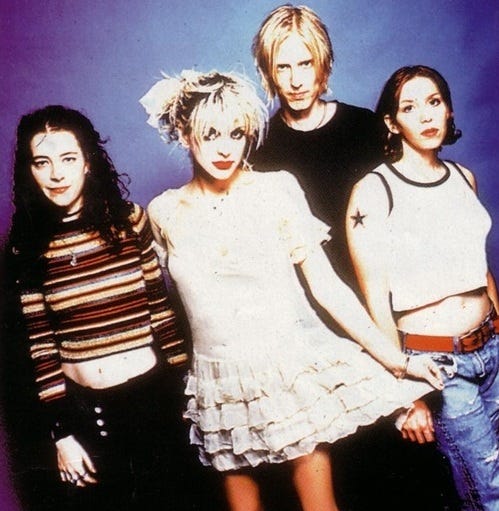
We didn’t have the access to artists we have now, so we spent those years hunting down clues and magazine clippings. We pored over features in Rolling Stone, Spin, and Q, stitching together quotes and journalists’ descriptions to complete a picture that went beyond the lyrics and liner notes.
Even the Good Girls Will Cry maps a distinct geography of memory: faceless American cities, coming of age in Canada, mourning in Montreal, the studio struggle sessions in Los Angeles, double dates with SNL characters in New York, Donatella’s boys at Milan Fashion Week, ghosts in the mirrors of New Orleans, a hospital escape in Paris, and the view from a garage in Seattle. These vignettes lead up to the Hollywood ending of Hole’s final album, which in retrospect feels like a farewell to the nineties before the digital world stole our souls.
The Hollywood ending of Hole’s final album that in retrospect feels like a farewell to the ‘90s before the digital world stole our souls.
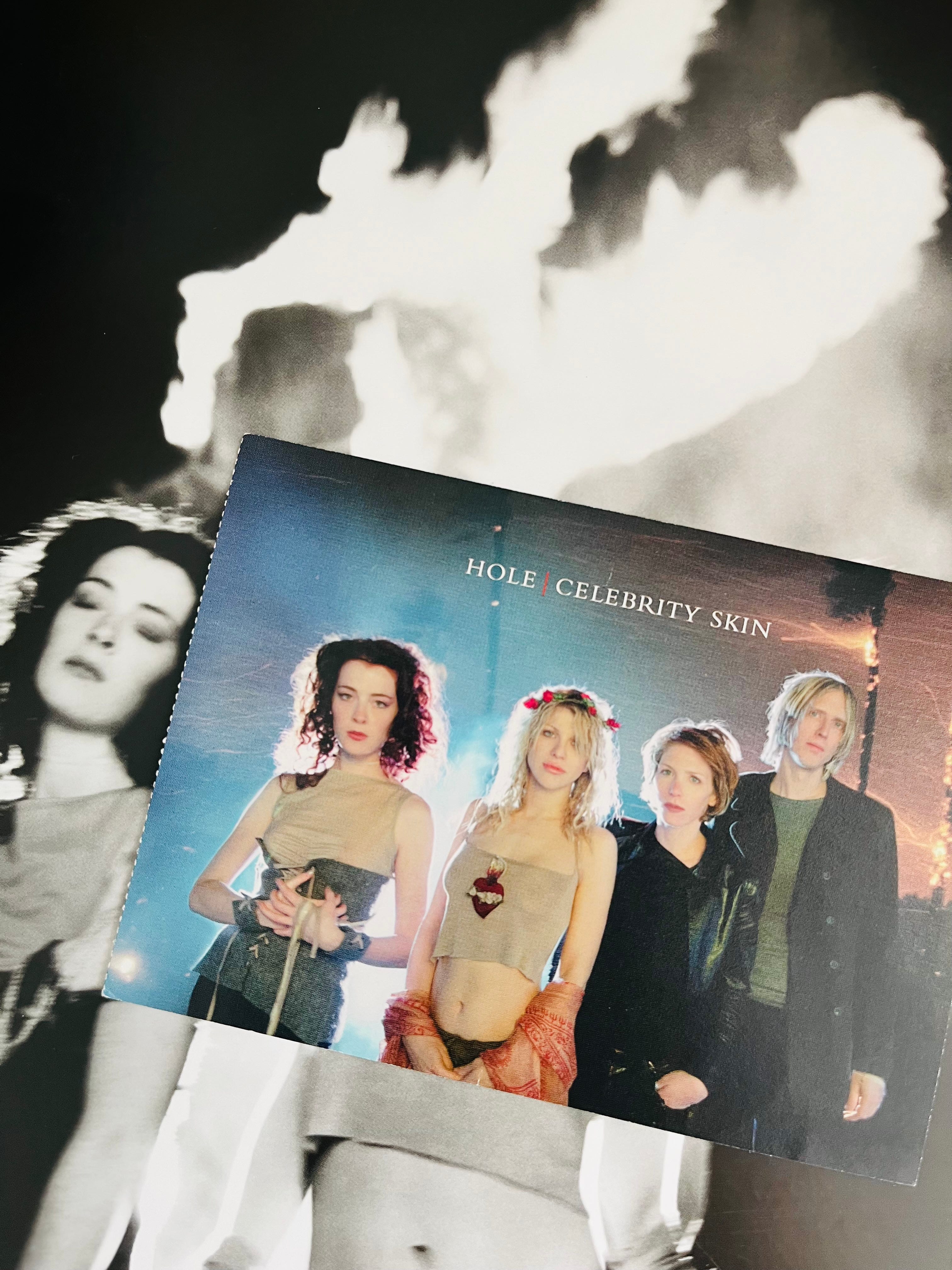
The book offers a sober yet poetic account, written from the eye of the tornado, the anchor holding down the rhythm section. Auf der Maur moves from the raw, open grief of Hole straight into the high-stakes calculations of the Smashing Pumpkins. Refreshingly counterculture, she declines to pray at the altar of Sonic Youth (even if I am a fan) and I am saddened the treatment Hole received at Lollapalooza ’95. Her memory of the iconic festival cuts through the standard alt-rock mythology with a cold, clear light, giving us a perspective that feels more aligned to reality.
“Our band’s situation makes me look at people [the other bands] through a new lens. Who is a kind, nonjudgmental human? And who is a too-cool-for-school, hip, obsessed asshole?” she muses, which is the kind of honesty I crave in my rock memoir. And when a bullet shell flies onto the stage, the solidarity does not come from the band’s peers or the friends the music media insisted they had. It comes from Cypress Hill who lined up in the wings like a protective wall against the violent provocation. The stony silence from their rock peers suggested a quiet, perhaps even tacit agreement with the bullet-tosser.
She writes: “The irony is that this offer [Cypress Hill’s protection] comes from someone who is a stranger to us. Instead of from Kurt’s friends on tour. The stony silence from the latter seems to suggest they might not agree with the abusive members of the crowd.”
Her treatment of the Courtney Love and Kathleen Hanna rift refuses the easy currency of villains and saints. Courtney took most of the blame, but Melissa’s account offers a perspective I hadn’t heard before and do, in fact, find to be the most believable account. Auf der Maur has never struck me as someone chasing cool points, certainly not in midlife, or exaggerating for effect, which finally makes the whole story from that summer of ’95 feel complete. When she describes the feminist academics of my former college, The Evergreen State College, as pretentious and exclusionary, I grinned with immediate recognition. She isn’t wrong, and it feels like a brave admission now, in a culture that increasingly demands we think in lockstep and take sides.
She isn’t wrong, and it feels like a brave admission now, in a culture that increasingly demands we think in lockstep and take sides.
One of the most affecting threads is her relationship with drummer Patty Schemel. I’d already read Patty’s memoir, Hit So Hard, which felt like a parallel world reading companion. Reading Melissa’s account—as the grounded one trying to hold the rhythm section together—offered the necessary counter-narrative on how addiction also impacts the non-addicted to a crippling degree.
What makes her perspective so gripping is her role as the ultimate observer: a Canadian art student dropped directly into the center of a chaotic American rock circus. In one scene at Australia’s Big Day Out festival, she recalls walking into a room where musicians from various bands were all shooting up. Having read Mark Lanegan’s memoir, Sing Backwards and Weep, I was able to fill in the blanks regarding the exact who and what of that specific moment. I deeply respect Melissa for protecting the privacy of her peers and letting them tell their own stories—but as someone who has devoured countless rock biographies, it was satisfying to be able to read between the lines and navigate the story with my very own nonfiction backstage pass.
It was incredibly satisfying to read between the lines and navigate the story with my very own nonfiction backstage pass.
Where other rock biographies might resort to tabloid gossip, Auf der Maur writes about Courtney Love and Billy Corgan, her “spiritual fucking cowboy,” with striking empathy and nuance. Instead of trashing the past, she focuses on the intense, beautiful, and crushing reality of that time. Her sharp cultural observations capture the mid-nineties alternative landscape with total clarity, serving as an essential companion piece to the history of modern rock.
Her sharp cultural observations capture the mid-nineties alternative landscape with total clarity, serving as an essential companion piece to the history of modern rock.
Beyond the music, her story felt like an echo of my own. I also knew what it was to have a first-name relationship with a father who didn’t raise me, and the weight of a throat cancer diagnosis. When he died in my early twenties, I had to make that same heavy flight from Los Angeles back to the east coast to mourn a father that felt more like a friend. When she recounted going back to LA after that experience, feeling lost in the City of Angels and on the brink of creative, emotional and life transition, I realized we shared the same geography of grief.
Feeling lost in the City of Angels and on the brink of transition, I realized we shared the same geography of grief.
Some personal bits and bobbles: I loved were her take on Alanis Morissette and how she and the rest of Hole weren’t falling for it. I was also not falling for it (and truly felt alone in 1995!), this corporate-branded feminism that was being sold as a “cleaner Courtney”. Nope. I wanted the real deal. I do love picturing the faces of all three women in Hole during all that Alanis hype. I also loved the shoutout to the now-closed Backdoor Bakery that was across the street from Spaceland, where I used to work. That was also my neighborhood in LA in the early aughts, and love knowing that Melissa and Patty used to go there. The croissants were good. And made on the premises! (I wonder if she spoke French with the owner Deb who was a big-time Francophile…)
Even the Good Girls Will Cry fills in the blanks of a fractured moment in music history that is now looked back on as the last great musical era. There will never be another one like it—a collision where analog met the digital world, explaining where we are and why we’re here. Although I was a teen who still had decades of life, love and new languages ahead of me, this book left me mourning for a time that was, in fact, not simple, but complex in a way our attention spans no longer allow. It is less a nostalgia trip and more a map of how we fell in love with that world, and exactly what it cost to survive it.
If you’ve read Even the Good Girls Will Cry, I’d love your thoughts. I really enjoyed this book and might just be my rock memoir of the year, so let’s chat.
And if you haven’t and now want to, you can find more information here on Melissa’s website.
No posts
Comments
Nothing yet. Say the first thing.
Sign in to join the conversation.