
Reading Bill’s weekly notes, my employee, I find they are spot on. They open with the accomplishment stated immediately, followed by why it’s important, and then end with the current status and next steps. Succinct, sharp, relevant - everything a weekly note should be.
So, why is Bill not in the room where it happens, where the decisions are being made? In this scenario, the decision makers are a bunch of project managers, and Bill is their assigned safety rep. Bill’s an expert when it comes to safety, and he’s there not only to keep the project out of trouble, but to help guide it towards success. So again, why is he being kept out of the room?
As the safety rep, his role is to bring up concerns and potential hazards. His job is to keep an eye out for what could go wrong so that the project can anticipate, plan, and mitigate them, so that it never materializes to begin with. But Bill trips over his own words, especially in high-pressure situations. Compounding this, any prospect of criticism can be interpreted as a nay-sayer, a wrench-thrower, a Debbie-downer. Combined with the stereotypical engineer trait of being socially shy, we have the recipe for someone like Bill being left out of the conversation.
What’s the difference between an introverted and an extroverted engineer? The introvert looks at their own shoes when they’re talking to you, and the extrovert looks at your shoes!
In 1964, Robert Kahn published Organizational Stress: Studies in Role Conflict and Ambiguity. The title says it all - role conflict and ambiguity. In Kahn’s framework, when an employee has conflicting roles, such as being tasked to do A but expected to deliver B, that’s a conflict. Or perhaps if his supervisor asks for A but Bill’s values and ethics do not permit it, it results in a conflict. And it’s that conflict that causes personal stress, which may become chronic if left unchecked. Additionally, the organization suffers - the supervisor is left unsatisfied, leaving Bill with a low performance score, and Bill is relegated to lesser tasks than his skills warrant. Bill’s expertise is to be an independent skeptic, and I’m asking him to sell the project managers on safety solutions. I’m asking Bill to occupy two different seats at the same time.
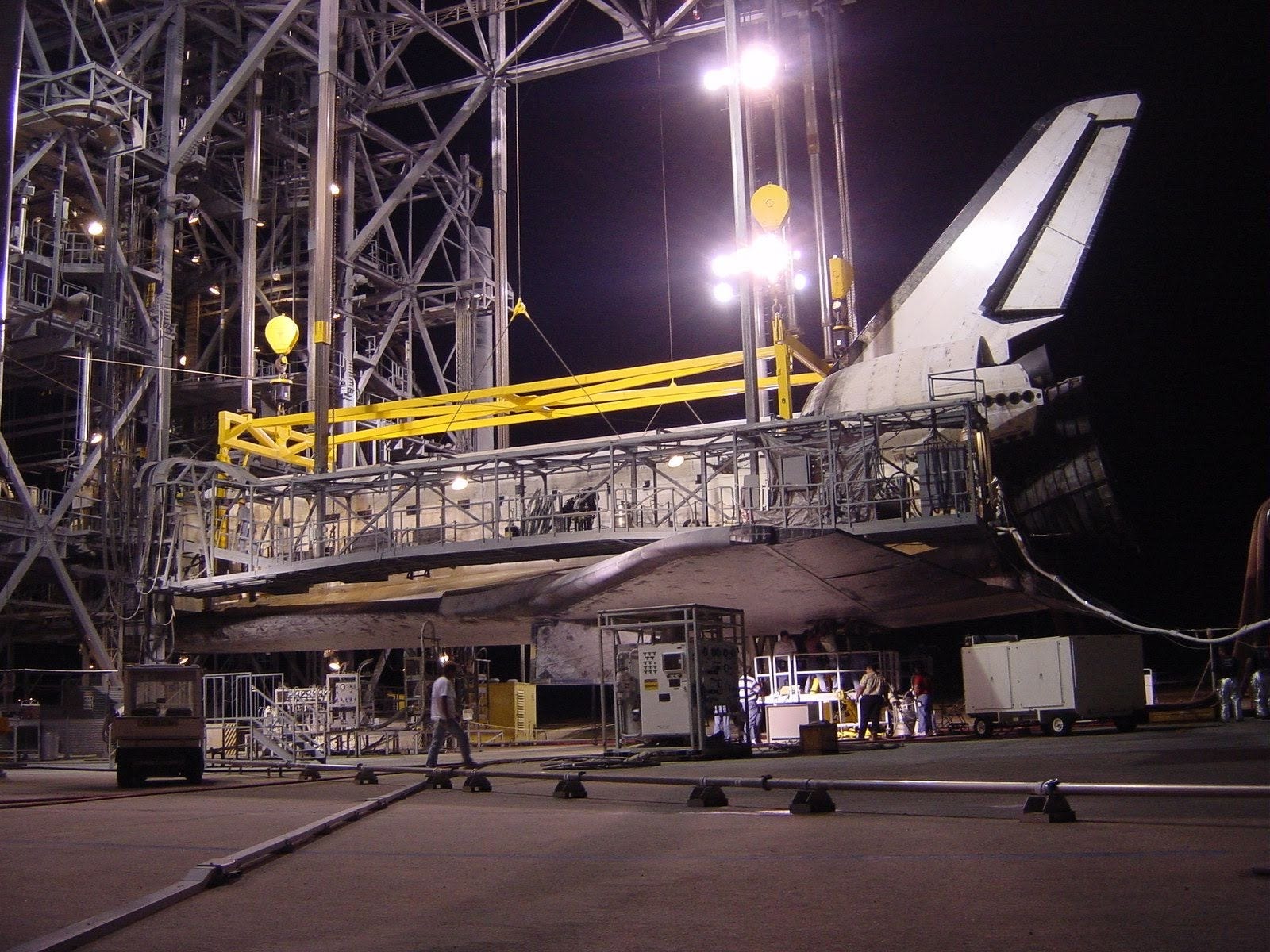
Working at NASA, this hits hard for anyone in the agency, especially if you’re in the safety organization. The investigation of the 2003 Space Shuttle Columbia accident directly indicted a ‘Silent Safety Program.’ And the instant a safety person forgets their role on the team and focuses only on moving the project forward, an environment ripe for an accident is born.
But launching rockets is a complex job, and so is this scenario. Layered on top is also a normalization of deviance. Bill is accustomed to sending those notes to me only, not to the project. I forward the juicy ones upward so my management knows, and so on. But on the project side, they’re missing out on Bill’s weekly prose. In other words, we’ve normalized the deviance of sharing info in only one silo, the safety side. Bill is stressed from role conflict, me constantly asking him to stay close to the project. The project managers are accustomed to not involving safety. And I’ve formed an opinion. The messed-up environment is now normalized.
It’s like Bill is sitting in the front of a car with dual power, motorized seats. I’m pressing the knob that inches him closer to the front. The project presses the other know, pushing Bill farther away. Poor Bill doesn’t know what’s up, so he just fiddles with the lumbar support, trying to get comfy.
So, I think we all know someone like Bill. Someone who’s struggling in the job, and it might be because of role conflict and people constantly adjusting his dual power, motorized seat. Do this, no do that. In the end, they’ll do what they’re best at. Bill writes succinct, sharp, relevant notes, which allows him to stay away from the tension. We all occupy a seat, worth noting who has their fingers on the knobs.
Sometime today, as you’re going about your job, reach down to your metaphorical seat and feel the control knobs. Do you notice anyone else’s hands on the control? More than one person? How do you determine who’s in control or perhaps wrestle control back?
“As I navigate through life today, I’ll occassionally take a sec to note, what’s the best use of my right now and what’s expected of me. Those two things should be in alignment.”
- from my AffirmStreak this morning
Comments
Nothing yet. Say the first thing.
Sign in to join the conversation.