

Now, I am not usually one to brag. But in the past decade, I have collected a list of various ailments and miscellaneous health conditions that would make any hypochondriac pale in comparison.
Allow me to paint the picture:
Severe chronic bloating, to the point of being regularly mistaken for pregnant. Two uterine polyps and a
confirmed endometrioma. A gradual, significant weight gain despite a healthy diet and regular movement,
that doesn’t respond to the things that are supposed to work. Recurring deep pain in my right shoulder blade. Strongly suspected ADHD and mild Tourette (my GP referred me to get a proper diagnosis, but the waitlist is endless). Drenching night sweats. Recurring insomnia. And recently – the cherry on the cake – joint stiffness that makes me feel twice my age in the morning, to the point of limping down the stairs.
Oh, and I am “only” 37 years of age.
I have tried everything under the sun – from your hardcore medical specialists to the fluffiest of alternative medicines. Nothing has worked. And when, after the latest of my blood work showed “everything is fine” and my GP dismissed me with a “just take some more vitamin D”, I decided to take matters in my own hands.
And start researching.
I want to be fair: GPs are overstretched, yadda yadda. But the dismissal sent me down a research path that made me realise how everything, and I mean everything, is interconnected.
I’ll give you two examples. Did you know that women with ADHD are almost twice as likely to have endometriosis (and vice versa)? And that endo CAN cause the specific shade of shoulder blade pain I have been experiencing for years, if it attaches itself to the diaphragm, irritating the phrenic nerve which runs all the way up the neck.
Mindblowing, I know.
But this article is not meant to be me throwing a pity party. I am sharing my findings in case some of you will relate, and also because the research led me to develop some habits to help regulate your nervous system, which is fundamental in both Endometriosis and ADHD management.
The missing piece: Cortisol and the HPA axis
The thing nobody had explained to me – and that took real digging to find – is the relationship between chronic stress, cortisol dysregulation, and systemic inflammation.
Cortisol is produced by your adrenal glands in response to signals from the brain. When your hypothalamus detects stress, it signals your pituitary gland, which signals your adrenals to release cortisol. This cascade is called the HPA axis — hypothalamic-pituitary-adrenal — and it’s the system that governs your entire stress response.
In a healthy system, cortisol spikes when you need it (in the morning, during exertion, in response to a genuine threat) and drops when you don’t. The problem with chronic stress is that it keeps the HPA axis in a state of persistent activation. Cortisol stays elevated. And chronically elevated cortisol drives systemic inflammation.
For someone with endometriosis, this matters enormously. Endo is not an autoimmune disease in the classical sense – the immune system doesn’t attack healthy tissue the way it does in lupus or rheumatoid arthritis. But there is clear immune dysregulation involved: the immune system fails to suppress the growth of endometrial-like tissue outside the uterus, and the result is chronic, systemic inflammation. Cortisol dysregulation feeds directly into that process. The two conditions don’t just coexist: they amplify each other.
What I started doing about it
I want to be clear that none of what follows is a cure, and I am not a doctor. What I have done is build a set of daily habits that target the underlying mechanisms — cortisol regulation, blood sugar stability, nervous system support, sleep — rather than treating symptoms in isolation. I am relatively new into the process (I have been going now for a couple of months), but I have started noticing a difference.
So, without further ado, here are my 7 daily habits:
This one sounds almost too simple, but the mechanism is real. Splashing cold water on your face triggers the dive reflex — a hardwired physiological response that slows your heart rate and activates the parasympathetic nervous system almost instantly. The parasympathetic nervous system is the opposite of the stress response: rest, digest, recover.
I do it first thing in the morning. It takes about ten seconds and, if nothing else, it is a sure way to wake me up.
This is probably the habit that has made the most consistent difference to how I feel physically – especially to my morning limp.
It works because the position shifts your body into parasympathetic mode — the opposite of fight-or-flight. It reduces the effort your cardiovascular system needs to return blood to the heart, signals to your nervous system that there is no immediate threat, and supports lymphatic drainage. For chronic bloating, that last point alone makes it worth doing.
Your cortisol has a natural peak in the first 30–45 minutes after waking — this is normal and actually necessary. It’s called the cortisol awakening response, and it’s how your body calibrates its daily rhythm. Morning light helps that peak happen properly. Your phone disrupts it — not just because of the artificial light, but because of the immediate flood of information and stimulation before your nervous system has had a chance to settle.
Getting outside within 30 minutes, even briefly, even on a grey London morning, makes a measurable difference. I treat these two habits as a pair: light in, screens out. And, talking of habit stacking, I also do the next point when out (unless it rains, which has been the case these past two weeks here in London).
Your breath is the one part of your nervous system you can consciously control. Slow, deliberate breathing activates the vagus nerve — the main pathway of the parasympathetic nervous system — which directly dials down cortisol production. The evidence behind breathwork for stress regulation is genuinely robust. This is not wellness fluff.
I use the 4:6 technique: inhale for 4 counts, exhale for 6. The longer exhale is the key — it activates the calming response more strongly than equal-ratio breathing. 5 minutes per session (or 30 full breaths), morning and night as a minimum. I try to fit a third session in before lunch when I can feel things building.
Blood sugar instability is one of the most underappreciated drivers of cortisol disruption. When blood sugar drops, the body releases cortisol to compensate. It’s an emergency mechanism that, if triggered repeatedly throughout the day, keeps your stress thermostat stuck in the on position.
Starting the day with enough protein stabilises blood sugar from the first meal and sets a more even metabolic tone for the rest of the day. I aim for around 30g per meal. Do I always hit it? No, but we’re not aiming for perfection here.
Regular moderate exercise is one of the most well-documented ways to reduce systemic inflammation. It improves insulin sensitivity, reduces visceral fat (which is itself inflammatory — more on that another time), and directly modulates immune function.
The frequency matters. Training too hard or too often spikes cortisol rather than reducing it. Three times a week is the sweet spot I’ve found: enough to make a real difference, not so much that it works against me. I also try to walk 8–10k steps a day — again, not always successfully, but I’ve stopped treating missed targets as failures. Consistency over perfection.
When I posted my weights on Instagram, you guys seem to have gone wild and they sold out of Amazon. Happy to report they are back in stock, I’ll share my affiliate link below:
Sleep is the single most powerful lever we have. This is where cortisol resets, inflammation drops, and the body does its most significant repair work. Put simply, lack of sleep worsens inflammation, which worsens symptoms.
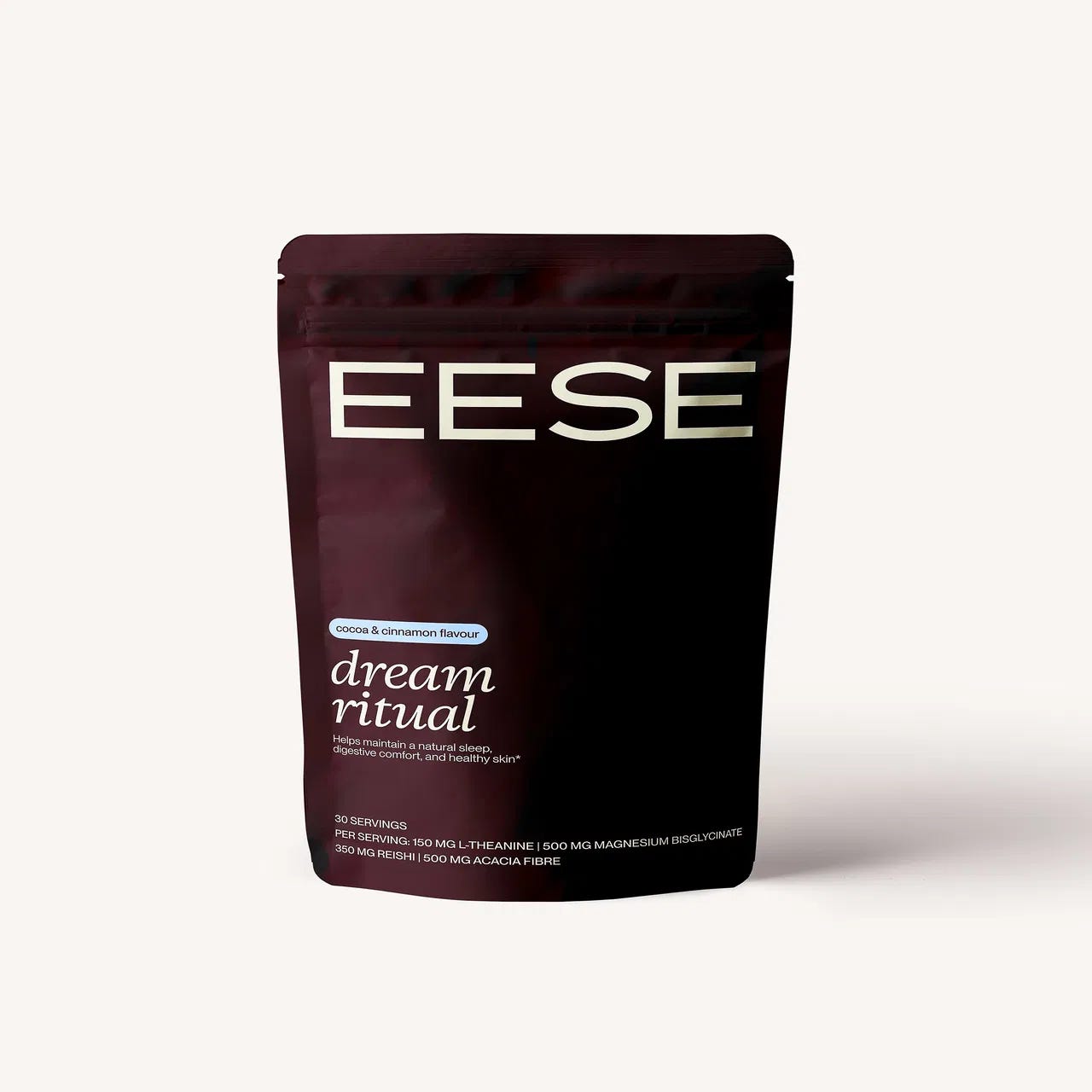
Now, I’ve always been the type of girl who can’t function unless I get my 8hrs sleep at night. What I have changed, though, is consistent bedtime, and no screens for half an hour before bed. Part of my wind-down ritual is EESE — a chocolate powder containing magnesium, reishi, chamomile and L-theanine, all of which support the nervous system and deeper sleep stages (Magnesium in particular is well-evidenced for this). You can mix it with water or milk and have it either hot or cold (though my preference is hot, as it helps the powder dissolve and also feels more comforting).
I have been taking it for about a month and have noticed that not only do I fall asleep faster, but I sleep more soundly too. My Oura ring data confirms it’s working – the quality of my sleep has definitely improved.
The bottom line
The truth is, I am still learning and researching how it is all connected. Some of these habits have resulted in tangible improvements: better sleep, less stiffness, feeling more focused in the morning, feeling fuller for longer thanks to the protein. But realistically, I know the road to undo a decade of chronic inflammation will be a long one.
None of this has cured my endometriosis, of course. But if nothing else, it has given me something quite valuable: time for myself, and a sense of agency when I felt so powerless, for so long.
I hope this resonates, and even helps if you are in a similar position. I’d love to know what has worked for you!
This post contains a paid partnership with Eese. All opinions and experiences are my own.
Comments
Nothing yet. Say the first thing.
Sign in to join the conversation.