
June 2026
June is Cancer Survivors Month. On June 7, communities across the country observed the 39th annual National Cancer Survivors Day, a celebration of life founded in 1987.1 In 1985, Fitzhugh Mullan, a physician who had survived treatment, published “Seasons of Survival” in the New England Journal of Medicine and introduced “cancer survivor” to the clinical literature, replacing “victim” with a concept of ongoing life.2 A year later, 23 individuals founded the National Coalition for Cancer Survivorship in Albuquerque and established a definition that holds today: a cancer survivor is anyone from the moment of diagnosis through the rest of life.3
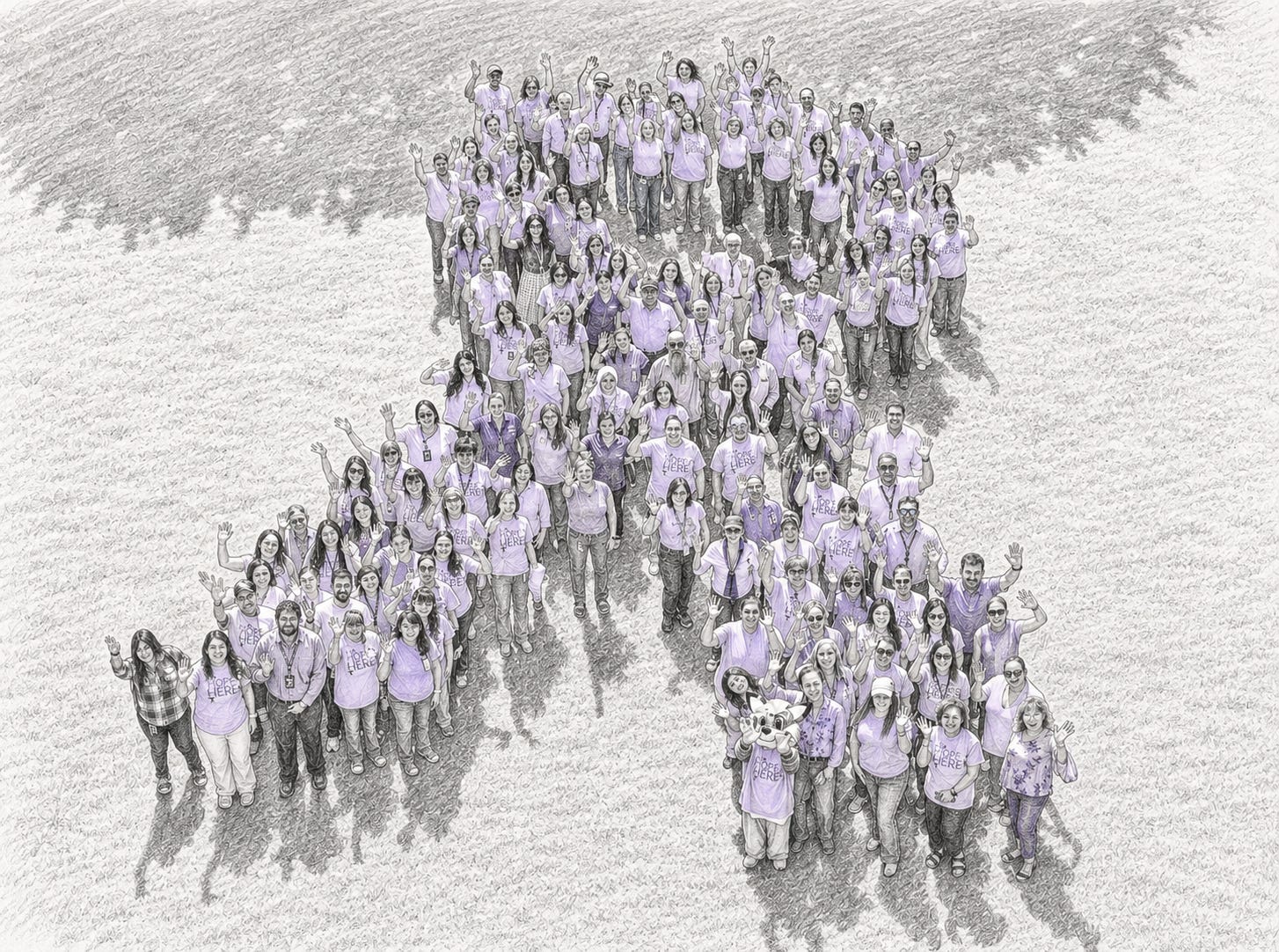
My university, Texas Tech Health El Paso, is marking the month by inviting students, faculty, and staff to wear lavender and form a human ribbon on the central quad. I will be wearing lavender. By Mullan’s definition, my diagnosis started the clock, and to some, I am already a cancer survivor.
But I have a long road before I fully reach the designation that the three people I am writing about earned. Before I was a cancer patient, I was a cancer writer. I sat across from these survivors and took notes. I thought I understood, but I did not. I prefer to call them cancer pathfinders now. They are showing me the way.
David Lepe: Faith, a Good Staff, and Attitude
David Lepe runs Lucy’s Cafe West, part of a five-location family operation that his mother, Lucinda (Lucy), built from a ten-seat counter diner on El Paso’s Mesa Street more than 50 years ago. Lucy passed away in 2024. Her hands were on the business into her seventies.
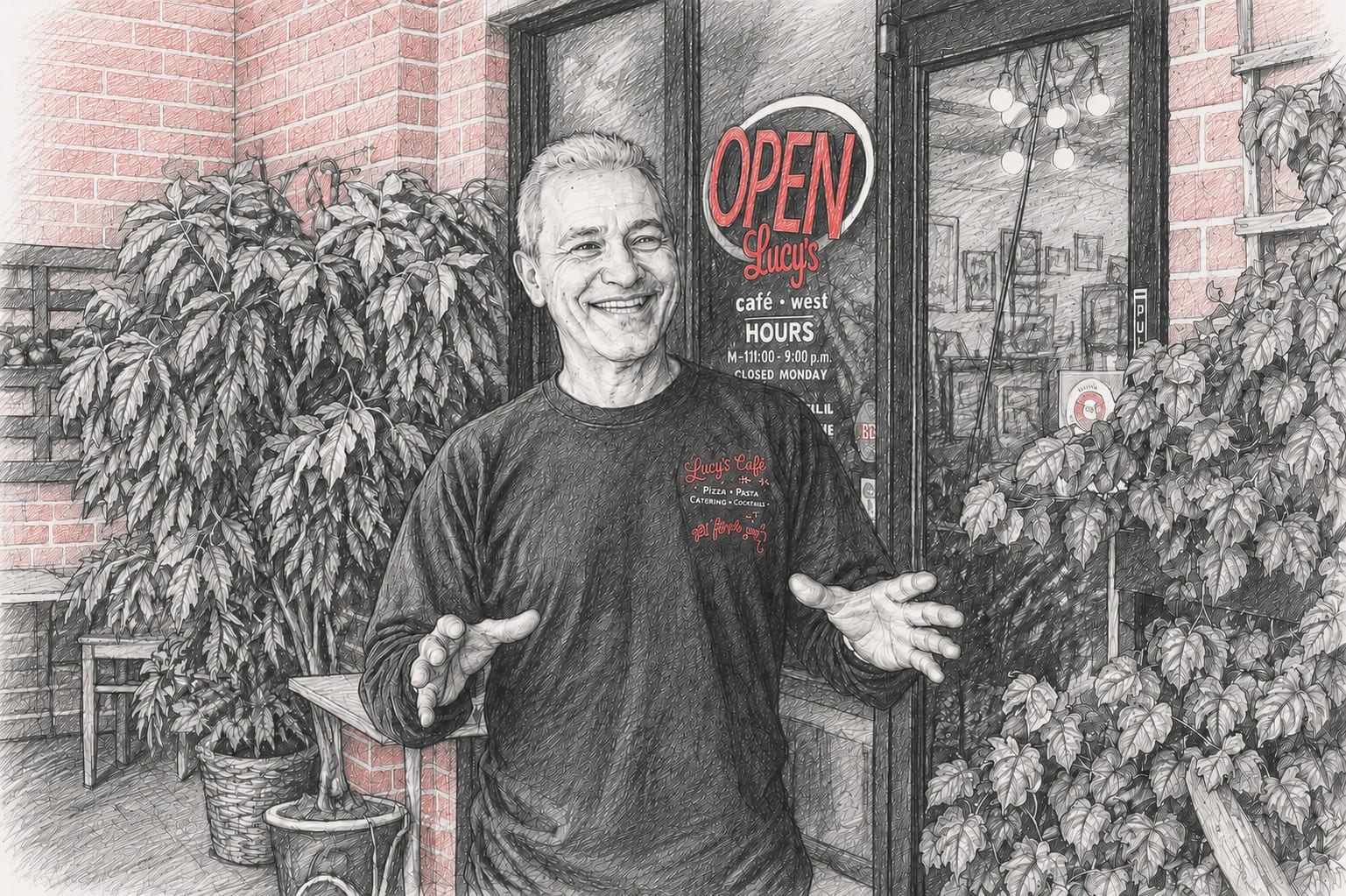
The same month he opened his restaurant, Lepe was diagnosed with colon cancer. He had attributed a year of abdominal pain to an ulcer and had never undergone a colonoscopy. “I hadn’t even heard about a colonoscopy,” he told me. That gap is not unusual in his community. Hispanic adults in the United States are screened for colorectal cancer at 53.4 percent, compared with 70.4 percent for non-Hispanic white adults; Texas has one of the largest disparities in the country.4 His story is that number made personal.
His care was provided entirely in El Paso. Dr. Angel Gonzalez at University Medical Center performed the surgery; approximately 90 percent of his colon was removed. Dr. Sumit Gaur at Texas Tech Physicians of El Paso, the same medical oncologist who now manages my treatment, recommended a year of chemotherapy.
“Even though it was hard, living with a bag and doing the chemo,” Lepe said, “it was a great blessing. I think it’s one of the things that saved my life.” The blood tests came back clean every session. He has been cancer-free without leaving his restaurant, his family, or his city.
“Faith, a good staff, and attitude make up about 50% of the ingredients you need to recover,” he said. “It’s about confidence.”
I asked about the other half. He shrugged and smiled. I will have to discover those ingredients on my own.
Kristin Sizemore and Jennifer Rau, Sisters in the Fight
Kristin Sizemore and Jennifer Rau are sisters who both grew up in El Paso. They also survived breast cancer, Jennifer in 2014 and Kristin in December 2018. They built something in response. Together, they co-founded the Sisters in the Fight Breast Cancer Foundation, which funds cancer screenings for women who otherwise cannot afford them. “It should never be a situation where you have to choose between taking care of your family or taking care of yourself,” Kristin told me.

Breast cancer screening costs in this region are approximately $150 to $180 per person. Financial barriers to screening drive diagnostic delays, and these delays correlate with later-stage diagnosis and worse outcomes. Their annual golf tournaments raise funds to help pay for these screenings for those who would otherwise go without.
“When you’re sick, especially with cancer, you want to be at home,” advised Kristen. “You want to be surrounded by the people you love.”
Added Jennifer: “Having to unplug and stay in a different city, go to Houston to MD Anderson, and not being with family and friends, that’s a burden and stress you don’t need.”
What They Taught Me
What I carry from those conversations is not the data. It is the spirit of what surviving looks like from the other side. Lepe’s shrug about the half you cannot plan for. Kristin and Jennifer turning their own diagnoses into a fundraising engine that screens women who have never met them. Their evidence, specific, lived, and El Paso, is that survival here is possible and that what gets built here matters.
El Paso is home to two universities tackling the problem from different angles. Texas Tech Health El Paso is building the Fox Cancer Center to provide the comprehensive oncology care the city has never had. Across town, the University of Texas at El Paso is advancing the science to understand why cancer strikes this population the way it does. UTEP's College of Health Sciences has assembled a cancer research cohort that targets the exact gaps these three stories identify.5
June is Cancer Survivors Month. I will spend it in pretreatment, preparing my body for the road ahead, the path through treatment, which, for many, is the toughest part of the journey.
The designation I am working toward began with a physician in 1985 who decided that “survivor” mattered enough to write it down. By next June, if all goes as it should, I will be wearing lavender for a different reason. These three pathfinders walked this road before me. Their footprints are still visible, and I intend to follow them.
At least I now know I am not a victim, nor a survivor—at least not yet.
I am a cancer pathfinder.
And that has made all the difference.
Dr. Vierra is a writer with Texas Tech Health El Paso. The views and opinions expressed here are those of the author, writing as a patient and a journalist, and do not represent the official position of Texas Tech Health El Paso. Clinical decisions should be made in consultation with a qualified healthcare provider.
This post is public, so feel free to share it.
How to follow A Journey Here. This Substack is its own section of The University Historian. To get only these cancer‑journey entries by email, click “Subscribe,” then go to your subscription settings (or visit theuniversityhistorian.substack.com/account). Under “Emails enabled for,” leave A Journey Here checked and uncheck the other sections. You can change this at any time.
How to follow the whole archive. If you want both the illness series and the institutional history—entries on UTEP’s past, Texas Tech Health El Paso, and the Fox Cancer Center, along with historiography and method—simply keep all sections checked. You’ll receive every new post from The University Historian in your inbox.
National Cancer Survivors Day Foundation. “Thirty-Ninth Annual National Cancer Survivors Day.” June 7, 2026. https://ncsd.org.
Mullan, Fitzhugh. “Seasons of Survival: Reflections of a Physician with Cancer.” New England Journal of Medicine 313, no. 4 (1985): 270-273. https://doi.org/10.1056/NEJM198507253130421.
Cancer History Project. “Thirty-Five Years of Advocating for Cancer Survivors.” October 26, 2021. https://cancerhistoryproject.com/article/thirty-five-years-of-advocating-for-cancer-survivors/. The National Coalition for Cancer Survivorship rebranded as Cancer Nation in 2025. Definition also in: National Coalition for Cancer Survivorship. “The NCCS Definition of a ‘Cancer Survivor.’” Accessed June 2026. https://canceradvocacy.org/defining-cancer-survivorship/.
Gupta, Samir, et al. “Colorectal Cancer Screening Among Hispanics in the United States.” Cancer Epidemiology, Biomarkers and Prevention 29, no. 9 (2020): 1718-1727. https://doi.org/10.1158/1055-9965.EPI-20-0259.
University of Texas at El Paso, College of Health Sciences. “Cancer Research,” accessed June 23, 2026. https://www.utep.edu/chs/research/cancer-research.html.
Comments
Nothing yet. Say the first thing.
Sign in to join the conversation.