
William Carey, first husband of Mary Boleyn, died on 22 June 1528 of sweating sickness. He was then in his early thirties; young, athletic, and highly favoured by the King.
While researching my book, I was able to recreate William’s last days and suggest where he was buried.
Chronicler Hall noted William Carey’s death, remembering him as ‘of the King’s Privy Chamber, and whom the King highly favoured’. French ambassador Cardinal Jean du Bellay wrote to Constable Montmorency about the sweating sickness, listing all of the men close to the King, who either fell sick or died. ‘Of those whom you knew, only Pointz, Carey and Compton died’, du Bellay wrote. ‘Pointz’ was Francis Poyntz, poet and diplomat (d. 26 June). ‘Compton’ was William Compton, the King’s Groom of the Stool and closest companion (d. 30 June).
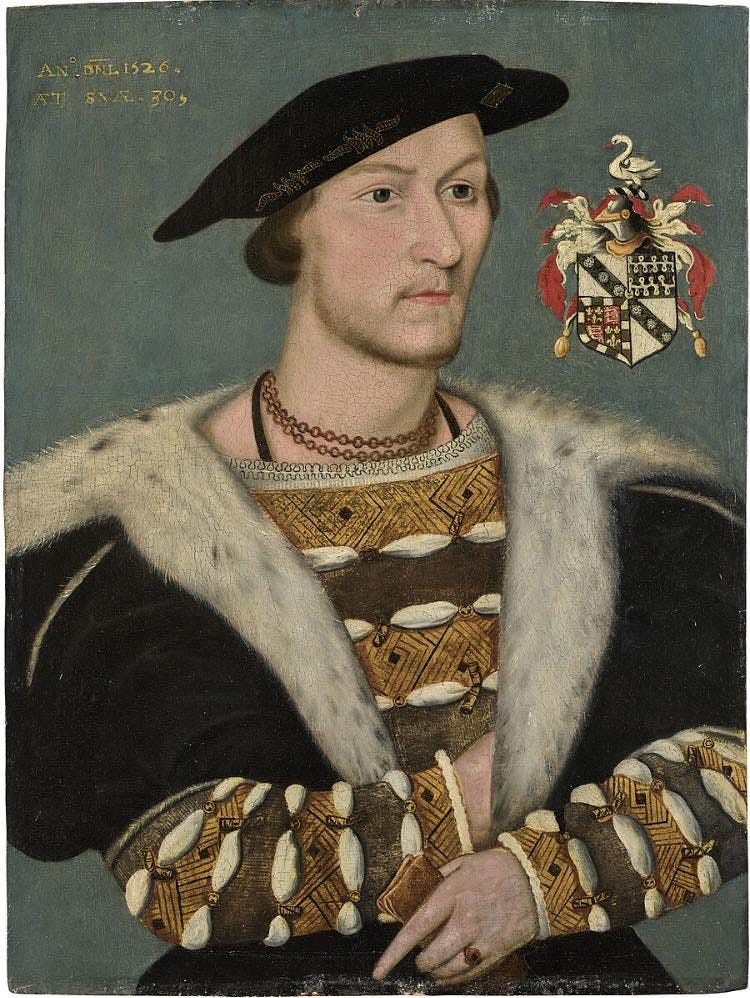
A letter written by Brian Tuke, the treasurer of the royal household, on 23 June 1528, reveals that William Carey spent some time with Mary at Pleshey Castle where he was hunting the deer in the nearby forest. He later joined the King at Hunsdon Manor, where he fell sick and died. Several letters written from Hunsdon confirm that the King and his household stayed at the manor for several days between 21 and 29 June before moving to Tyttenhanger manor.
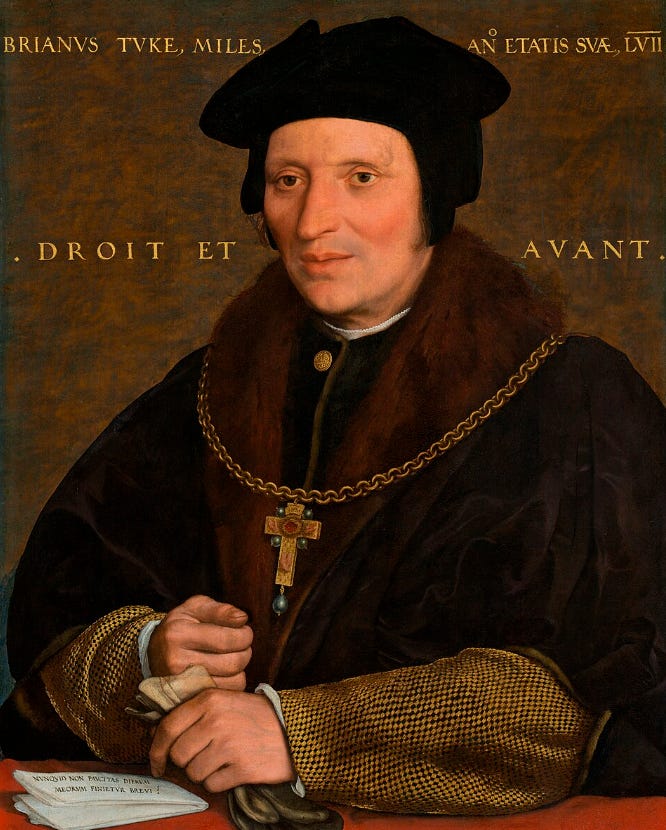
In a letter from Hunsdon dating to 23 June 1528, Thomas Hennege of the Privy Chamber wrote to Cardinal Thomas Wolsey, who was then residing at Hampton Court, about William’s plea ‘to be gracious to his sister, a nun in Wilton Abbey, to be prioress there’. In the same letter, Hennege wrote that ‘this night, as the King went to bed, word came of the death of William Carey’.
William’s burial place was not recorded and remains unknown, but in my biography of his wife, I suggest that he was buried at St Dunstan’s Church, commonly referred to as Hunsdon Church, near Hunsdon manor. This is based on the following evidence. William was among three prominent courtiers from Henry VIII’s immediate circle who died of the sweating sickness in June 1528; the other two were William Compton, Groom of the Stool (d. 30 June) and Francis Poyntz, poet and diplomat (d. 26 June).
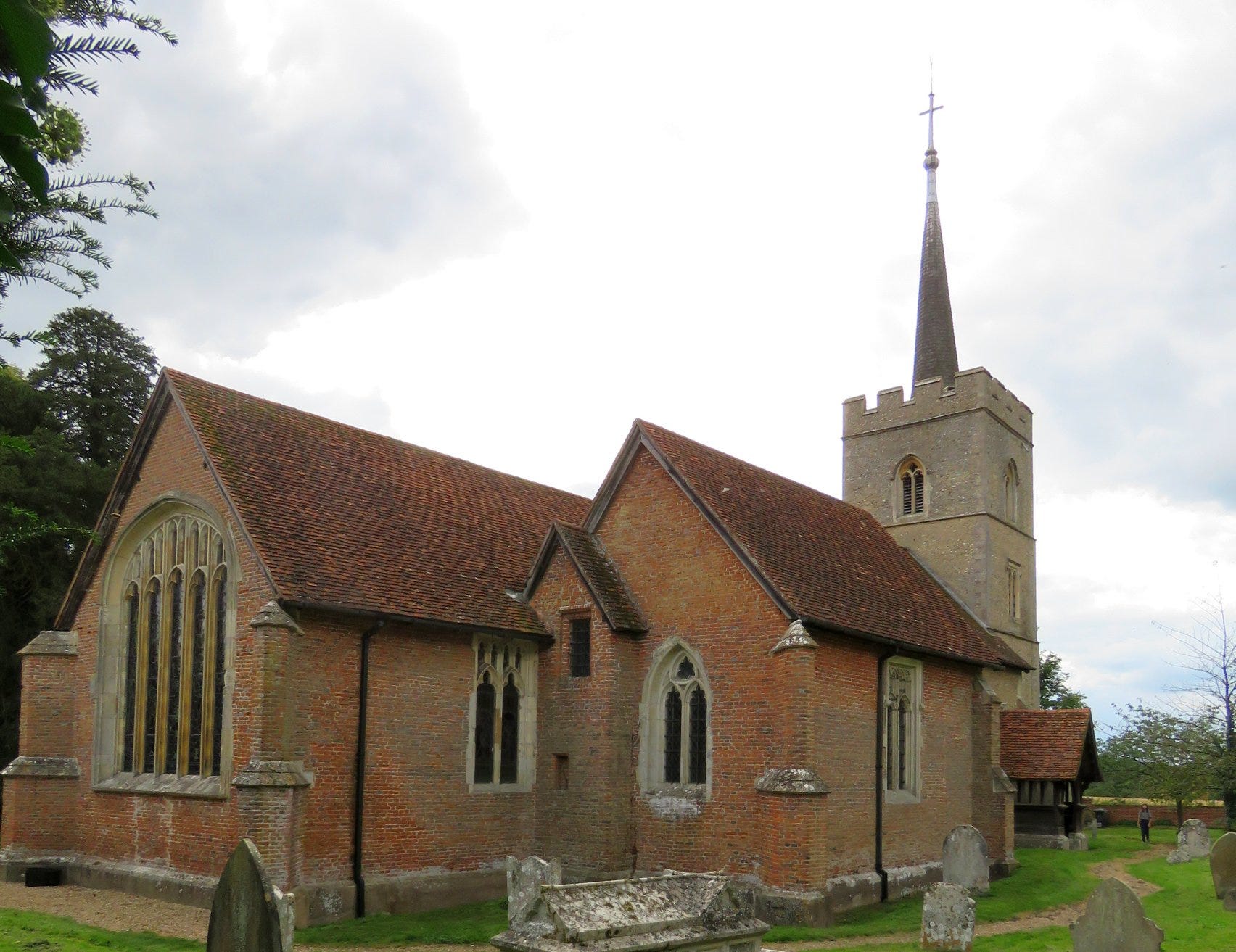
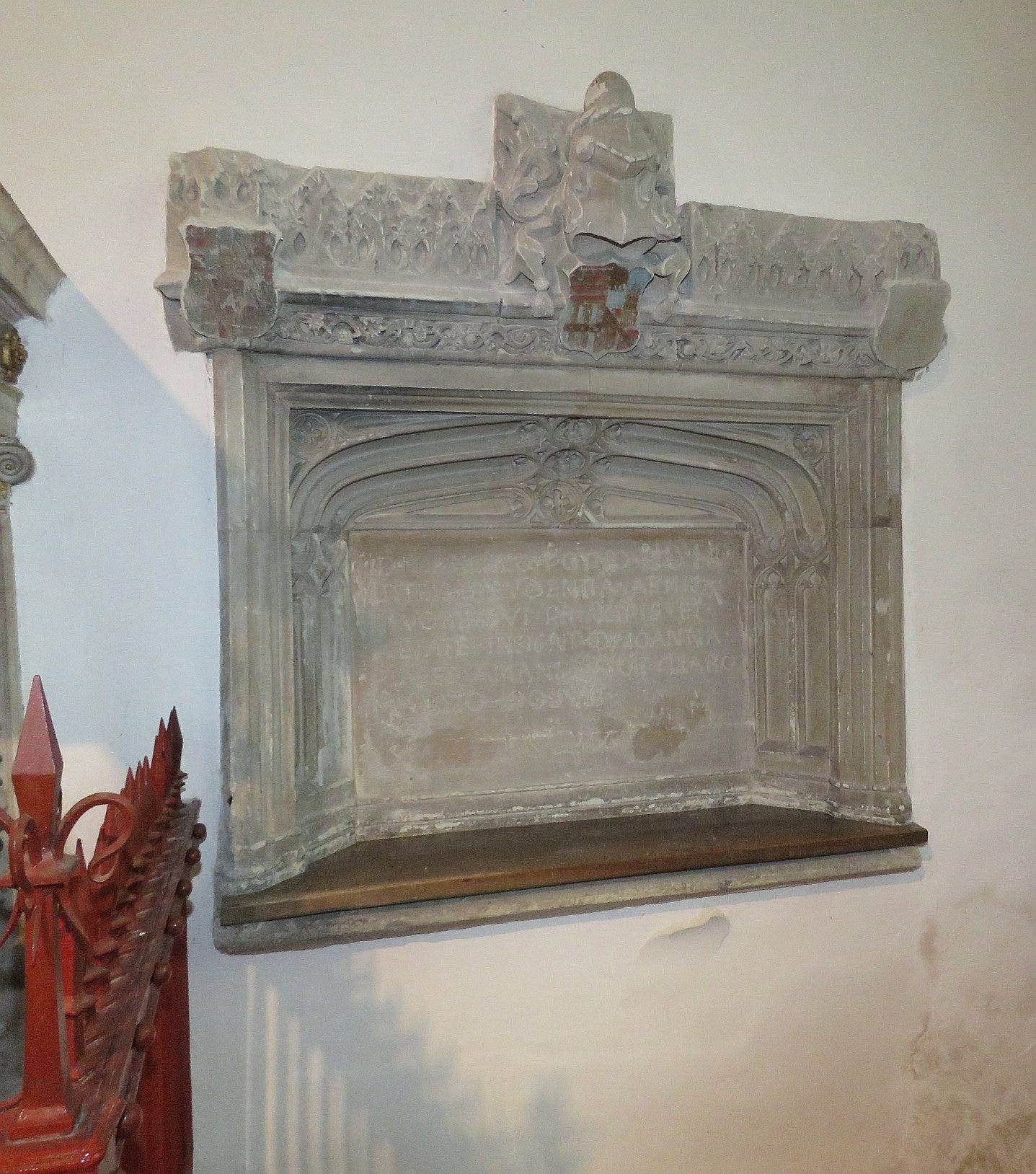
Francis Poyntz, who died at Hunsdon manor, was buried at Hunsdon Church which was the nearest church to the manor. He seems to have had no further connection to Hunsdon and may have died intestate, hence why he was buried there. His widow ordered a memorial slab, commemorating her husband, to be placed within the church.
William Compton, who died of the sweating sickness on 30 June 1528, made his last will in 1523, where he made a specific request about his burial: ‘I will that wheresoever I shall die my body be buried at Compton, where my ancestors lie’. The place of William Compton’s death is unknown, but the request in his last will was honoured.
The fact that Francis Poyntz died at Hunsdon manor and was buried in the nearest church because he died without specifying his wishes for burial lends credibility to my theory that William Carey was also buried within the same church for that same reason. Considering that Henry VIII leased a parcel of Hunsdon manor to William’s brother John in 1544 and that William’s son was created Baron Hunsdon in 1559, it seems likely that William is buried there, especially when we consider that Hunsdon Church became the Carey family’s mausoleum.
The Hunsdon Church is a place of burial of several members of the Carey family albeit only one burial can now be firmly located within the church; that of John Carey, third Baron Hunsdon (Henry Carey’s younger son and thus Mary Boleyn’s grandson) and his wife. An overlooked document, which I discuss in the book, sheds more light on which members of the Carey family were buried within that church. The earliest documented burial is that of William’s brother John, who was buried there on 8 September 1551. The last recorded Carey burial occurred on 13 April 1666 with the interment of Henry Carey, Earl of Dover.
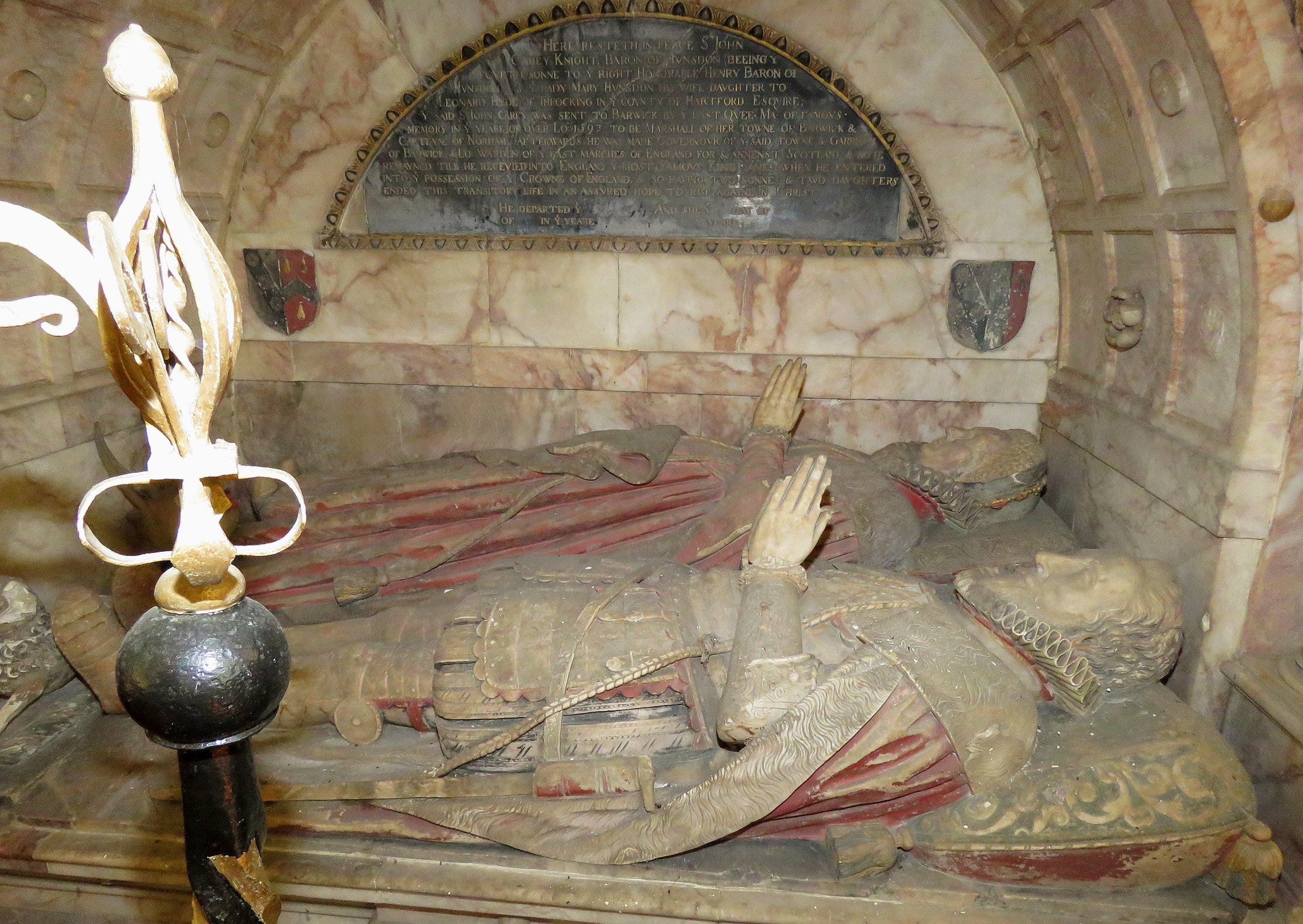
Hunsdon Church clearly held significant importance for the Carey family, as evidenced by the recorded connection through John Carey, Mary Boleyn’s brother-in-law. It is also highly plausible that William Carey was buried there, which might explain why the church held such importance for the family from the outset. In my book I also argue that Elizabeth I gave Henry Carey, William’s son, the title of Baron Hunsdon because his father was buried at Hunsdon Church.
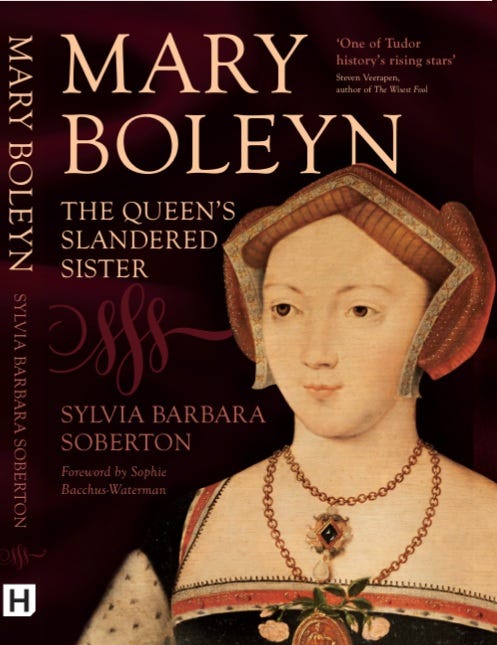
If you would like to learn more about Mary Boleyn, her life and times, my book entitled Mary Boleyn: The Queen’s Slandered Sister, is out now!
No posts
Comments
Nothing yet. Say the first thing.
Sign in to join the conversation.