
“How did you find us?”
The question came from Stella, the passionate chef behind a quiet taverna in the mountains of eastern Crete.
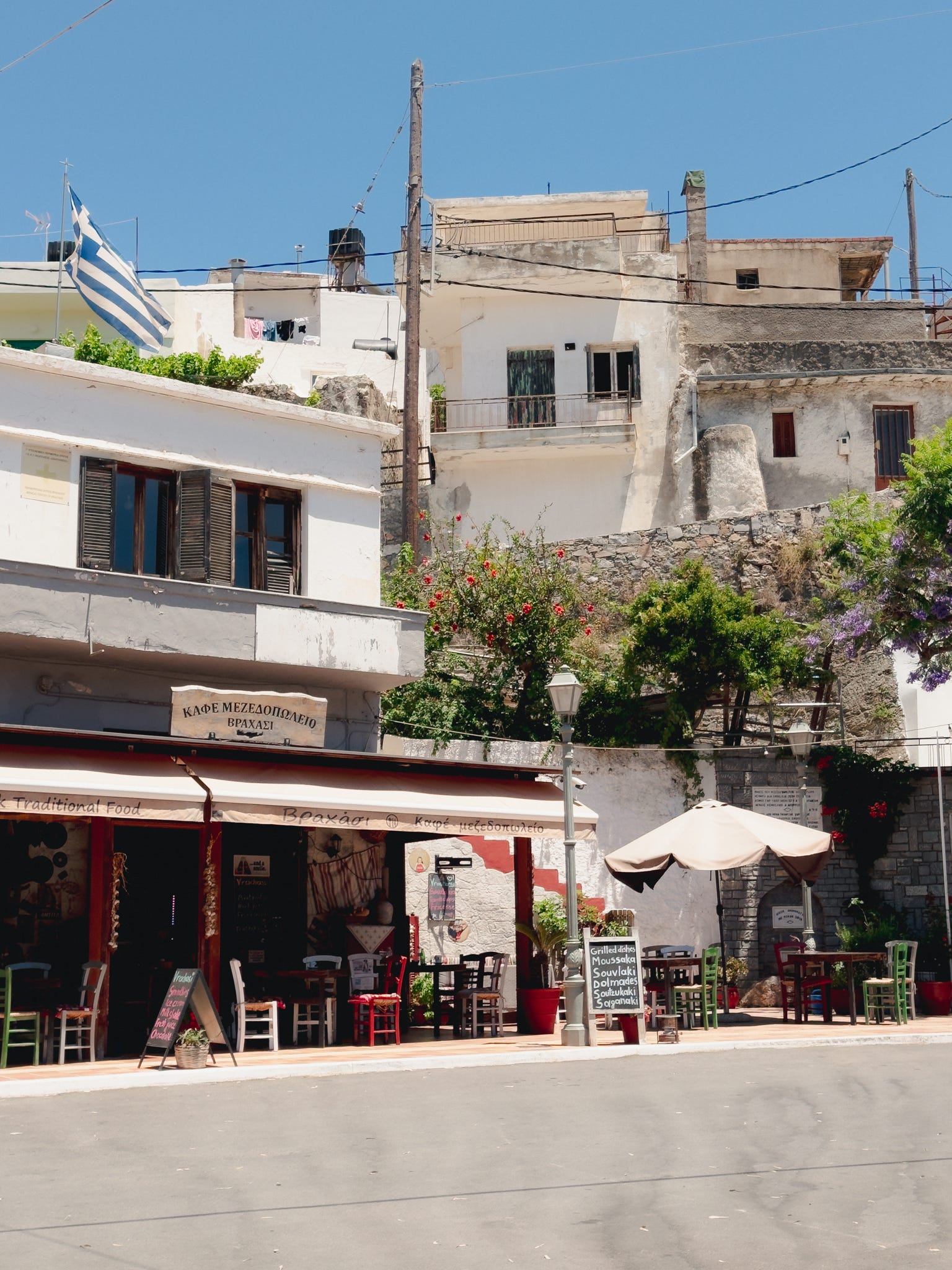
We had just landed in Heraklion that morning after a 4:00 AM wake-up call and were starving. We had only been back from Greece for two weeks, but all we could think about was a Greek salad and tzatziki.
While standing in line waiting to pick up our rental car, I pulled out my Google Map, searched for restaurants that were open along our route to Agios Nikolaos, and found a little taverna about halfway through the hour-long drive.
Sometimes Google Maps takes you on odd roads, and I thought that was what was happening when it had us turn off the main road onto a side street that narrowed into a series of tight mountain switchbacks.
As we climbed higher, I started to wonder if we were going to end up on top of the mountain.
“There has to be a little town up here somewhere…” I said to my husband.
Just as the words came out of my mouth, a cluster of semi-finished stone buildings appeared around the bend.
As I stepped out of the car, I first noticed the scent of fresh mountain air and the cool breeze, a relief after having just left the worst heat wave France had ever experienced, la canicule.
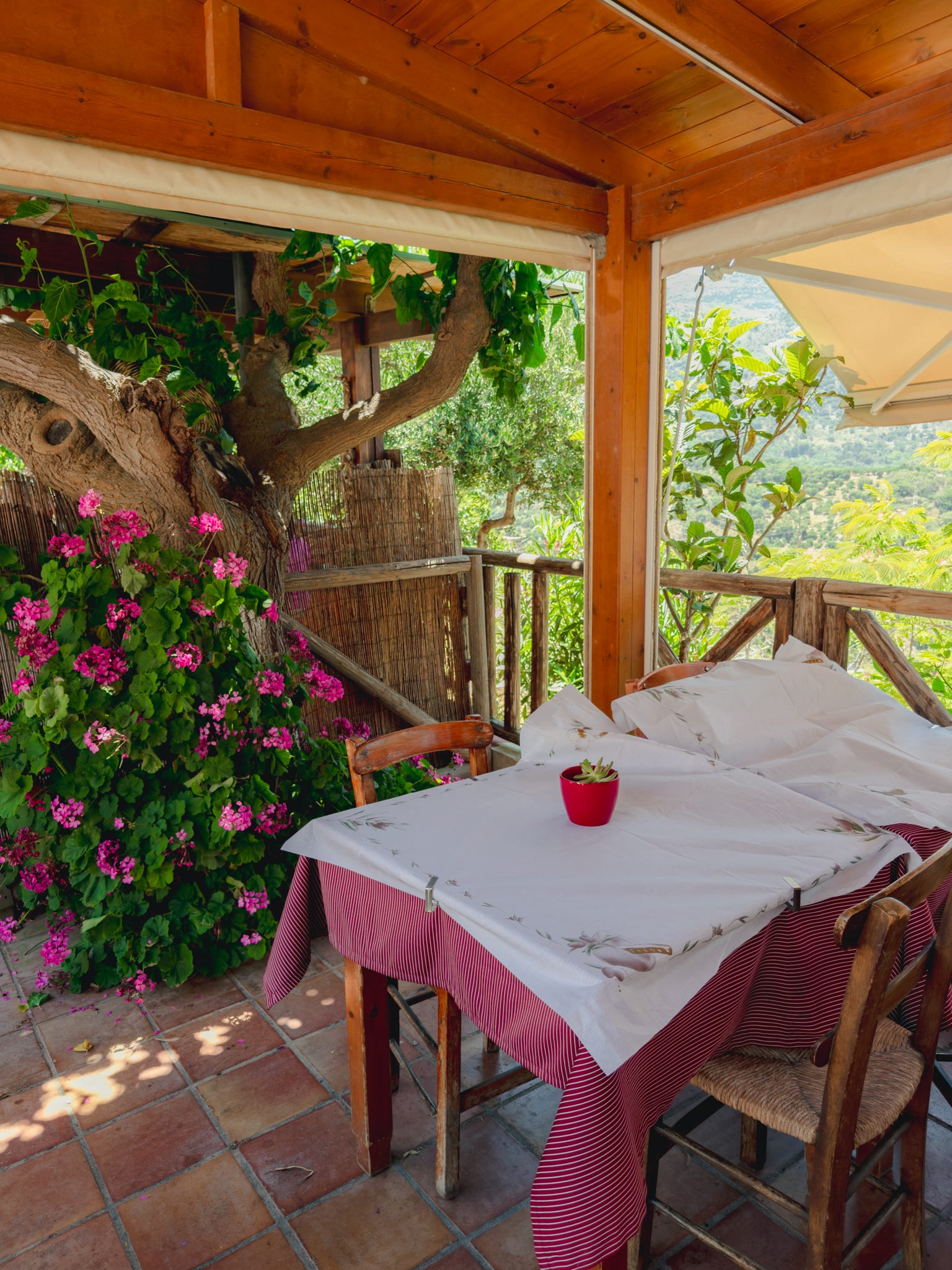
I looked out and noticed the terrace overlooking the valley covered in olive trees. We were higher up than I had realized.
I later learned that Crete has over 30 million olive trees, and when you see an entire mountainside covered in them, it’s easier to believe.
Red-and-white gingham tablecloths covered the tables of the taverna. Cicadas buzzed in the background. Birds chirped in the olive trees in the distance.
A teenage girl walked over.
“Yassas.”
“Yassou,” we replied.
“We’d like lunch.”
She smiled.
“Sit here. This table has the best view.”
We looked around. We were the only foreigners in a seemingly forgotten village that felt wonderfully untouched by mass tourism.
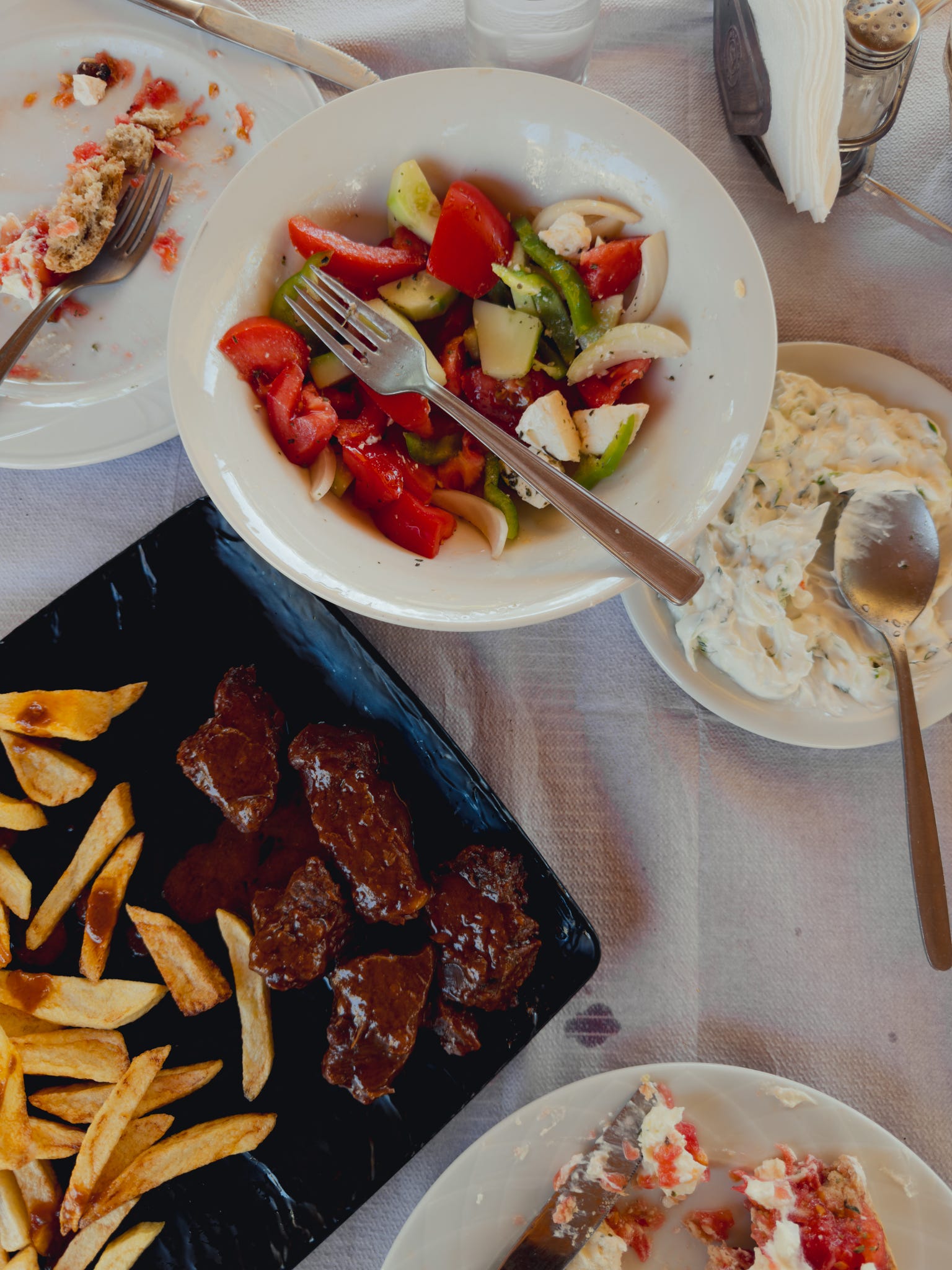
The specials of the day were beef cooked in tomato sauce and rabbit.
We ordered one serving of beef, tzatziki, a Greek salad, and dakos, a local specialty of shredded tomatoes, mizithra cheese, and olive oil atop a toasted barley rusk.
While we waited, the village carried on around us.
A man pulled up on his motorbike, disappeared, then came back to chat with the woman at the taverna next door.
A few men driving old pickup trucks stopped in the middle of the road to catch up with some others hanging out at the restaurant.
Some British tourists and their personal driver arrived later with a guide but wandered over to the taverna next door instead.
Eventually, a young boy, maybe twelve years old, brought out our bread and tzatziki, followed by the rest of our meal.
We realized that portions in Crete are much larger than in Paris, and our eyes were much bigger than our stomachs in that moment. We happily struggled to eat everything on the table.
The beef was unbelievably tender, and the tzatziki was thick and garlicky.
Whether or not it was our hunger speaking for us, we both agreed that it was a 10/10 meal.
When we went inside to pay, we met Stella, the mother of the kids and the chef behind our memorable meal.
“How was the food?” she asked. “If you didn’t like it, I’ll fire the chef!”
We laughed.
She immediately launched into a story about taking two of her five children, who I assumed were the kids who had been serving us, to Athens for the first time.
When they went to the Acropolis, her son looked up and said, “It’s just a pile of stones.”
“A pile of stones?!” Stella yelled, almost as loudly as I imagined she had in the moment.
“I cancelled the rest of our tour! He doesn’t deserve to see the Acropolis. I went to his teacher after the trip and asked, ‘What are you teaching him? The most important monument in Greece is not a pile of stones!’”
I liked Stella.
She invited us into her kitchen.
The decoration was simple, with a few old paintings and a traditional carpet hanging on the wall.
The kitchen was well-used and looked like it had cooked thousands of meals.
“My mother taught me to cook,” she said. “This is what I love doing.”
She picked up a tray of sausage-shaped beef patties.
“These are for tomorrow.”
She explained how she’d brown them today, refrigerate them overnight, and then quickly finish them in a tomato-and-wine sauce the next day.
“Everything is fresh,” she said.
“I only make five or ten portions of each dish because I don’t want leftovers.”
I told her Greek food felt so simple.
“Yes,” she said.
“Everything is simple. It’s from the heart.”
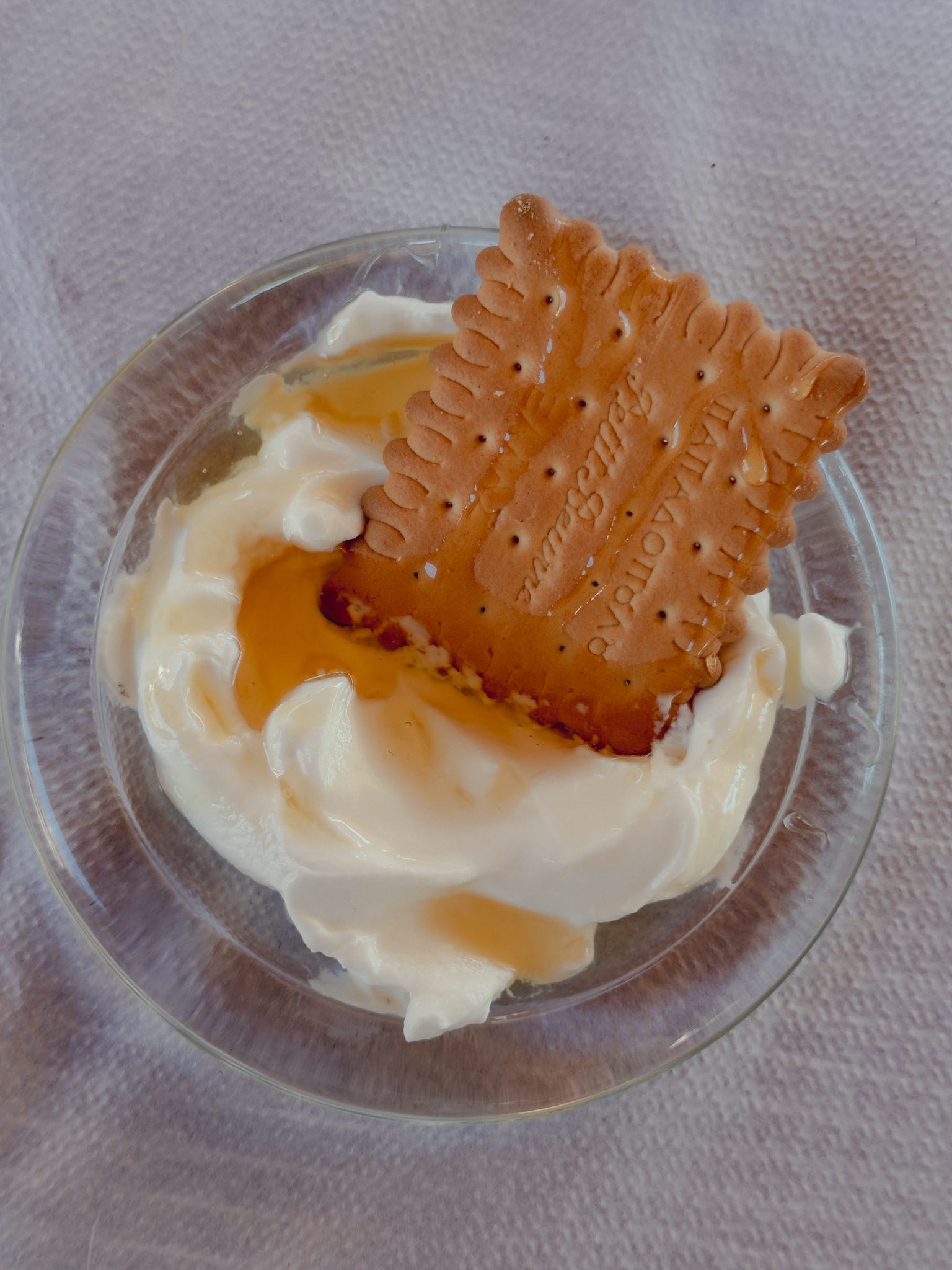
When we paid, I realized we hadn’t been charged for our coffees.
“On the house,” Stella said with a smile.
“But you already gave us dessert.”
“No,” she laughed. “The coffee is on the house too.”
Then she said something that reminded me why I love to travel.
“Meeting people like you fills my soul with joy. Cooking for people who truly love food is why I do this.”
My short exchange with Stella sparked an inkling of joy, a feeling that I’ve been searching for in my travels for a while.
Late last year, after a whirlwind two-week trip to ten or more Christmas markets throughout Germany and Austria, checking each one off like a task, I was feeling a bit down and questioning what I was traveling for.
I didn’t feel like there was any meaning to my travels. I was simply visiting places because that’s where everyone goes and that’s what everyone will want to read about on my blog. Salzburg? Check. Vienna? Check.
What is the point of traveling if you’re going for the photo? To check off a destination, a restaurant, or a museum like it’s another thing on your to-do list?
What happened to traveling for discovery? To experiencing a place through your own eyes instead of already having discovered every single place on social media beforehand? To wandering off the beaten path instead of only visiting viral places?
What happened to walking back to your hotel from the Colosseum in Rome, taking the “back roads,” and popping into a random trattoria you find along the way?
To taking it slow and chatting with the person seated next to you, like I did in Corfu with an American woman from San Francisco who had moved to Corfu without her husband, to whom she was still married, because she was going with or without him! Because you can do whatever the hell you want when you are 75 years old.
For me, the most meaningful moments in travel are the exchanges I have with the people I meet. I look back on my years of travel, the dozens of countries I’ve been to, and the best memories are moments I shared with people on the road.
Like a late-night exchange with a woman named Luna at a Bedouin camp in Jordan, talking about our travels and taking in the quiet moment together.
Like in Bali, when my husband and I were lying by the pool and heard a polite, but slightly desperate voice calling from a nearby balcony, “Hello, hello!” A man and his wife had stepped onto the tiny balcony outside their hotel room and accidentally locked themselves out. We went to find someone who could let them back in, and we ended up hanging out with them for the rest of our trip and are still in contact with them seven years later.
It’s the German man, Jan, who said hello to us on a beach in Sardinia, and we spent the evening at dinner sharing our life stories. It’s the old Italian couple who invited us to dinner in their apartment, speaking no English whatsoever. We don’t speak Italian either, but we had a wonderful home-cooked meal with them and their daughter, understanding one another through gestures and facial expressions.
What am I traveling for, then? For lucky encounters, like my lunch at Stella’s restaurant in a small mountain village in Crete.
Here’s to traveling for the journey and for the people we may meet along the way.
Stella’s Restaurant: Kivernitis Taverna
x, Jenoa
No posts
Comments
Nothing yet. Say the first thing.
Sign in to join the conversation.