
The Florida most visitors know begins at an airport, passes through a rental-car lot and ends somewhere between a theme park gate and a hotel pool. Orlando is fun. Miami deserves its reputation. The beach towns draw crowds for a reason.
Spend enough time driving around the state, though, and you start finding places that don’t fit that version of Florida. Spanish fortifications face the Atlantic in St. Augustine. Tarpon Springs has Greek bakeries, sponge boats and a waterfront shaped by generations of Greek families. Apalachicola still carries the scars of an oyster industry that once supported much of the town. In winter, manatees crowd into clear spring water. Head into northeast Florida and the Victorian houses and live oaks can make parts of it feel more like Georgia.
Some of these towns have been cleaned up for tourism. Others haven’t changed nearly as much. That’s the Florida I keep finding more interesting: the places that weren’t built around the idea that you were coming.
There’s a point on the Overseas Highway when the mainland starts to feel a lot farther away than it actually is. Water opens up on both sides of the road, the bridges stretch out and every few miles another island comes into view. By the time you reach Key West, Miami feels like somewhere you left behind hours ago.
Key West was a busy place long before Duval Street became the center of attention. Its location beside the Florida Straits made it an important port in the 1800s, with money coming from wrecking, shipping, fishing and cigar making. Bahamian settlers and Cuban immigrants left a lasting mark on the city, and you can still see it in the wooden houses and narrow streets of Old Town.
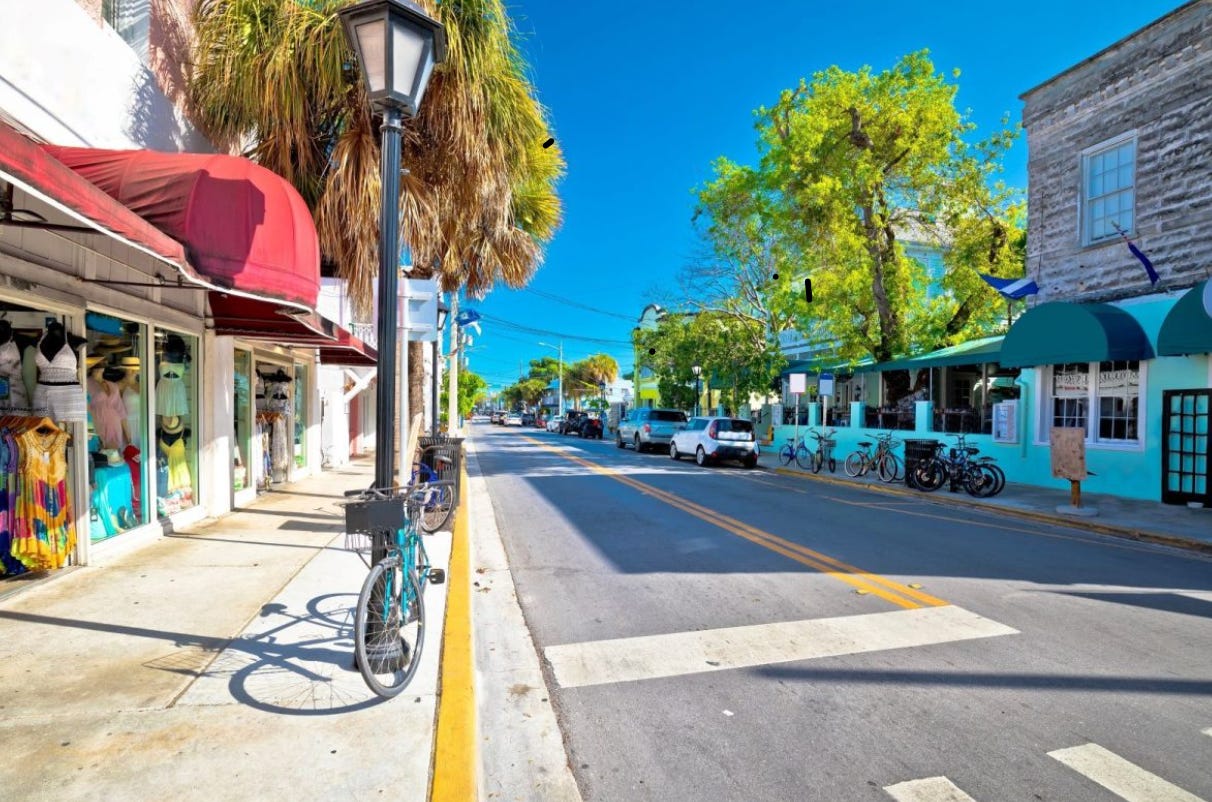
Duval Street is worth walking once, but I wouldn’t spend the whole day there. Wander through the side streets instead. Look at the porches, tropical yards and old wooden homes. Stop at Hemingway’s house if you’re interested in his years on the island. After that, don’t worry too much about having a plan. Key West is better when you give yourself time to wander.
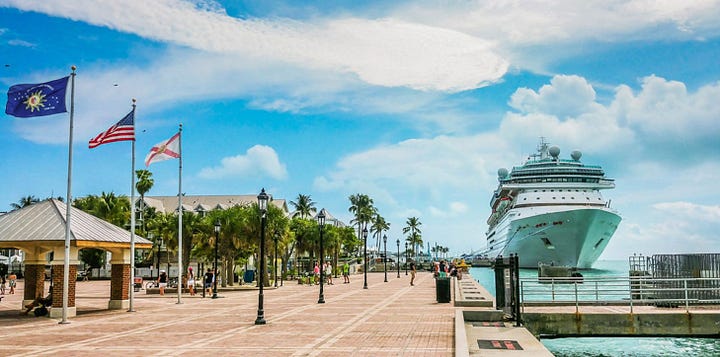
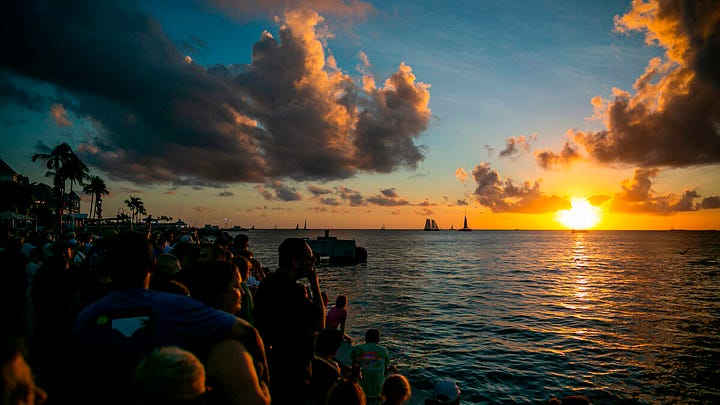
Later in the day, make your way to Mallory Square. It will probably be crowded. Street performers set up, boats pass through the harbor and everyone starts looking west as sunset gets closer. You can find quieter places to watch the sun go down, but seeing Mallory Square at least once is part of the experience.
I’d stay at least two nights if you’re driving down. Three is better. Anything less and too much of the trip gets eaten up by the drive there and the thought of having to turn around and leave. Winter and early spring usually bring the best weather, along with plenty of other people. Stay somewhere within walking distance of Old Town if you can. Do Mallory Square one evening, then find a quieter spot for sunset the next night.
Key West isn’t cheap, and there are parts of it that lean hard into tourism. You’ll pass bars and shops that seem built almost entirely for cruise passengers. Keep walking. A few blocks away, the crowds thin out, the streets get quieter and Key West starts feeling like an island again.
Florida doesn’t feel especially old until you get to St. Augustine. The Spanish founded the settlement in 1565, decades before Jamestown or Plymouth. Construction on Castillo de San Marcos began more than a century later, in 1672. The fort was built from coquina, a local stone made from compressed shells that proved remarkably good at absorbing cannon fire.
Start there in the morning. The fort sits right on Matanzas Bay, and its location makes it easy to understand why the Spanish wanted it here. St. Augustine protected their foothold in Florida and the shipping routes running along the coast.
The historic district begins just behind the fort. St. George Street can get packed by midday, but walk a few blocks away and it changes quickly. You’ll find old houses, church towers, hidden courtyards and narrow streets that feel much farther removed from the crowds.
St. Augustine also has another chapter that looks nothing like its Spanish past. In the late 1800s, Henry Flagler brought his railroad south and built lavish hotels for wealthy Northerners coming to Florida. The Ponce de León Hotel is now Flagler College. The former Alcazar Hotel houses the Lightner Museum. You can walk between centuries here in a matter of minutes, from a 17th-century Spanish fort to the grand hotels of Gilded Age Florida.
Stay overnight if you can. St. Augustine is easiest to write off as touristy in the middle of the day, when the streets are at their busiest. Morning and evening are better. Tour buses disappear, people settle in for dinner and the historic district becomes much easier to wander.
Spring and fall are also far more comfortable for walking than the middle of summer.
And if you’re driving, don’t make the mistake of leaving around 4 p.m. with everyone else.
You can usually spot the serious shell collectors on Sanibel by the way they walk. Heads down, eyes on the sand, stopping every few feet to inspect something near the water. Locals even have a name for it: the Sanibel stoop.
Sanibel’s position in the Gulf helps push an incredible number of shells onto its beaches, and collecting them has been part of life here for generations. Go to Bowman’s Beach early enough and you’ll see people already out with coffee, buckets and mesh bags, looking through whatever washed ashore overnight.
But Sanibel isn’t just about shells. Much of what makes the island different from other parts of Florida comes from the land that was never developed.
The wildlife refuge established here in 1945 was later named for Jay Norwood “Ding” Darling, a political cartoonist and conservationist who played an important role in protecting the area. When the Sanibel Causeway opened in 1963, suddenly getting to the island was much easier. More people came, development followed and residents began arguing over how much growth Sanibel could handle without losing what made it special.
Those fights mattered. A large part of the island remains protected today.
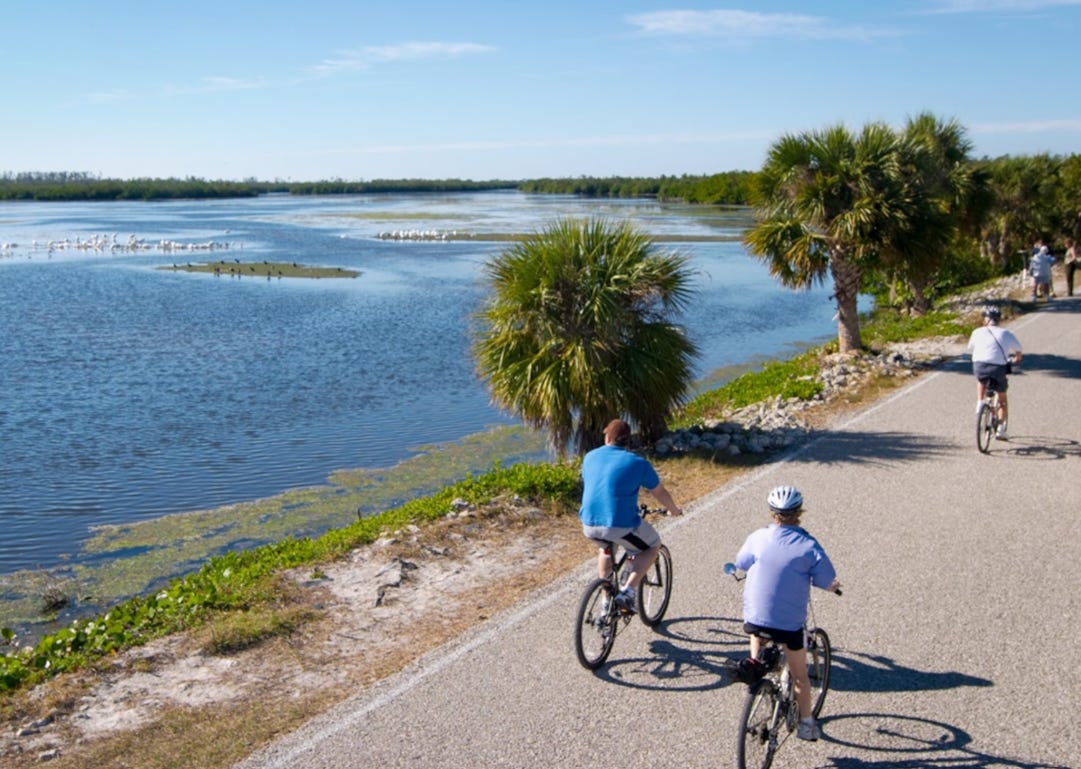
Rent a bike and spend a few hours at J.N. “Ding” Darling National Wildlife Refuge. Stop at the Bailey-Matthews National Shell Museum if you want to figure out what you picked up on the beach that morning.
After that, I wouldn’t plan much.
Have lunch. Ride around for a while. Go back to the beach. Walk along the water and see what else washed in.
That’s plenty for a day on Sanibel.

The Timeless Traveler is reader-supported. You can still explore a collection of free articles, while paid memberships support more detailed travel writing and include personal help when you’re ready to plan a trip.
Paid members receive:
Member-only newsletters and full archive access
Private chat and more detailed destination recommendations
Hotel booking support and help planning one full trip each year
A paid membership costs about 27 cents a day and helps support the writing, research, and travel planning behind The Timeless Traveler.
Comments
Nothing yet. Say the first thing.
Sign in to join the conversation.