
Bulgaria-born author and poet Kapka Kassabova takes us into a corner of the Balkans to some of the last true pastoralists of Europe. I first heard Kapka in an hour of conversation with Timbuktu friend Sophy Roberts here, and her attention to life, both physical and emotional, shined brighter than most. A magnifier of what human observation can glean when well tuned. With her graceful permission we have the prologue and a fragment of her first chapter from her book Anima below. If interested in more, her ‘Balkan quartet’ includes Anima (2024), Elixir (2023), To the Lake (2020) and Border (2017). She also has a new book out this year, Borrowed Land: A Highland Story (2026).
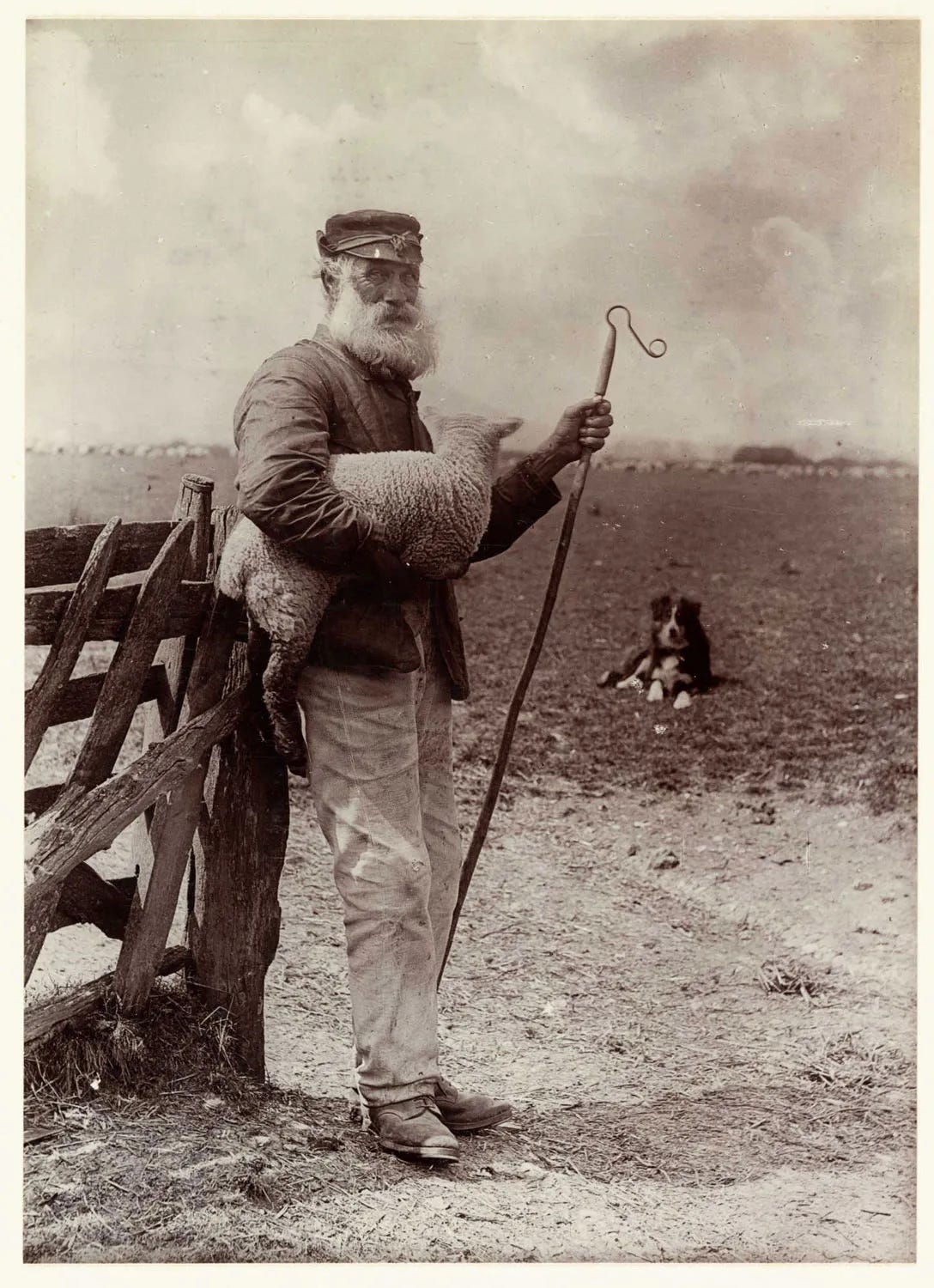
Black Water, summer
From the edge of the dwarf-pine grove, Black Water is laid out like a drawing. The river’s bone-white bed hasn’t yet dried up. The two waterfalls are lively, then the water thins when it hits the floor of our valley. In late summer, it goes completely underground and you hear it but can’t see it. That’s why it’s called Black Water, the old shepherds said. The old shepherds are gone and what’s left of them are the names they gave to every spring and creek. Little Horseback, Orelek Lakes, Horse Plaza, Borovan, Zagaza, Etip - all of them named after vanished animals, humans, plants and events remembered by the Mountain.
Black Water is a river that begins at the glacial lakes below Thunder Peak and passes through our steepish marble valley. The river makes a perfect vulva-shaped loop out of its own bed, then continues as a single stream down the terraces of the mountain until it joins the river known since forever as Strymon, Strymonas or Struma. The god of the river Strymon was born of Tethys and Oceanus, and on coins his hair is crazy like a tangle of snakes or a web of tributaries.And up here, we literally live inside the head of the mountain gods.
When the sun declines over the other mountain to the west - a mountain with a different character and shape from ours - then our little valley is plunged into a shadow so cold, you reach for a log to put in the stove. If you haven’t gathered enough dry wood and it rains, you are in trouble. But you are in trouble no matter what.
After some weeks here, I can’t tell the inside from the outside. I am wrestling with a force that feels daimonic. Whether it first appeared inside me or outside of me, I don’t know, but now it is everywhere.
I can’t see the other hut from here, only their smoke. They are not bothering me, they’re just sitting there drinking. Again. The only sober one is the child.
I count the dogs by our hut, all there. It’s a habit now, to check who’s here and who’s not: Topi, Gashta the pants mother and daughter, Kasho, Kito, Balkán, Redhead. Only Muna the Monkey can i be seen because she is under the bed, digging a hole in the earth.
The dogs are my only true friends in this valley of quick sunsets and rock stacks shaped like things older than anything the mind can grasp, this valley where heaven turns to hell as quickly as breath turns to wind. I sit on a flat stone and battle with anger, not for the firs time. How quickly everything comes and goes. The mountain is vast. You are small and so are your animals who are not yours, you are just their caretaker and they - yours. Sásho said it: “You live if the animals live, and you die if they die. In the lower world you fool yourself that you’re top of the heap, but here it’s fifty-fifty in your favour. Or less.’
Just a few weeks ago, I couldn’t wait to come here. The high pastures are where you come to be free and contemplate every flower, I was told, like on some yoga retreat. But only a few people actually spend the whole summer here - the shepherds.
The glacier above is in the shape of an angel with its wings spread over Black Water. We look at it every day and wonder if it’s shrink-ing. Above it is the sphinx of Thunder Peak, a round-headed hammer at 2,914 metres, poised to smite us without notice. Everything here happens without notice, and this landslide of the mind happens every second day like clockwork. It’s psycho-geological. The stones slip under your feet. The riverbank slips and the mare slipped into the gorge with Vasko the drunk cowherd.
“Life here is a game of roulette,” Ta said to Sásho, ‘I can’t take it anymore.’ “Russian roulette,” he said. “It’s not for you. I try my best but it’s the nature of it.’
The nature of it is, they are drinking again. I understand them - it’s a way out. Any day now, Kámen will come up with provisions and then I’ll leave. I don’t know what day of the week it is. We keep our phones turned off to save battery. Night closes in. I stumble down the scree to our empty hut where the fire has gone out and my pot with the last vegetables is half-cooked. I will rekindle it and wait.
I don’t like being a woman who waits. But this is what you do here: you wait and endure.
The dogs will come and put their heads on my lap, one by one:
Muna the Monkey, Topi, Redhead, Gashta the pants mother and daughter, the two toughies Kito and Kasho, even Balkán who has never put his head anywhere near me.
I stop to look at the dead ram. The eyes were pecked by crows within an hour of him dying in a lethal headbutt with another ram.It’s mating season, ‘a madhouse’ the shepherds say, a favourite word.
‘Fighting to the death for love,’ Sásho said. ‘Nothing we can do.’ The empty sockets confirm it: nothing we can do.
Entering the circle

This story begins with a picture. A man stands inside a circle of goats. Their black-and-white coats touch the ground. They have horns like sabres and hermit faces. He does not look at the camera but at the goats. Consumed, I thought, he is consumed by his animals. Immediately, I knew that a way of life that stretched back to some unknown time was contained in this moment. The picture began to move before my eyes. I saw a fanning out of human and animal flocks across mountains and river flats, like black-and-white rugs being aired in the wind. And I felt an urge to follow them.
Outside the frame was the whole of the Pirin Mountains. I’d spent several seasons along the Mesta River that defines eastern Pirin. That became Elixir. It was an old mountaineer from Mesta who gave me the album with this moving picture and by doing this, he opened a new gateway - through the centre of the mountains to their western side. That side was unknown to me. At home in Scotland, I’d open the album of Pirin and turn the pages of its seasons: granite peaks, millennial pines, edelweiss like cosmic velvet, golden eagles, lone people in remote villages and - the man with the long-coated goats.
This is what I found out: his name was Kámen, and he and his brother Achilles were experts in a legendary breed of dog called Karakachan. The Kará-kachán is an ancient dog, one of the few remaining ones. I’d come across them in earlier visits with mountain shepherds. Their eyes were human. They walked with the loose gait of wolves and the puppies were like bear cubs, with expressions so knowing they stopped you in your tracks and made you stare as if into the eyes of an old friend. They were aloof and conscious of it: we don’t need you, you need us and here we are because love is different from need. Superior, in fact.
These dogs had followed the pastoral trail across mountains and centuries. No - they had made it. Dogs, humans, horses and grazing animals, together. Any paths that are there on the map, or off the map are there thanks to these dogs.
Just thirty years ago, Karakachan dogs were in danger of disappearing. To think that these dogs that were more than dogs and at the same time the epitome of dog, would be extinct by now, had it not been for these two brothers was unthinkable. The reason why these dogs were disappearing was because the pastoral ways were disappearing. They still are, thirty years on.
Moving pastoralism emerged in Central Asia, the Balkans and the Mediterranean several thousand years ago. It began with the domestication of sheep and goats, and it was in its European heartland that nomadic shepherding lasted the longest - until the middle of the twentieth century. Even the word nomad hints that wandering and grazing go together: the Greek nomas means wandering shepherd’ or ‘wandering in search of pasture.
There were four cataclysms in the last 100 years that led to the extinguishment of the nomad hearth. These convulsions affected first the nomads and eventually, everyone in the pastoral world. With them came the end or near-end of breeds of animals, humans and ways of being.
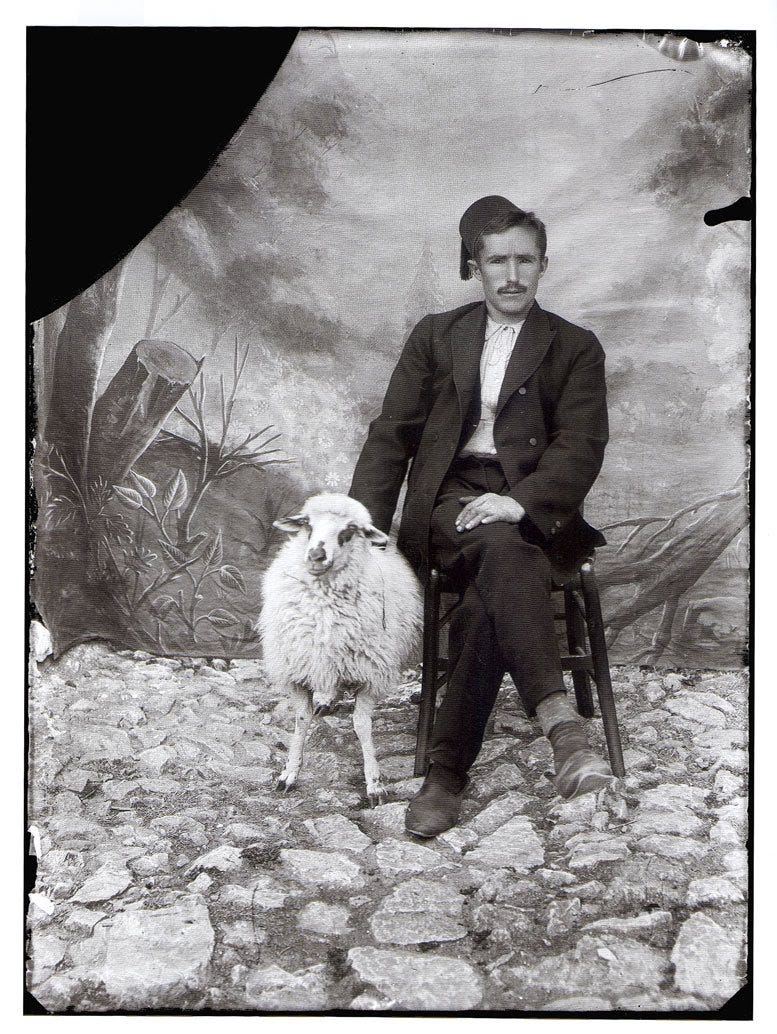
The first was the drawing of new national borders between Greece, Bulgaria and Turkey in the wake of the First World War. This made the movement of caravans exorbitant and dangerous.
The second was the complete closure of these same borders after the Second World War when the Cold War froze relations and the Iron Curtain put an end to all movement of animals, people and people with animals from the Aegean and Thracian lowlands of the Balkans to their mountainous interior. The old transhumance trail was severed but nomads endured in each country for a bit longer. The last nomads were the Karakachans.
The third cataclysm came in 1957: collectivization. It meant the wholesale theft and sometimes the slaughter of animals belonging to transhumant shepherds and to all livestock owners in Bulgaria. That was almost everyone outside the cities, and the cities were still small in an economy driven by the very thing that the communist state most coveted - large-scale sheep breeding and agriculture. The Karakachans had more animals than most. It’s all they had and they lost it.
The fourth cataclysm came forty years later: privatization. Communism collapsed and the state cooperatives politically engineered at the cost of so much human and animal suffering were expediently dismantled. In a free-for-all, animals were slaughtered en masse or sold and shipped abroad, and vast infrastructures were left to decay. With that came the quick decline of the guardian dog.
In the late 1990s, a group of penniless animal lovers took out a loan and moved into the crumbling village of Orelek in western Pirin. The mission was to establish a haven for endangered breeds of dogs, sheep and horses. Over the centuries, those breeds were preserved by the Karakachans with religious devotion. It all comes back to them.
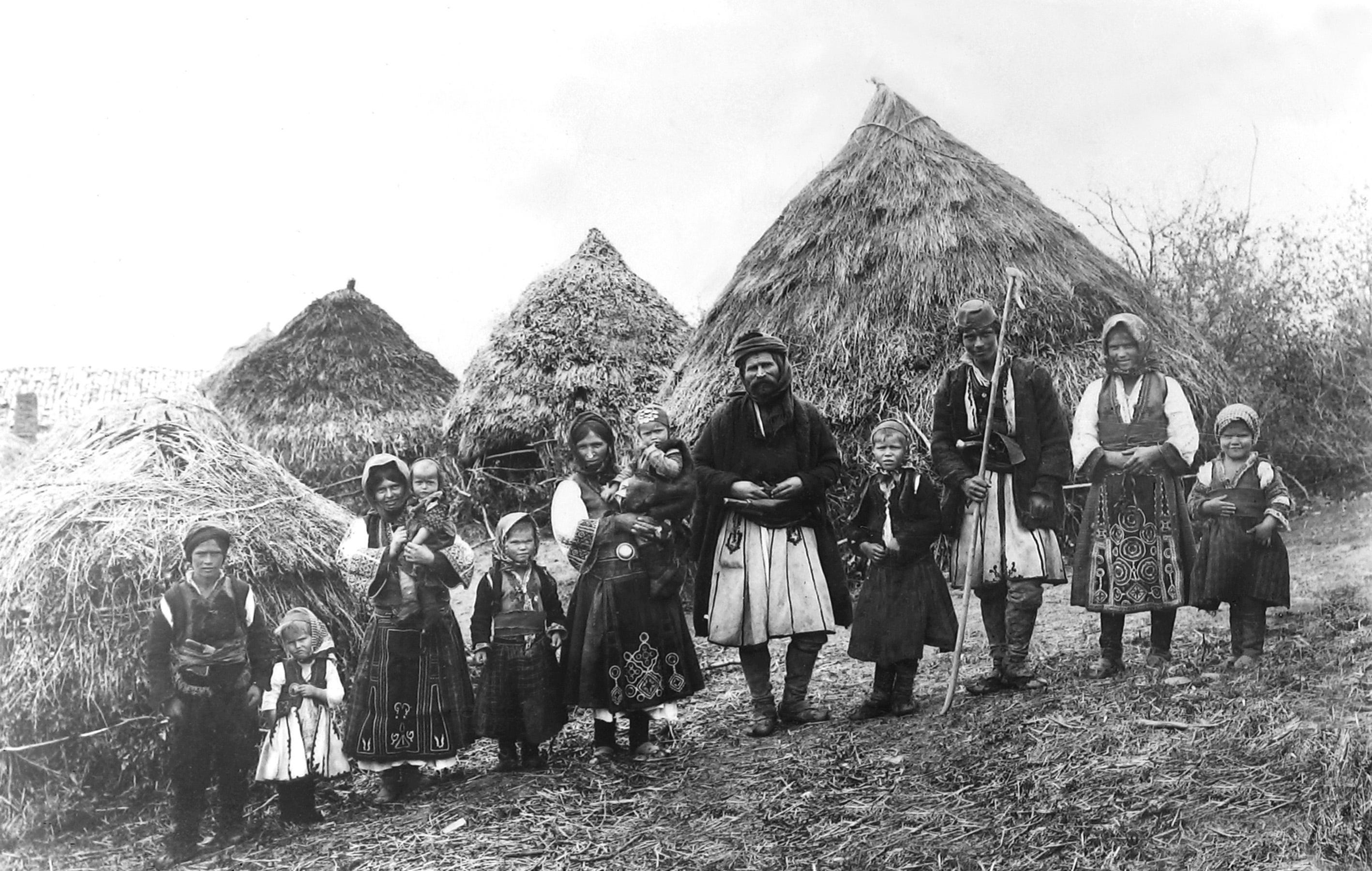
The Balkan Karakachans are one of the oldest nomadic peoples to have entered modernity with their animals. They are Greek speakers of mysterious origin, probably descended from pre-historic Thracian-Illyrian pastoralists Romanised and Hellenised over time. It is impossible to know the homeland of the Karakachans. They came from several different places but in recent centuries it has been, symbolically at least, the Pindus Mountain. Though most of them never set foot there because they were scattered over so many other mountains across the southern Balkans. It’s the nature of the nomad.
Nobody knows for sure why the Karakachans are called this, but kara-kachan means ‘black fugitive’ in Turkish. True, they wore clothes spun from the wool of their black sheep, but it was the way they were seen by others too: quick-moving wanderers who could cross any terrain with their ancient-looking animals often at night, without leaving a trace. The Greek is Sarakatsani, which is simply a Hellenised form of Karakachani, but some fancy that it might derive from their mooted homeland of Sirako in the Pindus and Sirako means ‘sad’ in Albanian, ‘poor’ in Romanian and ‘orphan’ in Bulgarian - yet another tale of how nomads were perceived by the settled ones. But the settled ones were not always settled.
Pastoralists have criss-crossed the Balkans for thousands of years and with time, the difference between nomads and settled pastoralists became more marked. Although everyone with grazing animals walked an established trail, there was a difference in scale and social setup. The nomads travelled as communities and covered hundreds of kilometres between winter and summer pastures and lived in seasonal huts. Settled pastoralists, like the highlanders of Pirin, also covered large distances between lowland and highland pasture, but only the men went off with the animals, while their families remained to keep the village fires burning.
The Karakachans lived the nomadic life to the end. Nobody knows when the beginning was. Their language is a northern Greek dialect with words that go back to the time of Homer and with Balkan words woven in - Albanian, Bulgarian, Turkish. They were Greek Orthodox practising a blend of stiff Abrahamic patriarchy and worship of the Virgin Mary and Saint George, protector of shepherds. Their own identifier was Vlachi. That’s an umbrella term for moving mountain shepherds. There was another big group under that umbrella, the Aromanian Vlachs, but the two groups kept themselves apart and spoke, dressed and treated animals differently. The Karakachans saw themselves as exceptional. And, like all the nomads, they were indeed the exception to the rule; the rule being settled living.
There’s a vocabulary that goes with nomadism. For centuries, all Balkan nomads were called one of two things: Vlachi or the more disparaging chergari - rug people, ones whose homes are made of rugs. Rugs carried by horses, then horse carts, then trains and finally, not at all. The chergari included the Gypsies and in some sense, all nomads were seen as Gypsies. Gypsy is synonymous with the eternal traveller.
The earliest written evidence of Vlachs is from an early eleventh-century Byzantine writer. He talks to a group of Vlach men in Thessaly who are about to join an armed revolt against the imperial authorities (a recurring theme for shepherds, that). He asks them: “and where are your women and children?” In the highlands of Bulgaria, they answer, ‘with our flocks. In the fifteenth and sixteenth centuries there came another lot of shepherd nomads - the Yuruks, Turkic wanderers sent by the Ottoman state as settlers. Unsettled settlers, that is. The word Yuruk means ‘walker’ or ‘one who got away’. Inconveniently mobile in their Anatolian homeland, they were more useful to the empire in the Balkans. They stayed for a few centuries and made their mark but the others were here before them and stayed after them, until they too were dispersed and settled.
Only their animals remained in the hills - just.
The mountain sheep was the first grazing animal to be domesticated by humans. It happened around 11,000 years ago in Central Asia and south-east Europe. The Vlachs called their mountain sheep ‘the oldest sheep in the world’ and studies show that they were probably right. It is the same with their mountain horses, donkeys and guard dogs who all evolved but remained genetically stable over time thanks to the - oddly enough - conservative nature of nomadic life. These breeds of animals have all come to be known by a single word: Karakachan.
And miraculously, some of them were still around. I found Kámen’s email and asked if I could visit.
‘If you must,’ he replied.
For more information on Kapka Kassabova seek her out HERE.
And, an hour well spent listening to Kapka and Sophy discuss on the podcast Gone to Timbuktu HERE.
Comments
Nothing yet. Say the first thing.
Sign in to join the conversation.