
The Tianxian View is the Pune International Centre’s (PIC) weekly newsletter on China. Each week, we bring you handpicked insights into the key developments shaping China’s politics, economy, defence, foreign policy, technology, and climate.


A year ago, The Tianxian View set out with a simple goal: to serve as a window into China and help readers make sense of one of the world’s most consequential countries. Since then, each edition has tracked the political decisions, economic trends, technological breakthroughs, diplomatic engagements, and societal shifts shaping China’s trajectory. Along the way, it has sought not only to report developments but also to make sense of what they mean and why they matter.
As The Tianxian View celebrates its first anniversary, we thank our readers for joining us on this journey of curiosity and discovery. We are also excited to launch The China Lexicon, a new section that will spotlight a Chinese phrase, tracing the language, ideas, and narratives that shape contemporary China. We hope that this weekly window into China has helped you look beyond the headlines, and we look forward to opening that window many more times in the years ahead.

From July 1, the State Council Regulations on Outward Investment, China’s first comprehensive framework governing overseas investments by Chinese firms, came into effect. The regulations aim to promote high-quality outbound investment and strengthen state oversight. These measures come as Beijing increases scrutiny of overseas transactions that involve Chinese technology firms, including its intervention in the Meta-Manus deal.
What are the Main Provisions of the Regulations?
Introduction of a security review mechanism for overseas investments affecting national security.
Classification of investments as encouraged, restricted, or prohibited based on strategic priorities and risk assessments.
Strict controls on the overseas transfer of sensitive technologies, data, and talent.
Mandatory compliance, risk management, and internal control systems for investors.
Expansion of financial, legal, insurance, and consular assistance for Chinese firms abroad.
Authority to impose countermeasures against countries or entities that restrict Chinese investments.
Although the framework is designed to protect strategic technologies and overseas interests, it also reflects the securitisation of economic policy. The scope and ambiguity of the national security provisions could complicate international expansion for firms engaged in high-technology fields. Chinese firms with international operations may face increased oversight of capital, data, and talent flows, while the prospect of state intervention could raise concerns among foreign stakeholders. The recent regulations signal China’s pursuit of greater strategic control, even at the cost of its own companies abroad.
Text within this block will maintain its original spacing when published
Recommended Sources:
Reuters - China expands curbs on foreign deals, tech transfer after Meta-Manus block (June 1, 2026)
State Council of the People’s Republic of China - State Council Decree of the People’s Republic of China (June 1, 2026)
On May 30, the State Council of the People’s Republic of China released the Urban Renewal Plan under the 15th Five-Year Plan (2026-2030). It outlines a transition from an expansion-led model of urban development towards quality, sustainability, resilience and efficiency. The plan aims to create a ‘modern people’s city’ by 2035 through urban regeneration, infrastructure upgrades, green development, digital governance and cultural preservation.
Some of the Highlights of the Urban Renewal Plan:
Redevelopment of old residential communities, urban villages, industrial zones, and ageing infrastructure.
Expansion of affordable housing and reforms to the housing provident fund system.
Promotion of ‘good houses’ that are safe, green, smart, and age-friendly.
Development of smart city infrastructure through City Information Modelling (CIM), blockchain-enabled property services, and digital governance platforms.
Strengthening urban resilience through upgrades to underground pipelines, emergency shelters, and disaster-response systems.
Greater emphasis on ecological restoration, low-carbon construction, and cultural heritage preservation.
Mobilisation of public and private capital through local government bonds, Public-Private Partnerships (PPPs), and Real Estate Investment Trusts (REITs).
Notwithstanding its breadth of ambition, the plan leaves several questions unanswered. It provides limited guidance on financing mechanisms and does not address the fiscal constraints faced by local governments. The emphasis on market participation fails to consider the structural flaws in the property sector and the risks associated with large-scale redevelopment projects. Furthermore, the plan promotes digital governance and grassroots management as tools of urban administration yet remains unclear about the role of public participation in urban decision-making. Though it intends to position urban renewal as a tool to support economic restructuring and social governance, the plan’s success will be determined by its execution at the local level.
Text within this block will maintain its original spacing when published
Recommended Sources:
State Council of the People’s Republic of China - The State Council issued the “Urban Renewal” document. Notice on the “15th Five-Year Plan” [Chinese Version] (May 30, 2026)
From May 23 to May 26, Shehbaz Sharif, the Prime Minister of the Islamic Republic of Pakistan, was on a state visit to the People’s Republic of China. The visit coincided with the 75th anniversary of diplomatic relations between China and Pakistan. President Xi Jinping stated that China is willing to work with Pakistan to build a ‘closer China-Pakistan community with a shared future’ and expand cooperation under their ‘all-weather strategic partnership.’ He also expressed appreciation for Pakistan’s ‘constructive role’ in promoting peace in the Middle East and supporting diplomatic efforts. The joint statement mentions bilateral cooperation on major geopolitical issues, global governance and the emerging multipolar order.
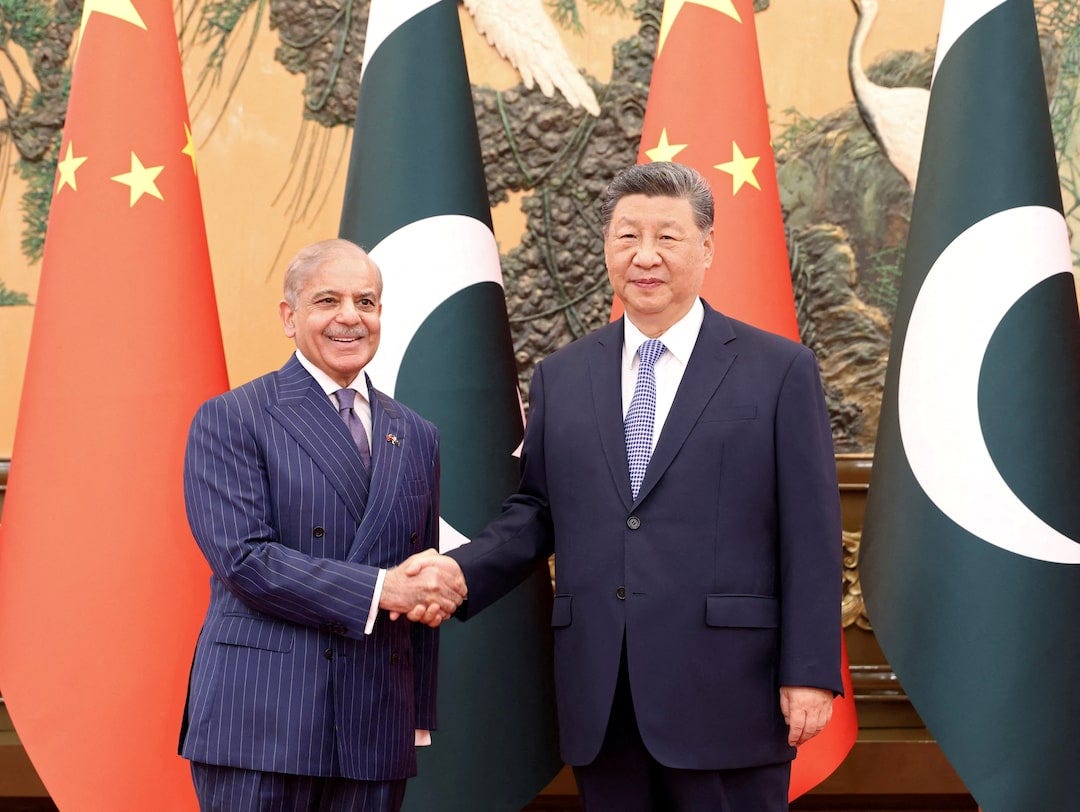
Key Points from the China-Pakistan Joint Statement
Strategic Partnership: Both sides reaffirmed their commitment to strengthening the China-Pakistan All-Weather Strategic Cooperative Partnership and implementing the 2025-2029 Action Plan for building a closer shared future.
CPEC 2.0 and Connectivity: Agreed to advance the high-quality development of CPEC 2.0, upgrade the Karakoram Highway, enhance connectivity through the Khunjerab Pass, and develop Gwadar Port into a regional connectivity hub.
Economic and Industrial Cooperation: Expanded cooperation in trade, energy, digital economy, artificial intelligence (AI), mining, oil and gas, textiles, and home appliance manufacturing.
Security Cooperation: Agreed to establish a China-Pakistan Security Partnership, deepen defence and counterterrorism cooperation, and enhance protection for Chinese personnel and projects in Pakistan.
Support on Core Interests: Pakistan reaffirmed support for the One-China Principle and China’s positions on Taiwan, Xinjiang, Tibet, Hong Kong, and the South China Sea, while China reiterated support for Pakistan’s sovereignty and security.
Technology, Education, and Space Cooperation: Both sides agreed to expand educational exchanges, technical training, AI cooperation, and space collaboration, including training Pakistani astronauts in China.
Regional and Global Coordination: Reaffirmed support for a multipolar world order, stronger UN-centred multilateralism, and closer coordination on international and regional issues.
Middle East and Afghanistan: China appreciated Pakistan’s role in facilitating U.S.-Iran talks, while both sides pledged to support peace efforts in the Middle East and strengthen cooperation on Afghanistan and counterterrorism.
Beyond the economic agreements, the visit underscored the convergence between China and Pakistan amidst the ongoing Iran-Israel-U.S. conflict. Although China commended Pakistan’s efforts to facilitate U.S.-Iran dialogue and reaffirmed support for joint peace efforts, it has been cautious about assuming a direct mediation role. The recent visit highlighted Beijing’s reliance on Islamabad as a diplomatic bridge to its economic and energy interests in a region of strategic importance to China’s energy security and Belt and Road interests, as instability poses a threat to regional trade networks.
Text within this block will maintain its original spacing when published
Recommended Sources:
Ministry of Foreign Affairs, People’s Republic of China - Xi Jinping meets with Pakistani Prime Minister Shahbaz [Chinese Version] (May 25, 2026)
Ministry of Foreign Affairs, People’s Republic of China - Joint Statement between the People’s Republic of China and the Islamic Republic of Pakistan [Chinese Version] (May 26, 2026)
Reuters - China, Pakistan aim to revamp economic corridor, Gwadar port (May 26, 2026)
On 1 June, People’s Daily, the official mouthpiece of the Chinese Communist Party (CCP), published a commentary under its Zhong Sheng (钟声) column titled ‘Promoting Artificial Intelligence as a New Frontier for China-U.S. Cooperation.’ The Zhong Sheng column is considered an expression of the Party-state’s collective position on international affairs. The article presents AI cooperation as a key pillar of the ‘constructive, strategic, and stable’ China-U.S. relationship. It emphasises the need for dialogue, coordination, and joint governance in the field of AI.
What are the key arguments of the commentary?
AI-related challenges are global in nature and therefore require collective governance and international cooperation rather than confrontation. China presents itself as willing to work with the U.S. and other countries to establish a global framework and standards for AI governance.
China and the U.S. possess distinct yet complementary strengths in AI research, applications, and regulation. Cooperation between the two countries could generate mutual benefits, accelerate innovation, and support the implementation of AI technologies.
AI cooperation is cited as a source of mutual economic benefit. It builds on China’s portfolio of AI patents, the commercial opportunities available to American companies in the Chinese market, and partnerships between companies such as NVIDIA, Microsoft, AMD, and Lenovo.
In addition to the above arguments, the Zhong Sheng commentary criticises Washington for its policies on investment restrictions, export controls on advanced semiconductors, and regulations related to cloud computing. These measures are described as manifestations of a ‘zero-sum mentality,’ the politicisation of technology, and attempts at technological containment. It rejects technological decoupling and contends that unilateral restrictions should not constrain technological development. The article serves as both a policy statement and a strategic narrative. It highlights the benefits of Sino-American cooperation in AI governance and innovation, but also objects to U.S. containment measures, legitimises China’s technological rise, promotes its preferred vision of global AI governance, and portrays China as an upholder of openness and multilateralism.
Text within this block will maintain its original spacing when published
Recommended Sources:
People’s Daily - Promoting Artificial Intelligence as a New Frontier for China-US Cooperation (Zhong Sheng) [Chinese Version] (June 1, 2026)
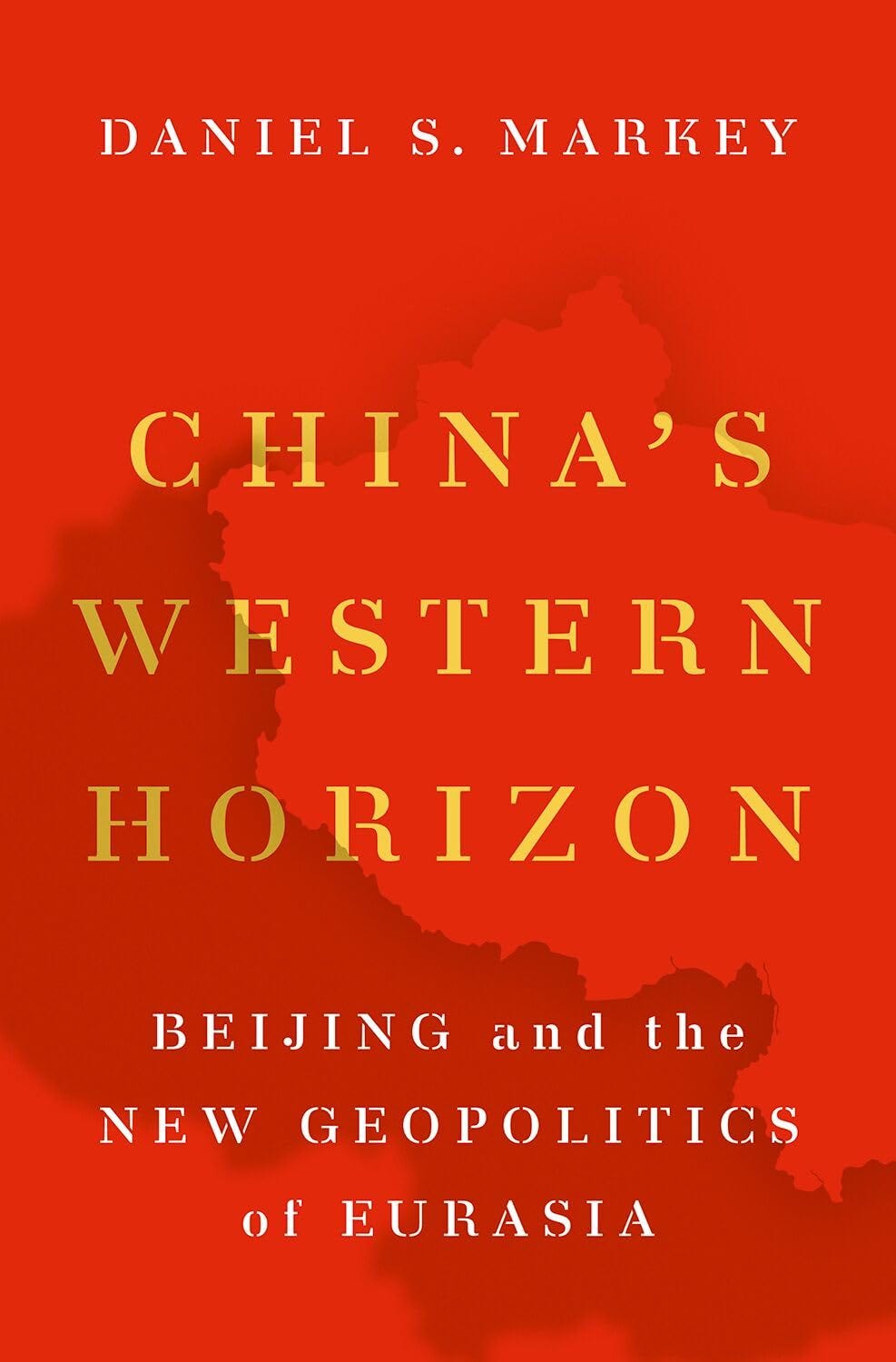
China’s Western Horizon: Beijing and the New Geopolitics of Eurasia by Daniel S. Markey offers a detailed examination of China’s expanding influence across South Asia, Central Asia, and the Middle East. Moving beyond a narrow great-power competition framework, Markey explores how local politics, regional rivalries, and domestic interests influence China’s interactions across Eurasia. He contends that initiatives such as the Belt and Road are shaped not only by Beijing’s ambitions but also by the political conditions, domestic interests, and regional rivalries of partner states. The book illustrates how regional leaders capitalise on China’s economic and security engagement to pursue their political and strategic interests. The author combines geopolitical analysis with regional expertise using extensive field research, interviews, and historical analysis. For those who are interested in Chinese foreign policy and the geopolitics of Eurasia, China’s Western Horizon serves as a must-read.
去去班味
(qùqù bānwèi)
去去班味 (qùqù bānwèi), literally meaning ‘getting rid of the smell of work’, has emerged as a popular phrase among young Chinese professionals. The term refers not to a physical smell but to the lingering emotional and psychological residue of the workday—visible in one’s mindset, habits, and interactions, even after leaving the office. Its popularity captures the conscious effort to reclaim personal space and identity from China’s demanding work culture.
Thanks for reading! This post is available for free. Please feel free to share it with others.
Latest from Geopolitics and Geoeconomics at the Pune International Centre:
PIC’s Global Compass | Episode 7 - China’s Bid for Global Primacy
In this podcast episode, Dr. Koena Lahiri, Policy Research Associate at the Pune International Centre, speaks with Manoj Kewalramani, Fellow–China Studies and Chairperson of the Geostrategy Programme at The Takshashila Institution, on China’s rise and the future of the international order. Watch the episode here.
The Tianxian View is an initiative of the Pune International Centre (PIC), an independent and multidimensional policy think tank based in Pune, India. This newsletter aims to offer clear, contextual insights into China’s evolving trajectory.
To know more about PIC’s work and upcoming initiatives, follow us on our website and social media handles.
LinkedIn | X | Instagram | YouTube | Spotify
AI Disclosure Statement: Select Mandarin-to-English translations in this newsletter were produced using advanced large language models (LLMs), applying artificial intelligence and machine learning techniques for natural language processing.
Comments
Nothing yet. Say the first thing.
Sign in to join the conversation.