
A spoiler alert: if you are on the Wolf Crawl journey with Simon Haisell and you haven’t read Hilary Mantel’s Thomas Cromwell Trilogy before or are unfamiliar with this period of English history, please be aware that my work draws on the Trilogy as a whole as well as the historical record.
A couple of odd experiences over the past few days, one of which has made my reality shimmer slightly, have made me think about three adjusted and adjustable memories. Perhaps such memories originate in wanting to believe - in the same vein as our eyes want to believe the sleight of hand of the Three Card Trick.
In Hilary Mantel’s Reith Lecture The Iron Maiden, she talked about the Derwent Village church that was submerged when the Derwent Reservoir was created. She could remember people telling her that, after the village was drowned, they could still see the church steeple when the water level was low.
But they did tell me that in dry years, you could see the steeple of Derwent church standing above the waters. This was not a fact.
It was something else. It was a myth.
Derwent’s church was blown up in 1947. People were seeing it ten years after it was gone. I was an adult when I found this out. I wasn’t pleased that I’d been misled.
I grew up not far from the Derwent Reservoir, and one of my favourite walking places was Woodhead, the area surrounding the Reservoir. As a child, I heard about the drowned village, and was fascinated by it. I, too, heard a variation of Hilary’s Derwent church story. In my version, the church steeple was not only visible, but the church bells could occasionally be heard.
Even today, when the water level has sunk to very low levels and some of the foundations of the buildings are uncovered, I watch the resulting news coverage hungrily - even though I haven’t been to Woodhead and the drowned village for nearly 40 years. And I can understand why people thought they had seen the steeple and heard the bells: the idea of the drowned village is a haunting one. Surely something must remain?
In an album probably still on a shelf somewhere, there exists a photograph of me probably looking slightly uncomfortable. I’m with my father, standing in front of a grey stone built manor house. Care was probably taken to include a gate that incorporated the name of the house, because it was our name too: Dutton Hall.
My father had done some research into the Dutton family: how the Duttons had arrived in England at the time of the Norman Conquest, and how one such Dutton - from whom we were descended - Sir Piers Dutton - had built Dutton Hall in Cheshire. And when I was eleven, we drove into the hills to see this house. It wasn’t open to the public, and we didn’t expect anything other than to see it from the outside, but I think I remember that someone who lived there was in the garden, was friendly, and took the photograph of us. To be clear, I don’t think we were making any claims on our “ancestral home” or anything like that - it was just an interesting excursion into history.
I haven’t thought much about this trip for years - I’m not like Hilary Mantel’s Walter Cromwell (“If it weren’t for the so-called law, we would be lords. Of the manor.”). But Dutton Hall came into my mind this week via a slightly convoluted route.
I have been toying with the idea of creating some sort of Cromwell-related model house - probably not the Austin Friars, more likely the house at Fenchurch Street. So on Friday I started looking up model Tudor houses to see if there were any that would suit; I don’t have the skills to build from scratch. I couldn’t see any that felt exactly right, but one seller had a kit that might be customisable. I idly clicked to see what other models they had on sale.
At the bottom of their page was a 1/30 scale model of Dutton Hall. For sale. Not the house at Fenchurch Street I was seeking, but - as if by magic - the house of Sir Piers Dutton, supposedly a distant ancestor of mine, a correspondent of Thomas Cromwell, and the uncle of William Brereton, whose mother was Eleanor Dutton. For various reasons, I have very complicated feelings about the concept of “home”, but could a 1/30 sized Dutton Hall make me feel at home? My fingers hovered over the “buy” button.
But there was something a little odd. This Dutton Hall - supposedly a replica of the Actual Dutton Hall that I visited as an eleven year old - was a large half timbered mansion, not a stone manor house. Maybe my memory was at fault? No, a quick search took me to the Dutton Hall I recognised. There it was, just as I remembered it - only now with rose gardens open to the public at certain times.
So how could the 1/30 replica of Dutton Hall be a half timbered mansion that would be three times the size of the Actual Dutton Hall?
Within a couple of clicks, I established that the Actual Dutton Hall with which I was familiar wasn’t built by Sir Piers Dutton. It was built by the Towneley family on land they had rented since the 14th century, and was nothing to do with the Dutton family. You must remember that the internet hadn’t been thought of when I was eleven, and the research undertaken by my father with great diligence was definitely analogue.
We had visited the Wrong Dutton Hall.
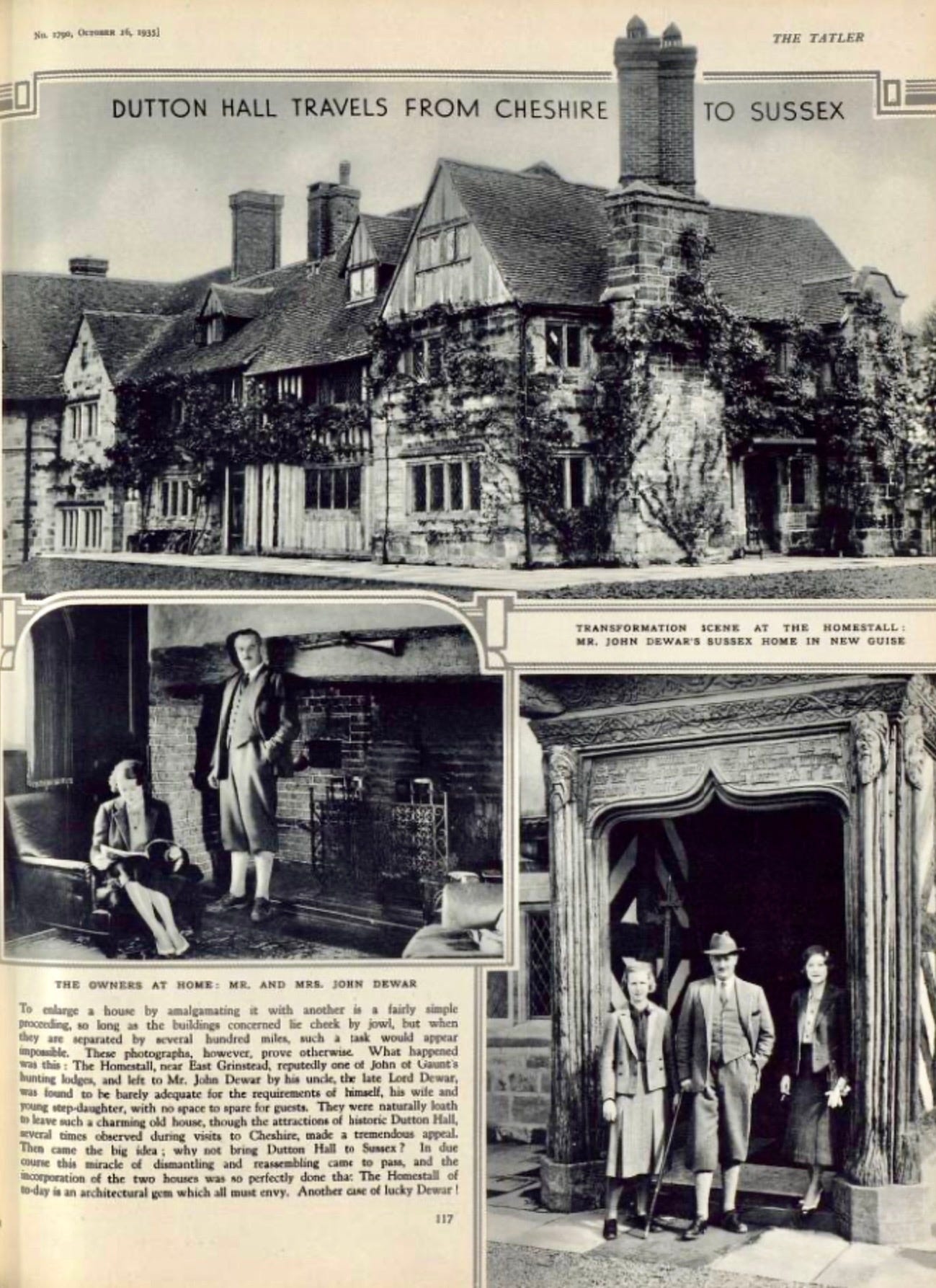
The Real Dutton Hall - now available as a 1/30 model - was indeed built by Sir Piers Dutton, correspondent of Cromwell, brother of Eleanor, uncle of William Brereton. It was a different Dutton Hall and was located in a different place. And now it is located in a very different place. Because Dutton Hall has moved.
In 1935, Dutton Hall was moved from Cheshire, piece by piece in packing crates, to a country setting outside East Grinstead. It is still there. The Hall came up for sale - divided into a number of luxury residences - a couple of years ago. And the 1/30 Dutton Hall replica is of this Dutton Hall, in - it seems - its original iteration.
I can’t explain why but I find the “Going to the Wrong Dutton Hall” aspect of this story hilarious (I was almost incoherent with laughter when telling my husband); and the fact that the Real Dutton Hall was taken apart and moved across England was the icing on the cake.
Reader, my finger pressed the “buy” button.
In 1540, Thomas Cromwell was arrested and charged with all sorts of offences. One of the charges - which may seem trivial to us now - was of owning and wearing a purple coat. Under the sumptuary laws then in place, he was not entitled to wear purple, and therefore his wearing of it was considered presumptuous. After all, Cromwell was, in the words of the indictment against him, a man “of very base and low degree”.
In the novel of The Mirror and the Light Hilary Mantel notes that “He has a riding coat of deep purple”. Later, Cromwell thinks he should have looked it out for the headsman. The purple coat is also referenced in the stage play. The Duke of Norfolk asks Cromwell “What gave you the right to wear such a colour? It is the preserve of royal persons and high dignitaries of the Church.” Call-Me Wriothesley questions whether it could have been perhaps violet: “If violet, it can be excused.” But “It was purple. I saw it”, roars Uncle Norfolk.
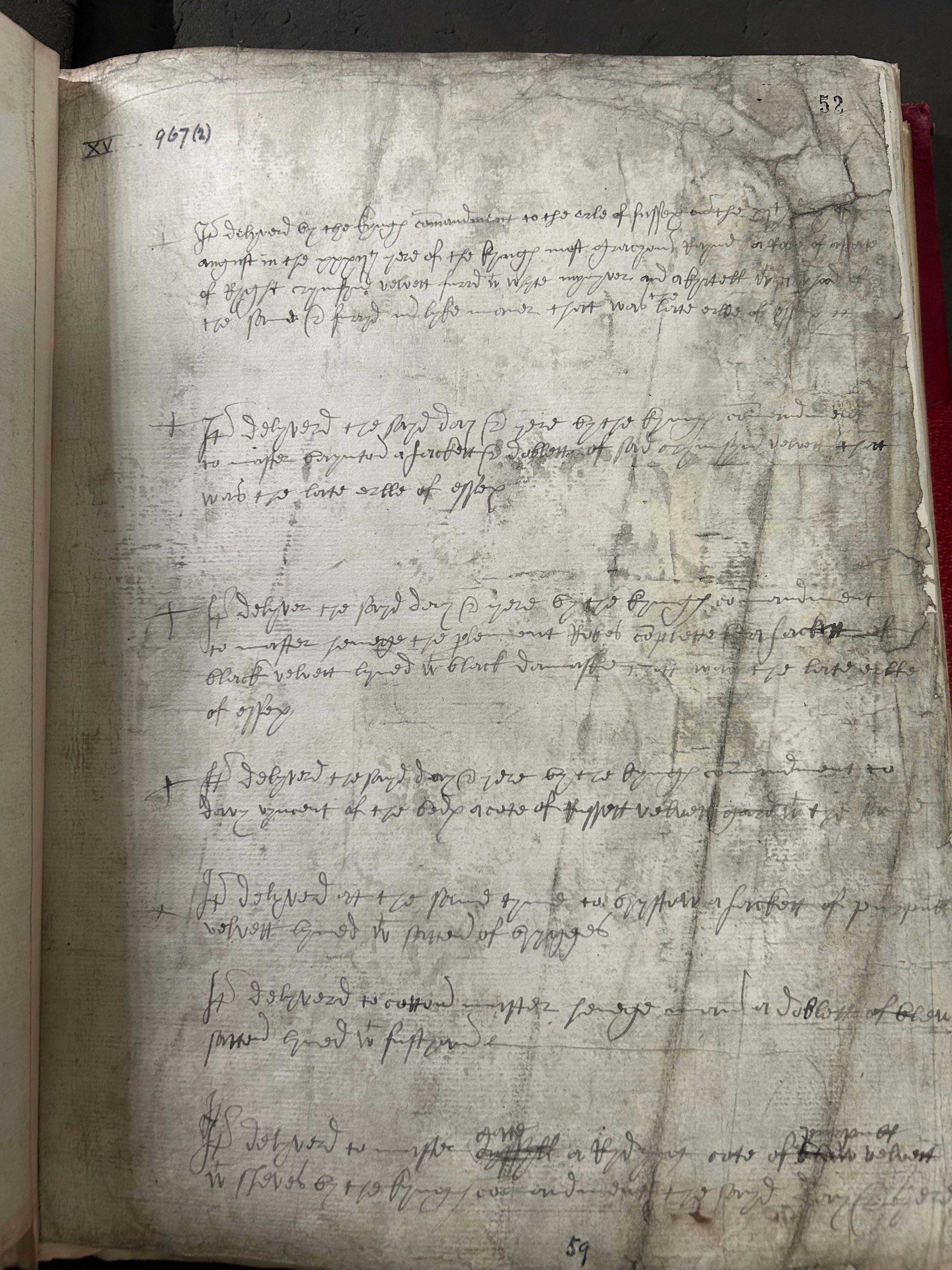
Today I was in the National Archives, consulting documents from the immediate aftermath of Cromwell’s death in 1540. I’m always particularly interested in papers that relate to fabric and clothes, and one of the first documents I saw today was a list of robes belonging to Lord Cromwell that were returned to the Earl of Sussex and the Lord Chamberlain of England in August 1540. There were two copies of the list, both in the same hand. Both copies included his crimson velvet robe, trimmed with miniver, that Cromwell wore on his creation as Earl of Essex, and other high value items. The second copy contained an extra item: a purple riding coat.
When I gave my Stitching Cromwell Engine Room Lecture at the University of Worcester a couple of weeks ago, I was asked how I manage to read 16th century documents. I explained that it takes practice, but that the task is made much easier thanks to the work of earlier historians who undertook the mammoth task of cataloguing and summarising the Henry VIII Letters and Papers in the late 19th and early 20th centuries. However, the resulting published summaries are just that - summaries. And summaries tend to privilege the interests of the summariser. The researcher might have different priorities. This was a case in point.
The published summary told me that the second copy was a
“Memoranda in the same hand of the delivery of the above articles (here dated 11 Aug 32 Hen VIII), with an additional item of a purple riding coat to Mr Gate.”
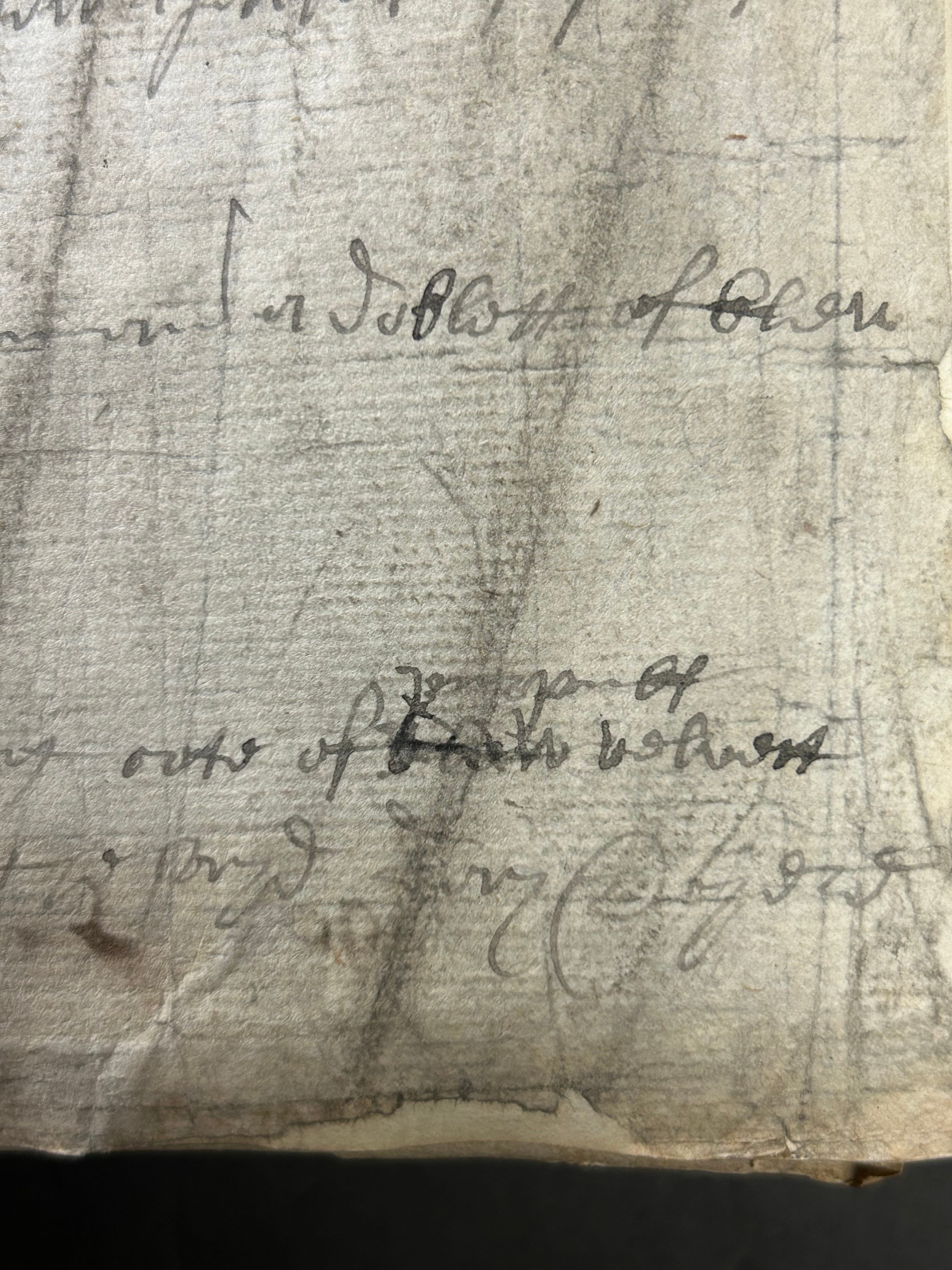
The original document, written in 1540, told me something different. Possibly. It lists a “black velvet riding cote”. The word “black” was crossed through, and the word “purple” written above it. Did Cromwell indeed have a purple riding cote, or did someone else decide to augment his wardrobe?
I don’t know the answer - and I haven’t seen any reference to this particular crossing out anywhere else (of course I haven’t read every single source ever written about Cromwell) so I am not quite sure how much to make of it. But I do know that an unchecked source is an unreliable source.
To end my Three Card Trick, I would like to return to Hilary Mantel’s Reith Lectures. In the lecture entitled Can these bones live? she said:
Facts are strong, but they are not stable. Soon you find your sources are riddled with contradiction, and that even when the facts are agreed, their meaning often isn’t. At this stage, you will want to seek out the earliest evidence you can get. If your story tracks real events, you will spend a lot of time sifting versions, checking discrepancies, assessing the status of evidence: always asking, who is telling me this, and why does he want me to believe it? The contradictions can be fertile. If you can locate the area of doubt, that’s where you go to work. You may well consult original documents, and you will tramp over the ground, and visit the libraries, and allow your hand to hover over a document and imagine the hand that first wrote it.
Comments
Nothing yet. Say the first thing.
Sign in to join the conversation.