
1 / Editor’s Observations: In the End
2 / Observe a Tartuvian: Alex Fadeev
3 / Culture Recommendations for 2024/2025
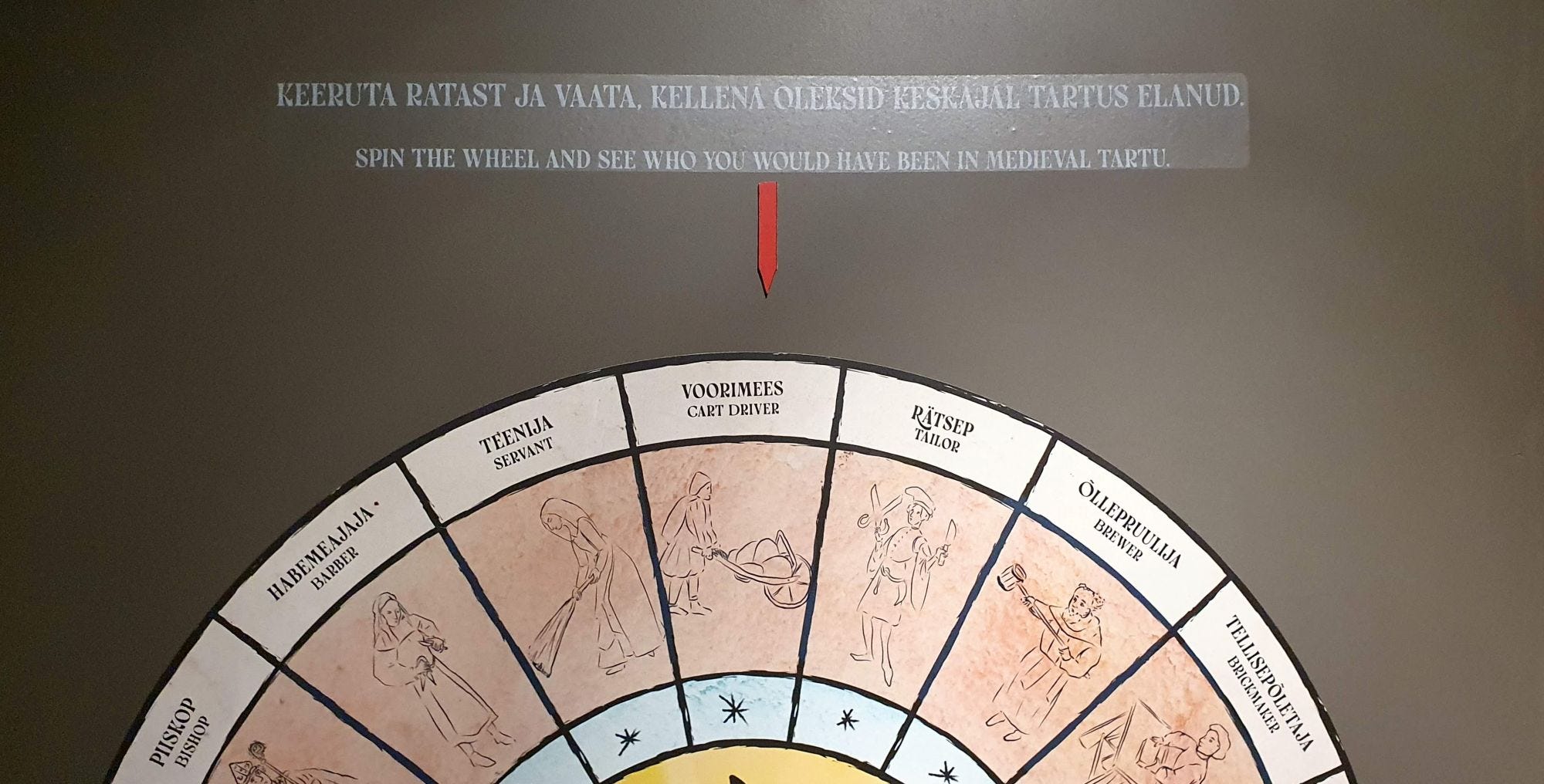
“In Medieval Tartu, I would have been a DPD courier or a Bolt driver!”
I had spun a wheel with a selection of 13th-century professions and this is where it had stopped: voorimees, a cart driver.
My daughter kept quiet. Maybe she pondered over my centuries-spanning joke. Or maybe she already listened to the sounds of neighing horses and crackling fire coming from the next nooks.
We were at "Invisible City. 800 years of the City of Tartu", an interactive exhibition about the beginnings of the city at the University Museum on Toome Hill. Another great Southern Estonian exposition in the year 2024 that has already given us several well-done, far-reaching, available-in-English exhibitions: Wild Bits at Maajaam near Otepää, Ryoji Ikeda’s amazing giant screens at ERM, “Minu Tartu” at the Tartu City Museum, and Hidden Worlds Expanded that brought outsider art from around Europe to Valga, Viljandi and Tartu, to name some.
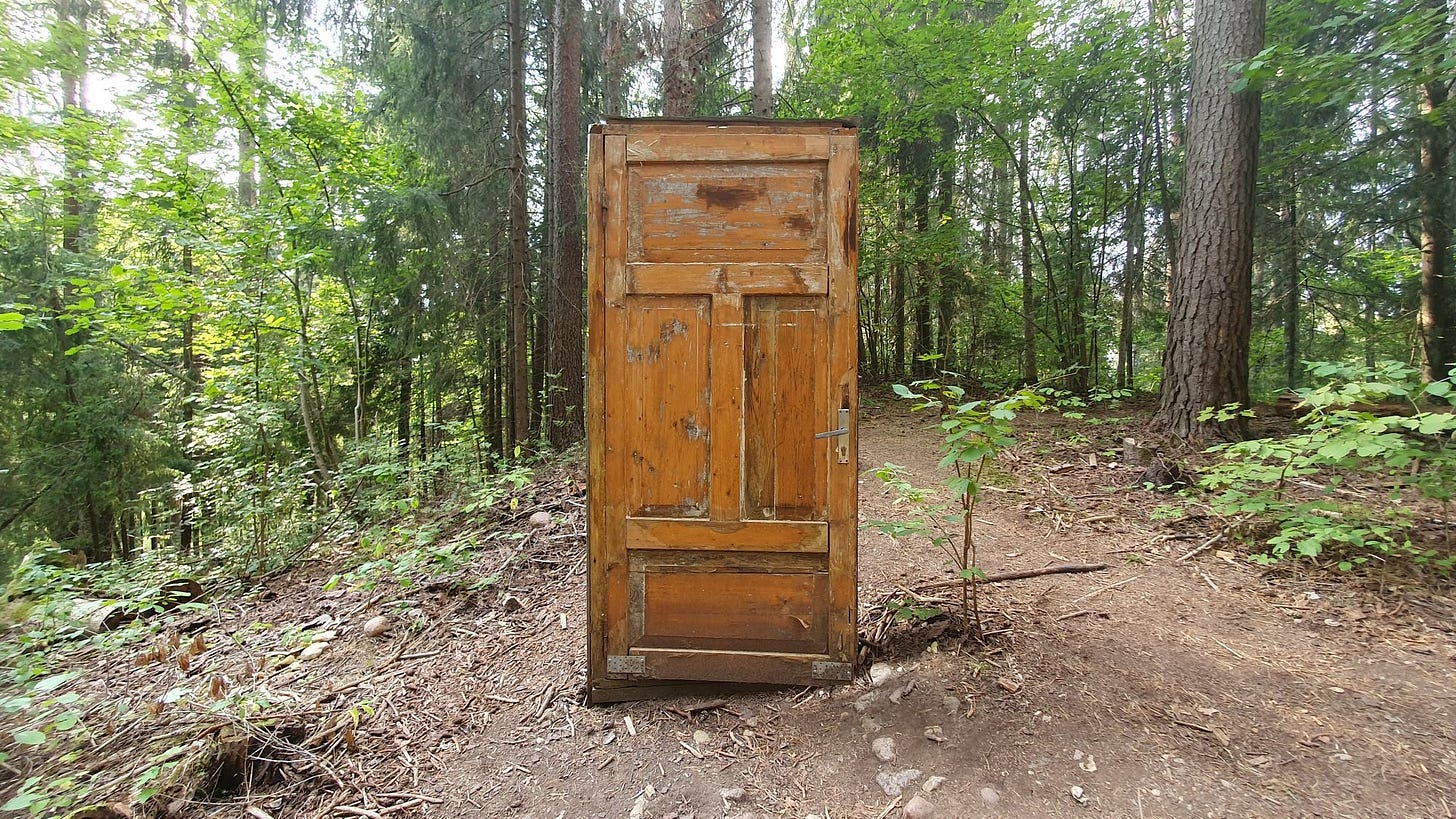
Soon, 2024 will be a thing of the past. As always, most of the details this year will be forgotten. But a few events and experiences will indeed stick with us a bit longer. To me, many of this year’s potentially long-lasting memories came from the European Capital of Culture Tartu 2024 title year programme.
For the last Tartu Observer interview this year (see below) I picked one guy who saw from the inside what the audience saw from the outside. Aleksandr Fadeev is neither a born Tartuvian nor a born Estonian but his great grip on the Estonian language and culture made him one of the international bridge builders in the Tartu 2024 team.
Aleksandr was involved in welcoming to Southern Estonia a multitude of foreign ministers, mayors, ambassadors, council(wo)men, culture managers, etc. As a man who himself had to get to know Tartu from scratch – from a rental apartment in Karlova – a few years ago, I'm sure he could introduce this city from approachable yet genuine angles. This is how I think Tartu should be introduced to the world.
It's the end of the year. I hope 2024 was in a number of ways a good year for you. I think of this year as a rather difficult one, but when it comes to my work on illustrations and the Tartu Observer, I feel grateful, and satisfied with the volume and quality of published work.
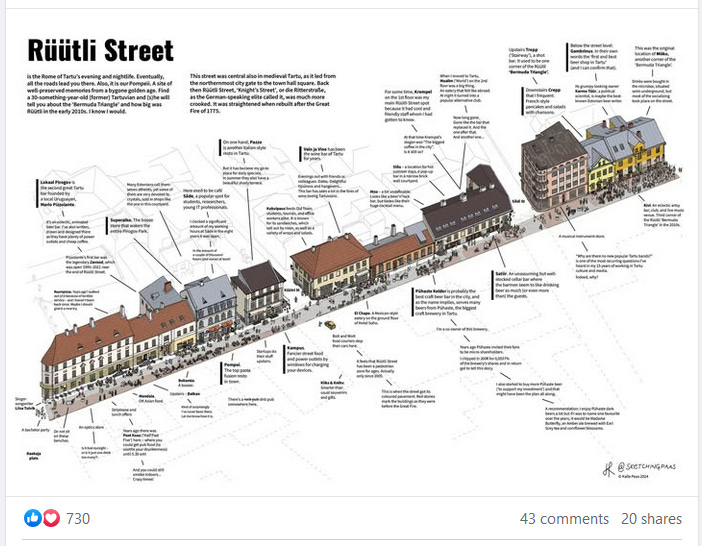
A highlight of the year was the reception of “Rüütli Street”, the latest work in the “How to Tartu” series. It got over 700 reactions on the Foreigners in Tartu Facebook group. As these people are exactly the people I consider my main audience, I feel that my work was resultful.
So, on to 2025. What will become of us now?
Maybe Tartu will be a more boring place after the big year, considering the dwindling economy, decreasing purchasing power, rising taxes, and bars and cafes closing one after another. Maybe Tartu will build upon its added fame, reputation, and experience, and it will continue to grow as what has been envisioned in the strategies – ‘an international city of culture’.
We will see.
But surely DPD couriers and Bolt drivers will keep on going, whatever the year. Or century.
→ Other bigger works published by me this year: “The Student Commune” and “The Smokestack of Keskkatlamaja”.
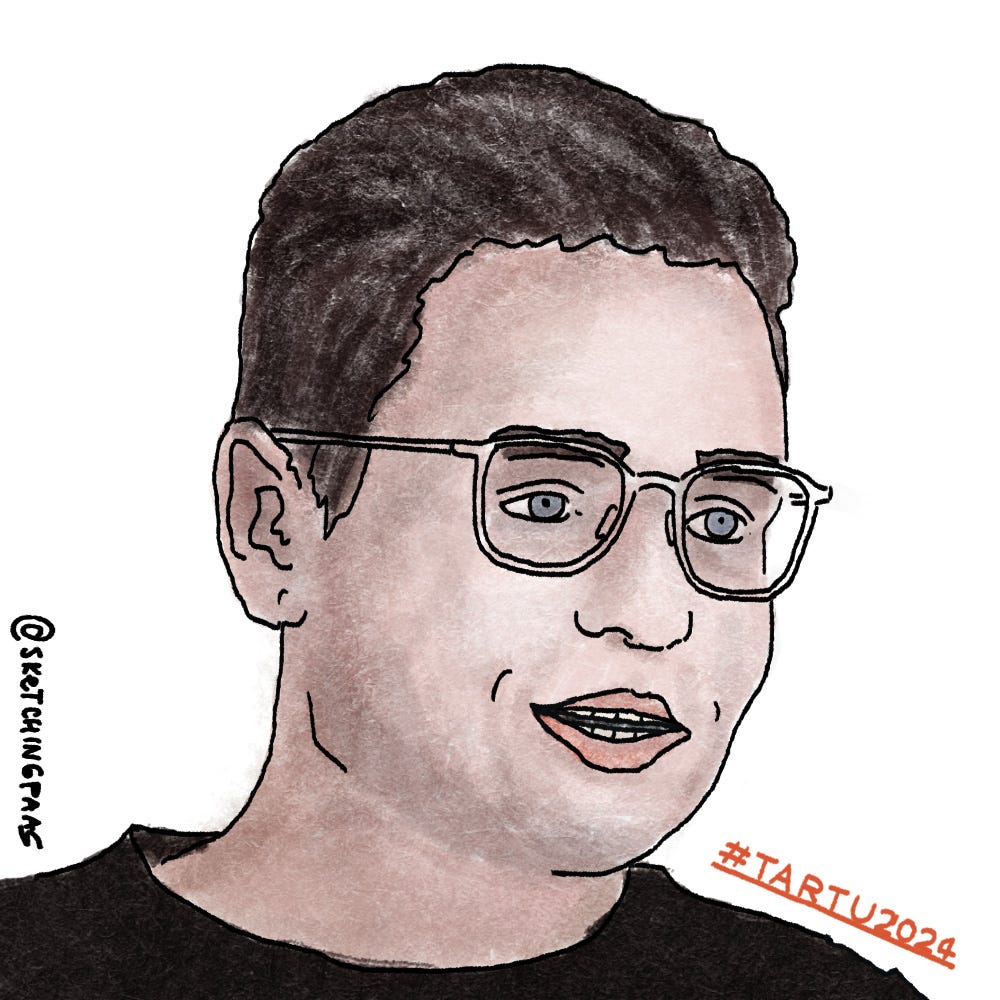
As the European Capital of Culture year draws to a close, I spoke with a guy who has had a very special insider and outsider look at Tartu and Tartu 2024. Aleksandr Fadeev is an international relations coordinator at the Tartu 2024 Foundation. He is not a born Tartuvian, as he arrived here in 2016 from Saint Petersburg. He graduated from the University of Tartu with a PhD and now continues to work there as a research fellow.
Aleksandr, you are part of the Tartu 2024 international relations team that invited or helped host hundreds of formal visitors from all around Europe. What have you learned about us through this?
I had lived in Estonia for already 5 years, but joining the European Capital of Culture team in 2021 was an unforgettable experience as I – basically a foreigner – could look at everything from the inside.
During these years, I was very lucky to get to know so many people from Tartu and Southern Estonia, whose everyday life and work is helping to preserve the cultural traditions of Southern Estonia and develop new directions and tendencies in the contemporary Estonian culture and art.
A student from Tartu, a farmer from Põlva, a museum worker from Värska, or a youth centre volunteer from Antsla. Culture really is what they know and what they do.
What are your favourite places in Tartu for food?
Since I moved to Tartu in 2016 there have been many new good places for food appearing in Tartu, and there are indeed several of them that I frequently visit.
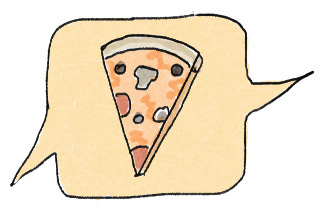
There is one hidden gem in Karlova, Tautsi pizza. I think it’s the only place in Tartu that makes an American type of pizza, which I’ve been struggling to find in Tartu. It’s a place where you quickly make friends with the owners. You know, when you open the door, and they already shout “Hi, Aleks”! It’s very very nice, and it always gives a very home-like feeling.
There is also Juulamõisa, which is near Tartu, next to Soitsjärv Lake. It is one of the rare places in or near Tartu where you can experience real traditional Estonian cuisine made with local ingredients from local farms. The owners also run their own farm.
What are your favourite places in Tartu for drinks?
I can’t say that I really have a favourite place for drinks, as I don’t drink a lot. Since I live in Karlova district, my “home bar” is obviously Barlova, and I really enjoy the international vibe of it.
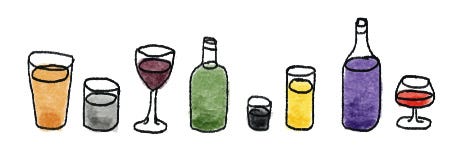
I’ve been recently very much enjoying the atmosphere of the relatively new place in Supilinn - Mülä. It is a cafe during the day and a very cozy bar in the evenings. It’s also a very international place, where you can meet with many interesting people.
In your opinion, which one is the most boring neighbourhood in Tartu? Why?
I think it largely depends on what you mean by “boring”.
This year the Tartu City Museum opened a great exhibition called “My Tartu” where you could really feel how every Tartu neighbourhood resembles a separate “city in the city”. That is something you cannot say about every town.
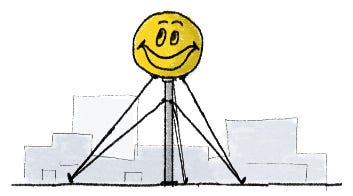
If I were to bring out something I would say I’ve struggled to connect with districts as for example Ihaste or the freshly built districts, such as the one around Lõunakeskus. Maybe it is because they are relatively new house districts with no distinct individuality. There just isn't anything that could catch me to explore it, or simply google about it. But it's of course a very personal thing. I am sure many Tartuvians like them.
What is missing in Tartu? What would you add to Tartu?
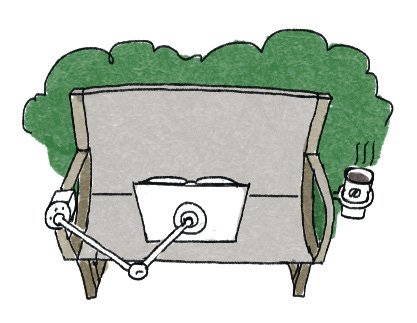
I think Tartu is a very green city but sometimes it feels like those green areas do not look like places where you would like to spend a lot of time. Like drink coffee with a good book or just chill with a friend on a lunch break. I think the parks could have some more well-thought-through park infrastructure.
One of the great treasures of Tartu is of course the river Emajõgi. And I am still quite surprised that we have so little access to the water in the city. Emajõgi is a part of Tartu's identity and it would be great to see more possibilities in the city to be closer to the water.
What's your general favourite place in Tartu?
From the day I moved to Tartu, I have very much enjoyed exploring the University of Tartu Botanical Gardens. I still think that it’s one of the best botanical gardens I’ve visited. It is never the same, it always changes from season to season, from year to year.
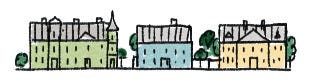
In general, I think my favourite place is the district of Karlova. This is my home district. I think it is very easy to fall in love with Karlova, when you walk along its streets, sneak into a local cafe, or just go observing its wooden architecture and street art.
It’s definitely worth visiting during the Karlova kohvikute päev (Home Café Days in Karlova) when the locals invite everyone to their backyards and treat them with their best cakes.
Finally, please share your favourite story about getting to know Tartu or Tartuvians.
When I just moved to Tartu in 2016, I first lived in the University dormitory, and then found a flat, so that we could move there together with my wife. That was a flat in a typical Karlova house. And our first neighbour was Enn, a man in his 70s.

He was really nice and friendly. He lived alone, so I think he was happy to have new neighbours to be able to talk to. We of course didn't speak almost any Estonian at that time, except for some basic phrases like “Tere” or “Nägemist”. But he always appreciated it when we used even a couple of phrases.
When he knew we were from St. Petersburg he was very enthusiastic as he spent a part of his youth there. So he told us lots of stories about that.
We could stand and talk with him for hours. This was my first experience of this kind of close relationship with a real Estonian, and I am very grateful to Enn for those wonderful first impressions of how sincere, kind and hospitable Tartuvians are.
→ Mülä, the bar in Supilinn that Aleksandr recommends is open for one last time on New Year’s night.
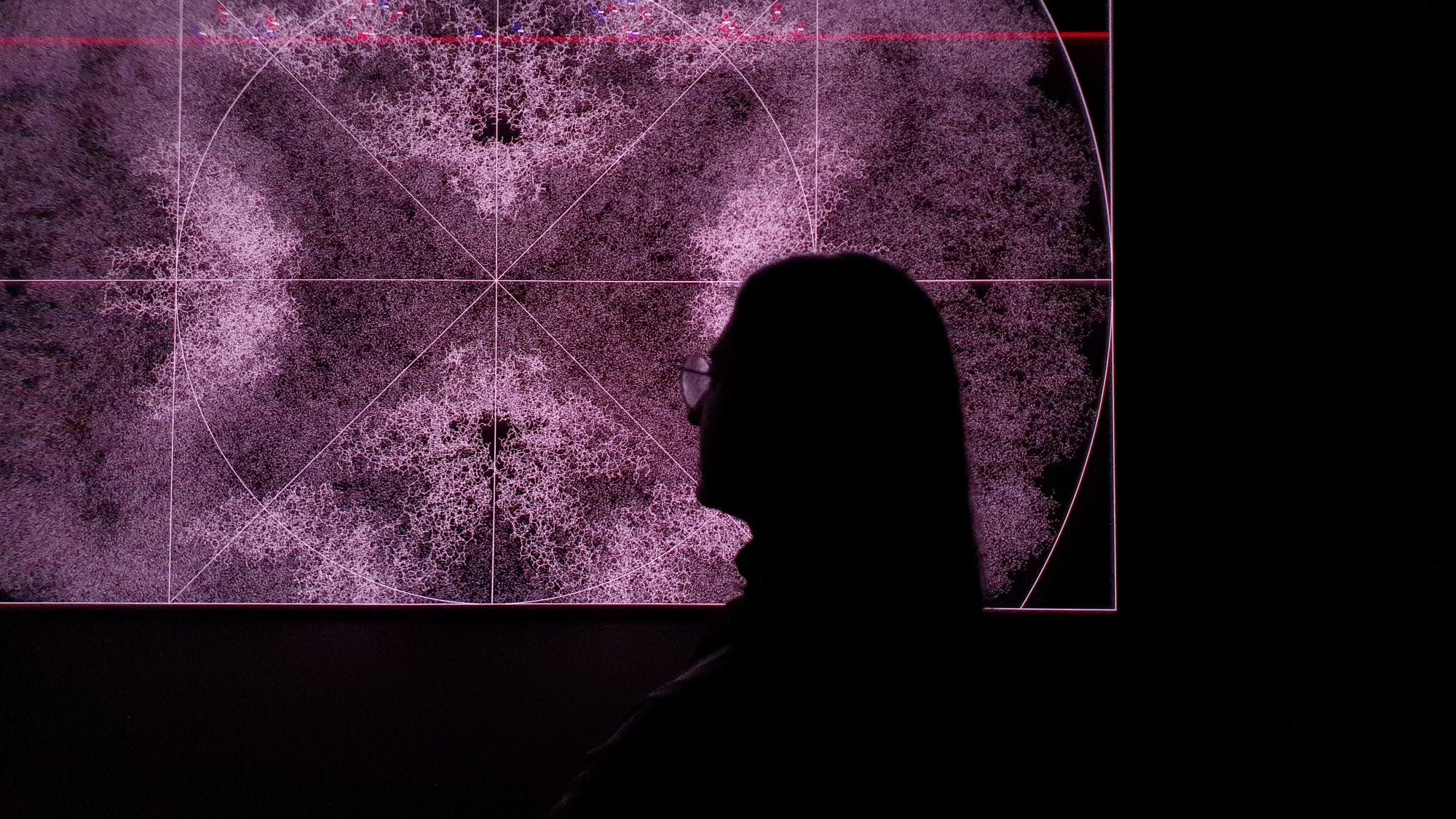
The end of a year and the beginning of a new one tend to make us contemplative. Suitably, Ryoji Ikeda’s solo exhibition in the Estonian National Museum provides an ample environment for contemplation. His works contemplate on big screens in a big dark room how life, human society, and the universe work. You might find some food for thought. Or get some mighty good content for social media.
By far the most amazing thing you can get in Tartu for 7€.
Open until 2 March 2025.
→ Keep on exploring Tartu and Southern Estonia, find events at kultuuriaken.tartu.ee and Tartu2024.ee!
No posts
Comments
Nothing yet. Say the first thing.
Sign in to join the conversation.