
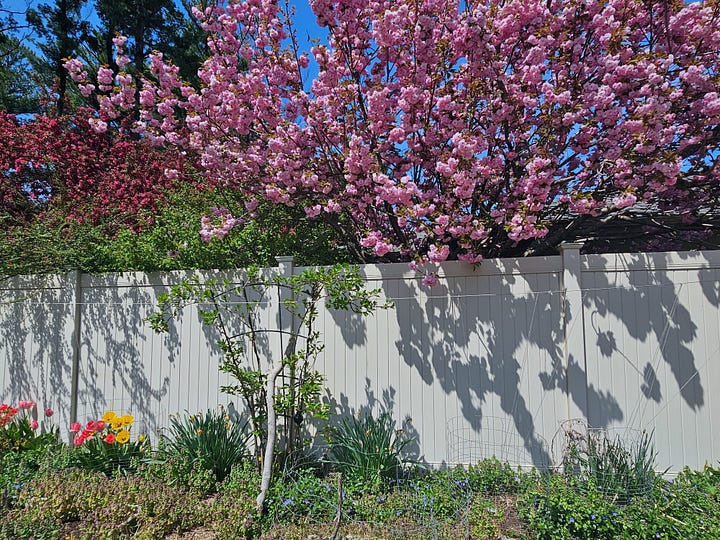
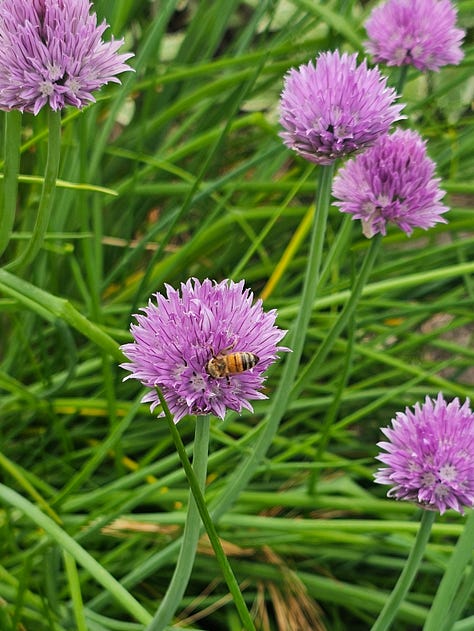
This is our first year of having bees survive the Winter, and thus our first experience with Spring beekeeping. Instead of starting over with a nuc (“nuke,” a small box with a queen and a few frames of bees) in May, as we’d done the past few years, we already had a sizable colony whose queen started laying in March. It was fascinating to watch all the early tree pollen come in with the foragers. Thankfully, we didn’t need to supplement their diet for long, as the nectar flow was plentiful by early May. We had the joy of watching our honeybees, along with bumbles and little native bees, landing on the perennial blooms (mostly “weeds”) that pop up all over the yard in early Spring.
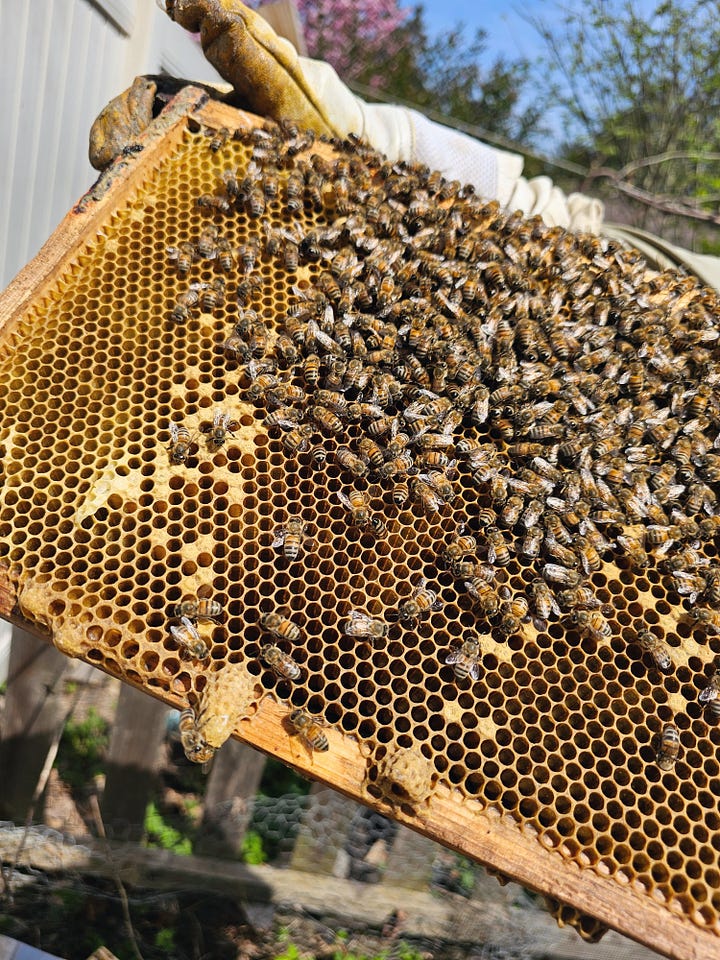
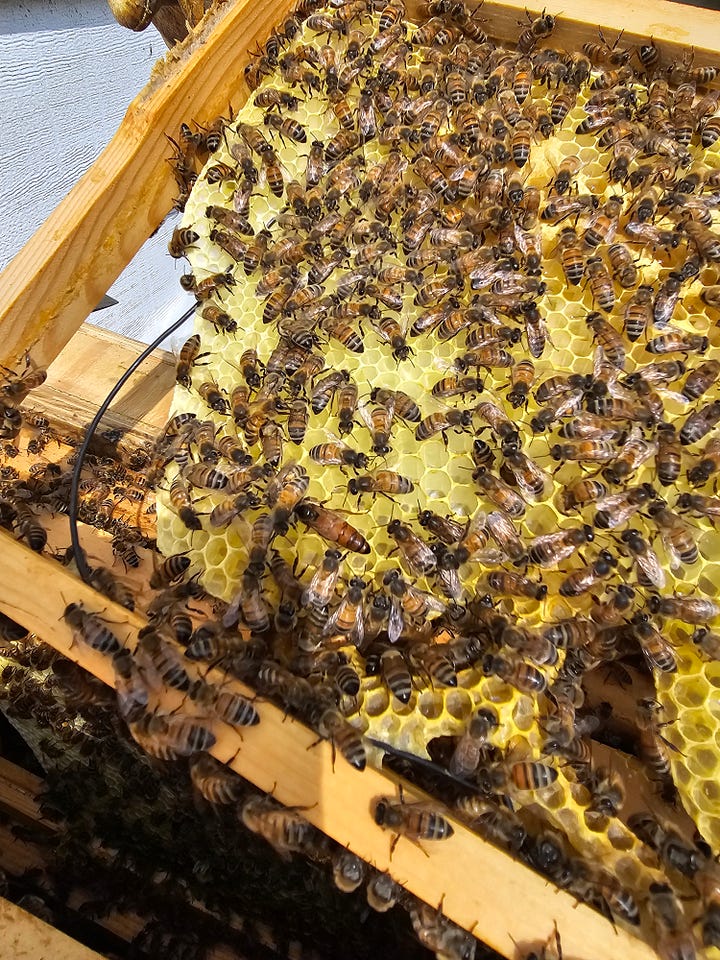
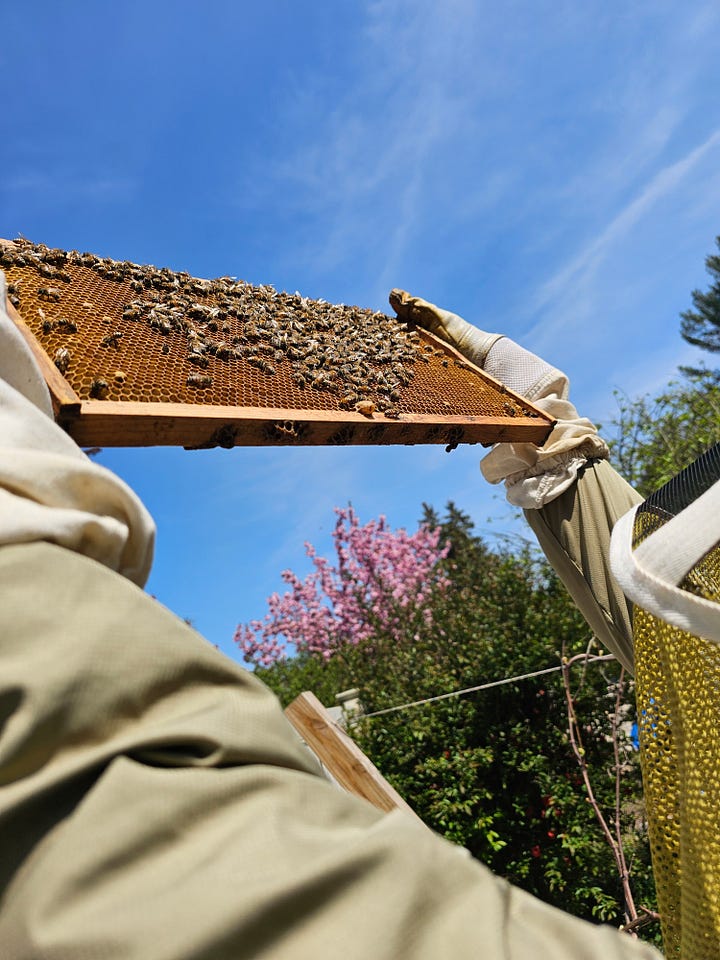
It’s also been our first year of needing to manage bees through the beginning of swarm season. Our little starter hives of previous years weren’t ready to swarm until July. We split the hive in late April this year, and again in early May (as described here in the last post). You’ve likely heard of “chicken math.” This is a tale of bee math. Let’s just say we’ve learned many beekeeping lessons this Spring!
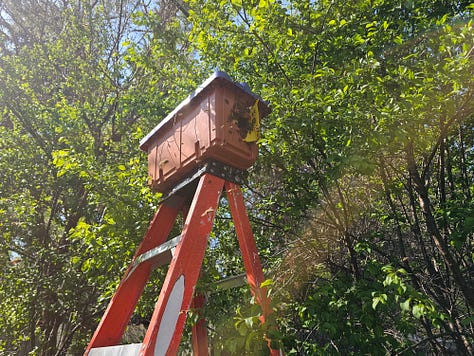
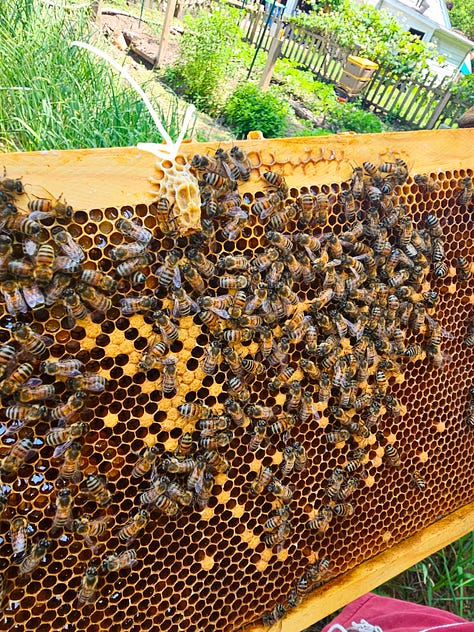
Despite all looking well on a hive check 3 days prior, we spent the 2nd Saturday in May retrieving our swarming bees from the neighbors’ tree. The good news: our neighbors are super cool (notified us, helped reach the swarm), we had a successful swarm capture, and no stings or falls from the ladder. The bad news: what we thought was a single swarm was actually 2 on branches next to each other (our over-wintered queen plus a smaller “virgin swarm” with a small unmated queen), so we inadvertently left 2 queens to fight to the death in 1 swarm box. OG won, and set to work in her new home. Total= 4 hives
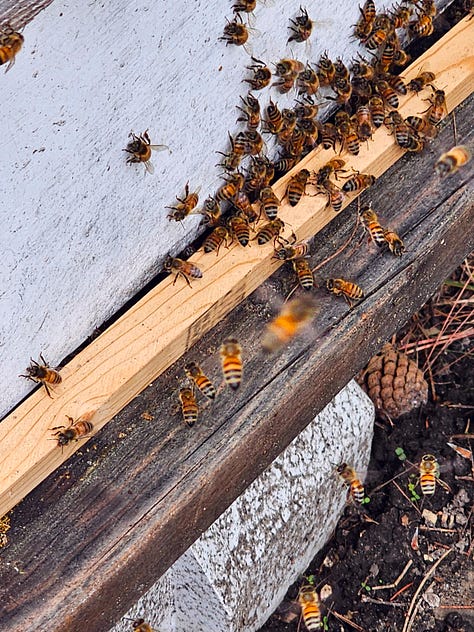
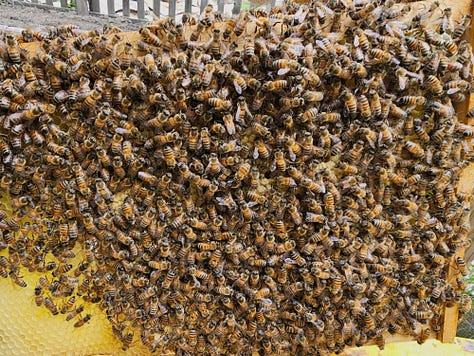
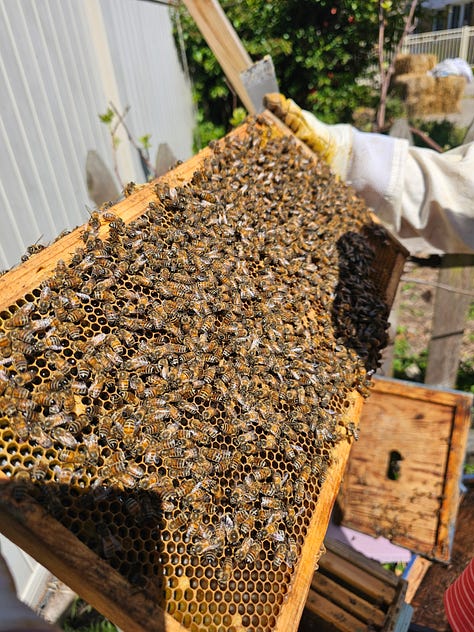

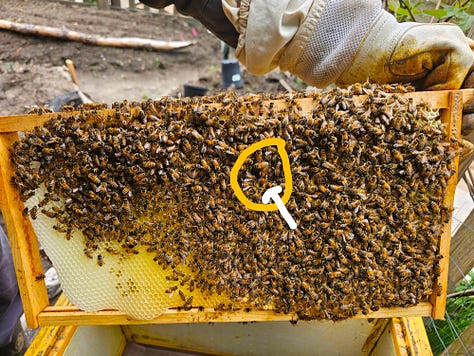
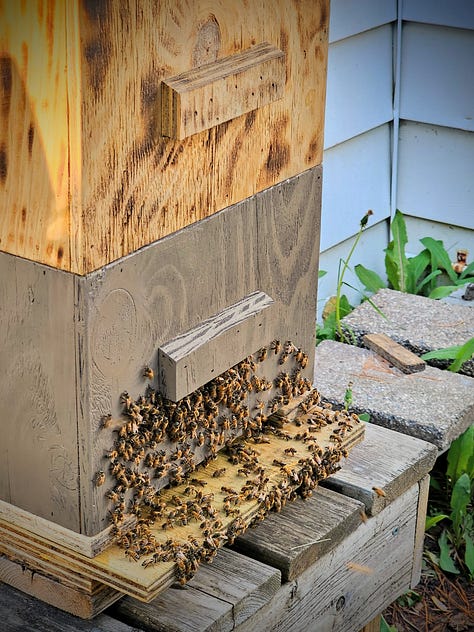

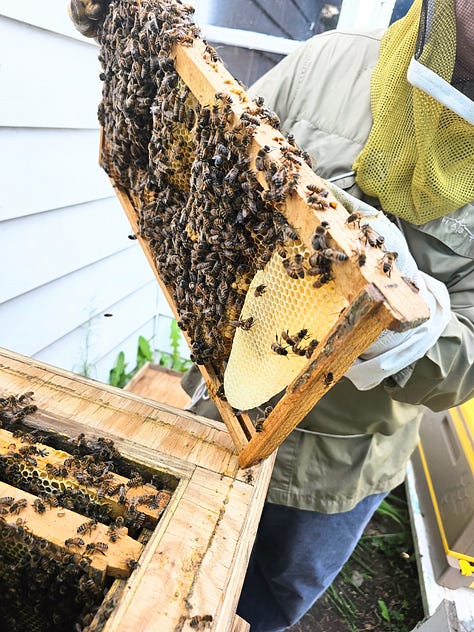
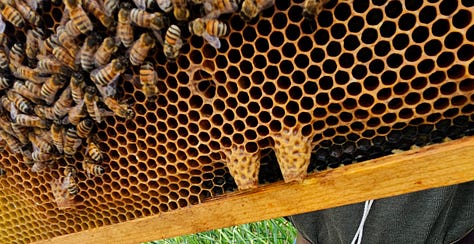
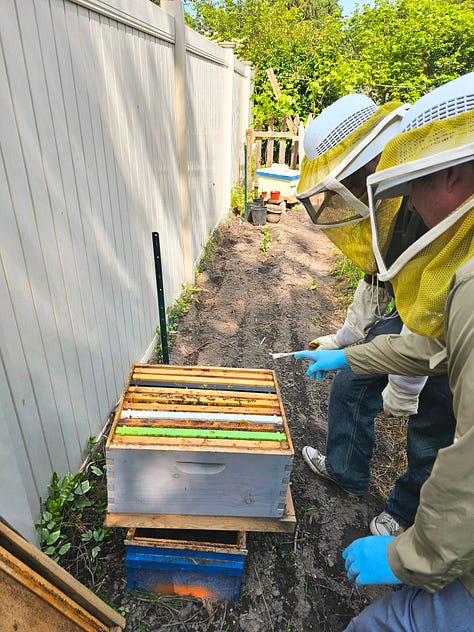
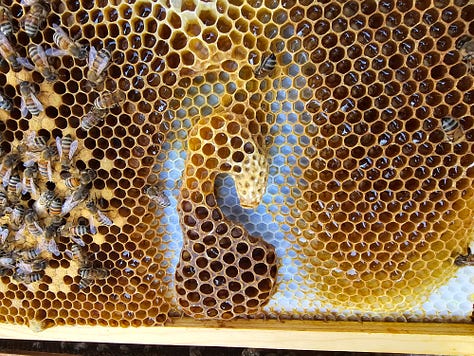
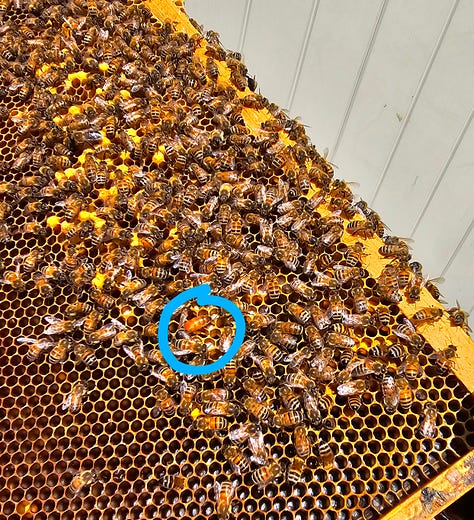
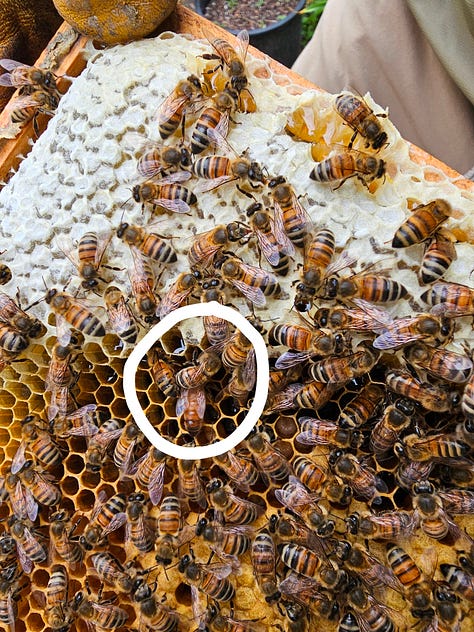
The next day, which happened to be Mother’s Day here in the U.S., after ruminating for 24 hours on our swarm experience, we decided to recheck the hives, this time with the full understanding that our bees were in escape mode. We found so very many queen cells and some already-born new queens. I did cull the queen cells, but I couldn’t bring myself to dispatch those beautiful baby queens, who resembled their golden mother. Which is how Phillip ended up hurriedly assembling hive boxes and dividing resources between them for their new majesties, which was maybe the best Mother’s Day gift ever. Readers, we had 7 hives by that evening.
Two weeks later, Memorial Day weekend, hive checks revealed 5 of 7 with sure signs of a queen. We figured the boxes were already set up, with bees in want of queens, so we transferred eggs from other hives with which the queen-less 2 could make their own monarchs. They do this by feeding large amounts of royal jelly to select larvae, sans the added honey & pollen that are fed to most bee larvae. Royal jelly, excreted by worker bees, stimulates ovary development in the queen-to-be, and is responsible for her larger size and longer life span.
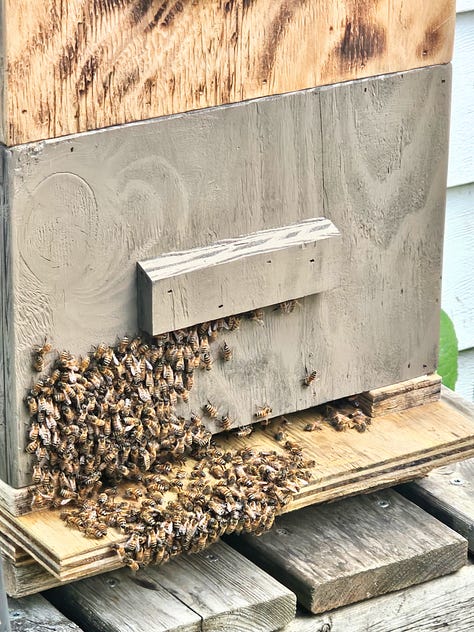

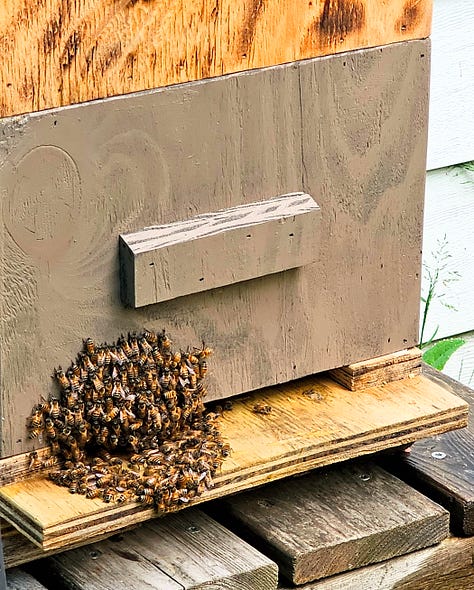
The following weekend, there were queens or capped queen cells in all 7 hives. The bad news: OG queen had swarmed again, not to be sighted or retrieved this time. Sometimes bees have just decided to swarm, and they can’t be stopped. It’s part of their reproductive cycle, and they’ve been doing it for millennia. The queen, slimmed down for flight, takes off with roughly half the population, their bellies full of honey for the trip (which makes it difficult for them to flex their bodies to sting, making most swarms quite docile), and they take off in search of a new house. The colony members who stay behind make new queens, who will fight for their right to rule by dispatching their royal sisters with a sting, whether they’ve been born yet or not. The current problem with this ancient cycle is that the swarm’s chance of finding a new home that is suitable & safe, much less nearby, is very low indeed. At least 75% of swarms now will perish, whether from starvation, exposure to inclement weather, or chemical sprays & other methods of extermination at the hands of humans.
On to mid-June. Whilst checking off the hives as being in various stages of queen-rightness, we arrived at a hive with frenetic behavior: much flying, gathering in groups all around the fenced apiary…yes, wise readers, preparing to swarm. Phillip miraculously located the one virgin queen in the center of a gathering swarm, hastily assembled a hive box, and “swarmed” them into a new home. I watched as a newly born 2nd queen dispatched her sister in the cell next to hers, and was paraded away by her new subjects in a seeming wave of triumph. Lesson learned: Find all the queen cells and squish most of them; otherwise, there will be multiple virgin swarms and less duels to the death for the throne of a very small colony. New hive count=9
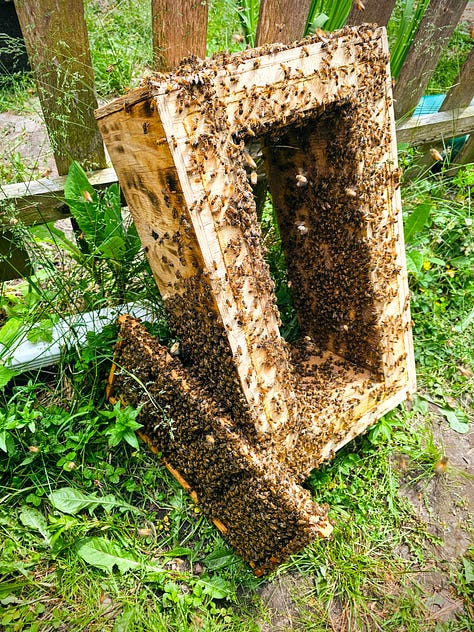
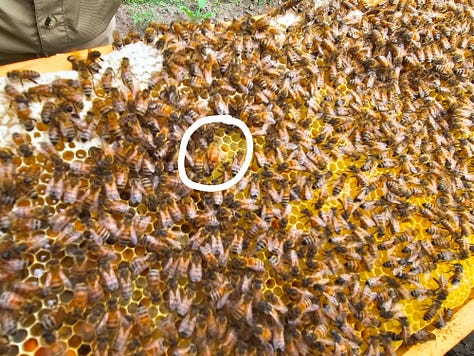
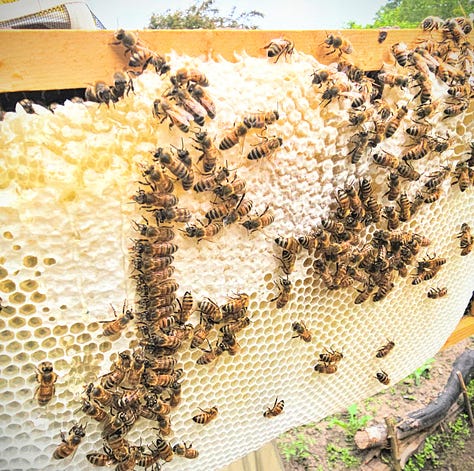
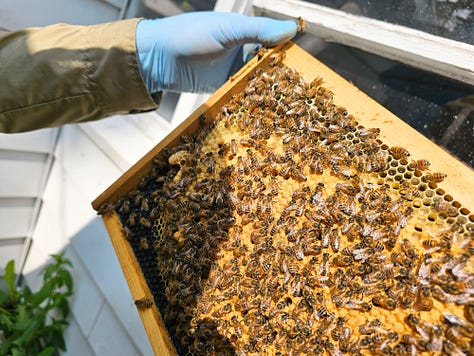
As of the recent Solstice, 8 of the 9 hives had a queen, 7 of which had returned from their mating flights and were laying eggs. Leaving one hive, rather out-of-sorts and understandably cranky, without a queen. We gave them a frame of eggs from a hive who could spare them, and watched in wonder as the colony changed in seconds; suddenly attendant to the “nursery,” organizing in a new formation to tend the next generation of bees, and all calming in the process. It will be a few weeks until they have a laying queen, depending on success at multiple stages. The oldest workers in this hive won’t live to see their new queen, but they perform their part steadily, having seen the one who can ensure the continuation of their colony. It’s almost biblical.
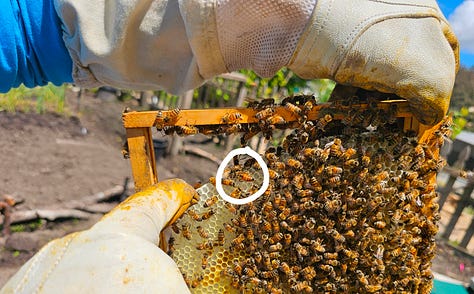
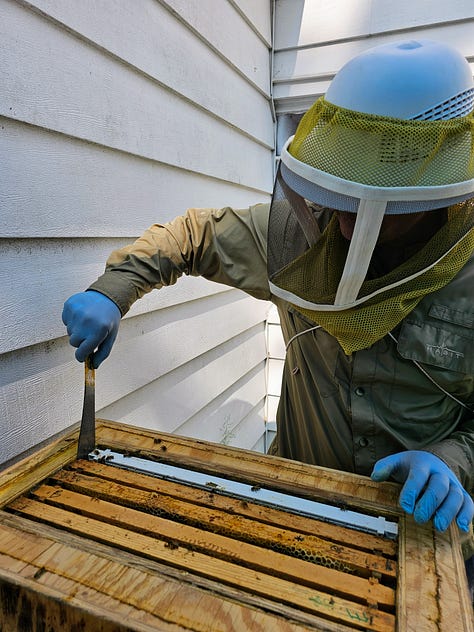


Soon, after ensuring that each hive has a productive queen and enough workers, we’ll be transporting most of the hives to other locations; rural properties of family and friends with more space. We’ll still manage the hives, which means a new adventure. Wish us well as we make the rounds, bee gear bouncing around in the back seat.
I’ll update you all on the plants next time. In the meanwhile, I’ll post photos from the gardens and mini-orchard over on the Chat. Stop by and contribute your own garden photos! Or bee photos, or photos of bees on blooms…
How’s your June so far? What are you growing? Have you seen a swarm of bees before? And for the beekeepers, do you have tips on swarm prevention?
—Erin, in Michigan
Comments
Nothing yet. Say the first thing.
Sign in to join the conversation.