
I knew the conversation wouldn’t be good.
I stood in front of my closet that morning with a pit in my stomach. You know the kind. The kind that shows up before the mind can even form the words.
I was already thinking of leaving the company. And deep down, I knew the feeling was mutual. This wasn’t fear. It was the sharp edge of discomfort. The quiet tension before a conversation you do NOT want, but can’t avoid.
I’m someone who feels deeply. I wear my heart openly - sometimes too openly in professional spaces. And yet that day I needed to hold my ground.
Not perform. Not explode.
Just hold.
So I chose my armour:
A tailored black suit. Crisp blouse. Structured. Composed. Unyielding.
It wasn’t just aesthetic. It was strategic.
That outfit became my first line of emotional defense. Not to hide, but to brace. Not to perform, but to protect.
And it worked!
My spine straightened. My breathing calmed down. I walked into that HR meeting and held my composure. Not because I didn’t feel anything, but because my clothing helped me contain it.
That suit became a boundary between me and the hostility in that room.
It helped me stay present, without unraveling.
And when I left the building, I cracked open.
But not before I got through what needed to be done. Not before I got through the revolving doors of corporate so no one could see.
Years later - last Friday to be exact - I stood in front of my closet again.
Different stakes. Same pit in my stomach.
The most important interview of my life. Most life altering interview of my life.
I reached for a suit again. Not the same one, but the same energy. Structured. Unshakeable. The kind of armour that says: I belong here, and you are going to remember me. And you are going to see me for who I am.
It worked then, too.
I walked in steady. I held my ground. And when I left, I knew I had done everything I could.
That is what armour does.
Not erase the feeling. But give you the scaffolding to move through it without breaking.
As a fashion psychologist who studies emotion regulation, memory, attachment, and social theory I need to finally tell you what nobody tells you about getting dressed:
It is not decoration. It is infrastructure!
You are not overthinking your outfit when you stand in front of your closet for twenty minutes before a hard conversation, a first date, a performance review, or a day when you just feel raw.
You are building scaffolding.
You are constructing the external framework that will help you hold yourself together when the world refuses to.
And the reason you need to do this - the reason getting dressed feels like preparation for battle some mornings - isn’t because you are vain or insecure or “too sensitive.” That language is bullshit and infuriates me.
It is because the world is structured to destabilise women.
Professionally, socially, emotionally? You are expected to regulate yourself constantly. (And men are not allowed to feel at all - right.)
Stay calm under pressure. Manage other people’s discomfort with your emotions. Perform composure even when you are being undermined, dismissed, or straight-up disrespected.
He can raise his voice in a meeting and it is “passion.” You do it and suddenly HR wants to have a chat about your “communication style.”
And you are supposed to do all of this without external support.
No institutional backing. No systemic protection. No one holding space for your nervous system to recover.
So you build it yourself.
And it starts in your closet.

Psychological research backs this up, but you already knew it was true.
Symbolic self-completion theory has a fancy name for what you already know: when you feel shaky inside, you reach for something that makes you feel solid outside.
That’s not fake. That’s strategy.
And if I have a say into the void, let me tell you: Clothing also functions as an emotion regulation tool.
Emotion regulation is how we manage emotional responses. Whether we are softening them, amplifying them, or reshaping them entirely (Gross already said that in 1998).
And what we wear plays an often overlooked role in that.
There are two main phases of regulation (by Gross, 2001):
Antecedent-focused regulation means preparing before an emotion unfolds
Response-focused regulation means supporting ourselves after the emotion hits
Clothing works at both levels.
We dress to preempt a trigger (like I did before that HR meeting, and again last Friday before the interview).
We also dress to recover. Reaching for something soft, familiar, anchoring, after the impact.
The fabric doesn’t just sit on the skin. It holds memory.
It is the external scaffolding for an internal shift.
That black suit I wore to the HR meeting became an anchor.
It’s made of lightweight wool, but its structure is impeccable.
The trousers are wide-legged, high-waisted - almost Marlene Dietrich in silhouette. The blazer is boxy, double-breasted, with lapels that point upward like armour. Making me feel fierce and sharp. Speaking of sharp.. sharp shoulder pads. No embellishment. No apology.
It doesn’t make me invisible.
It makes me undeniable.
When I wear that suit, I don’t walk into a room, nope. I enter it.
I don’t have to try to command space. I already do.
But armour doesn’t always need to be sharp.
Some days, when I feel safe enough, I soften.
I reach for a dress that drapes, or a fabric that flows. Something that feels gentle but grounded.
Armour doesn’t have to be rigid.
Sometimes it is silk. Sometimes it is structure.
The point is intention.
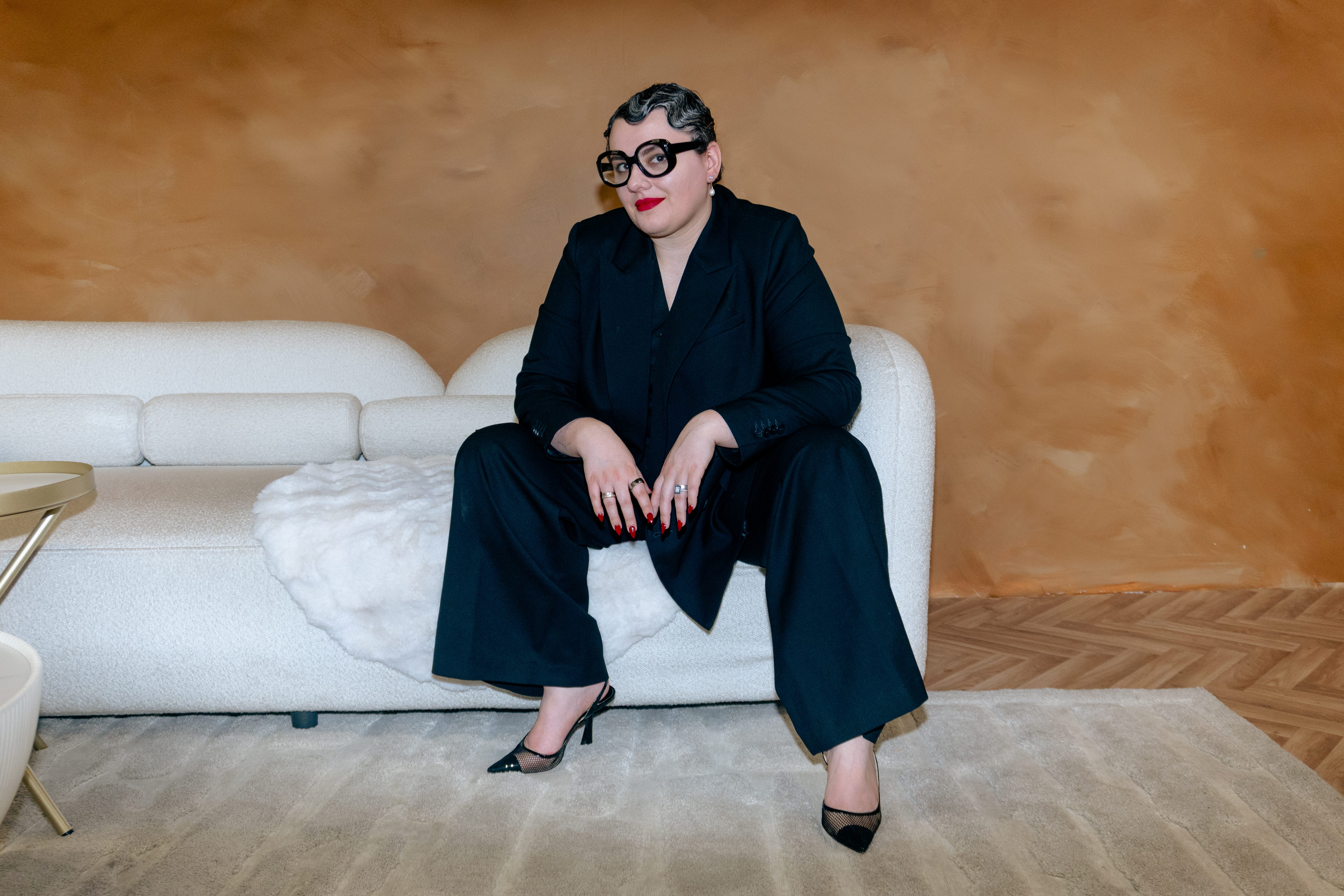
Photo Credit: Kaya Dawkins
When I was younger, armour meant something different.
It meant invisibility.
I wore jeans, T-shirts, and sneakers - just like everyone else in my hometown. I loved to call it the uniform of conformity.
Not because it felt like me, but because it made me less noticeable. Less strange. Less “too much.”
Whenever I dressed even slightly outside the norm, I got the look. You know the one.
That tight-lipped silence. Or worse ”You’re wearing that?“
Condescension wrapped in fake concern. As if they were worried about me, not just uncomfortable that I existed differently.
So I kept it safe? Because how could I not?
And the safer I dressed, the more invisible I became. Not just in body, but in personality.
I disappeared myself to avoid judgment. And I learned decades later the hard truth of that act.
That’s not armour. That’s erasure.
And now?
I don’t own a single pair of blue jeans. My one pair is black, wide-legged, and intentionally styled.
Sneakers? Only for workouts.
T-shirts? Only when they are styled to speak.
Today, armour doesn’t make me small.
It lets me be seen without being pierced.
And when I return to that hometown now, people still look. (More than ever actually)
And you know what? I’m no longer rattled by it.
I don’t want to belong there.
I belong to myself.
Funny thing? The same people who once questioned my style now offer compliments.
And yes, the irony isn’t lost on me.
You might be wondering: Why does this even matter? Why do you need armour in the first place?
Why do women need emotional armour to often just get through the day?
Because the world doesn’t protect us.
Professionally, you are expected to manage your emotions in ways men aren’t. To stay composed when challenged. To absorb hostility without reacting. To make other people comfortable with your competence.
Socially, you are expected to anticipate judgment before it arrives. To pre-regulate your visibility. To dress in a way that doesn’t invite commentary, but also doesn’t signal you have “given up.”
Emotionally, you are expected to recover from all of this on your own time, without support, and show up the next day ready to do it again.
That is not sustainable without scaffolding.
And for a lot of women, clothing is the scaffolding.
It’s not about faking confidence. It’s about building a container for it.
Clothing lets us navigate hard moments without abandoning ourselves. It doesn’t numb the feeling but it gives it form.
Containment.
Composure.
For highstakes meetings, hard conversations, heartbreak days, or transitions that test us, clothing can become a lifeline.
Not a costume. Not a mask.
But a reminder of the strength we already carry.

Armour protects you while letting you be seen.
Erasure protects you by making you disappear.
When I wore jeans and T-shirts in my hometown, I wasn’t armouring up. I was erasing myself.
I was pre-regulating my visibility to avoid judgment I had learned to expect.
That’s not protection. That is fucking compliance.
Real armour does the opposite.
It says: I’m here. I’m visible. I’m taking up space. And I’m protected enough to stay present while I do it.
That’s the difference between dressing to hide and dressing to hold your ground.
We all have it. I know we do. I ran studies on that.
Sometimes it’s a suit that cuts like a sword.
Sometimes it’s a soft knit that wraps around grief.
Sometimes it’s a necklace passed down through hands that held us steady.
Sometimes it’s the lipstick you put on before a hard conversation, not because it changes anything, but because the ritual steadies you.
Armour isn’t one thing. It’s whatever helps you stay intact when the world asks too much.
And if your wardrobe doesn’t hold space for both your strength and your softness? If getting dressed still feels like erasure instead of preparation…
…that is worth examining.
Next time you are standing in your closet before something hard, ask yourself:
1. Am I dressing to be seen, or to disappear?
2. Does this outfit help me hold my ground, or does it ask me to shrink?
3. What do I need today? Structure or softness? Sharpness or flow?
4. Am I building scaffolding, or am I performing compliance?
Your clothing is working for you or against you.
There is no neutral (sorry if that is inconvenient).
And if you are still dressing to make other people comfortable? That is your answer.
Emotional armour shouldn’t be necessary.
Women shouldn’t have to construct external frameworks just to survive workplaces, social spaces, and systems that refuse to hold them steady.
But until the world stops treating women’s nervous systems as expendable..
Your wardrobe is the infrastructure.
Not vanity. Not frivolity. Not “just clothes.”
Survival work!!!
And you are allowed to take it seriously.
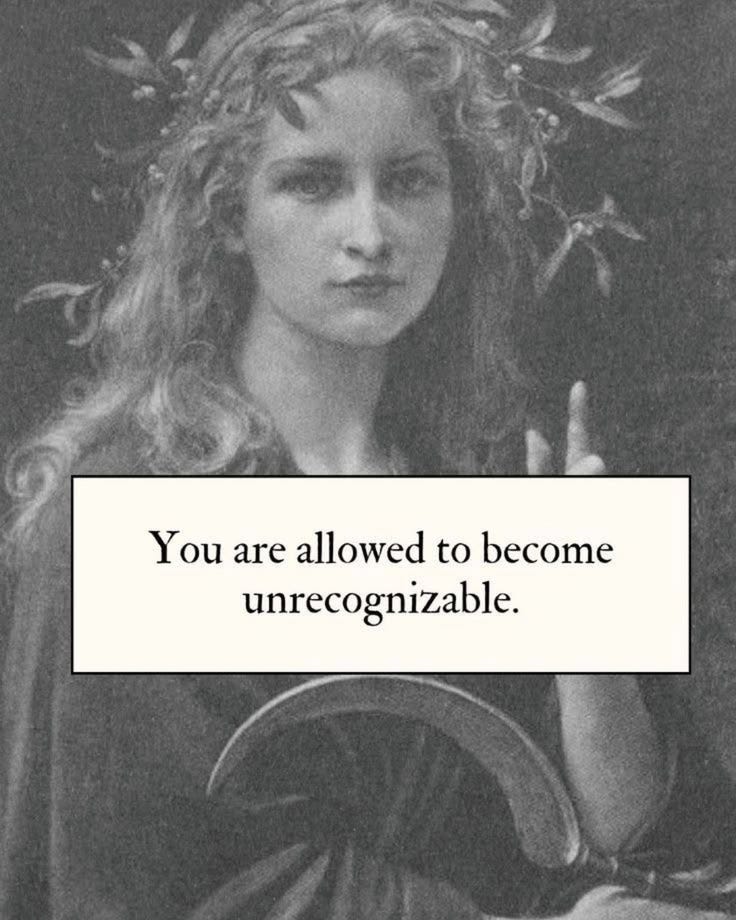
What is your armour?
What do you reach for when you need to brace, but not hide?
Drop it in the comments. I want to know what holds you steady.
I write about how clothing holds what the world won’t. Your emotions, your boundaries, your right to take up space. If this landed, join me at The Style MYᴺᴰ Edit.
PS: I missed posting in my Once Upon A Lie series last Friday - I was too busy getting dressed (and stressed) for that interview. It’ll be back this week. Turns out even deconstructing fairy tales takes a back seat when you are armouring up for real life.
No posts
Comments
Nothing yet. Say the first thing.
Sign in to join the conversation.