
What’s in this post:
INDEX: writing memoir, Kathryn Hoffman
We are accepting submissions. Learn how below.
In Pursuit essay: Individual liberty is served by pursuit of the common good: Abraham Lincoln written by Barack Obama
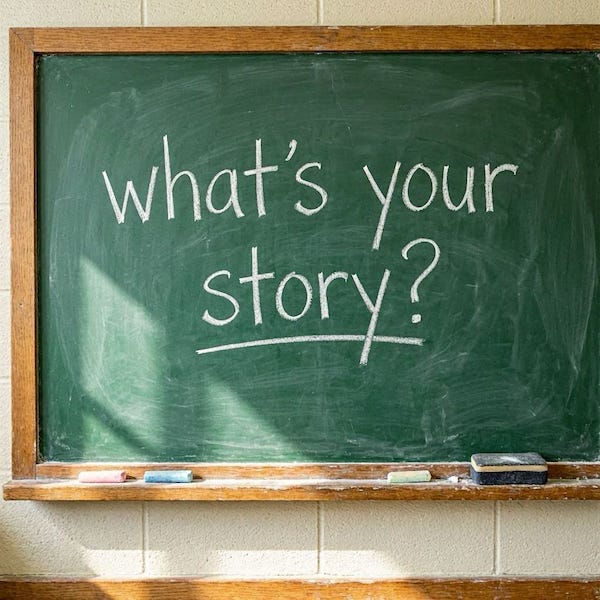
“Everyone has a story to tell.” Of course. But take a moment to consider this truism literally. Decades ago, as I sat in my mother-in-law’s living room, listening to her reminisce about life as wife of a country doctor in a tiny rural village in north-central Spain, she suddenly interrupted herself to note, “I could write a book.” After a quick beat, she immediately added, in the spirit of generosity, “Everybody in the world could write a book.”
I certainly applauded the sentiment–each and every one of us have lives that matter. But what also popped into mind was the startling image of piles and piles, endless piles, of memoirs, in every hamlet, town and city in the world. World population today is roughly 8.3 billion, with the people meter spinning at a dizzying rate of more than 2.5 million new lives per week, which would translate into enough books to fill the Library of Congress, the largest library in the world, in less than four months.
After my head stopped spinning, however, I caught myself squirming; were there life stories I thought, um... perhaps, didn’t really merit being told? That’s an ugly thought. Which lives did I think were more worthy or less worthy of being recorded and why? Consider your own family, your neighborhood, the town or city in which you live now. Want to try dividing those folks into the story-worthy and story-unworthy? What criteria would you use?
Memoir has a way of raising such troublesome questions. And yet, memoir as a genre is booming, not despite such issues, but rather because of them. Memoirs resonate because they give readers the opportunity to share in someone else’s most intimate, profound experiences, which can, in turn, inspire identification, reflection and empathy. Memoirs offer us a ready-made connection to the messy, complex realities of human existence.
As Helena de Bres, author of Artful Truths: The Philosophy of Memoir, observed, as a guest on the podcast Philosophy Talk, “... compared to other art forms, [with memoir] you’re directly engaging with the lived experience of another actual human... So you have a much less filtered connection with the writer or the artist than you do in fiction...There’s this other live human who’s whispering straight into my ear.”
Of course, there is also this whole business of what counts as “truthiness” in memoir and the inherently blurry lines that divide objective fact from subjective experience. Can you trust the memoirist whispering in your ear? How much does that matter? Can the memoirist even trust herself, because as de Bres points out, “there’s some evidence that suggests the more you think about an experience, and presumably the more you write about it, and revise your draft of your memoir, the further you get from the truth of that experience. Memoir writing is a risky epistemic enterprise in that way.”
In an August 31, 2024 article that appeared in The Writer, Jack Smith asked a panel of memoirists, agents, and publishers to weigh in on various aspects of memoirs. One of the points made by novelist Peter Selgin was the following: “I think the key thing to understand is that–though based on our memories and experiences–unlike an autobiography, a memoir is never about us. Even when we’re the main character of our memoirs, we’re not the subject. The subject is something bigger than ourselves, a theme to which certain experiences we’ve had attach themselves.”
Memoir, then, must necessarily look outward as well as inward. Of the many challenges raised by memoir, one of the most fraught is how memoirists write about family. There is, of course, an extraordinarily wide range of possible contexts in which families exist, from the horrific to the heroic and everything in between. Considerations of context are always essential.
“It’s tricky,” acknowledges de Bres, who has also written a memoir of her experience being a twin, How to Be Multiple: The Philosophy of Twins. “I think there are three different types of broad goals memoirists are aiming at, one is... capturing the experiential truth of your past, another is producing a work of art... And another one is acting ethically, being decent towards those you write about.” De Bres is optimistic that all three can coexist. That doesn’t mean keeping those goals in balance is always easy, however.
Kathryn Hoffman helps writers navigate the obstacles and opportunities in writing about family. She facilitates writing groups for mothers of special needs children, and is herself writing a memoir that includes her childhood, as well as the experience of raising her special needs son. “I’ve been leading my writing workshop for Moms of Children With Disabilities since 2021, and many of the women have been with me for at least two or three years. Parenting a child who has special needs can be very isolating and it’s hard to meet other moms who have similar experiences and worries.”
Hoffman’s commitment to these writing workshops grew out of her own exploration of memoir as a medium. Early in this journey, she began to take classes in memoir. In the course of these classes, says Hoffman, “I’ve become close friends with some of the other writers, and we laugh about how the tell-all nature of memoir really breaks down barriers and can be a fast-track to friendship. You end up feeling close to this person who has bared their soul to you. It’s like, Yay! I’m not the only one on this earth whose life at times feels like a dumpster fire. You get the sense that there’s other people in the trenches with you, fighting for their lives. I think that’s the beauty and power of memoir. You feel less alone when you realize that everyone has struggles at some point or another. Of course, as adults we know this, but there’s something so satisfying about reading a tale of survival.”
David: Researchers have found that writing about your life can contribute to psychological healing and our sense of wellbeing. Have you found this to be true in your own writing? And how important is this motivation to people who join your writing groups? Does a sense of community also enter into this equation?
Kathy: I think in the beginning it may be more about community, but then through the writing they find an outlet for their feelings and experiences. That’s how it started for me. Years ago, I saw a post on Facebook about a writing workshop in my area for moms of children with special needs. I was interested for two reasons: I’d been a writer my whole life but had gotten away from it after my son was born. And I wanted to meet moms dealing with similar issues. The first session, the words just poured out of me. And the second, and the third… That was the very beginning of what would become my memoir. I bled onto the page—the good, the bad, the ugly—and it was so cathartic. A friend once said to me, “You’ll write your way through this.” My son is 18, and I still am.
The workshops I lead are based on the Amherst Writers & Artists (AWA) method, and follows guidelines to make participants feel safe enough to express themselves freely. For one, if someone chooses to read aloud what they’ve just written, we only comment on what’s successful about the writing—a metaphor, for example, or the structure, voice or prose. We also treat the piece as if it’s a work of fiction. This takes some getting used to: We say “the narrator” instead of “you.” And what we share doesn’t leave the group.
There’s at least one writer in our workshop who is interested in publication. She wants to raise awareness about neurodivergence, and that’s something that has come up within the group. We agree that often what we write needs to be shared among the general population, portraying what it’s really like to raise a child with a disability. The depictions in media tend to be of individuals who have triumphed in some way, i.e. a teen with Autism who makes the game-winning shot after being a bench-warmer for the season, or the non-speaking adult who writes a book. These are departures from the norm and though they deserve to be celebrated, the difficulties shouldn’t be airbrushed out of the picture. People need to see realistic depictions of disabled individuals so they understand that resources and supports are needed for this vulnerable population.
David: When a memoirist writes about family members, those individuals have little control over how their stories are told or interpreted and what’s included or not. That’s especially true for family members who are vulnerable or have diminished agency for any of a variety of reasons–factors of age, health, special needs, or other circumstances. How does an memoirist balance competing concerns? Is it possible to adopt certain guidelines that can be applied in all–or most–situations or are the boundaries always changing and if so, how and why?
Kathy: In the case of my son, who does not read or write and who is intellectually disabled, I worry about portraying him in a compassionate yet realistic way. It hasn’t been easy raising him; he has some aggressive behaviors because he is primarily nonspeaking and cannot protest verbally. So though I include scenes showing this, I am careful to include my own behaviors that are less than flattering. I try to treat all my “characters” with grace and compassion, but especially my son. I write about him from a place of love and respect. It also helps to have trusted readers who can tell you whether something you’ve written seems unfair or harsh.
One of my workshop teachers at Bennington, Shawna Kay Rodenberg, wrote Kin, a memoir about growing up in Appalachia. It has been called “a multilayered portrait of a misrepresented people,” and indeed, she writes candidly about the region and its people. As a result, some of the folks from her hometown didn’t appreciate their portrayal. She said she has had to make peace with that, knowing that she wrote the story from a place of truth and with a sense of humanity.
What I hear overwhelmingly in my workshop is the desire to be seen and heard; in the not so distant past, disability was something that families felt they had to hide away. Writing about and sharing stories breaks that silence and hopefully gets people talking about ways to support families and individuals with disabilities.
David: Prompts are one of the staples of writing classes everywhere. How do you choose and use prompts in the groups that you facilitate? What makes a prompt particularly relevant or effective?
Kathy: I largely choose a prompt based on a feeling I get when I come across something I read. If a piece of prose or a poem feels especially resonant or true, I imagine that it will touch others as well. Sometimes the prompts focus on motherhood or on womanhood. For example, I recently used a poem called “Good Mom” by Tina Cane that appeared in the literary magazine MER. It is written as one long sentence and is a humorous look at being a mother; the narrator admits to swearing under her breath while driving her kids here, there, and everywhere. The prompt was to follow Cane’s style and write without punctuation about a funny or warm memory. I rarely do humor, so I chose this piece for its light touch! One writer said how freeing it felt to write without punctuation. As I mentioned, the excerpts aren’t always about being a mom; the experience of being a human is fraught and complicated enough!
One of my favorite prompts is the poem “Wild Geese” by Mary Oliver, which begins: “You do not have to be good./ You do not have to walk on your knees/ For a hundred miles through the desert, repenting…” I’ve used these beginning lines as the prompt itself. But the writers always have the option to simply write about what’s on their minds or to write to whatever they are feeling in the moment. I’m careful to let them know that it’s not an assignment.
What always strikes me is how different the writers’ responses usually are to the same prompt, whatever it is. I’m continuously impressed by how profound and insightful each person’s writing is. There’s a magic to writing as part of a group in response to something that’s just been read aloud.
Kathy Hoffman grew up in Wilbraham, a little town in western Massachusetts known for being the home of Friendly’s ice cream. Raised without a television, she became an avid reader but has a blind spot for pop culture references from the late 70s. A love of reading naturally led her to a life of writing. In 2025 she earned an MFA from Bennington College, where she studied with Saeed Jones (How We Fight for Our Lives), Garrard Conley (Boy Erased), Doug Bauer (The Book of Famous Iowans) and Hugh Ryan (My Bad: A Personal History of the Queer Nineties and Beyond). Since 2021 she has led a writing workshop through Westport Writers’ Workshop.
Since 2021, she has led a writing workshop through Westport Writers’ Workshop for Moms of Children Who Have Disabilities. Favorite memoirs: Long Live the Tribe of Fatherless Girls, by T Kira Madden, You Could Make This Place Beautiful, by Maggie Smith, In the Dream House, by Carmen Maria Machado, and Mary Karr’s The Liars’ Club.

Have an essay for Writer’s Desk?
A piece of regional writing for Sense of Place?
A photograph that captures North Dakota or the surrounding region for Snapshot?
We’re building this together.
Send submissions or questions to Editor David Bjerklie at david@thestudynd.org.
This essay was first published by In Pursuit, an initiative of More Perfect, a bipartisan alliance of over 43 presidential centers and many of the country’s leading educational and civic initiatives. Visit to learn more about the project.
Comments
Nothing yet. Say the first thing.
Sign in to join the conversation.