
Welcome BACK to The Student Success Stack!
I’m Jordan Stein, Head of Public Affairs and Communications at EdSights, and I’m excited to be back in your inbox for the next installment of our ongoing conversation at the intersection of higher education, public policy, technology, and student support.
In this edition, you’ll find a collection of news stories, analysis, and commentary pieces that got me thinking, along with a few thoughts on why they matter for student success leaders.
But first, I’m excited to share conversations with two thoughtful leaders approaching student success from very different perspectives.
Former Waterloo, IA Mayor Quentin Hart, who in addition to spending 10 years as his city’s elected Chief Executive previously spent more than nine years in student affairs and student support at Hawkeye Community College; and
My colleague, EdSights Chief Technology Officer John Hampton, who has great insight into how real people - in our case students and student and academic affairs professionals - must remain top of mind in the technology we build and maintain.
After you read this edition, make sure to check out a recent roundtable panel the EdSights team convened, bringing together Georgia State Rep. Phil Olaleye, Savannah State University President Jermaine Whirl, and University of West Georgia Grad School Dean Matt Varga diving into how cross-sector collaboration and innovative tools are essential to meeting today’s moment and supporting students:
Now … let’s dive in.
I had the chance to catch up with Former Waterloo, IA Mayor Quentin Hart. Before serving as mayor, Hart spent nearly a decade working in student affairs and student support at Hawkeye Community College.
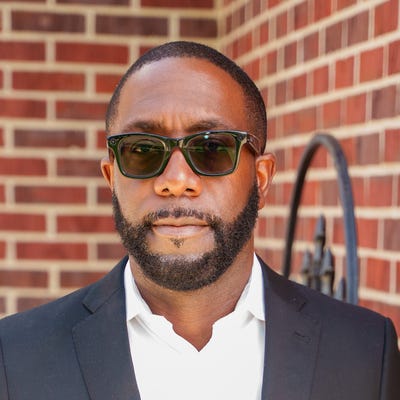
SST: Before serving as mayor, you spent much of your career in higher education and student affairs. Looking back, what lessons about supporting students most influenced your approach to leadership and public service?
Mayor Hart: One of the most important lessons I took from my higher education career was that equity is not a concept, it is a practice. It means giving students what they actually need, not treating everyone the same and calling it fair.
In recruitment, I saw students arrive full of optimism. Nervous, yes, but genuinely ready to succeed. No one comes to college planning to drop out. Then as a retention coordinator, I started seeing those same students on the other end of that journey, weeks or months before they walked away. The excitement had eroded. Not because they stopped wanting to succeed, but because the institution was often applying the same approach to students with very different circumstances.
That experience shaped everything that came after. In public service, cookie-cutter thinking produces the same inequitable outcomes it produces on campus. If you want to lead well, you have to meet people where they are and provide what they specifically need to move forward.
SST: You have spent your career working with students, families, and communities. What do you believe are the biggest challenges facing today’s students, and where do you see the greatest opportunities for colleges to make a difference?
Mayor Hart: The biggest challenge facing today’s students is that life does not pause because you are enrolled. A single parent’s child does not wait to get sick until after an assignment is submitted. A working student’s financial pressure does not take a break during midterms. Students are carrying real weight into the classroom every day, and institutions that ignore that reality will keep losing students they could have kept.
The opportunity is real. Colleges have a chance to reimagine how education works. That means multiple formats, in-person, online, televised lectures, flexible scheduling, so that education bends toward the student’s life rather than the other way around. It means teaching content that is relevant, so students can see themselves and the opportunities that exist for them. And it means wrapping all of that in holistic support and programming that addresses the whole person, not just the academic one.
Colleges that get this right will not just improve retention numbers. They will change what higher education means to the communities they serve.
SST: Student success is often discussed in terms of academics and finances, but you’ve long emphasized belonging and engagement. How should institutions think about creating environments where students feel seen, supported, and connected?
Mayor Hart: Belonging in higher education means students have a sense of comfort that allows them to show up as their authentic selves. Free from microaggressions. Free from judgment. Able to see themselves reflected in the campus environment, in the faculty, the curriculum, the programming, and the leadership. When that is missing, students feel it immediately, and it quietly chips away at their ability to focus on why they came.
A well-rounded educational experience requires institutions to be intentional about creating that environment. It means building safe spaces for freedom of expression where students feel genuinely empowered rather than just tolerated. It means designing learning environments that offer multiple formats so students can engage in the ways that work best for them. And it means giving students room to be creative, to bring their full selves into the learning process.
Institutions that get belonging right do not treat it as a side program. They build it into the daily fabric of campus life.
SST: As mayor, you had a front-row seat to the connection between education, workforce development, and community wellbeing. What role do colleges and universities play in helping communities thrive?
Mayor Hart: As mayor, one of my four strategic goals was called Waterloo Works, focused on building the most educated and credentialed workforce in the state and the Midwest. That goal was rooted in a belief I hold deeply: the more educated your citizenry, the greater the opportunities available to them. The better credentialed your community, the more attractive you become to business investment. The more training pathways you create, the greater your odds of raising the standard of living for everyone.
That meant thinking about education at every level. Short-term credentials and certifications alongside traditional degrees. Our school district transformed the educational experience by creating the Waterloo Career Center, offering technical training pathways for students who might not see themselves on a four-year track but absolutely see themselves building a career. I also served on several local and statewide workforce boards, working alongside educational institutions to align workforce investment with community need.
Colleges and universities are not separate from community wellbeing. They are central to it. When higher education leaders understand that duality, that their work inside the institution directly shapes what is possible outside of it, that is when real transformation happens.
SST: If you could give one piece of advice to higher education leaders focused on improving student success over the next decade, what would it be?
Mayor Hart: The “collage” and the equity piece were the cornerstones of my higher education experience. When I left to take the mayor role, I was serving as Associate Director for Multicultural Affairs. That work shaped how I think about this question.
Student success is community success. It is the attraction of business. It is the very essence of what every community needs to grow. And it requires leaders who understand that equality does not equal equity. Those are two different commitments, and we have to be clear about which one we are practicing.
My advice is this: do not let the current climate convince you that diversity and inclusion in education has anything other than a positive impact on our daily lives. This has nothing to do with forcing ideology on anyone. To me, college is a “collage.” A collection of theories, ideas, terminologies, and personalities being placed in the minds and hearts of people. That exchange is the point. Higher education is the last resting place before what some call the real world, and we have an obligation to give students a well-rounded experience that does not fluctuate based on the whims of presidential leadership or political pressure, because every shift in that direction adds its own biases.
The student’s mind is a tapestry. The ideas and perspectives we share shape their minds, which empowers their hearts, which shapes their behavior and the spirit of their expectations. That is the work. Higher education leaders who hold that line over the next decade will be the ones who deliver on the promise of education itself, which is freedom, liberation, and growth.
EdSights partners with hundreds of colleges and universities across America to deliver products and solutions to create a more student-centered higher education experience. The most impactful technology leaders balance building and scaling with a relentless focus on the people who use their products every day. I’m excited to introduce my colleague, EdSights CTO John Hampton. John’s work sits at the intersection of technology, product development, and student success—and I wanted to get his perspective on how technology leaders build products that never lose sight of the people they serve.
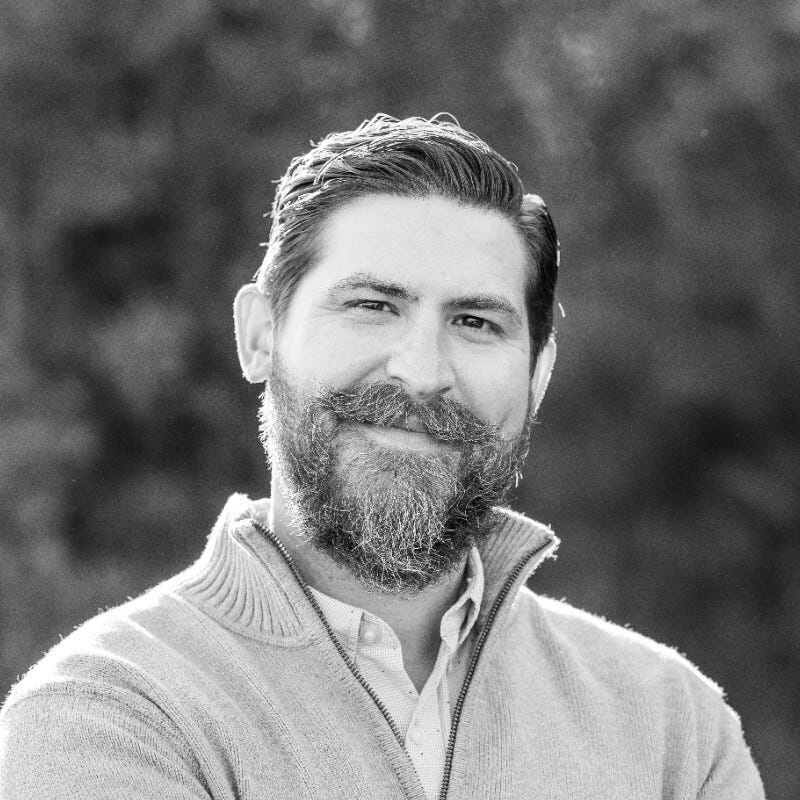
SST: As CTO, you’re responsible for the technology behind EdSights. How do you make sure that real students and student affairs professionals—not just metrics and dashboards—stay at the center of product decisions?
John Hampton: Our mission is to build a student-centric higher education system and we believe the student voice is the key to transforming education and creating the learning environment of tomorrow. I take that literally. If you believe it, it can’t just live on a slide; it has to show up as a baseline requirement in everything we design. So every product decision starts from the same question: does this elevate the student voice, and does it help student affairs professionals hear that voice? If the answer is no, it doesn’t much matter how clever the feature is. Our partners are a big part of it, too. The people on campus doing this work every day see things we can’t from where we sit, so their feedback feeds directly into our product and engineering roadmap. We’re not building in a vacuum and then handing it over the wall; we’re building alongside the people who will actually use it.
SST: What’s something you’ve learned about students through building EdSights that surprised you and changed the way you think about technology?
John Hampton: What surprised me is how often students are more candid with a text thread than they’d be with a person across a desk. I went in not really knowing how much students would engage over SMS, and the level of engagement was a pleasant surprise. The low barrier to entry turns out to be everything. There’s no app to download, no office hours to catch, no appointment to dread. You just reply to a text. And when the thing on the other end is helpful and non-judgmental, that combination is more powerful than I expected. That changed how I think about what we’re building. The goal isn’t to make the AI feel human. Chasing that is a losing game. Once you stop trying to make it human and start making it useful and easy to reach, a lot of decisions get easier.
SST: EdSights supports hundreds of campuses and hundreds of thousands of students. What’s the biggest challenge in building technology that feels personal and human at that scale?
John Hampton: The failure mode I worry about most isn’t a message that’s too generic. It’s the opposite problem, when the tech is straining to feel personal and lands as canned, or a little off-putting. That’s worse than a message that’s obviously automated. So for us, “personal” isn’t about dropping someone’s first name into the right spots. It’s about meeting a student where they are: what campus they’re at, what point in the semester it is, what they told us last week. A first-year living in the dorms and a working parent taking night classes both deserve to feel seen, and “seen” means something completely different for each of them. One size never fits all here.
SST: From the perspective of a technology leader, how do you think about the balance between the power of cutting-edge AI technology and human connection in student success?
John Hampton: We believe AI should expand human connection, not replace it. That’s the whole philosophy in one line, and it’s the test every decision runs through. We look at AI as a tool, and the job of that tool is to surface the students who need support and steer them toward a person who can do something about it. Because there’s a limit to what the tool should do. A student in real crisis doesn’t need a cleverer AI; they need a person, fast, and everything we build is pointed at getting them there. The technology is impressive, but it isn’t the point. The point is the human on the other side of it. AI’s role is to connect the right student with the right person at the right moment, then step back.
39 million.
That’s the estimated number of Americans who have earned some college credit but left without a credential.
A thought: We spend a lot of time discussing the students colleges hope to enroll. One of the biggest opportunities may be supporting the millions who already started and simply need a pathway back to completion.
New Student Voice survey findings suggest students are embracing AI tools while simultaneously expressing uncertainty about how institutions are responding. Many students report wanting clearer guidance, stronger policies, and more support navigating an AI-enabled learning environment.
A thought: Many campuses have spent the past two years debating whether AI belongs in higher education. Students have already moved on. The question now is whether institutions can provide the clarity and support students are asking for.
College Possible is integrating its AI-powered advising tool into the Common App platform to help students navigate applications, deadlines, and enrollment tasks, with a particular focus on first-generation and lower-income students.
A thought: This is a good example of AI being used not to replace advising, but to reduce friction in a complex process. For many students, the barrier is not aspiration — it is navigating the right steps at the right time.
This opinion piece argues that higher education’s central challenge is not only getting students in the door, but helping them finish. The author highlights how seemingly small disruptions—financial aid delays, transportation issues, work schedules, or unexpected expenses—can compound until a student stops out.
A thought: Discussions about the enrollment cliff often focus on recruiting students. But for many institutions, the most important students may already be on campus. This premise resonates strongly with many student success practitioners focused on helping students persist and complete.
The Chronicle examines efforts to build AI fluency across higher education, including through community college partnerships and workforce-focused initiatives. The piece raises important questions about how institutions define AI literacy and prepare students for an evolving labor market.
A thought: “AI fluency” is quickly becoming the newest buzzy workforce-readiness phrase. The challenge will be defining it in a way that is practical, equitable, and durable enough to survive rapid changes in the technology itself.
This conversation with NYU’s Zoe Ragouzeos explores how institutions can move beyond counseling centers and embed well-being into the broader student experience.
A thought: Student well-being cannot sit on the margins of campus strategy. If loneliness, mental health, belonging, and stress shape whether students persist, then well-being is part of the student success infrastructure.
The Chronicle looks at the growth of stackable credentials and the tension between short-term workforce alignment and long-term transferability. For these pathways to work, credits and skills need to carry value across employers and institutions.
A thought: Flexibility is becoming central to student success. But flexibility only helps students if the system is legible, transferable, and built around the way students actually move through higher education.
This piece highlights programs supporting students who have experienced foster care, including models that combine financial aid guidance, housing support, mentoring, and community-building.
A thought: One of the most important reminders in student success work is that not all students experience college the same way. Broad-based supports matter, but targeted interventions can be transformative for students facing unique challenges.
Thanks again for reading The Student Success Stack. If there is a story, report, or perspective you think should be featured in a future edition, I’d love to hear from you.
Until next time,
Jordan
No posts
Comments
Nothing yet. Say the first thing.
Sign in to join the conversation.