
Hello and welcome back to The Student Eye, a publication for university students and those interested in higher education across the UK.
This week, we first take a look at the course cuts at the University of Nottingham and staff strikes. After that is our unpicking of the Office for Students’ new strategy document.
We hope you enjoy this week’s edition of The Student Eye, and please share with anyone who may be interested!
By Oliver Hall
The biggest story in higher education this fortnight is almost certainly the course cuts at the University of Nottingham. It announced last week that it will axe all of its modern language and music courses for the next academic year. It also said that it would look to “reduce its nursing offer”.
The move comes in light of extreme financial pressures and the cutting of more than 250 non-academic roles that it announced in April. In the press release making the announcement it said that “This is not unusual; we constantly review the courses and modules we offer in light of student demand and other factors.”
Clearly, this is extremely unusual. There are hundreds of students enrolled to study languages at the university and it had even accepted some students onto those courses for the 2026-27 academic year. Several students in that situation told the Student Eye that they had been notified of the changes by email and offered entry onto different humanities courses.
The move is yet another blow for modern languages teaching, which has been suffering at secondary and higher education level across the country. The University say that student demand played a role in the decision making and that it will assist currently enrolled students in finishing their studies.
Elsewhere, staff at the Lancaster University and the University of Derby have announced that they will go on strike in protest against proposed job cuts. Both strikes are set to take place in late November.
As always, the move will come as a blow to students who are again stuck in the crossfire. Both universities argue that they have no choice given their financial situations. The University and College Union says that there is “a mandate against needless job cuts”. It is hard to see where a solution might come from any time soon.
By Oliver Hall
After a consultation process lasting several months, the Office for Students (OfS) announced their new “strategy” for 2025-2030 this week. The document is intended to be a guiding light for the organisation for the next several years and has received input from people across the industry. As you might expect from the regulator, it isn’t remotely straightforward.
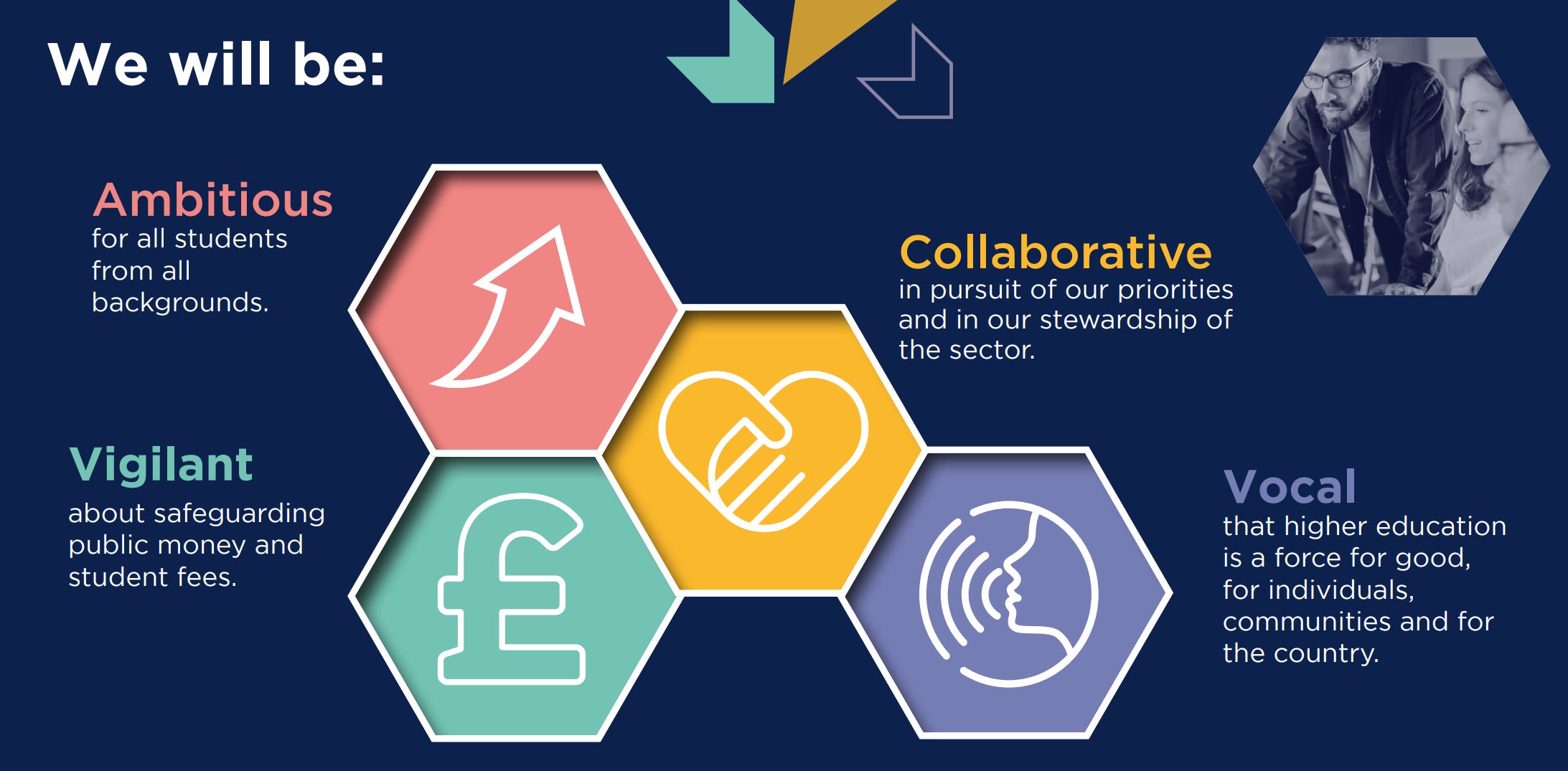
Essentially, the OfS have added four new guiding attitudes on top of their three primary goals of “quality”, “sector resilience”, and “student experience and support”. Let’s take each of those new attitudes in turn and explain what, if anything, they mean for students across the country.
Ambitious - For students from all backgrounds.
This one explains itself really. This is a commitment from the regulator to be focused on access, to drive improvements across the sector. In their role, you might expect to OfS to intervene when institutions fall short. Whether that happens remains to be seen
Vigilant - About safeguarding public money and student fees.
This section is largely unchanged from previous strategies. The OfS says that it will increase focus on effective governance and leadership, as well as maintaining an “up to date assessment of financial risk” at “an institutional and a sector level”. They also say that they will target action where there is most risk to taxpayers and students.
Collaborative - In pursuit of our priorities and of our stewardship of the sector.
Here, the OfS talk about collaborating within the sector and outside of it. It of course talks about collaborating to mitigate risk but also with organisations such as Skills England to help meet national need.
Vocal - That higher education is a force for good, for individuals, for communities, and for the country.
The OfS says that it will “champion the many benefits of higher education for society, culture and the economy and regulate in a way that enables universities and colleges to drive growth, create opportunity, champion free expression and support a flourishing society”. The industry could certainly use a bit more of that but, again, and as you might expect, detail is thin on the ground.
Aside from those new “attitudes”, there are some other significant changes from the document that was first circulated in December 2024. The first of those is in the “Quality” section, where the focus has shifted more towards “collaboration” and sharing good practice.
The “Student experience and support” section has similar sentiments. Instead of the proposed “model student contract” that was floated previously, the OfS now says that it focus on helping students understand their rights. It is hard to read that as anything other than a softened stance. The regulator has also dropped proposals to publish case reports and of intelligence sharing. There had previously been a commitment to publish data on sexual misconduct across the sector - that has been dropped.
On the resilience front, the OfS acknowledges the risks facing the sector and says that it will work more closely with institutions to safeguard against, and plan for, closures.
Although this isn’t a document for students, it does dictate how the sector will be regulated for years to come. The changes may seem minor on the surface, it is clear that some proposals have been significantly softened. That may reduce the burden on providers in a time of financial challenges, but it could risk putting student experience in the way.
Each week, we bring you a selection of our favourite stories from student publications around the UK.
Imperial’s Felix reports on their university joining the growing number offering their students free access to ChatGPT. It’s an intriguing trend, especially given most haven’t decided how their students could or should be using it.
The Student reports on the new student accommodation plans in Edinburgh. They will look to help ease the student accommodation crisis that is continuing there and across the country.
This Glasgow Guardian article from two weeks ago has important reporting on the university’s response to mistakes in its handling of a student death. It’s a powerful read on an important subject.
Comments
Nothing yet. Say the first thing.
Sign in to join the conversation.