
(1) All the better to see you with, my dear
Sometimes, to solve an intractable problem, you have to look in the most unexpected places for clues. So it was when trying to tackle the math of physical network optimisation.
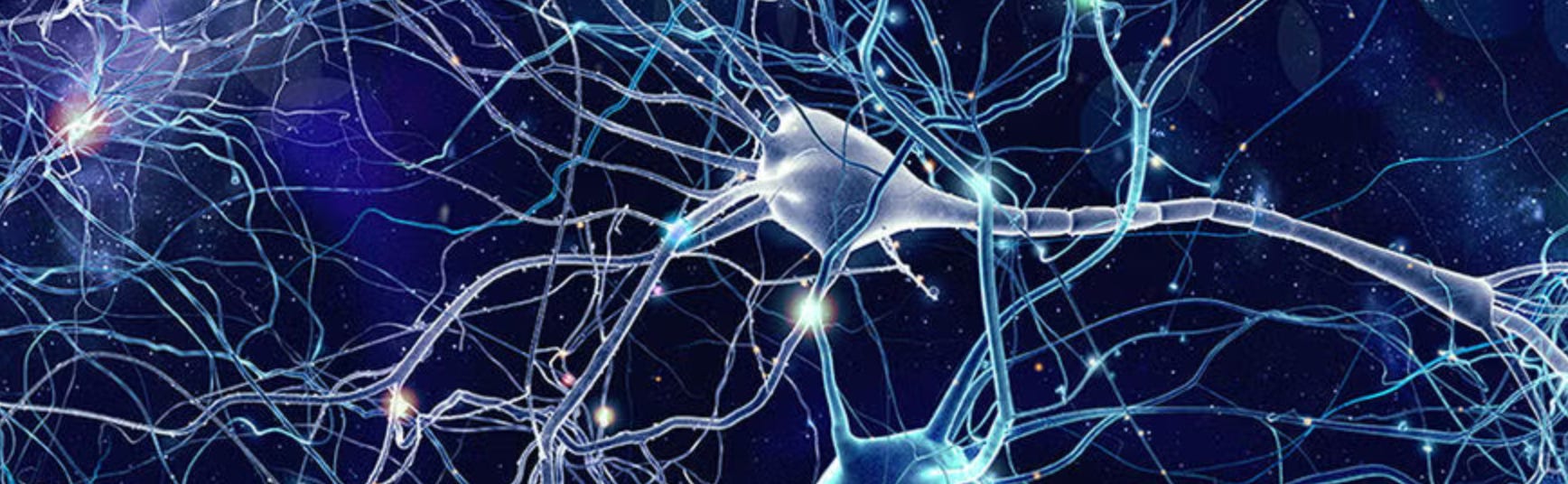
Some networks such as social, neural, etc. are virtual or abstract, whose connective structures are characterised by their nodes. To tackle physical networks such as real neurons or blood vessels, researchers had to think differently. Very differently.
“Now Albert-László Barabási, of the Network Science Institute at Northeastern University in Boston, and colleagues have found that physical network structures can be better explained by a different hypothesis: The networks seek to minimize not their length but their surface area.
“It’s easy to see why surface area should be the most relevant quantity for networks of blood vessels and other tubelike structures that are nothing but surface area. For other systems, such as tree branches and nerve cells, the outer surface of a network link is often the most biologically expensive to construct. In testing the hypothesis, however, the researchers hit a wall: Calculating the surface-area-minimizing network structure is a computationally intractable problem. There are too many possibilities for the thickness and position of all the network branches, and it’s too difficult to exactly model the junctions where branches smoothly join together.
“But then Xiangyi Meng—Barabási’s collaborator and former postdoc, now on the faculty at Rensselaer Polytechnic Institute—made a critical discovery: String theory, he realized, had already grappled with a mathematically equivalent problem. In string theory, reactions among elementary particles are represented as continuous branched manifolds called worldsheets, which evolve in a way that minimizes their surface area. Exactly solving the surface-minimization problem is just as intractable for string theorists as it is for network theorists. But the string theorists had a decades-long head start, and they developed mathematical tools to find useful approximate solutions.”*
* Miller, J., “The new math of network optimization, courtesy of string theory,” Physics Today (March 2026: p 11-2); https://physicstoday.aip.org/news/the-new-math-of-network-optimization-courtesy-of-string-theory
Comments
Nothing yet. Say the first thing.
Sign in to join the conversation.