
I lost my words when my father’s heart stopped beating. He was sitting in his favorite armchair, the way he always did after lunch, and in the middle of a sentence, in a novel about the Second World War, he was suddenly gone. Quietly, with the book still in his hand. Almost poetic for a man who was terrified of losing himself to old age. It happened exactly as quickly as I think he would have wanted - but far too quickly for those of us left behind.
I fell silent. For a long time, I thought the next thing I wrote would have to be about him. It needed to be. I thought I needed to stand on the rooftops and scream that he was gone and that life would never be the same again. That I could never be the same again. That the world couldn’t either.
But it’s impossible. He can’t be captured. Nothing I could say would do him justice. The moment I try, he becomes too small. Too defined. As if he and his life could be reduced to a few traits and anecdotes. He was bigger than all of that, and he exists in other ways - in the spring wind and in the books he left behind. In my hands that still remember the feeling of being washed by his before dinner when they were small. He exists in sunlit fish scales, in jazz, in scents. In the absence of the sounds he made, the ones that still belong to the house I grew up in - humming, groaning, quietly singing to himself.
But maybe most of all, he exists inside me.
I’ve felt grief before, but never like this. It’s so fundamental and all-consuming, as if half of me has been amputated and I can still feel the phantom pain. As if the limbs remain as memories in my nervous system and I’m still trying to move them.
Grief is difficult. Difficult to live inside, difficult to observe. Learning that grief does not work chronologically but in layers. Moving back and forth between unbearable pain, memories, everyday obligations, and sudden laughter that feels wrong and yet somehow relieving at the same time. One step forward, two steps back. A strange dance that you can only follow, impossible to control.
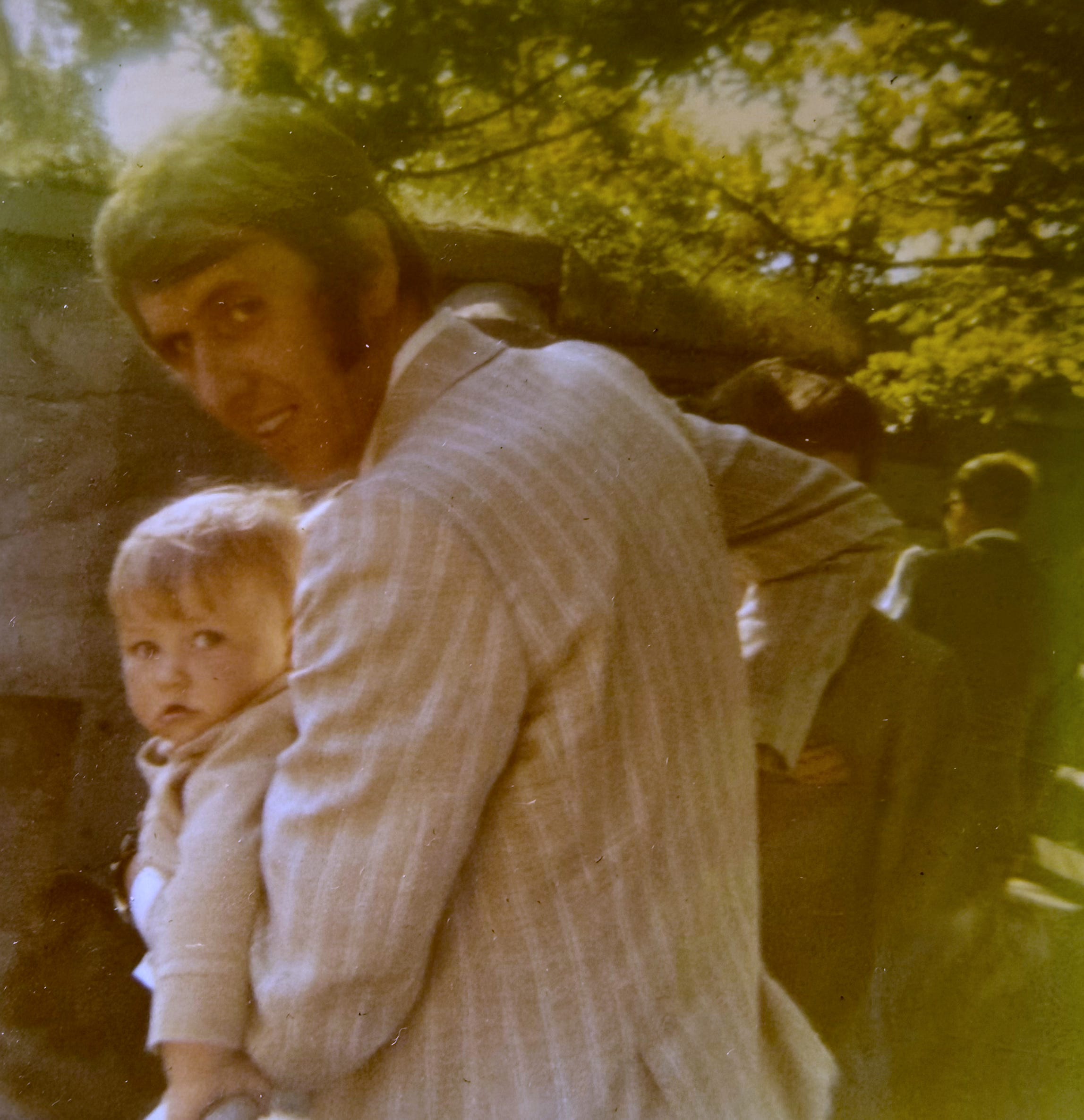
I lose myself in photographs. Childhood, youth, everyday life, travels. I get reacquainted with my grandmother and my relatives. Proud and upright, made from tough Estonian-Swedish stock, carrying flight and scarcity with them. Happy, hardworking, together, but also marked by loss and grief. People who learned not to speak about what was difficult. Who carried their history in their bodies instead of in words.
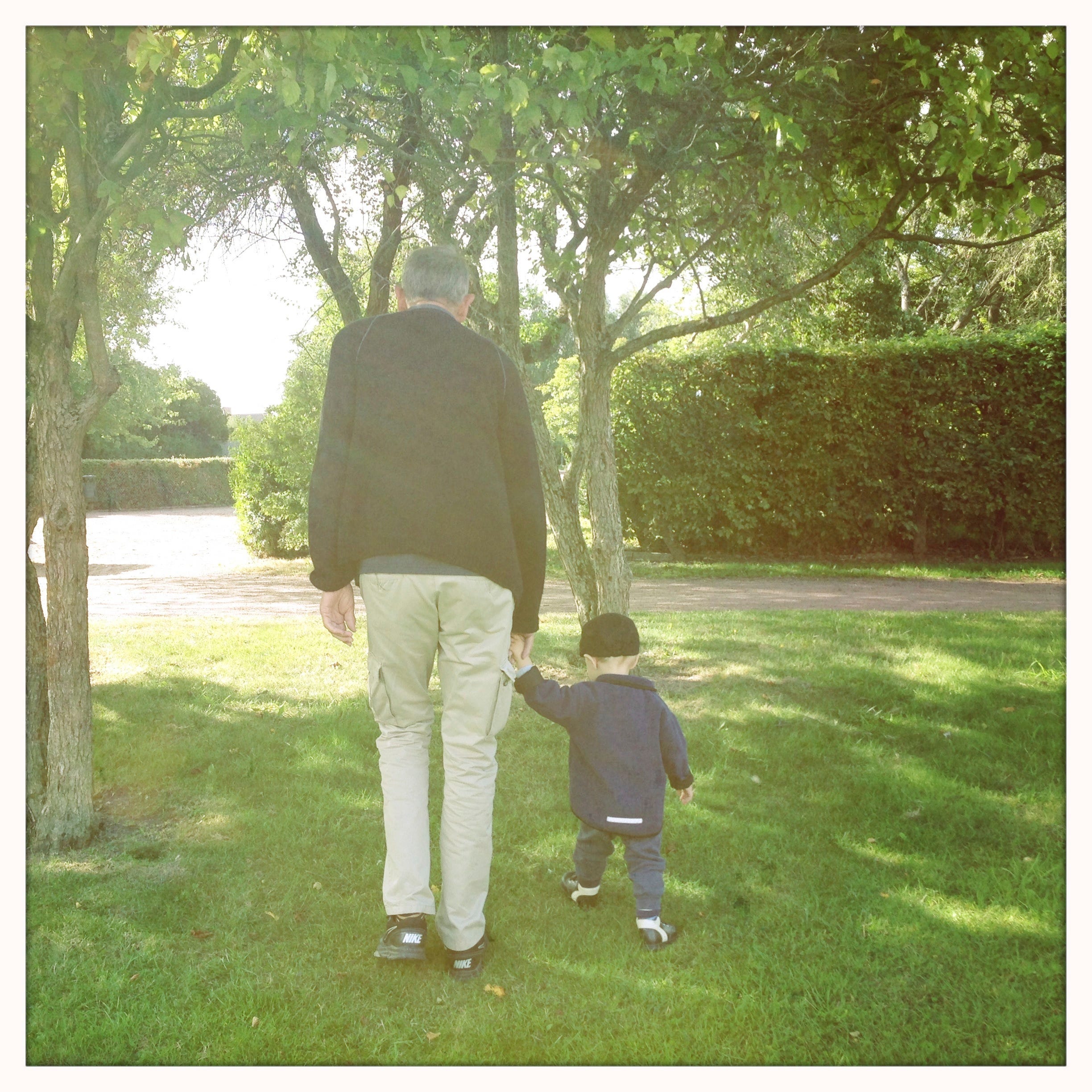
My son has a crooked rib that sticks out slightly. Just like me. Just like my father. I remember feeling happy the first time I noticed it, and when I think about it now, I cry. Not out of grief but because of something else I don’t quite have words for. The way certain things travel through generations without asking permission. A facial expression. A temperament. A way of entering a room. Or a crooked rib.
I inherited his curiosity about the world. His need to understand. His stubbornness. His ability to walk straight ahead without blinking. My son inherited his body, his posture, his interests.
My father walked his own path, never avoided discomfort, expressed - not infrequently to the horror of the family - everything he thought, without softening it. He loved the written word, the worlds it could create. I grew up surrounded by newspapers and headlines, with the world sitting at the dinner table. Palme was someone you greeted. Fälldin was someone you traveled to China with, and Mona Sahlin was someone you lent a lighter to. The world, politics, and history were like air - you breathed them in without thinking about it.
We did not always get along. He demanded a kind of perfection I didn’t want to deliver, and he rarely gave praise - but when he did, you felt like the best person in the world. He did not always understand that other people could function differently from him. Dinners could spiral because we could not meet each other.
Over the years, we slowly learned how to navigate those minefields with a kind of care. We separated ourselves from our opinions and tried to meet each other anyway. Among the hundreds of books he left behind, I find several written by and about young women, as if he was trying to understand me, just as I turned to old photographs to understand him.
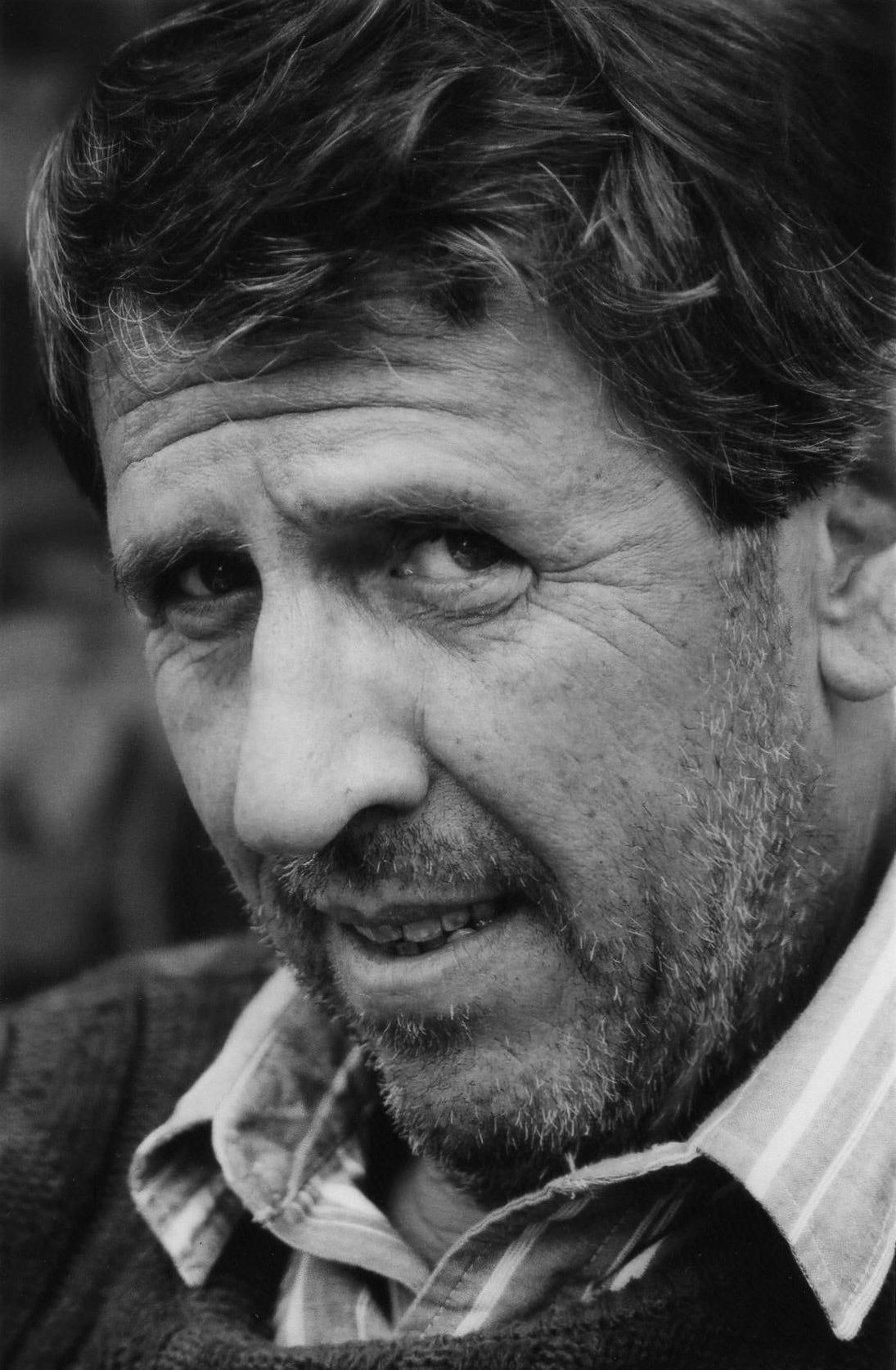
His gaze is still my compass. Who am I when he no longer exists?
The only thing I have wanted for as long as I can remember was to be acknowledged for who I am and not for who he wanted me to be. There is probably more than one psychologist who would have something to say about being over fifty and still wanting permission from my father. But I am slowly realizing that it is bigger than that. That I have held myself back, polished myself down, and performed not only for his sake but because the world demanded it. That he was the clearest representative of a world I want to leave behind but one he desperately tried to keep me inside. He could sense what was coming. Where I was heading. He saw me, but he did not always have the words to meet me there.
He could never affirm who I was, only what he himself was. He was the rational one, I was the intuitive one, and even though we provoked each other, we eventually learned that we could love each other without agreeing. In the final years, we could even joke about it.
I remember the moment I realized that fathers could be sad. It was a terrible realization. It completely unsettled me and, with the naivety of a child, I thought about it for days. My father rarely showed sadness. Or honestly, never. Tough guys don’t dance. Or cry, and so on. A masculine ideal from another century, but with other sides too - he always showed up. Explained things. Took time. Massaged my lower back when I was a teenager with period pain. Helped me move. Supported me. Helped me. Stayed close.
I was already on my way somewhere when he disappeared. Away from something, toward something else. Grief did not stop that movement, it deepened it. In the stillness that follows a loss, a lot falls away on its own. Posturing. Urgency. Irrelevancies. Things I was reading and people I believed in three months ago now provoke some kind of disgust. I have no interest whatsoever in pretending.
I recently read a quote: that becoming middle-aged is like being sixteen again, but liking yourself this time. I thought about who I was at sixteen - what I wanted, what I felt strongly about, what I had not yet learned to tone down - and I feel so strongly that I want to rediscover the person I came here as, not the person I learned to become.
Maybe that is what he gave me in the end, without even knowing it. Not only an inheritance backward, but permission forward. To stop. To begin again from the right place. With conviction this time, and with words to explain it. But I do not look the same, do not feel the same, and need to rethink how I move through the world.
…
Well, I finally got something out, Dad. It feels different knowing you are not sitting there printing everything out anymore (yes, I found the secret drawer with everything you saved). But I am afraid to send this out now because it feels as though I have made you into something graspable and moved on, even though I do not want to. I mostly just want to stay here among all your things and feel your presence.
I am writing a book called “The Starting Point”, from the edge where an old world fades and a flickering new one begins. If you would like to support my work you can preorder it here.
You can also join the 100-day process and explore what it means to slowly recalibrate the very thing we call life.
Comments
Nothing yet. Say the first thing.
Sign in to join the conversation.