

Dear Squawkers,
There’s been drama in K-pop the last few weeks over the biggest girl group in the world, BLACKPINK. August 8 was the tenth anniversary of their debut. Anniversaries in K-pop are already a big deal, there are often fan meets planned, a whole calendar of special releases, from new photos to remixes, and definitely a livestream.
A tenth anniversary, however, is that much more significant – so many groups don’t make it to that point, and almost all of them don’t get to the level of global success as Jennie, Jisoo, Lisa, and Rosé. So BLINK, their fanbase, was hoping for a significant celebration. Instead what happened was poor communication, a small event for 40 people that seemed like it was planned only days in advance, where people weren’t even sure up to the last minute if all four members would even show up. And then they did show up for a livestream but it was super-muted and lasted only like 15 minutes. After which Jisoo was seen crying while she was leaving and then later on posted an apology on social media. Rosie also posted an emotional message afterwards, and both acknowledged how disappointed the fans were while expressing their appreciation for the fans’ devotion.
It’s been such a flop that a few major fan accounts have declared that they’re shutting down and there’s been so much debate and arguing online about who’s to blame and whether or not the girls have just decided to tap out on the band entirely. Looking back, though, this didn’t just come out of nowhere.
Over a year ago, in March 2025, I answered a question about BLACKPINK in a weekly mailbag related to their solo work and how it was all coming together for the Deadline Tour and how it seemed like … a really ambitious timeline with their various solo commitments and no indication that a new album was ready. Ultimately it wasn’t. The Deadline Tour happened and ended before the Deadline album was even released – and it was a mini-album at that. Which exacerbated an ongoing issue with the group: that their catalogue is SO light, despite the fact that they debuted in 2016. It’s a total of something like … 37 songs… give or take a couple. Aespa debuted in 2020, four years later, and they’re currently at over 80 songs. The K-pop churn might not be as intense as it used to be in the early 2010s but, still, under 40 songs is… extremely atypical.
Which is, for years, why BLINK has been complaining about YG Entertainment, BLACKPINK’s management, and how they’ve done the group dirty. When all four of the members signed to different labels, or started their own, to handle their solo careers, while remaining under contract with YG for specifically BLACKPINK projects, it was pretty much confirmation that there was likely some – or a lot of – dissatisfaction, an understatement.
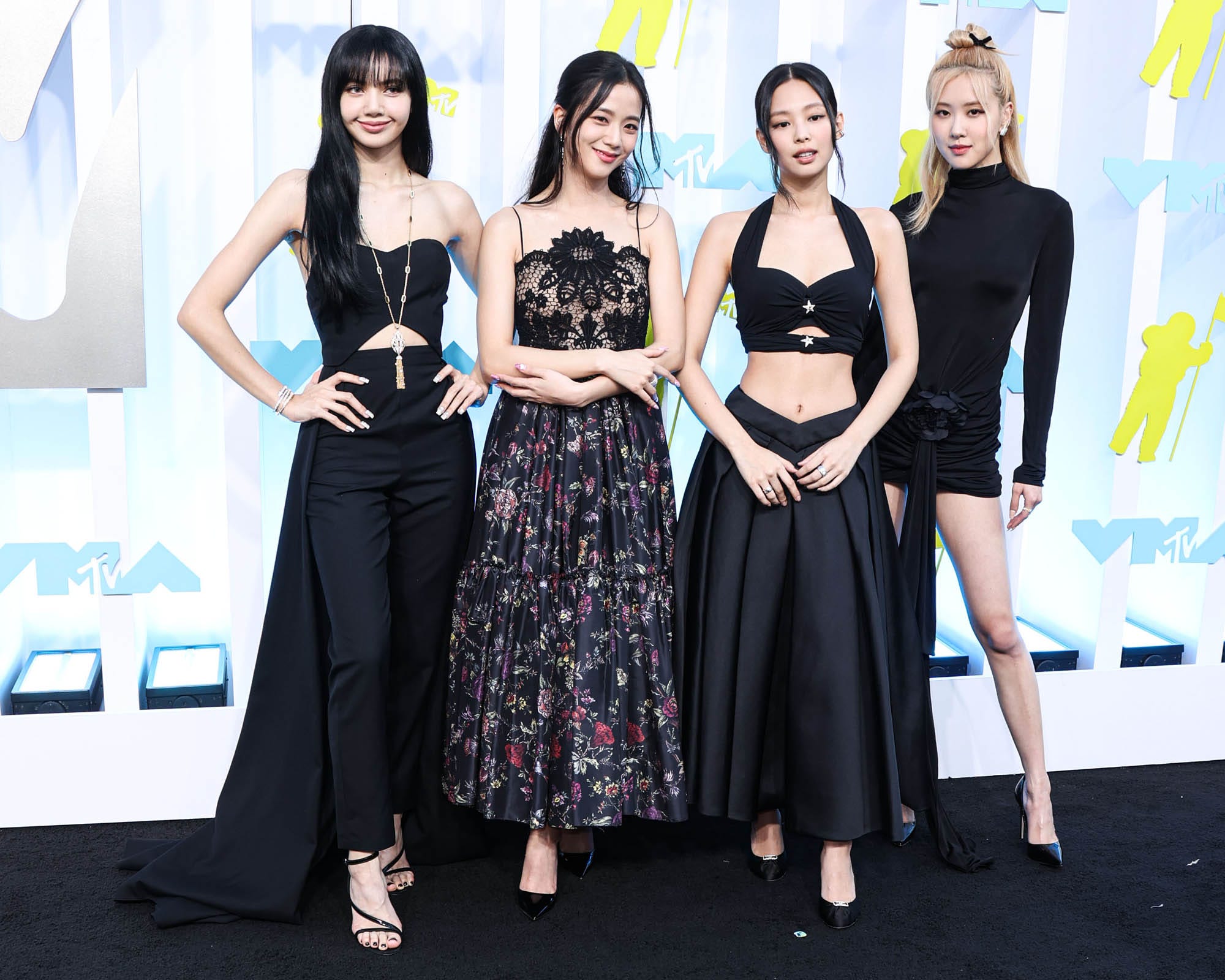
One theory, that I’m inclined to believe, is that since YG basically owns the BLACKPINK name, Jennie, Jisoo, Lisa, and Rosé are not inclined to make them any more money. The relationship between the four of them, personally, as friends and colleagues, in my opinion, is solid but separate from their collective relationship with the label. And their relationship with the label does not look all that healthy. This could explain their reluctance to participate in any BLACKPINK branded events on a major scale, not because they don’t care about the fans, but because it would benefit a company that they are possibly in conflict with.
Artist and label disputes are complicated, anywhere in the world. But in Korea it can be that much more intimidating. Look at what happened to NewJeans, they had so much momentum, they were on track to become massive. And then that messy lawsuit. Right before them there was FIFTY FIFTY, and immediately after the massive success of their song “Cupid”. There are a lot of people who believe that the corporations often have the legal advantage in Korea. So, perhaps, there’s a lot that Jennie, Jisoo, Lisa, and Rosie haven’t been able to say.
But, interestingly, there’s a documentary coming out very soon. Always Lalisa, directed by Sue Kim, is world premiering at TIFF. It’s one of the major centerpieces of the festival, the red carpet will be at Roy Thomson Hall, primetime on the Friday of the first weekend, at 9pm. Sue Kim is an experienced and acclaimed producer and filmmaker. Her last film, The Last of the Sea Women, co-produced with Malala Yousafzai (!) about Korea’s famed “haenyeo”, also premiered at TIFF back in 2024. Always Lalisa documents a year in Lisa’s life – when she was doing The White Lotus, prepping for Coachella, and establishing a creative identity outside of BLACKPINK and away from YG. It’ll be SO interesting to see exactly how that is handled in the film, and what additional insight we’ll get about what happened behind the scenes with the group.
Time for the mailbag…
Question from Jane (in one of the daily chats):
Anyone else disgusted by Brad Pitt publicly declaring he’s drinking again & knows now how to do it in moderation?! I’m really disturbed by it, he has a huge platform & he’s setting a HORRIBLE example for people who have gotten sober. It takes a hell of a lot to admit you can’t have “just a little”, for an alcoholic even one sip is impossible.
Lainey’s Answer:
Trigger warning for substance abuse and DV
I know you didn’t mean it this way, but just to be extra clear, to rule out any possible misunderstanding since we should approach mental health and addiction with extra sensitivity, and taking it away for a moment from Brad Pitt, relapse is not disgusting. Recovery is not linear; it is common for those in recovery to experience a lapse that if not addressed can become a relapse. But while these are serious challenges to recovery, it is important to acknowledge that relapse is not shameful, nor does it mean failure.
In his new Esquire profile, however, Brad Pitt does not use any of this language. He doesn’t refer to himself as being in recovery at all. The way he talks about it is almost…flippant…and that’s why people find it so problematic. This is the passage in question:
“No, I got—I was sober for seven years. And then I got back off the wagon.” Little laugh. He raises his famous opposing-diacritic eyebrows and holds a finger up: “In a more restrained manner. I got overconfident a couple times, went, Yep, nope, not good for me. Not in big quantities.”
“You can have a glass of wine.”
“Yeah. Well . . . I can have a few. But I can’t have a lot. I have to be professional about it.” He likes mornings now anyway, and you can miss a lovely morning when you drink too much the night before, and it’s just not as interesting. Mornings are interesting, and he doesn’t want any more of them to go by unseen.
What I’m about to say next is not a judgment about the writer, it’s an observation as someone (me) who has unfortunately had a front row seat to substance abuse disorder and who has had to, as a result, deeply reflect on whether or not I was an enabler to someone with the disease. “He likes mornings now anyway…” reads, to me, through my own personal lens, like a deflection. Because I did this with the people in my life who struggle with substance abuse: he says he likes waking up early now, she says she’s super into her training classes now, he says he cares about this new job too much now, they can totally do this is moderation…
And then, well, you know.
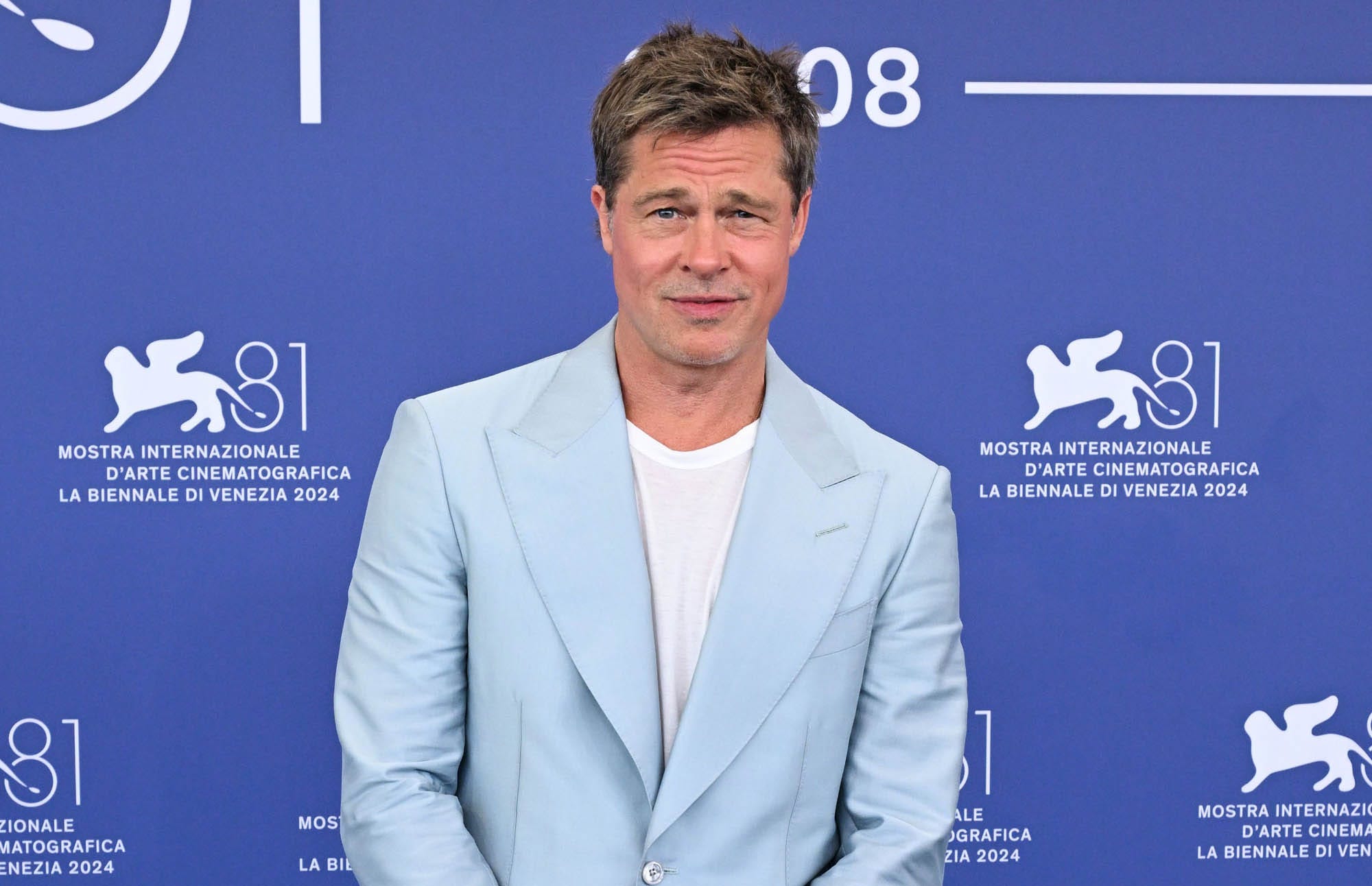
Now, another clarification, I’m not saying any of us is responsible for anyone else’s recovery. But in my opinion, from first-hand experience, I can also choose to be more thoughtful, aware, and informed with my family and friends in recovery and that too requires a rewiring. Because enabling is often the more comfortable response. And so many of us, frankly, are conditioned towards it. And the writer here is an example of it – again, no judgement. He is reporting what he learned: that Brad Pitt likes mornings and doesn’t want to miss them. But the way the piece reads, with that note coming immediately after Brad’s rationalisation, which those who have substance abuse disorder are so skilled at, comes across to the reader as an inadvertent “it’s OK, he’s fine, this is not a problem”. Which…is enabling, though accidental.
There are many people online who don’t see it as such. Esquire is getting criticised for running the piece – which would have gone through at least two edits and (I hope) factchecking (although with budget cuts and general media challenges I worry this doesn’t happen anymore) and cleared for publication. Perhaps in comparison my take is a little more generous towards the journalist, and that may be my bias, but I do think there’s a lesson here about how we default to enable, and maybe even who we default to enabling.
Brad Pitt, handsome and successful white American male, has certainly received his share of empathy. And two things can be true – we can show grace to him as a person in recovery from substance abuse disorder and also find it distasteful that his recovery is even our business. Because it shouldn’t be our business. But we are talking about it because he talked about it in an interview…and I don’t think he had to.
He was asked, after offering wine to his guest, whether the wine was only for his guests. And after 30 years of fame, he knows how to say “I do not want to discuss my experience with recovery” – as he demonstrates later on when he cuts off the conversation about his children with a succinct “Family stuff. We could leave it at that.” But Brad Pitt, movie star since the early 90s, is the one who chose to reveal that he’s drinking again after seven years of sobriety and claims to be in control of it because he’s “professional”. That is not how the disease works.
But you know how the disease works? By lying. It lies to you and then you lie to yourself and the lies spread to everyone around you. All diseases are fucked up and cruel, but addiction is the one that reliably turns you into someone who routinely betrays the people who love you. Cancer patients aren’t known to deceive; and/or disappear; and/or steal; and/or cheat; and/or hit. But, sure, the movie star who “got back off the wagon” is always telling the truth. That must be why so many people believe him over his ex-wife and all SIX of their children.
Question from Stephanie C:
What type deals do Tom Holland and Zendaya have with Marvel? Is it safe to assume they’re making big money on the back end?
Sarah’s answer:
I don’t think Zendaya has a deal with Marvel, her deal is with Sony. Tom Holland has a deal with Sony for the solo Spider-Man movies, and a deal with Marvel for the Avengers/crossover movies.
Making “big money” on the back end, though, is always a bit of a mystery. It definitely exists, because Scarlett Johansson sued over what amounted to her profit participation in Black Widow, arguing that a day-and-date streaming release cut into her presumed compensation package, which assumed a certain level of box office performance that would result in a certain payout. In that lawsuit, ScarJo’s side argued that releasing the film day-and-date on VOD cut into her back-end earnings, and a judge agreed, though the rumored $40 million settlement is still said to be less than she stood to make from a robust theatrical release.
At this point, a decade into their tenures with Sony/Marvel, and with Spider-Man such a critical piece of the MCU, we can assume Tom and Zendaya make good money from Spider-Man/Marvel. Tom more than Zendaya, because he plays the title role and he’s double-dipping with both studios. But the key is longevity. The longer you’re in the MCU, the more you stand to make. The real power comes with the ability to renegotiate. ScarJo makes so much money in no small part because she signed a three-picture deal in 2009, and was one of the first Avengers to renegotiate, reupping for Avengers: Age of Ultron. She’s been taking Marvel to cleaners ever since (good for her).
Also, British actor Tom Hollander once told a story about mistakenly receiving one of Tom Holland’s Marvel checks, so we know he’s getting those performance bonuses and they’re in the eye-popping range. Good for him.
Question from Patty:
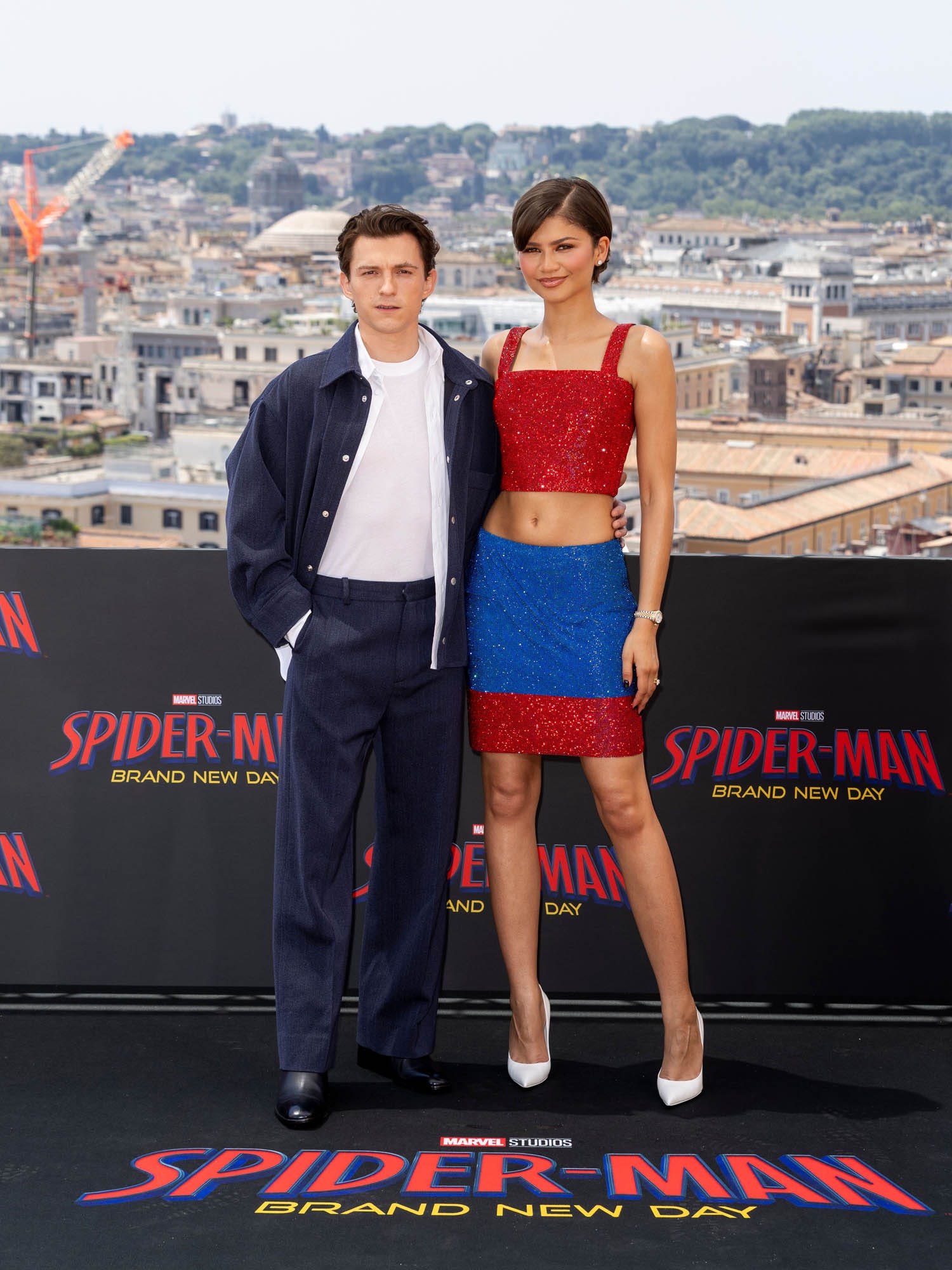
IMO Tom Holland and Zendaya have come off a very successful promo tour for Spider-man. When big movies are casting, do they consider how successful they would be in promoting a movie? I know that there are lots of actors at a level they may not be required to do so, but not everyone. I mean people really like Tom and Zendaya and will actually go to a movie just to see them.
Sarah’s answer:
Yes, an actor’s value to promotions is a consideration in casting. It probably shouldn’t be, but when you’re making the kind of movie that needs to put butts in seats, yes, someone somewhere is thinking about what the cast brings to the marketing table.
There was a truly terrible trend in the 2010s, though, of casting directors and producers caring WAY too much about people’s follower counts (this trickled into other industries, too, I know people who were rejected from writing workshops not because of their work, but because they didn’t have enough followers on Twitter). I think this has died off a little as major stars like Jennifer Lawrence, Emma Stone, and Robert Pattinson don’t have (public) social media and they do just fine with audiences. Though we can still see plenty of stars who use social media to increase their profiles—Sydney Sweeney is good at this—and help sell their movies. Anyone But You was a hit in part due to Sweeney and Glen Powell’s internet-engineered shenanigans.
But now when a celebrity gets on social media, like Tom Cruise joining TikTok, it feels more like meeting the audience where they are for marketing purposes, since linear TV is practically dead and people don’t watch trailers like they used to. It doesn’t feel as sweaty as in the 2010s, when it seemed like people convinced themselves that huge follower counts automatically equaled real marketing value. We all eventually learned that internet famous and famous-famous are two different things.
Question from Kristin:
We know amateur gossips make the gossip ecosystem messy. Especially the TikTok detectives. I’m curious how Sarah feels about amateur film criticism. Criticism is taking a hit these days with traditional outlets trimming their critics rosters or eliminating criticism altogether. Emily Wilson - who is a brilliant classicist but not a film critic - took a beating on social media for her critique of The Odyssey. (I did not read it, but man did people feel strongly about her opinions.) Do we give the TikTokker film critics and the Letterboxd critics more leeway because they aren’t subject matter experts or because we are giving amateur critics the authority to replace actual critics (if that makes sense)? I feel the same about booktok - they’re not critics, they’re just sharing what they like.
Sarah’s answer:
I’ve written about the convergence of social media and criticism before, but I will tell you an anecdote that happened earlier this year about this very topic. I was asked to assess applications for a grant for emerging critics that would send young/new critics to their first film festival. I was given dozens of applications that included multiple writing/video samples each. The first thing I did was cull anyone who ONLY posted short-form videos. After eliminating that set, I went back and started reading/watching the remaining applicants’ samples.
One of the people in charge of this grant asked why I nixed everyone who did short form videos, and I wrote back: It’s a commercial. You cannot do substantive criticism in three minutes, but you can make a commercial. You asked me to give you my opinion on emerging critics, not aspiring advertising executives.
I probably won’t be asked to contribute to that project again, but I stand by it.
I personally don’t think we should give online posters on any platform any leeway, we should recognize that social media provides a megaphone for every asshole’s opinion and that is not the same thing as actual criticism. We should especially recognize this during a time when actual criticism is being devalued across the board in mainstream and legacy media. If we don’t draw the line, someone else will erase the whole thing for us.
Emily Wilson DOES get leeway, though, because she IS a subject matter expert. She is extremely qualified to judge an adaptation of The Odyssey. I think she argued with a wall, a little bit, by focusing so much on what Nolan’s Odyssey ISN’T and not really assessing where it stands among adaptations—or seeing/acknowledging that Nolan was specifically connecting an ancient text to modern cinematic tropes. But that’s what film critics do, and Emily Wilson was offering critique more from a standpoint of classicism and rhetoric than cinema. (She also got extra shit heaped on her for Being A Woman Criticizing A Beloved Man.) But I’ll listen to her critique over AndyMovies123 on TikTok any day of the week.
Question from Janelle A:
For MC (mailbag or post), favourite one-hit wonders? Thanks.
MC’s Answer:
Ahhh, a question after my own heart! I have a soft spot for one-hit wonders, it’s that lightning in a bottle track that is so cosmic, it cannot be duplicated. While there is some sadness in terms of the artist’s career post-wonder, there is something very special about a song that feels singular for said artist. I often find that one-hit wonders tend to become more cherished by the public as time goes on than the standard hit. Since the artist attached generally remains unknown, it allows for the song to flourish in ways that others can’t. So here are ten of my all-time favourite one-hit wonders… and trust me, it wasn’t easy to narrow it down. Keep in mind I am a quintessential late Millennial boy so naturally that is reflected in the songs I gravitate towards. Let’s do this…
“I Love You Always Forever” by Donna Lewis (1996)
This 1996 mid-tempo ballad is, in my humble opinion, one of the most everlasting melodies we’ve ever heard in pop music. It has a permanent spot on my anxiety playlist (my essentials for when I need to calm my nervous system), and it just makes me happy. That’s all a boy can ask for.
“Sugar Sugar” by The Archies (1969)
HUNTR/X was not the first fictional group to top the Billboard Hot 100! The Archies did it back in the 60s with this feel-good summer ready track. This song reminds me of the stories my mom tells me about first moving to Canada in the late-60s/early-70s. A simpler time I could only imagine.
“Wait For You” by Elliott Yamin (2007)
For those of you like me who religiously watched American Idol in 2000s, I dedicate this to you. Elliott came in fourth place in his season, but this R&B-tinged jam took him further than anyone thought he’d go. “Wait For You” was written by the same team who would go on to craft some of Rihanna’s greatest hits so it’s no wonder that this song is such an earworm.
“Torn” by Natalie Imbruglia (1997)
This only belongs on this list if we are counting hits in North America. While Natalie Imbruglia certainly has other impeccable songs, none of them made any noise north of the border. “Torn” remains a 90s staple and will live on in dentist office lobbies until the end of time.
“Return of the Mack” by Mark Morrison (1997)
Of all the songs on the list, this is the one that has me feeling myself every time it comes on. I must get up, dance, scream the lyrics, and maybe even tap into my alter-ego who’s a lot smoother than the real me. Fellas, hide your mans.
“Turn Me On” by Kevin Lyttle (2003)
Maybe one of the most universally recognized dancehall songs of all time, “Turn Me On” is a classic party tune. Even if you claim to hate this song, there’s still part of you that likes this song and that’s something that I believe with my entire soul.
“What’s Up?” by 4 Non-Blondes (1992)
This might be the most iconic one-hit wonder to ever “wonder”. This song finds new life every decade or so whether it be in the form on a sample, interpolation or more recently, a viral TikTok trend. With a hit as impactful as this, who really needs another one anyway… right?
“Video Killed the Radio Star” by The Buggles (1980)
Shout-out to my brother’s high school ex-girlfriend who taught me this song when I was just a little pre-teen. The first video to ever be played on MTV in 1981 and the perfect bridge between the music industry’s shift from audio to visual media. Maybe we need a 2026 revamp titled “Streaming Killed the Video Star”? Something to think about.
“I Wanna Be Bad” by Willa Ford (2001)
In a world where Britney Spears, Christina Aguilera and Jessica Simpson reigned supreme lives a small place in every millennial gay boy’s heart for Willa Ford. “I Wanna Be Bad” is Pussycat Dolls sexy before they existed as a singing group and still serves as an excellent striptease soundtrack.
“Wherever You Will Go” by The Calling (2001)
This song holds the record as the second longest trek at #1 on the US Adult Top 40 charts where it peaked at the top of the summit for a whopping 23 weeks. This is the quintessential 2000s teen drama song with the perfect hint of karaoke night vibes.
On that corny note (ha!), we hope you keep this community open on your phone wherever you will go, way up high or down low. Thanks for sticking around here and sharing your thoughts, and photos, and tips, and yourselves.
Keep squawking and keep gossiping,
Lainey, Sarah, and MC
No posts
Comments
Nothing yet. Say the first thing.
Sign in to join the conversation.