
Welcome to The Spy Hunter newsletter!
In this week’s edition:
A former senior researcher at LG Energy Solution is referred to prosecutors for leaking cutting edge battery technology to an Indian competitor.
Fifteen individuals and entities connected to Samsung SDI are indicted for stealing EV battery technology for Vietnamese and Chinese competitors.

🔎Economic Espionage Case of the Week
What happened?
In South Korea, a former senior researcher at LG Energy Solution was referred to prosecutors for allegedly leaking national core battery technology to India’s Ola Electric after joining the company in November 2023. The stolen data included details on high energy density pouch-type battery manufacturing. Korean authorities are investigating whether the leak was part of a broader, organized effort, as several LG employees had also moved to Ola around the same time.
Why does it matter?
Ola Electric is India’s leading electric two-wheeler manufacturer and a central player in the country’s push for domestic EV and battery production. Acquiring high-density battery technology from LG Energy Solution would give Ola a major advantage over its domestic rivals. As such, the alleged leak not only threatens Korea’s industrial security but could accelerate India’s technological leap in EV batteries.
What happened?
South Korean prosecutors have indicted 15 individuals and entities for leaking EV battery technology to foreign companies. The group allegedly stole design models for key components such as aluminum casings and safety cap assemblies between October 2022 and February 2025. The leaked data was reportedly shared with battery firms in China and Vietnam.
Why does it matter?
Cases like these are exacerbating Korea’s rapidly declining market share in the EV battery sector. South Korea’s top three EV battery makers, LG Energy Solution, SK On, and Samsung SDI (two of which are mentioned here), saw their combined global market share fall to 17.7% in early 2025, down 5.5 percentage points from a year earlier. Chinese rivals’ rapid expansion, led by BYD, has primarily been responsible for eroding Korea’s position. If Korea’s industrial espionage crisis is not curtailed, other low cost countries like India and Vietnam will only further chip away at this dwindling industry.
🌏Around the region
Korea
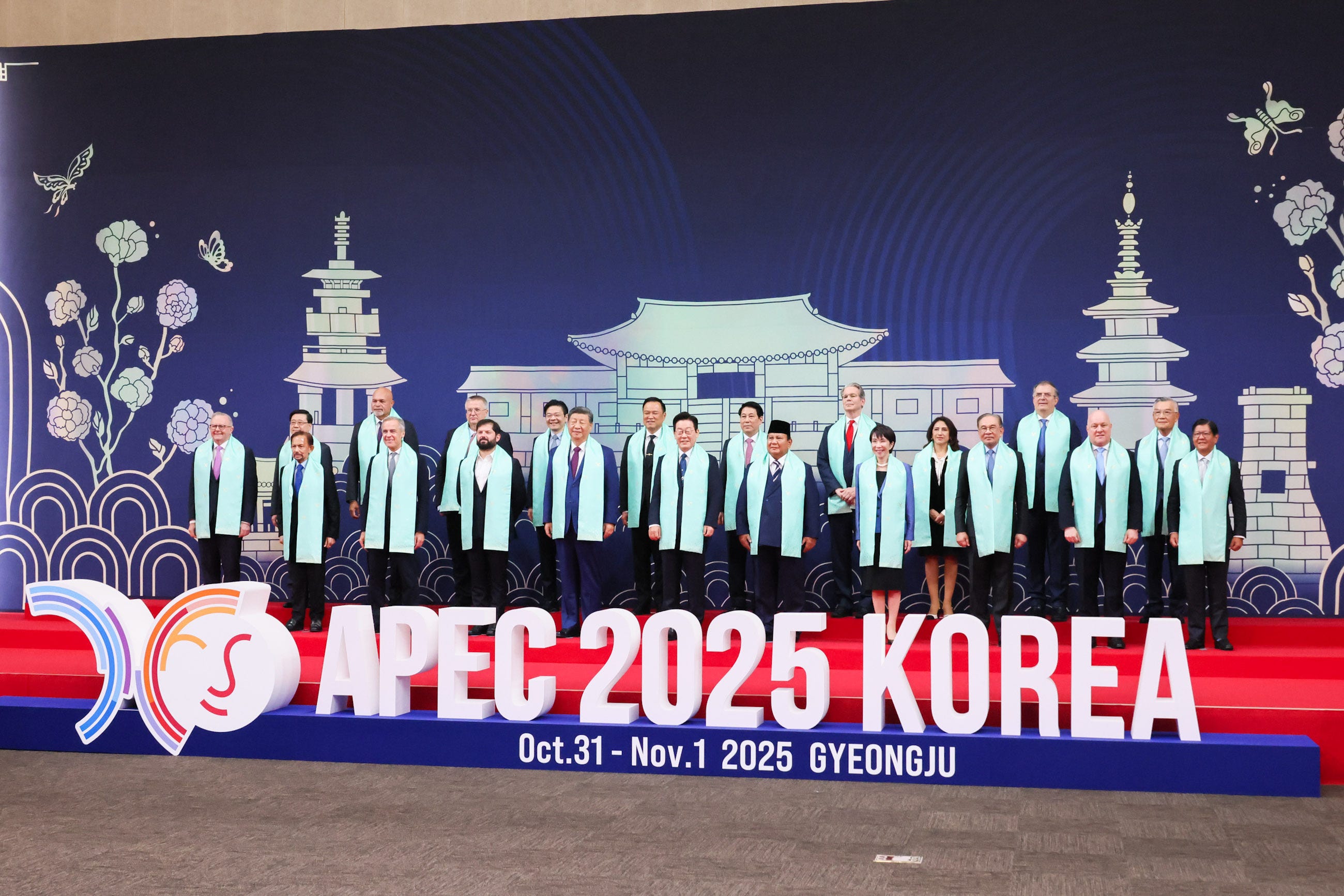
The 2025 APEC summit was held in South Korea. Before the event, the U.S. and China reached a one-year truce agreement under which Beijing will lift export restrictions on critical minerals, halt exports of fentanyl-related chemicals to North America, and resume automotive semiconductor shipments.
The agreement also restores access to rare earths like gallium and germanium for U.S. industries.
The week also ended with economic deals for South Korea, including a $350 billion U.S. trade agreement and a 260,000-chip deal with NVIDIA.
📖Best reads of the week
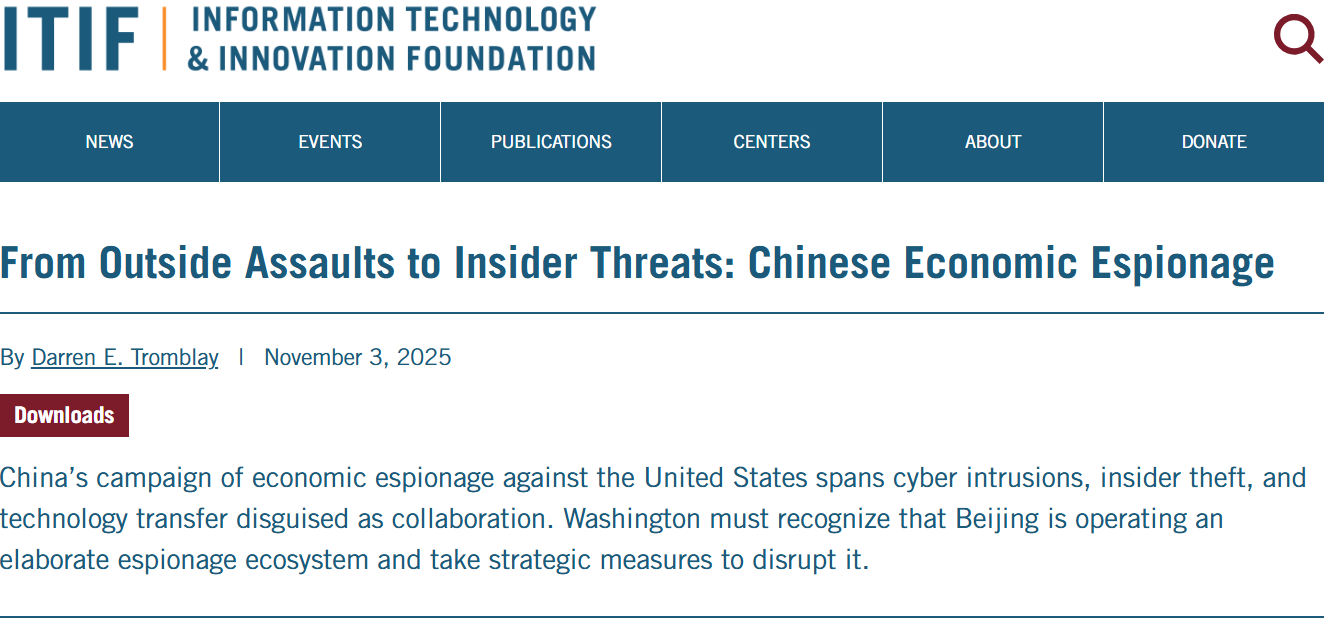
The PRC’s campaign against U.S. sources, including industry, manifests itself in multiple ways. First, Beijing is responsible for attacks from the outside against American industry as well as government and academic institutions. These often take the form of cyber intrusions, such as those conducted by Peoples’ Liberation Army-affiliated hacking groups. Second, the PRC has sponsored multiple varieties of insider threats: employees who pass sensitive information to Chinese entities. Finally, PRC state-owned enterprises have used platforms in the United States—whether local consulting firms or branches of Chinese companies—to hire human capital from U.S. industry who possess and ultimately pass trade secret information (TSI).
📣Upcoming Events
Hudson Institute’s Japan Chair will host an event featuring two panels with financial, industrial, and policy experts. Panelists will explain how the $550 billion fund will operate and address and lingering questions about implementation and identify specific strategic chokepoints that the fund can help solve.
How capable are today’s AI systems at cyber-relevant tasks? Which emerging capabilities matter most? And as these systems continue to advance, what should defenders, policymakers, and industry do to prepare? Join the Center for a New American Security for an expert panel discussing these questions and more.
Experts discuss whether China’s latest rare earth actions, Europe’s auto sector challenges, and recent US-EU summits with Beijing are pushing transatlantic views toward greater alignment.
🗣️Job Opportunities
Director, Hamilton Center on Industrial Strategy - ITIF (Washington, DC)
Specialist - Defense and Security - McKinsey (US, various)
Research Policy Analyst - Galaxy (New York, NY)
Assistant Director for Research and Strategy - Asia Society Policy Institute (New York or Washington, D.C.)
📰In Other News
How China really spies on the UK - BBC
Trump wants to admit more Chinese students. Here’s why he shouldn’t. - Washington Post
EU takes new measures to strengthen research and security across Europe - Open Access Government
U.S. Trade Policy Sends Geopolitical Ripples Through Pacific Rim - CFR
Intelligence Over Indemnity In Times Of Geopolitical Risk - Forbes
EU pressed to back critical minerals projects as China tightens grip - Financial Times
Canada leads G7 bid to loosen China’s hold on rare earths - Politico
Industrial Policy and Economic Security - AEI
U.S. Expands Quantum and AI Partnerships with Japan and Korea - Quantum Insider
Exclusive: Nexperia cuts wafer supplies to Chinese plant, ratcheting up chip disruptions - Reuters
Nvidia strikes bumper AI deals with Asia tech giants - BBC
China Started Separating Its Economy From the West Years Ago - New York Times
China is using America’s own trade weapons to beat it - The Economist
China Has Another Trade Weapon Waiting for America - Bloomberg
🛜Around the Web
Comments
Nothing yet. Say the first thing.
Sign in to join the conversation.