
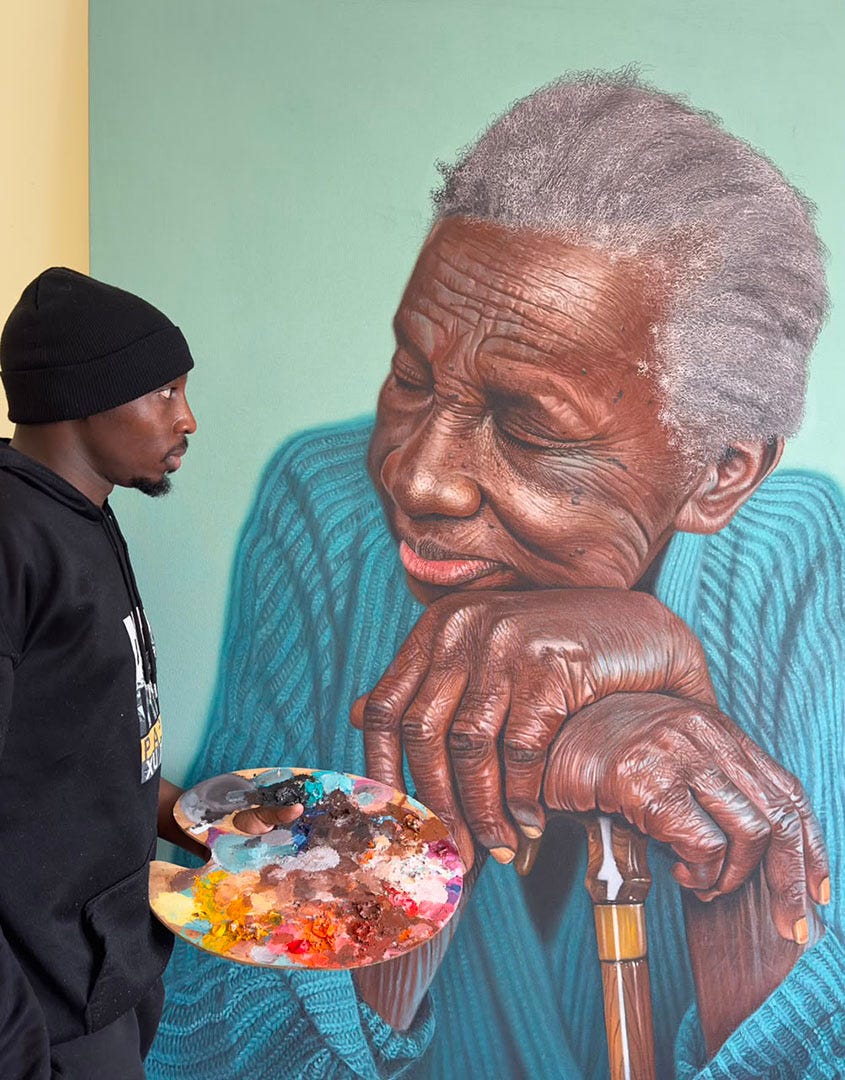
Eddy Ochieng (b. 1993, Nairobi, Kenya) is a painter whose meticulously rendered portraits examine interiority, memory, and the emotional complexity of everyday life. Working through a language informed by hyperrealism, Ochieng gives particular attention to the material qualities of the body, including the luminosity of skin, traces of moisture, and the subtle physical markers through which individual histories become visible.
Ochieng’s subjects are frequently drawn from his immediate community in Kenya. Removed from spectacle and presented with psychological clarity, they occupy the paintings with a quiet authority. His compositions resist a singular reading, instead using precision, light, and surface to explore the distance between what can be observed and what remains unknowable. Through this sustained attention, portraiture becomes a means of affirming presence while considering the shared conditions of vulnerability, resilience, and belonging.
Ochieng studied Fine Art at Kenyatta University and was selected for the 2024 Art Omi International Artists Residency in New York. He is a two-time recipient of the MASK Prize and received first place in the 2021 Manjano Art Competition. His work has been presented internationally in solo and group exhibitions in the United States, the United Kingdom, Australia, Kenya, and South Africa, as well as at SCOPE Miami Beach and EXPO Chicago.
His work has been acquired by Pérez Art Museum Miami (PAMM) and is held in additional institutional and private collections across Africa, Europe, and North America. Ochieng is represented by Jessica Ann Peavy Gallery, New York
“My paintings begin with the understanding that looking is never neutral. Two people may encounter the same face and leave with entirely different impressions, shaped by their own histories, expectations, and ways of seeing. Through portraiture, I explore the distance between what is immediately visible and what remains private within another person.
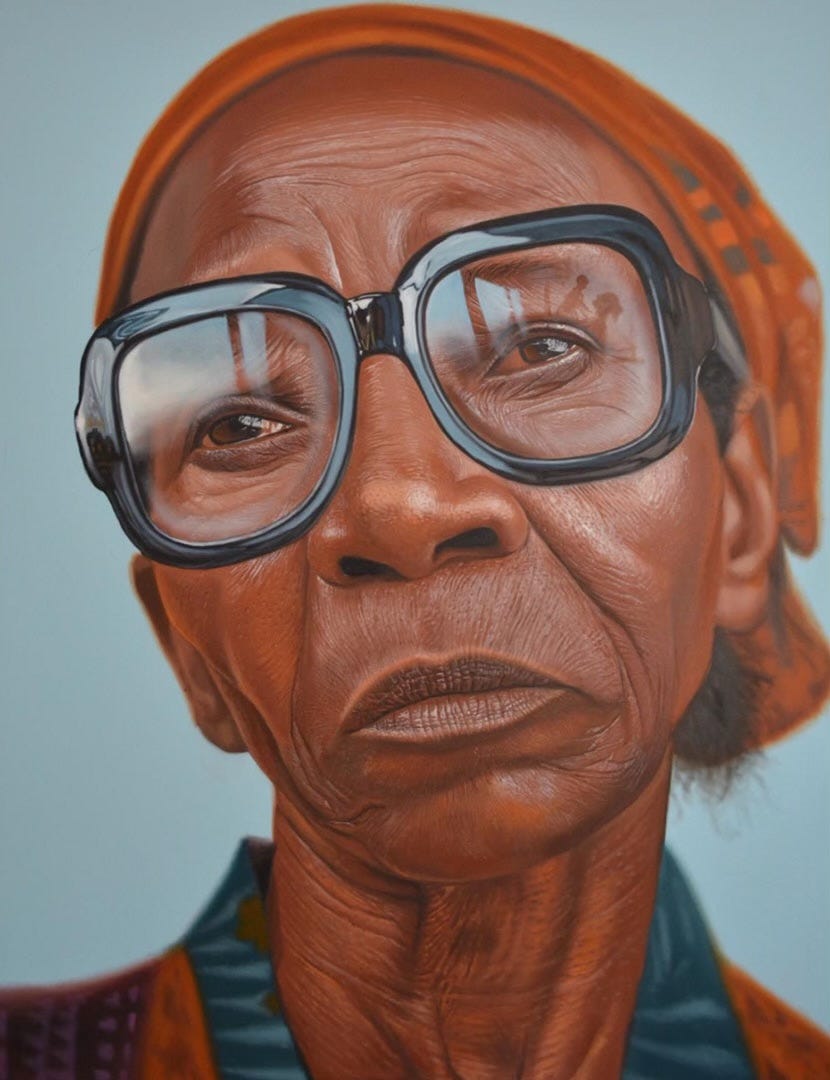
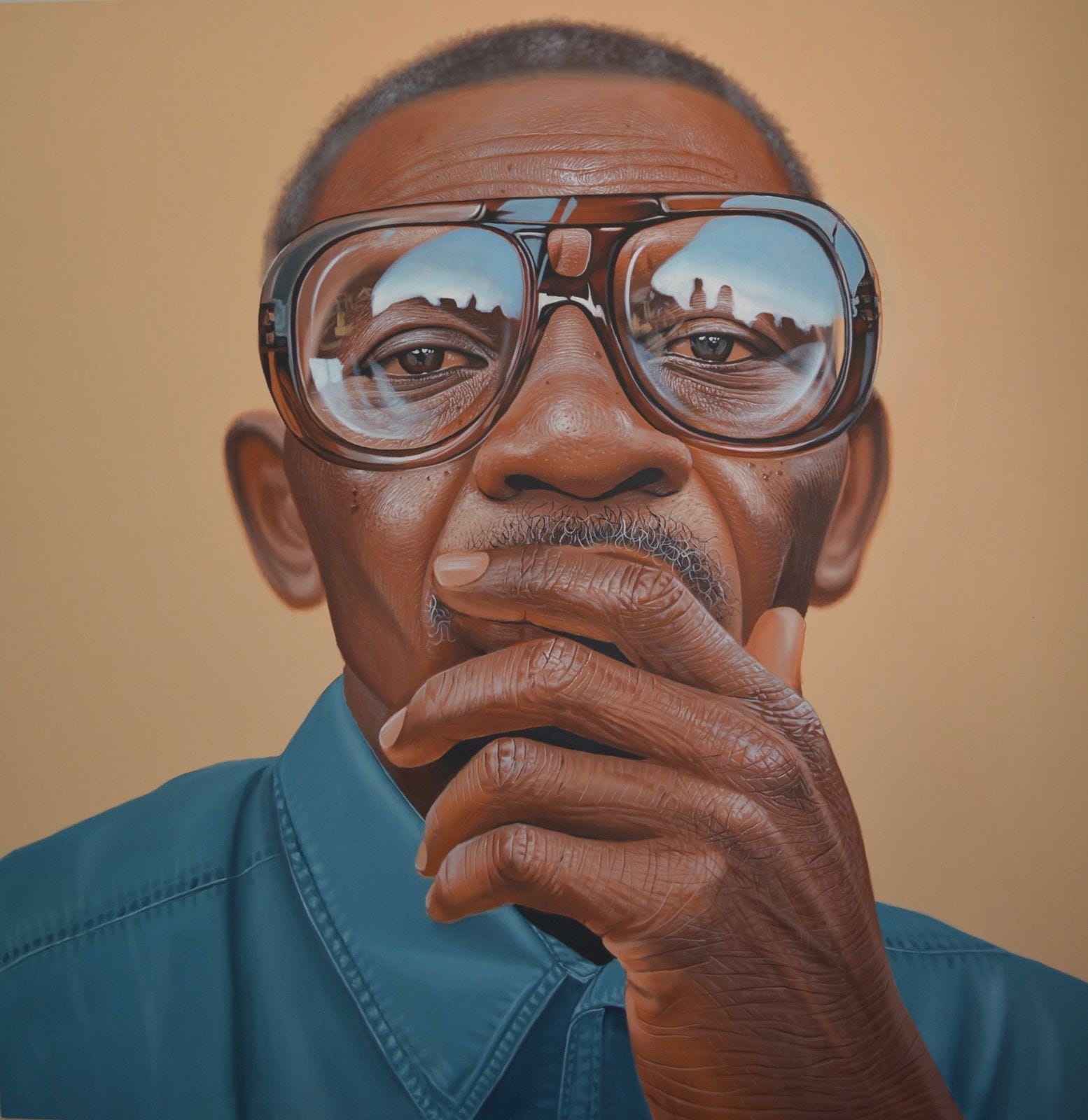
I am drawn to the physical details through which lived experience registers on the body: the texture of skin, the presence of moisture, the weight of a gaze, and the subtle evidence of age and endurance. Precision is important to my practice, but perfection is not the objective. I use the visual language of hyperrealism to slow the act of looking and to create space for vulnerability, ambiguity, and psychological presence.
Many of my subjects come from the communities around me in Kenya. Their expressions may communicate longing, joy, loss, strength, or contentment, but I do not intend for the paintings to resolve their stories. Instead, I want the viewer to remain with the questions each person carries. Who are they beyond the surface? What have they experienced? What remains inaccessible to us?
For me, portraiture is both an act of preservation and a form of recognition. It can hold individual identity while revealing the emotions and conditions that connect us across geography, culture, and time. My work asks viewers to look closely, to question their assumptions, and to recognize the dignity and complexity present within an ordinary human life.”
That creating can become a place of peace, free of distractions.
The importance of discipline and consistency in building an artistic career.
How emotional expression and technique work together to give meaning to work.
That growing involves taking risks.
The admin/business side of your craft is just as important as creation.
What first made you want to draw as a child?
Drawing started as a quiet escape. It was the one place where I could focus completely and lose track of time. Long before I thought about becoming an artist, I simply enjoyed creating with a pencil and paper.
Beyond technique, what did studying Fine Art at Kenyatta University teach you?
Studying Fine Art at Kenyatta University taught me much more than how to paint. It taught me discipline, consistency and the value of showing up every day, even when progress feels slow. It also challenged me to think more deeply about my work. Instead of simply asking, “How do I paint this?” I began asking, “Why am I painting this?” That shift changed my entire approach to art. Perhaps most importantly, it encouraged me to find my own voice. I realised that technical skill alone isn’t what makes work memorable. People connect with authenticity, ideas and perspective. Those lessons continue to shape not only how I create, but also how I see my role as an artist.
What attracts you to capturing such tiny details?
We live in a culture of quick glances. My paintings invite people to stop looking for a few seconds and start seeing for much longer.
Do you ever feel that technical perfection gets in the way of emotional expression?
I don’t think they’re in competition. For me, technique and emotional expression move together like a dance. The realism creates space for the emotion to be felt, and the emotion gives meaning to the realism. A technically perfect painting that says nothing is only half the job done.
Do you ever feel pressure to repeat what has already proven to be successful?
There’s always that pressure, especially when collectors respond well to a certain body of work. But I think growth requires taking risks. I want people to recognise my voice, not because I’m repeating myself, but because the ideas continue to evolve. That’s why I’m constantly asking new questions within my practice instead of staying comfortable.
What’s the biggest challenge you’ve had to overcome as an artist?
Making art is only part of the profession. Learning contracts, pricing, galleries and the business side took just as much effort as learning to paint.
What is a question you wish more people asked about your artwork?
I’d love to hear people ask why I focus on painting people. The answer is simple yet profound: everyone you meet is the main character of a story you may never read. By portraying them, I’m inviting myself and the viewer to slow down, look closer, and remember that behind every face is a universe of experience. That awareness makes me more patient, more curious, and ultimately more caring toward humanity
What is one piece of advice you’d give to aspiring artists?
Talent can open a door, but consistency is what builds a career. Keep showing up, even when inspiration isn’t there. Even when no one is watching.
Thank you for reading, feel free to check out more of Eddy’s work! Also head over to Jessica Ann Peavy Gallery who among Eddy Ochieng, represent many other great artists.
This newsletter is only possible thanks to our premium subscribers, you guys help me spread awareness to the artists shaping today’s culture :))
Best
Alex
No posts
Comments
Nothing yet. Say the first thing.
Sign in to join the conversation.