
I’ve noticed a curious way of thinking about exposure and awareness in the various sponsorship conferences, forums and round tables I’ve been at over the last year. Sometimes they are conflated, as if they are exactly the same thing. Other times they are conjoined, as if wherever one exists, the other goes with it.
A common expression is “we need to move beyond exposure and awareness to demonstrating impact.”
Even more curiously, I’ve spoken with sponsorship salespeople who have been trained, explicitly, never to mention brand awareness in sponsorship sales meetings.
I’m not sure why this is. Perhaps there’s a sense that awareness sounds primitive, like badging; the thing sponsorship did in the 1990s before we all got sophisticated and started talking about engagement, purpose, and fandom. Or perhaps it’s hard-won experience that if you say “awareness” in a sales meeting, it’s akin to saying it’s all just vibes, and you’ll get told to jog on.
This seems peculiar to me. Awareness is one of the most valuable things sponsorship can deliver, and the evidence for that value stretches back the best part of a century.
My concern is the sector’s squeamishness about the word is costing it money, whether that’s a rights holder negotiating a rights fee, or a Head of Sponsorship requesting more budget.
So, much like I previously felt the need to speak up in defence of exposure, I think it’s time to speak up for its cousin, awareness.
I’d guess the primary reason awareness gets a bad name in sponsorship is because it’s used interchangeably with exposure.
In the worst cases, you’ll see a post-season report with awareness stated as an objective, and the level of exposure or impressions in the results column. I’ve personally seen someone stand up in a global marketing conference and say “we wanted to increase awareness, and we got 600,000 YouTube views”.
So let’s get one thing straight: exposure and awareness are not the same thing.
Exposure is something you create. In effectiveness language, it’s an input, because it’s something you’ve generated, and it’s under your control. Spend more, and you can generally get more.
Awareness is different. It’s what happens inside someone’s brain; it’s about memory, and the ability of an audience to recall the brand as a result of the exposure. It’s an output; an effect.
Conjoining them - as if awareness inevitably follows exposure - is equally flawed. You can’t build awareness without exposure, but you can absolutely rack up exposure without increasing awareness at all.
If the exposure wasn’t big enough and/or if the creative was dull, the brand’s presence may never be noticed in the first place, which means it won’t be encoded in people’s memory, and the brand won’t be recalled.
My hunch is that, when the industry says “we need to move beyond exposure and awareness”, what it usually means is “we need to move beyond pretending impressions are an outcome”. Which is true. But that’s an argument against poor measurement, not against awareness.
We’ve thrown out the effect because of how badly we measured it.
The value of awareness has one of the strongest evidence bases in all of marketing; research into the recall of brands goes back almost 100 years. But it was intuitively understood much further back than that.
Paul Feldwick, in his history of advertising theory The Anatomy of Humbug, traces a whole school of thought, Showmanship, back to P.T. Barnum. Barnum built an entertainment empire in the nineteenth century on the understanding that being known was a commercial asset in itself. His advance men would paper a town with posters weeks before the circus arrived, on the theory that by the time the tents went up, there should be nobody left who hadn't heard of it. He couldn't measure what that familiarity was worth, but he behaved, expensively and consistently, as if it was worth a great deal. It's a line Feldwick would later draw all the way to Byron Sharp.
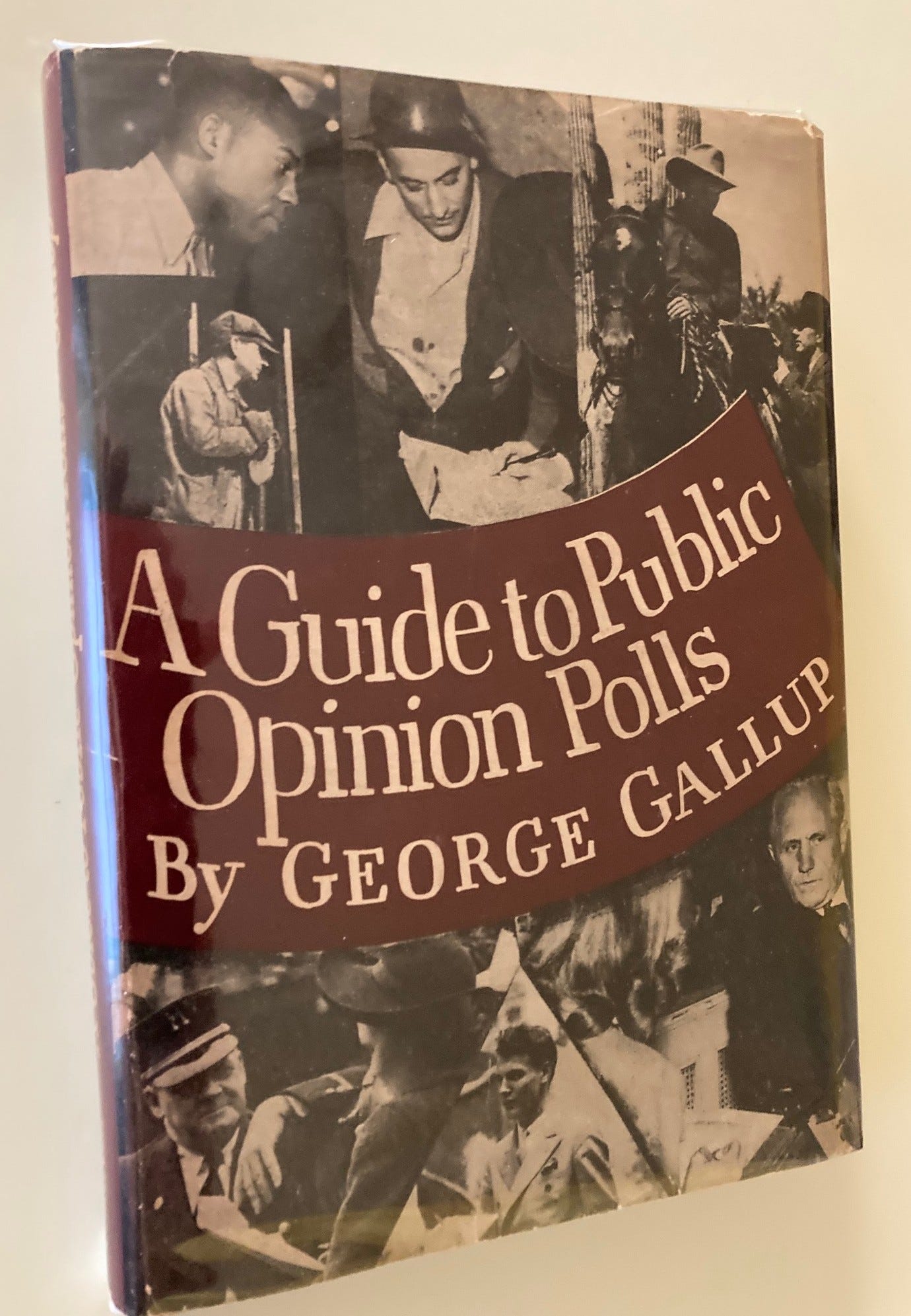
Measurement began to arrive in the 1930s, when the political polling pioneer George Gallup ran the first asking consumers to name brands in a category without prompting. Louis Cheskin’s influential System of Consumer Attitude Research added word-association in the 1950s, and the recall and recognition measures that brand trackers still use today are direct descendants of that work.
Interbrand, founded in 1974 by John Murphy, announced the first proprietary brand valuation method in 1987. Its method used “common factors of Brand Strength such as awareness, market position, customer satisfaction, loyalty and advertising & marketing support”. In the late 1980s Rank Hovis McDougall, the UK flour miller, used Interbrand’s valuation to fend off a hostile takeover bid from Goodman Fielder Wattie in a move endorsed by the London Stock Exchange. Brand valuation is now part of mainstream accounting practice.
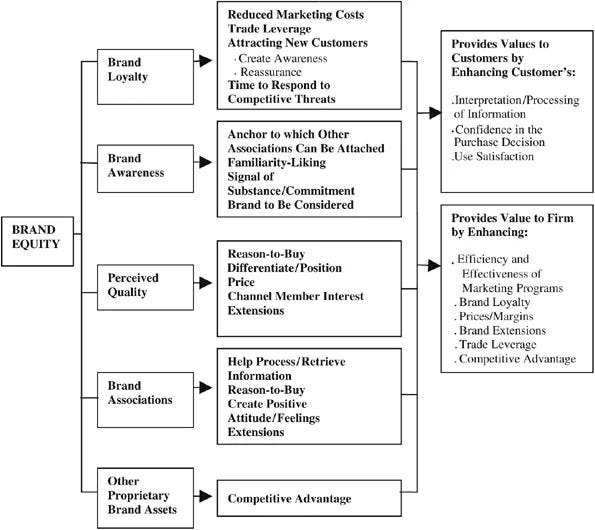
In the 1990s, academic research confirmed the value of awareness. David Aaker, Professor Emeritus at the University of California, Berkeley, identified it as a foundational component of brand equity in 1991.
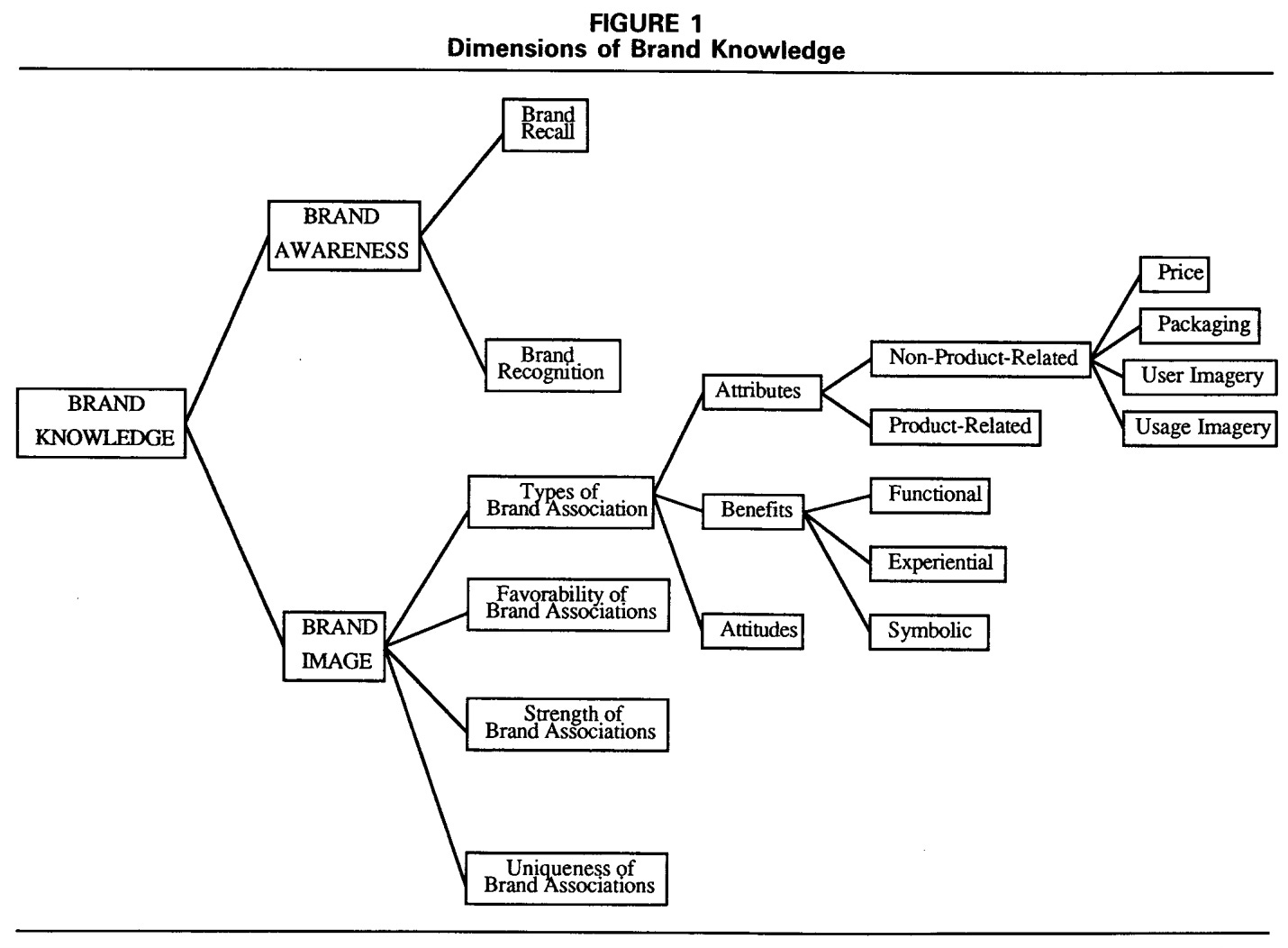
Kevin Lane Keller’s 1993 paper in the Journal of Marketing, one of the most cited works in the field, argued that brand equity is derived from brand knowledge, which has two key components: brand awareness and brand image. Keller also argued that awareness has to come first, because you can’t recognise, recall, or form an image of a brand you aren’t aware of.
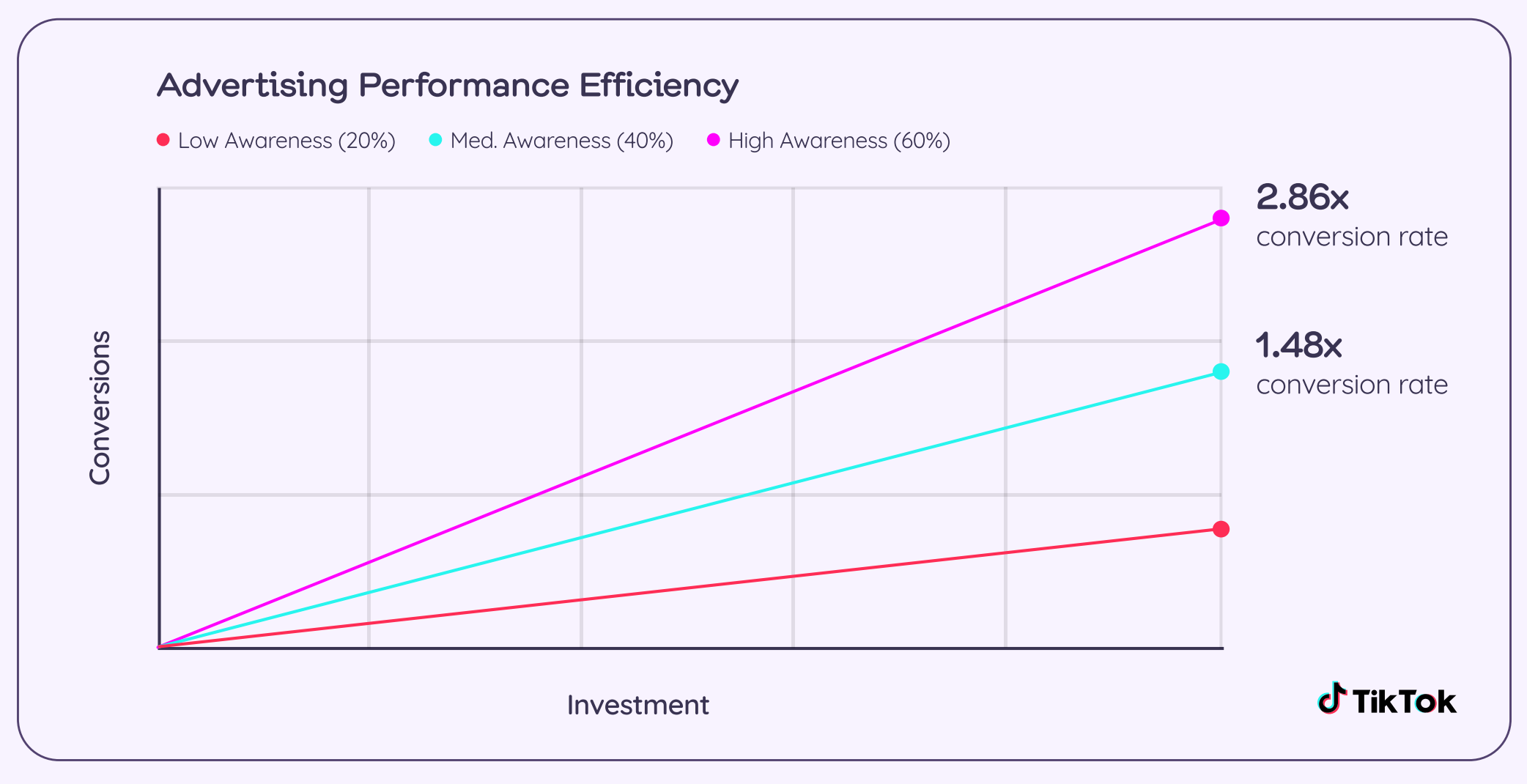
As recently as 2024, TikTok and Tracksuit’s paper, The Awareness Advantage, found that high levels of awareness were linked to a nearly 2.86x increase in conversion rates in performance media compared low awareness brands, suggesting that it is anything but a ‘fluffy brand metric’.
That’s a hundred years of showmen, statisticians, academics, accountants, and social platforms, all converging on the same conclusion: being known is worth money.
Running alongside all of this, Andrew Ehrenberg’s work on double jeopardy, first observed in the 1960s and formalised in 1990, showed that small brands have have fewer buyers, and those buyers are slightly less loyal. It has been borne out over more than half a decade, across multiple categories, and is arguably the closest marketing comes to a law in the truly scientific sense.
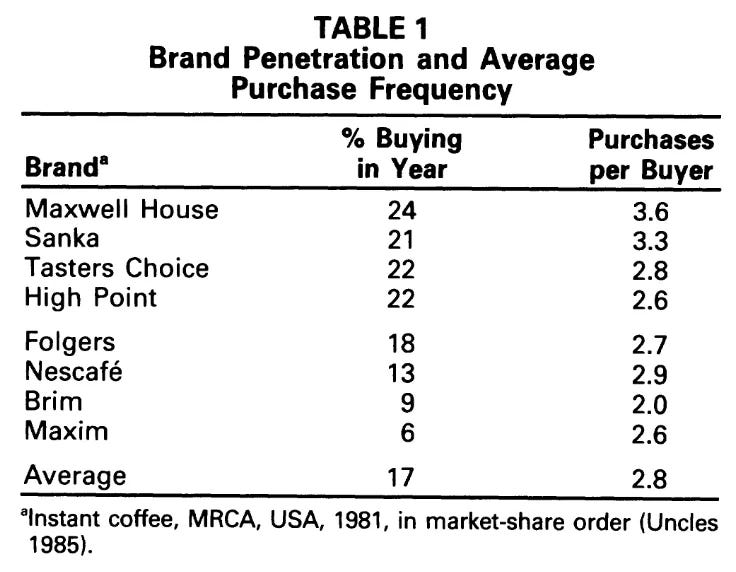
The underlying cause of double jeopardy, as Byron Sharp and Jenni Romaniuk have spent over a decade pointing out, is mental availability, which is different from awareness.
As Sharp himself says: “a brand’s mental availability refers to the probability that a buyer will notice, recognise and/or think of a brand in buying situations … it is much more than awareness, whether that is top-of-mind awareness, recognition or recall.”
In other words:
Awareness (Unprompted) = what beer brands you can name?
Awareness (Prompted) = which of these beer brands do you recognise?
Mental availability = if you’ve just got to the pub to watch England in the World Cup semi-final on a hot summer’s day, which beer brands come to mind?
The current consensus amongst effectiveness-focussed marketers is that mental availability is the primary predictor of brand growth. In Mark Ritson and Byron Sharp’s recent head-to-head in Cannes, the importance of mental availability was first on the list of the five things they agreed on.
It’s tracked using category entry point (CEP) analysis - which brands are most associated with particular purchase occasions in a given category - and often requires a separate study to a standard brand tracker.
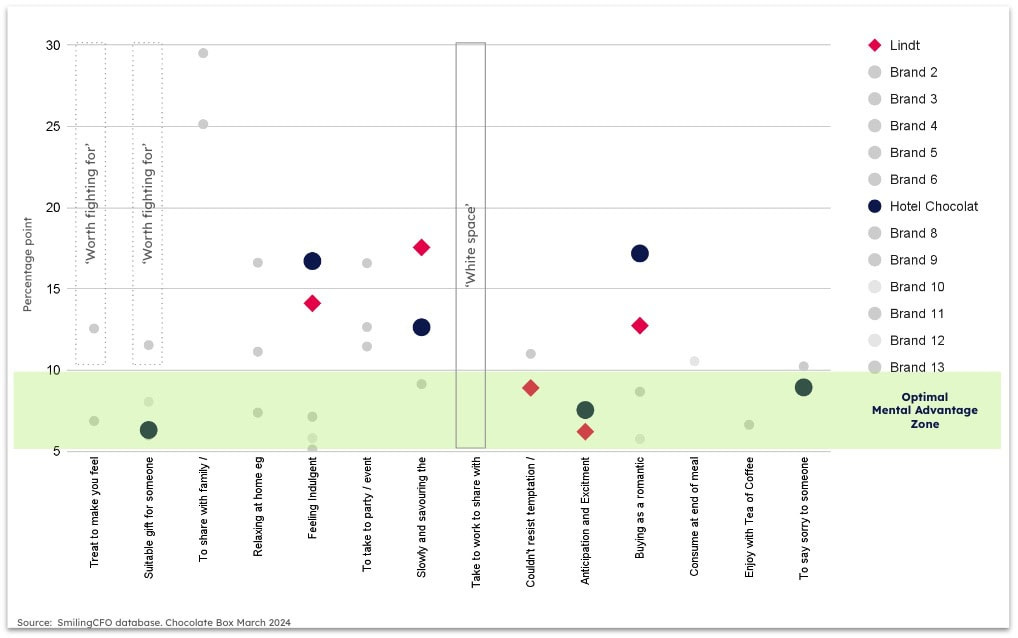
Some might interpret the primacy of mental availability as an argument against awareness. But mental availability results from brand memory structures, and you can’t have memory structures for a brand you’ve never heard of.
This is a line Feldwick again draws all the way back to Barnum. In his later book Why Does the Pedlar Sing?, he connects Showmanship directly to Ehrenberg-Bass, arguing that Barnum was practising mental availability - getting yourself talked about, kept in front of people, and lodged in memory - a century before Sharp named it. It’s why buying a ticket to see Jennie Lind came to mind when New Yorkers were at a loose end in the summer of 1850 (one for all you Greatest Showman fans out there).
Fast forward to 2026, and sponsorship has intrinsic structural advantages when it comes to mental availability. In a fragmented media landscape, the number of platforms that can put a brand in front of tens of millions of people, repeatedly, over years, in contexts loaded with emotion and attention, keeps shrinking. Live sport is one of the last of them.
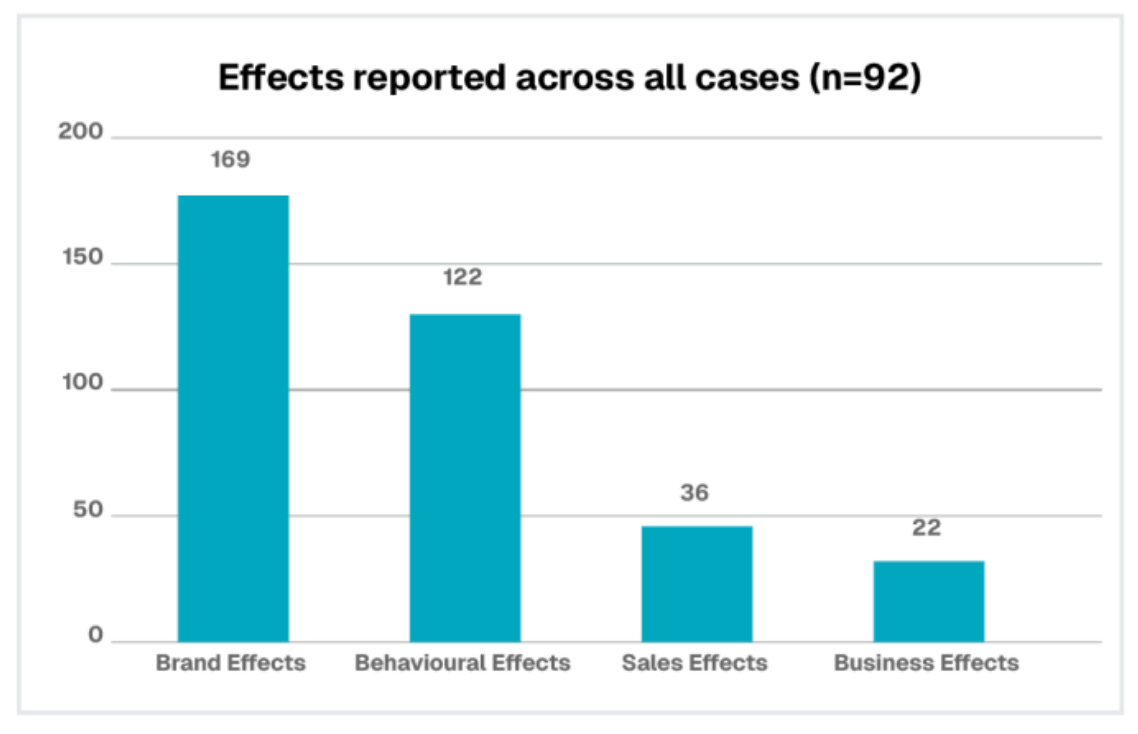
My own analysis in The Sponsorship Effect found brand effects outnumbering sales effects five to one. Sponsorship is structurally tilted towards exactly the thing the industry has been trained not to mention.
The final refuge of the awareness sceptic is that it can’t be valued. It’s a “soft” metric, the argument goes, and it doesn’t survive contact with a CFO.
Except it can be valued, with numbers most businesses already have:
Value of one point of awareness = addressable market × 1% × conversion rate from aware to consideration × conversion rate from consideration to purchase × customer lifetime value
Suppose a brand operates in a market of 20 million category buyers. One point of awareness represents 200,000 people. If 30% of those aware of the brand would consider it, and 10% of considerers become customers within the relevant window, 200,000 people who are aware becomes 6,000 customers. With a customer lifetime value of £400, that point of awareness is worth £2.4 million.
Those numbers are illustrative, a method template rather than a benchmark, and come with caveats. A person who’s only recently become aware is less likely to buy than the person who has been aware for a decade. The funnel isn’t a rigid pipe, and the stages interact. And you’re multiplying several estimates together, which means the output carries the uncertainty of all of them. While nobody should present the calculations as audited fact, Brand Finance will have used a method like that to calculate the incremental value of Deutsche Telekom’s Bayern Munich sponsorship to be €1.9bn.
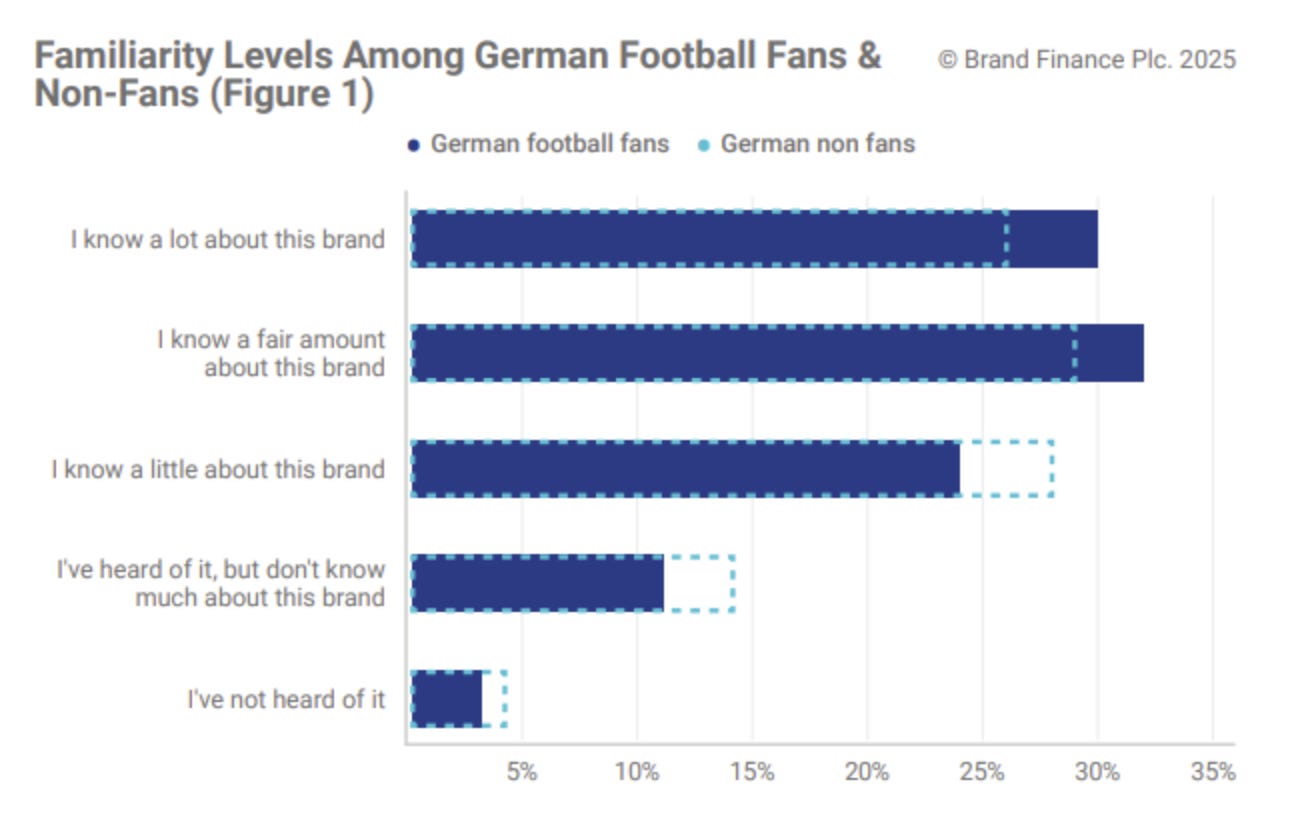
The truth is, the output doesn’t need to be precise to be useful. The entire finance discipline is built on valuing intangible assets, discounting uncertain future cash flows, and pricing risk. Which means the calculation just needs to be defensible, and this calculation puts awareness in the same language as every other investment the business makes.
If a CFO can’t engage with the value of being known by the people who might buy from the business, it’s not the metric’s fault.
There is a brand effect the evidence rates more highly, and that’s fame. Binet and Field’s analysis of the IPA Databank found that fame-driven campaigns, the ones that proactively get talked about, outperform every other communications model on hard business measures, with the highest rate of very large profit growth in the databank.
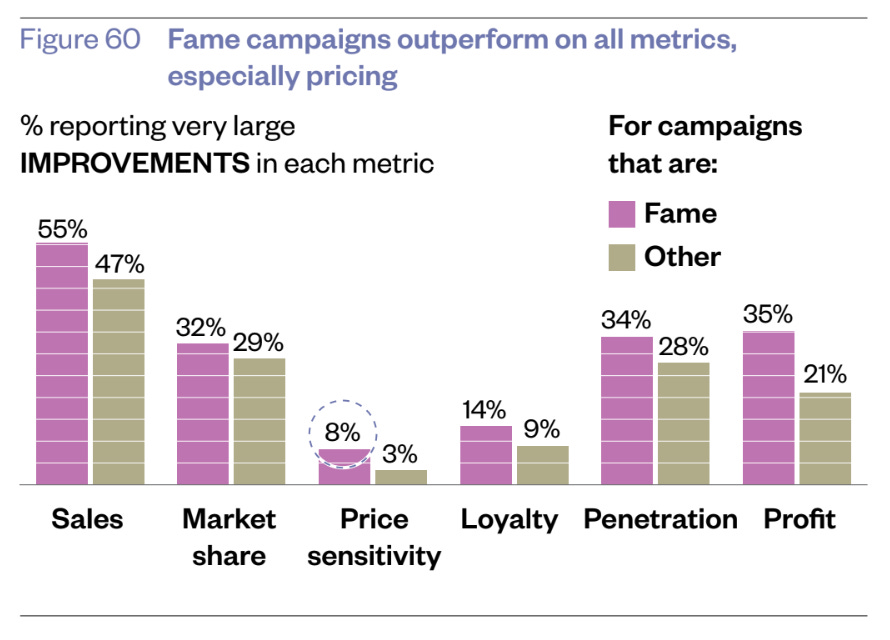
Fame goes beyond being known into being currently, socially, conspicuously known. Paul Feldwick describes it as a social construct rather than a psychological one, something that lives between people rather than inside them.
Sponsorship can produce fame. When Guinness owns the Six Nations, or when a sponsor’s activation becomes part of the cultural memory of a tournament, as I wrote about John Barnes and Lucozade last week, that’s fame at work. The uncomfortable part, for anyone selling sponsorship, is that fame can’t be guaranteed and is highly dependent on the sponsor’s approach. It depends on media investment, creative quality, cultural timing, and a degree of luck that no rights package can underwrite.
But just as with mental availability, to be famous you first need to have awareness. And awareness is the thing sponsorship can reliably, repeatedly, provably deliver.
Its value is supported by a century of evidence, and can be expressed in terms of revenue and profit. So let’s stop saying we need to improve on it, when it’s one of the things sponsorship does best.
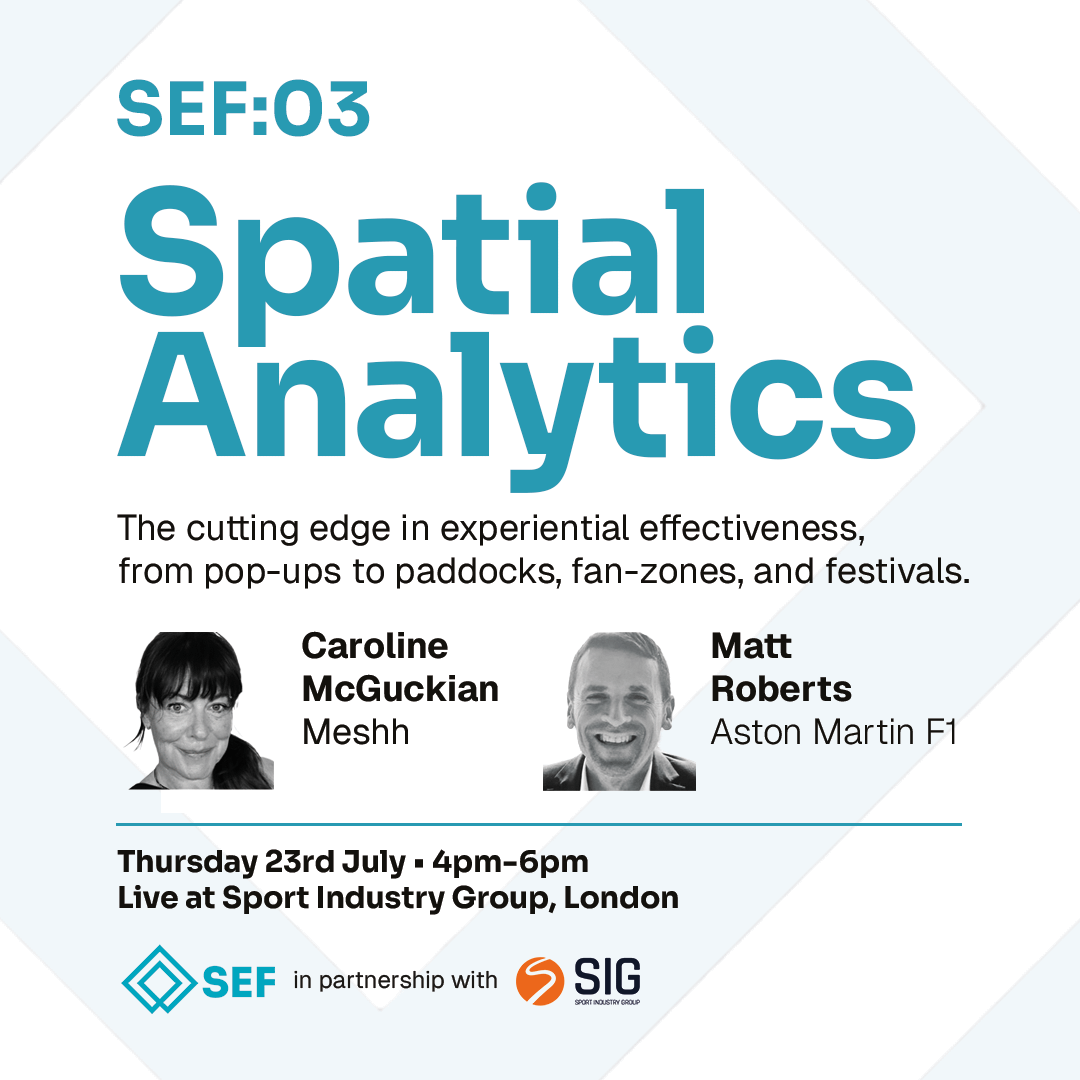
A couple of reminders: SEF:03 will be held on Thursday 23rd July at Sport Industry Group in Holborn, and will look at how spatial analytics can be used to evaluate the effectiveness of live events and experiential activations. Head over to Eventbrite to get your tickets.
Secondly, a request for ten minutes of your time to complete a survey for our research on sponsorship effectiveness with the IPA. Completing the survey is the only way to get full access to the findings ahead of the IPA Effectiveness Conference in October.
For brands https://www.surveymonkey.com/r/FBYJQ2J
For rights holders https://www.surveymonkey.com/r/3J2JWLF
For agencies https://www.surveymonkey.com/r/3RQJMST
No posts
Comments
Nothing yet. Say the first thing.
Sign in to join the conversation.