
Long before tequila became a global spirit category, before distillation arrived in Mexico, and long before agave appeared on cocktail menus or luxury back bars, the plant already carried religious, symbolic, and social importance across Mesoamerica.
And honestly, when you look at what agave actually gave to people, this starts making a lot more sense.
Because agave was never just a source of alcohol. More than anything else, it represented survival.
The plant provided fibre for rope and textiles, sharp tips that could function almost like needles, materials for construction, food, fermented beverages, and something incredibly important in harsher climates: reliability.
Agave survives where many crops struggle.
It stores energy slowly over years, sometimes more than a decade, concentrating carbohydrates inside the piña before flowering once and dying. In practical terms, it became a long-term reserve of usable material in environments that could be dry, unpredictable, and difficult.
And once a plant becomes deeply tied to survival, it usually becomes deeply tied to symbolism too.
Because mythology often reveals what societies depended on most.
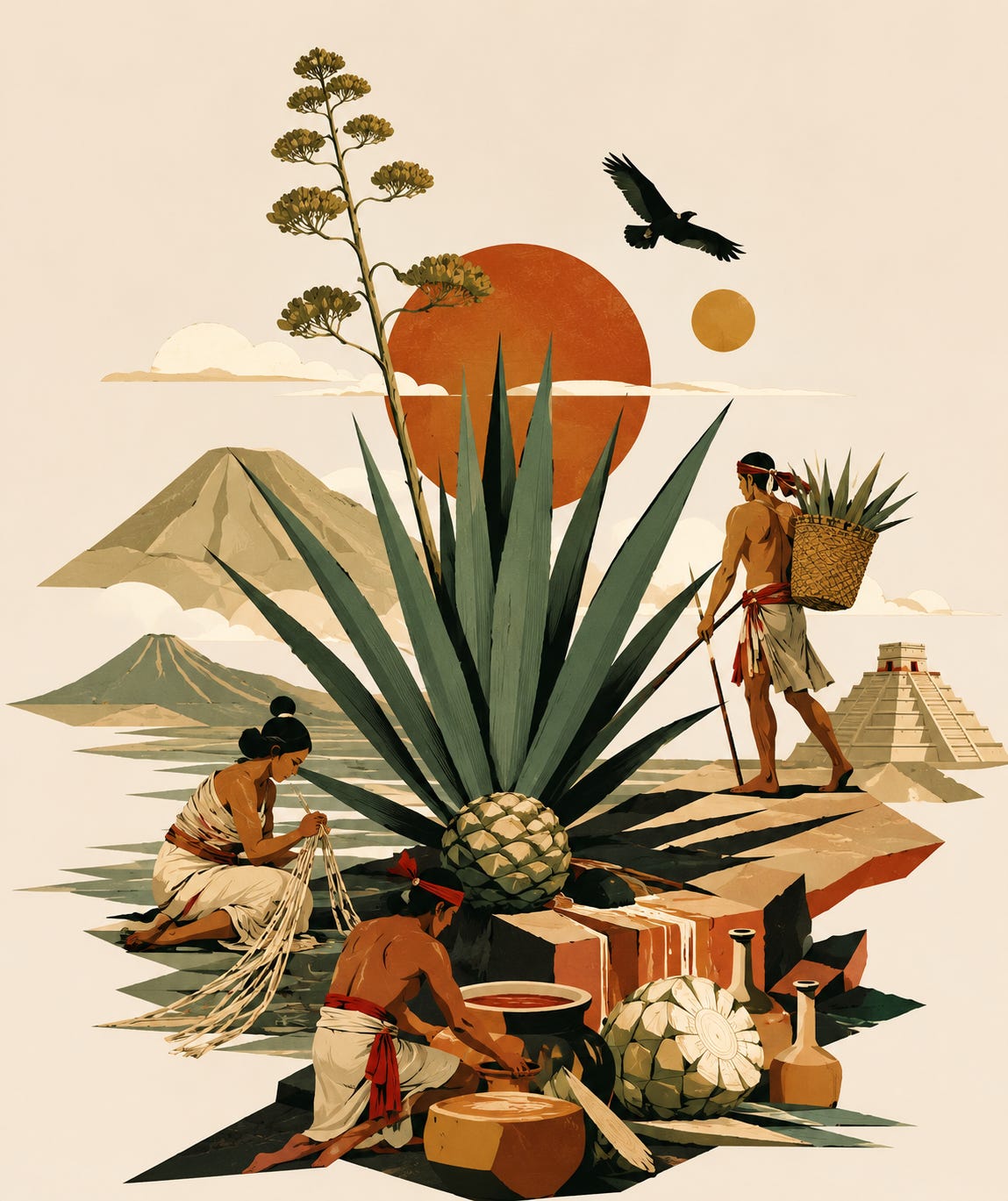
This is where Mayahuel enters the story.
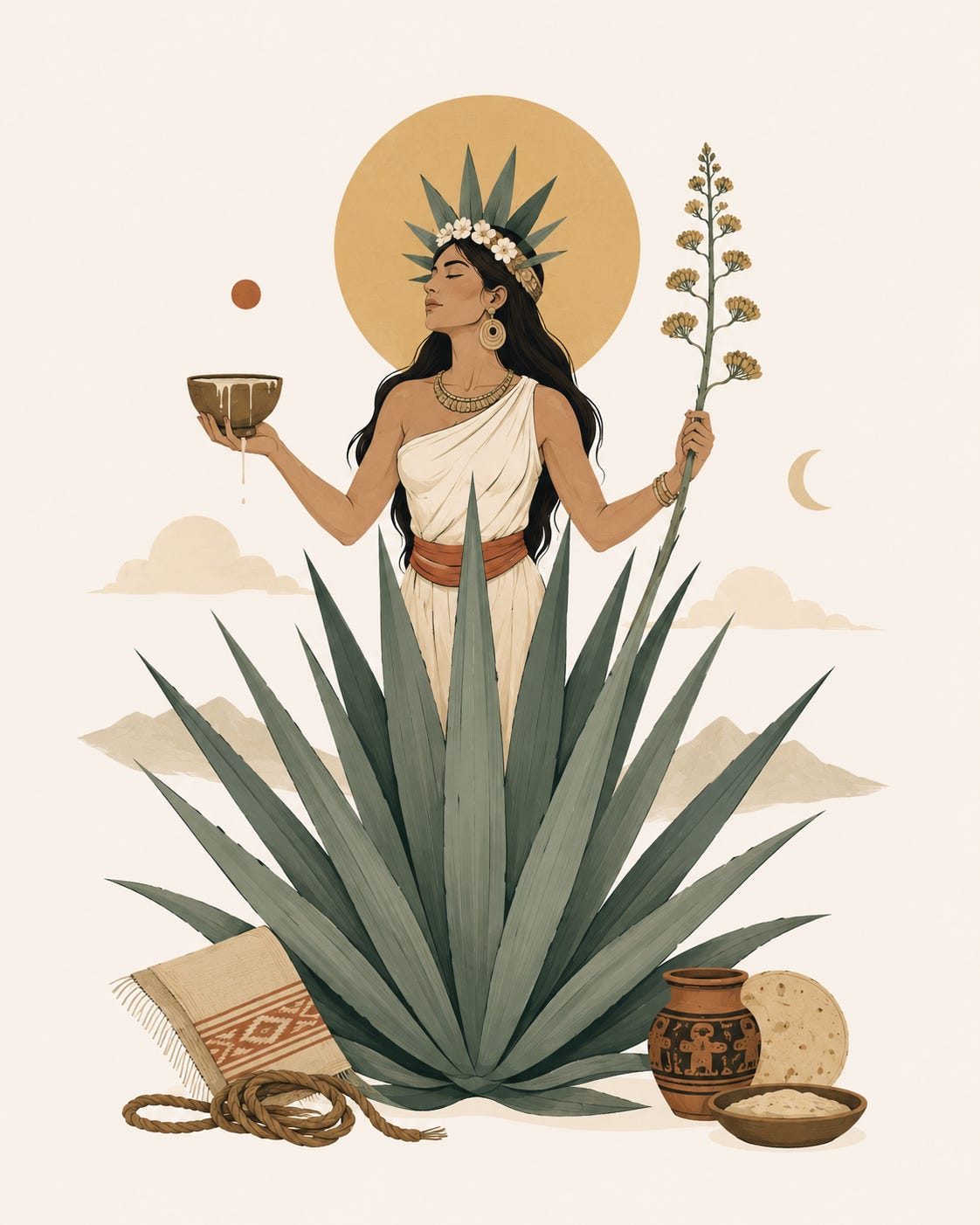
In Aztec mythology, Mayahuel was a goddess associated with agave, fertility, nourishment, and pulque, the fermented agave beverage consumed long before tequila existed.
She is often represented emerging directly from the agave plant itself, almost becoming physically inseparable from it.
And honestly, the symbolism almost becomes logical.
Agave fed people, clothed people, provided tools, fermented into intoxicating beverages, and survived difficult environments. Over time, the plant stopped being viewed only as agriculture and started becoming associated with continuity of life itself.
Which is why Mayahuel was not simply connected to intoxication.
She became associated with nourishment, fertility, motherhood, and sustenance.
And this pattern repeats constantly throughout history.
Societies tend to mythologise the things that reduce suffering, increase survival, or alter human experience in meaningful ways.
Wheat, Wine, Cacao, Coffee all became ritualised.
Agave became divine.
Because symbolic importance usually follows material importance.
And agave carried enormous material importance.
One of the strangest things about modern tequila culture is that many people unconsciously treat it as if it were the beginning of agave alcohol.
It wasn’t.
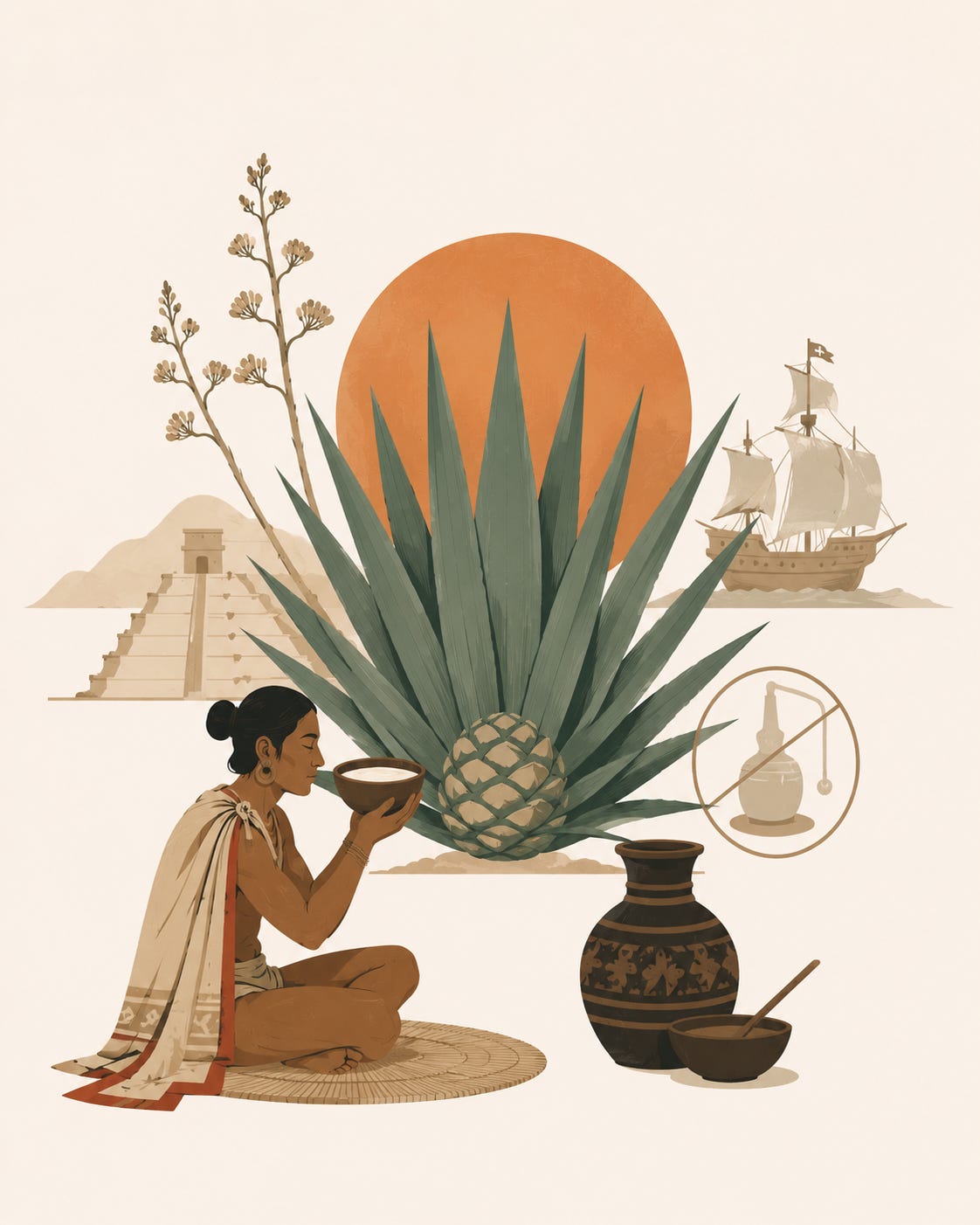
Long before distillation arrived from Europe, fermented agave beverages already existed in Mesoamerica. The most important of these was Pulque, produced from agave sap and consumed ceremonially, socially, and religiously.
That changes the timeline completely.
Because the spiritual and ritual relationship already existed centuries earlier.
Pulque occupied a complicated role in society. In some contexts it was ceremonial, restricted, or associated with specific rituals and social structures. Intoxication itself was not always treated casually. In many ancient cultures, altered consciousness carried religious meaning because people often interpreted psychological transformation spiritually long before chemistry or neuroscience existed.
And honestly, this is still visible today.
Even now, people describe intoxication using language that sounds strangely spiritual:
losing yourself, becoming someone else, seeing differently, letting go,
escaping reality.
The vocabulary changed, but the psychological fascination did not.
This is probably the most fascinating part of agave mythology.
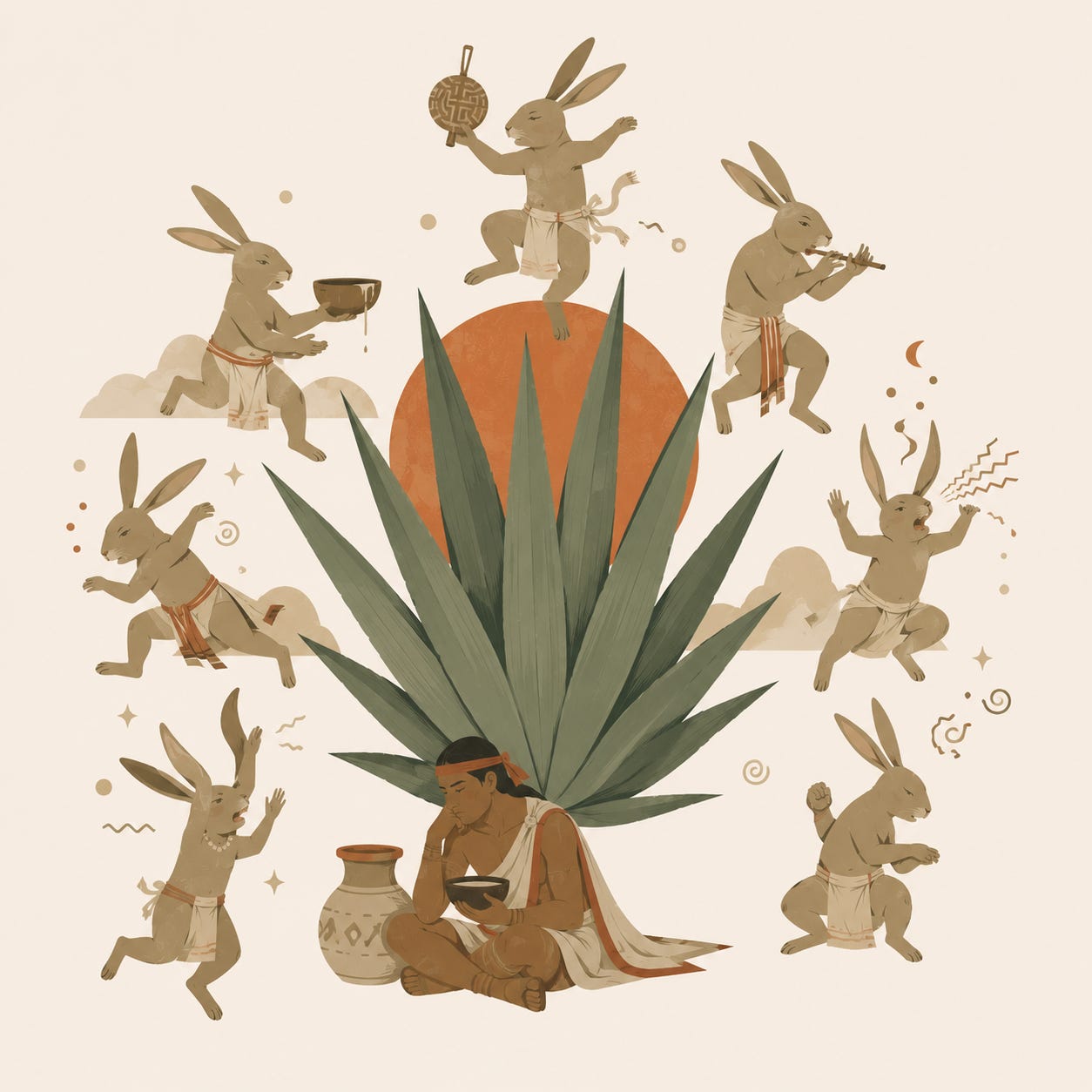
In Aztec mythology, the Centzon Tōtōchtin, often translated as the “400 Rabbits,” were divine rabbit spirits associated with pulque and drunkenness.
The number 400 did not literally mean 400 rabbits.
In Nahuatl symbolism, it often represented something countless or beyond easy measurement.
Which makes the symbolism incredibly intelligent.
Because intoxication rarely expresses itself the same way twice.
Some people become emotional.
Some become aggressive.
Some become affectionate.
Some become philosophical.
Some become reckless.
Some become quiet.
The mythology treated drunkenness almost like multiplication of personality.
Not one rabbit. Hundreds of them.
And rabbits themselves were not random symbols either.
They represented fertility, rapid multiplication, excess, and loss of control, all things that mirror intoxication surprisingly well.
One drink becomes several.
One version of yourself becomes another.
What I find most interesting is that this mythology was not simply celebrating drunkenness. It was trying to explain it.
Because before psychology, neuroscience, or biochemistry, human beings still needed frameworks to understand why intoxication could transform behaviour so dramatically.
So mythology became one of those frameworks.
Once you zoom out, agave stops being an isolated example.
Humans repeatedly mythologised substances that altered consciousness.
Wine in the Mediterranean.
Cacao in Mesoamerica.
Coffee in the Middle-east.
Tobacco in ritual ceremonies.
Psychoactive mushrooms in religious practice.
This pattern appears again and again across civilizations.
And honestly, it makes perfect sense.
Altered consciousness is one of the strangest experiences available to human beings.
Fermentation itself probably looked almost supernatural before microbiology existed. Sugar transformed into intoxication through an invisible process nobody could fully explain chemically at the time.
Fruit spoiled.
Grain transformed.
Agave fermented.
Human perception changed.
That sequence alone is enough to create mythology.
Especially when those substances also became tied to:
ritual, social bonding, status, religion, celebration, and more.
Which is why agave eventually became far more than a plant.
It became symbol.
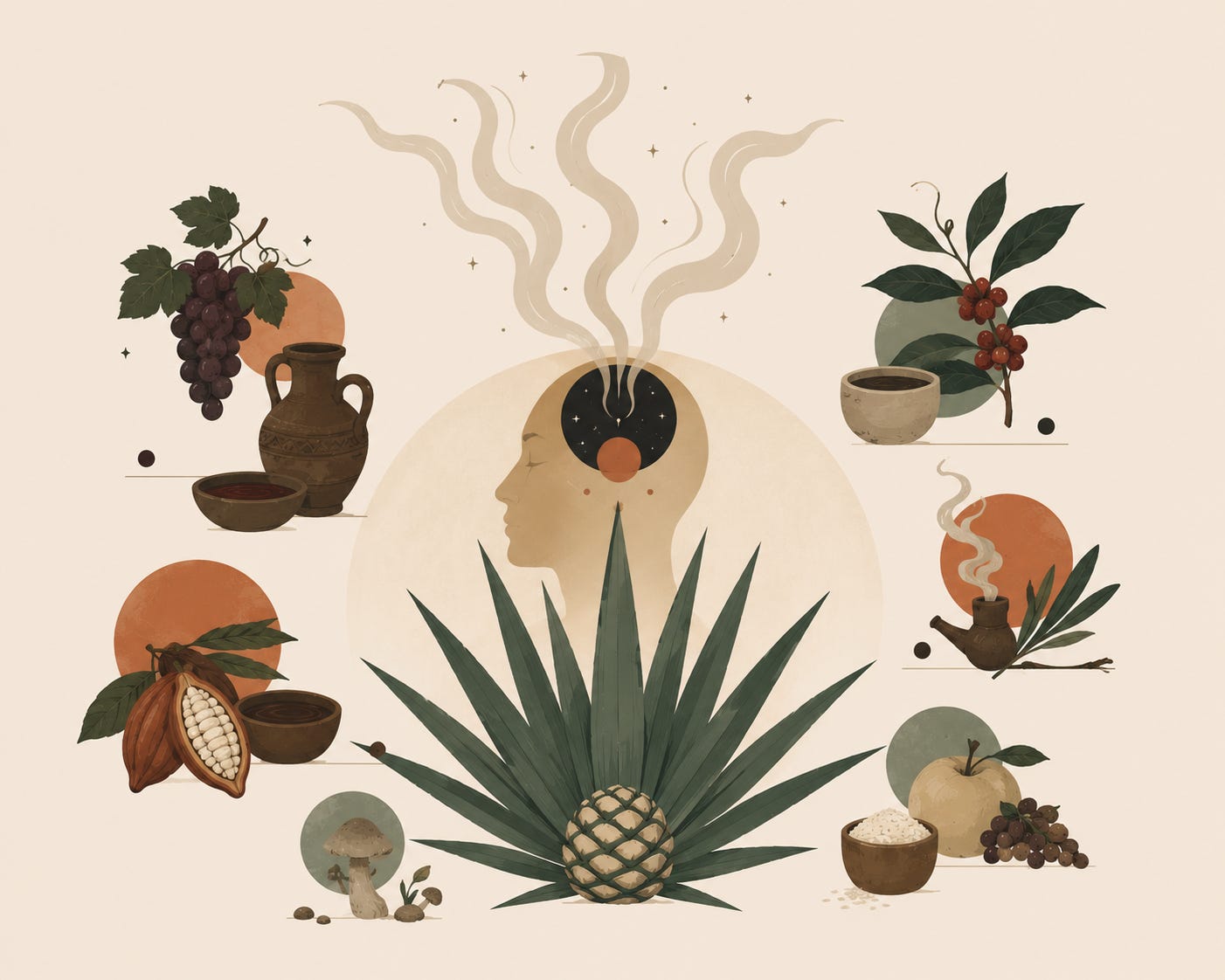
Tequila is modern. Agave mythology not so much.
Long before tequila became a luxury bottle, a cocktail ingredient, or a global export category, agave had already earned something much more difficult:
Importance.
Because it fundamentally changed how people survived, gathered, fermented, celebrated, and understood transformation itself.
And maybe that is the most interesting thing about agave.
Before it became a spirit, it first became sacred.
No posts
Comments
Nothing yet. Say the first thing.
Sign in to join the conversation.