
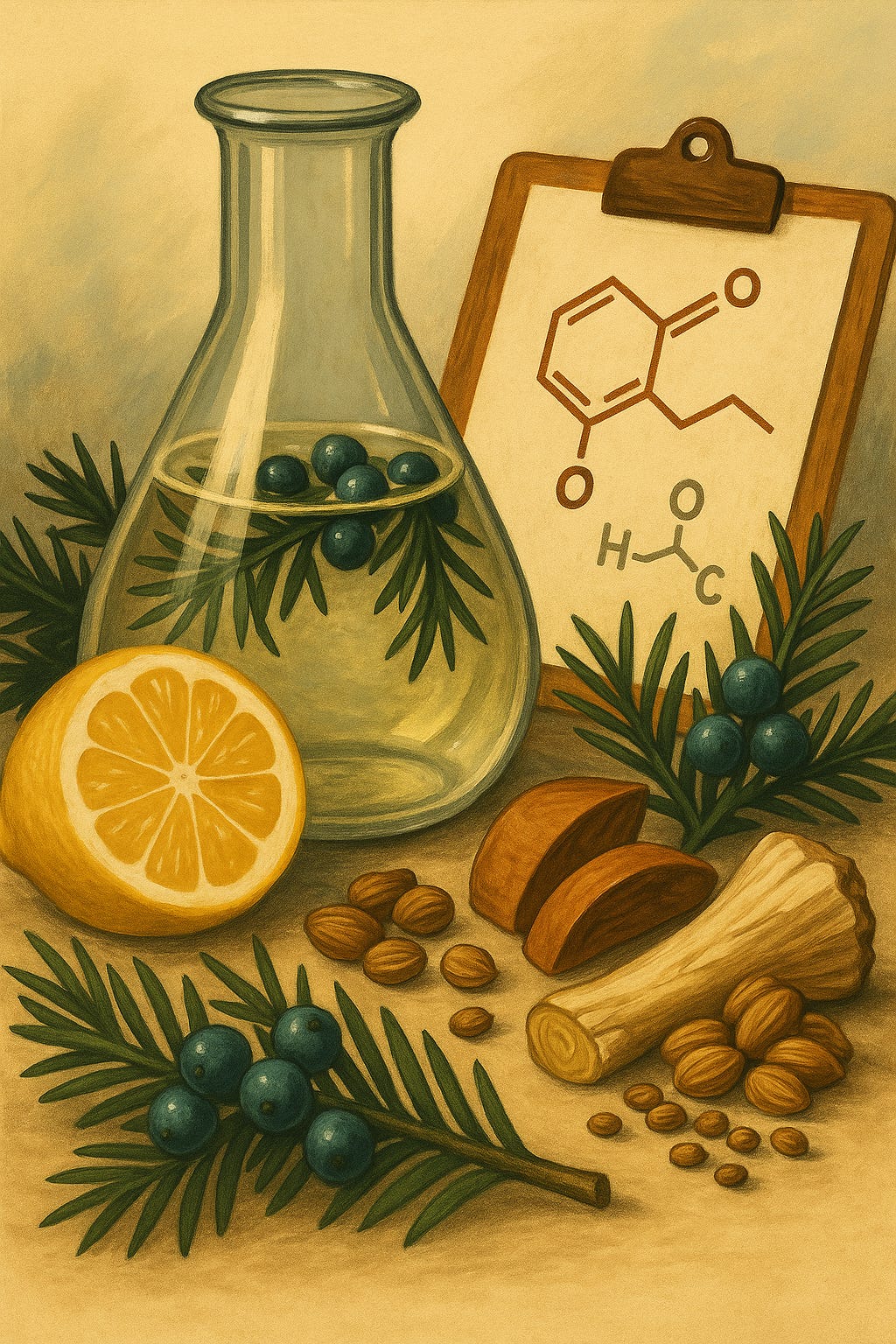
The citrus, the spice, the floral and earthy undertones — exists to shape, lift, or support what juniper starts.
Juniper (Juniperus communis) isn’t just a legal requirement. It’s the anchor of flavour, built from a complex mix of terpenes. The key players are:
α-Pinene — pine resin, crisp and fresh, the signature of juniper on the nose
β-Myrcene — soft herbal notes, giving juniper its depth
Limonene — subtle citrus lift that balances the resin
Sabinene — peppery edge that brings complexity
Cadinene & sesquiterpenes — faint woody and smoky undertones
These compounds are volatile, meaning they’re drawn out during distillation and carried directly into the final spirit. They define gin’s aroma from the first sip to the lingering finish.
But even juniper at its best can sometimes feel raw or one-dimensional without balance. That’s where other botanicals come in — not to overshadow juniper, but to work in harmony.
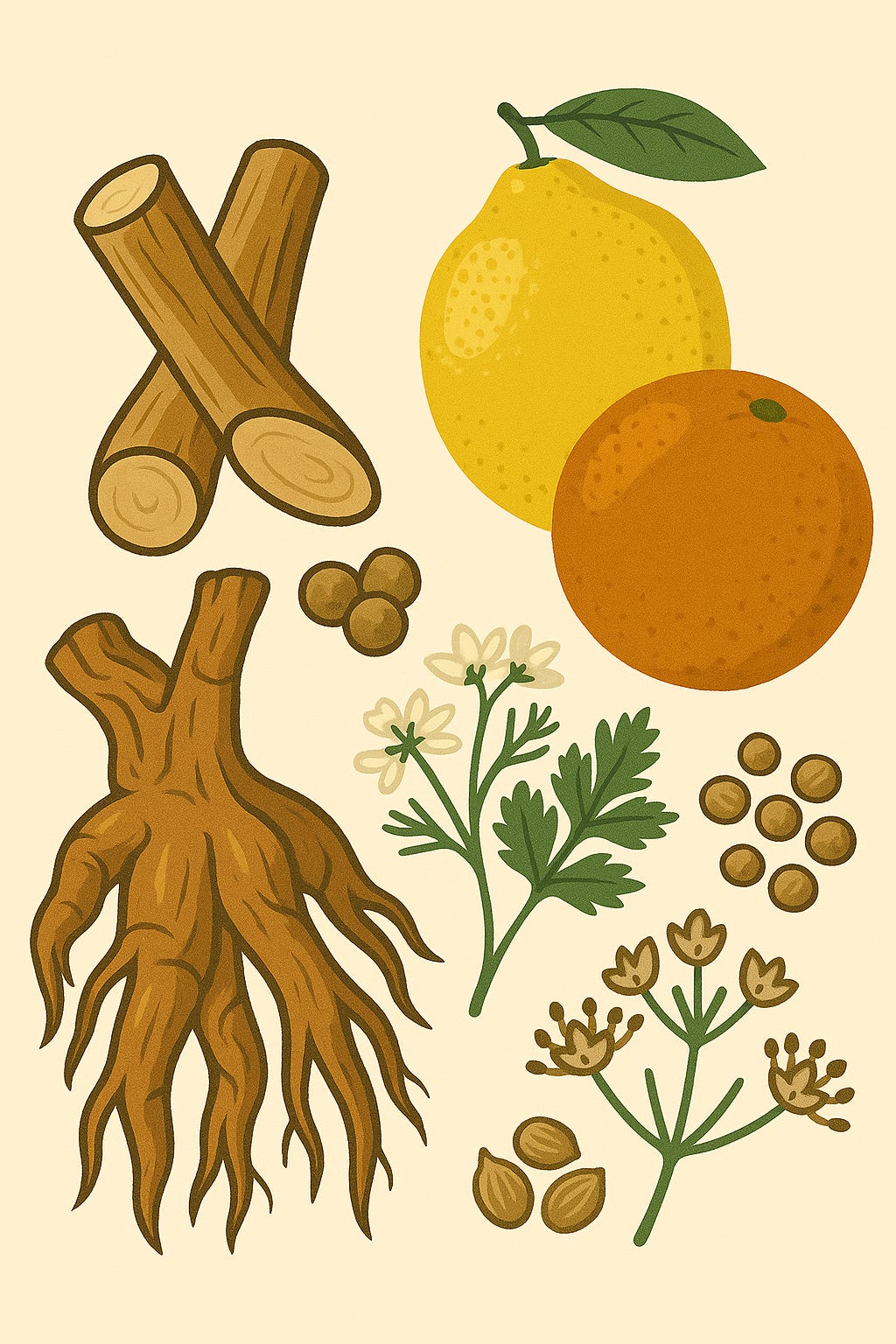
Coriander Seed
Coriander adds complexity to juniper’s pine. Its linalool content brings warm citrus and floral edges, while α-pinene reinforces the herbal backbone. Coriander makes gin feel rounder, bridging the gap between juniper’s resin and citrus peel’s brightness.
Angelica Root
Angelica adds earthiness and a faintly musky spice. Chemically, it contributes terpenoids that round off sharper notes. More importantly, it acts as a fixative: it helps slow the evaporation of lighter aromatics, giving gin its length and stability.
Orris Root
Orris doesn’t bring much aroma itself. Its main job is to hold the structure of the gin together. The irones in orris bind and stabilize other volatile compounds, ensuring that bright citrus or floral top notes don’t vanish the moment the bottle is opened.
Citrus Peels (Lemon, Bitter Orange, Lime, Grapefruit)
Citrus peels provide limonene, citral, and related terpenes that give gin its top-note freshness. They don’t compete with juniper — they lift it, adding brightness to what could otherwise feel heavy.
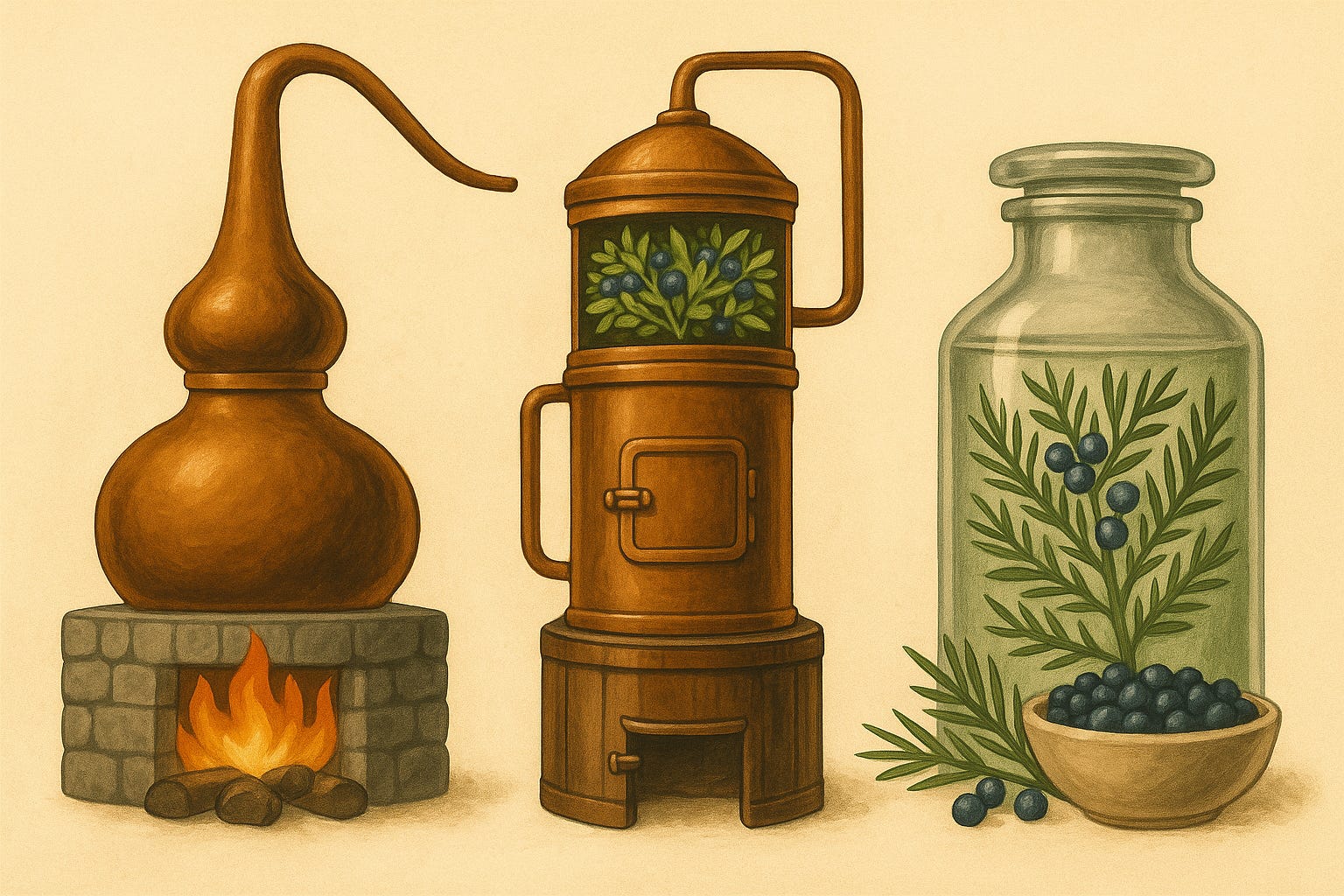
Gin’s character isn’t only about what goes in — it’s about how those botanicals are handled during distillation.
Steeping (Pot Still Method)
In traditional London Dry-style gin, botanicals are steeped and distilled directly in neutral spirit, all together. This method gives a deeper extraction of essential oils and compounds. The result is a fuller, more integrated botanical profile — richer, more oily, with longer persistence on the palate.
Vapour Infusion (Basket Method)
Here, botanicals sit in a basket above the spirit in the still. Alcohol vapour passes through the botanicals, extracting more delicate, volatile aromatics. Vapour infusion produces a cleaner, lighter gin with brighter top notes and a more lifted, elegant style.
Compound Gin (Cold Compounding)
Although not the focus of quality gin production: compound gins are made by adding flavouring extracts or essences (natural or artificial) to neutral spirit, without redistillation. The result can be uneven and less integrated, lacking the subtle balance that comes from distilling botanicals together.
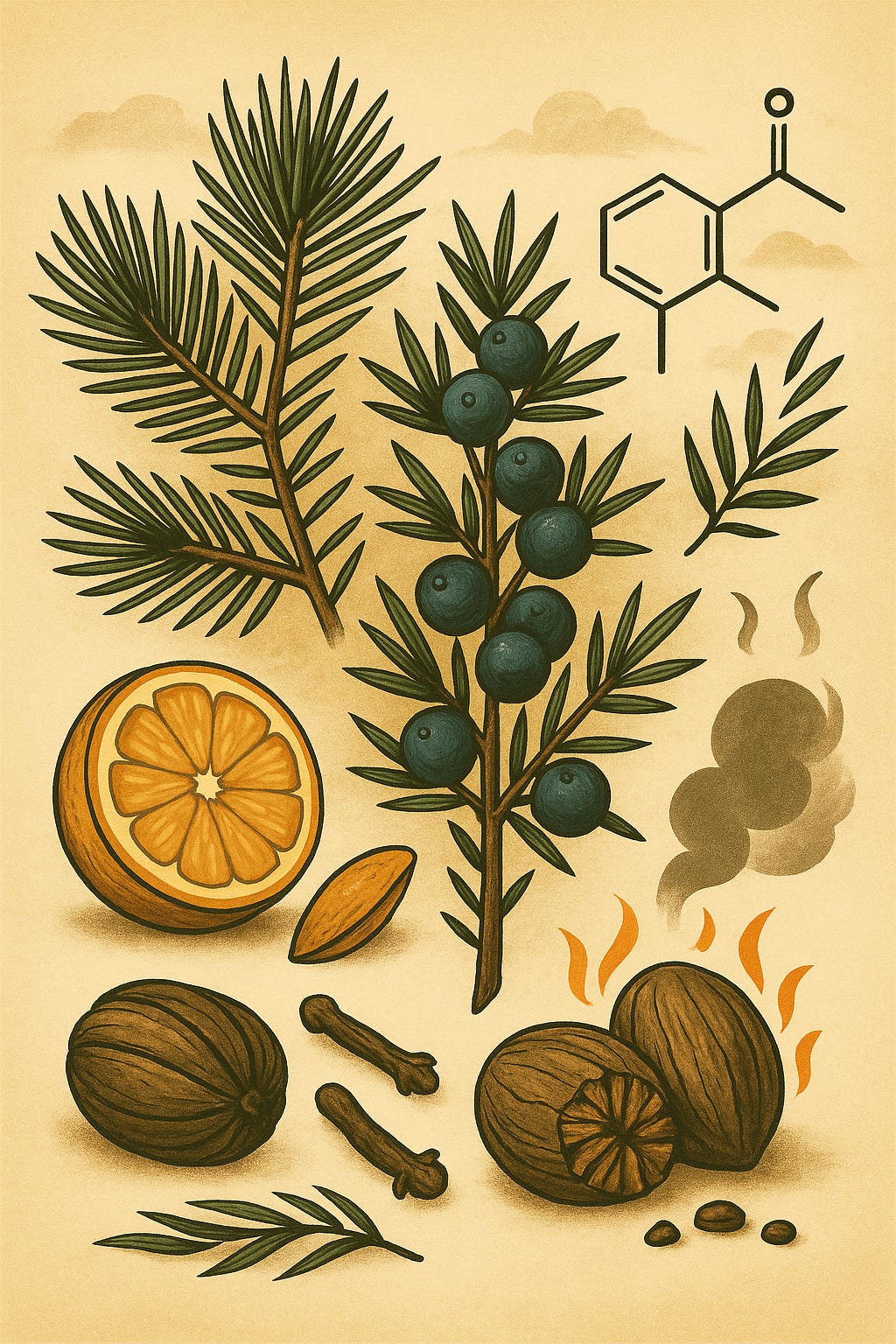
A good gin recipe isn’t built on marketing stories or tradition alone. It’s built on chemistry:
Juniper delivers the signature — no exceptions.
Other botanicals stabilize, enhance, or frame that core character.
Distillation method defines how those compounds are captured and balanced.
The choices made from botanical selection to how those botanicals meet the spirit shape the final liquid far more than any label story ever will.
Juniper isn’t just an ingredient. It’s the identity of gin. The rest is structure — the chemistry that holds it up, frames it, and lets it shine. And while the production method may be invisible to most drinkers, it’s what makes the difference between a gin that’s simply a flavoured spirit, and one that’s built to last in the glass (and your memory).
No posts
Comments
Nothing yet. Say the first thing.
Sign in to join the conversation.