
The Spiral Lab Magazine is a new iteration of this newsletter, which began as a single-contributor weekly(ish) newsletter by me, Marta Rose. Now, the Spiral Lab Collective is launching a multi-contributor magazine format, which is quite long, and not meant to be read in one sitting (unless you want to!). We hope you will keep coming back and savoring these thought-provoking pieces, and join in the conversation in the comments, and at our free creative care workshop in a few weeks!
The theme of this first issue is Chaos—which we feel is appropriate to launch this magazine because we are making it up as we go, iterating, designing divergently, neuroqueering both our process and our product.
What we can say right now is that we are a collective of international, neuroqueer, disabled writers and artists who have come together through Divergent Design Studios to be in conversation with each other and with you, dear readers, about a wide range of themes that grab our collective interests.
Keeping in mind that everything we do here is subject to change, our vision right now is that in addition to the magazine issue itself, we will publish sometime soon(ish) a set of creative care invitations and journaling prompts related to the current theme, and then shortly after that we will host a free live workshop on zoom during which one or more of us will lead participants through those invitations. Everything will be free, though we will “pass the hat” for a suggested donation at the workshop. Sometime later, if there is interest, we will invite you the readers/makers to contribute to the conversation around the month’s theme through your comments and the writing and art you make in response to our creative care invitations.
For this first issue, on the theme of Chaos, our conversation among the members of The Spiral Lab Collective was sparked by the first essay in this issue, On Navigating Chaos, by Le*ah. Their response to their own essay forms the conclusion of the issue.
by Le*ah1
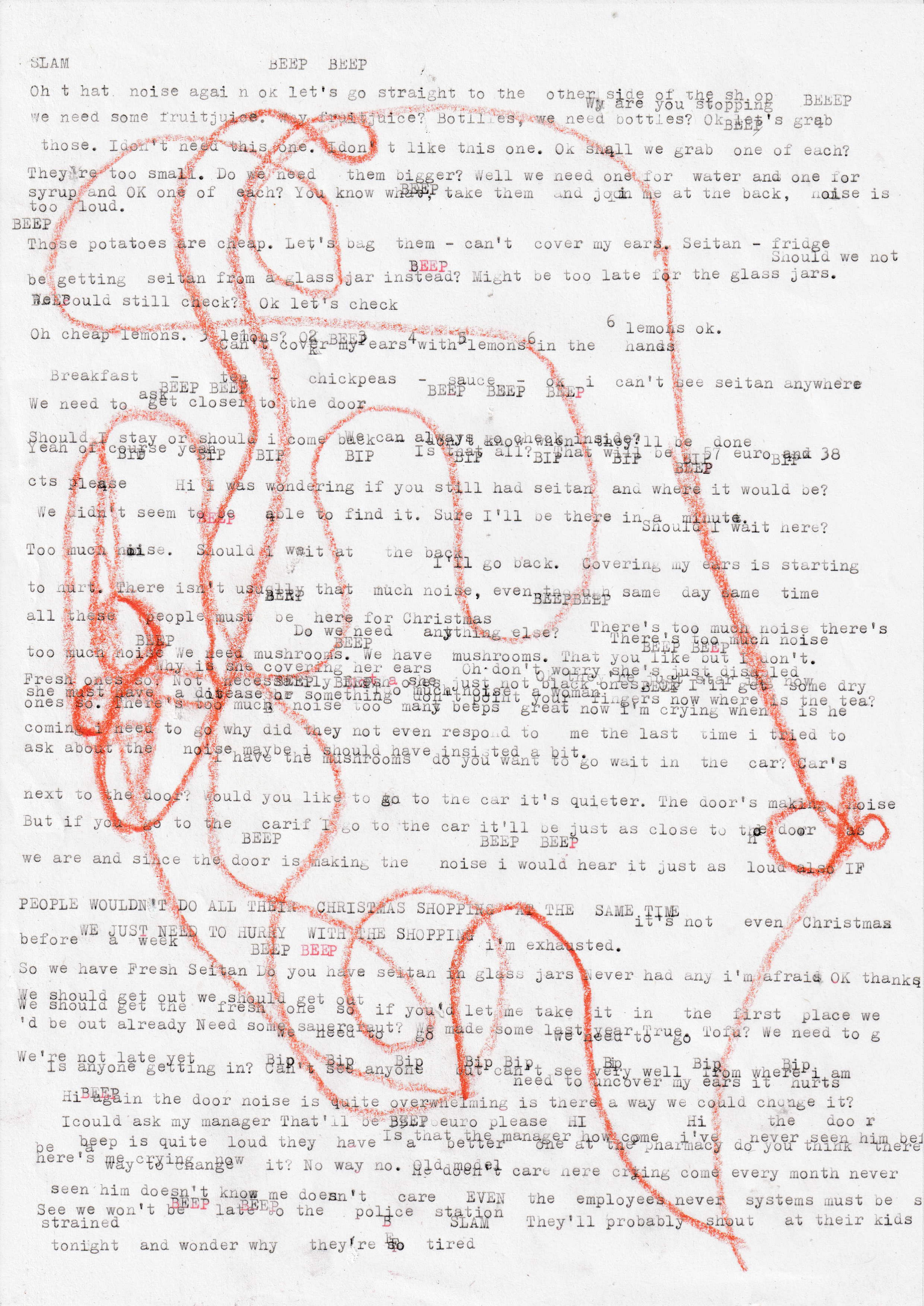
Some of us don’t think in straight lines. Our lives break and rebuild in loops, fragments, and unexpected shapes. For those who live with neurodivergence, trauma, and masking, chaos isn’t failure, it’s the landscape we’ve learned to navigate. This essay is a map drawn from that terrain: how creativity and life mirror each other, and how staying with chaos can sometimes lead us home.
For me, being creative has never been a luxury, it’s been a way of surviving. People often think of creativity as something reserved to artists: a gift, a talent, a pastime for those with brushes or instruments. But I’ve come to understand it differently. Creativity is not just about producing art, it’s about finding a way through chaos. It’s the movement that happens when life unravels and we still reach, somehow, for pattern, color, and meaning.
Living is a creative act too. It can be messy, cyclical, uncertain. Both, creativity and life often require us to navigate the unknown, to let go of structures and trust that something new will take shape in the space that opens.
When I look back, every major change in my life began with something falling apart. A job, a relationship, a sense of identity, an order I thought I needed to survive. And then came chaos. The in-between. The place where nothing made sense. For a long time, I thought that meant I was failing. Now I know that chaos is the birthplace of a new order.
Creative processes mirror that movement perfectly: they begin with structure, enter chaos, and something emerges, if we stay with it long enough, something that has not existed before.
There is often this moment, when painting, writing, composing, or crafting where everything collapses. The piece stops working. The original idea dissolves. You can’t see the way forward. That’s the moment when many people give up, but it’s also a moment of potential. Because if you can stay there, if you can breathe inside the not-knowing, something begins to shift. A new pattern emerges from the fragments.
Life can feel the same: There’s no clear beginning or end, just waves of unmaking and re-forming. We lose ourselves and then find small traces again, an image, a sound, a gesture that says, keep going. I used to think I needed to control the chaos, to tidy it, fix it, explain it. Now I see that chaos itself is a form of intelligence. It’s life reorganizing itself. It’s a system refusing to remain what it was.
When I am in crisis, I try to remember that I am not broken, I’m in the middle of a creative storm. Something in me is rearranging. The patterns that kept me alive are no longer sustainable, and something truer is waiting to emerge. Of course, this sounds poetic from outside the storm. Living it is harder. Chaos is uncomfortable. It’s disorienting, slow, and lonely. But it’s also fertile. It’s where imagination wakes up.
I’ve learned to build small rituals for these in-between spaces: lighting a candle, sketching without purpose, rearranging objects on my desk, listening to sounds that feel like breath. These are ways of communicating with the process itself. They remind me that I can move, even when I don’t know where I’m going.
Creativity doesn’t demand that we understand. It asks that we participate.
Sometimes that means writing without sense, crying without language, sitting among fragments without forcing them to fit. Sometimes it means resting until the next impulse arrives.
Slowly, the map unfolds, not as a plan, but as a feeling: a pull toward what wants to live.
The longer I live inside creative cycles, the more I trust the movement between order, chaos, and renewal. There’s no final version of me waiting at the end, only ongoing transformation.
Life, creativity, healing, they’re all names for the same current. And every time we choose to stay in the process, we are already creating something new: a life that holds us, even when everything else falls apart.
If you’re somewhere between old order and new form, between collapse and creation, you’re not lost. You’re mid-process.
Chaos is part of the language of becoming.
The map will reveal itself as we move.
by Céol2
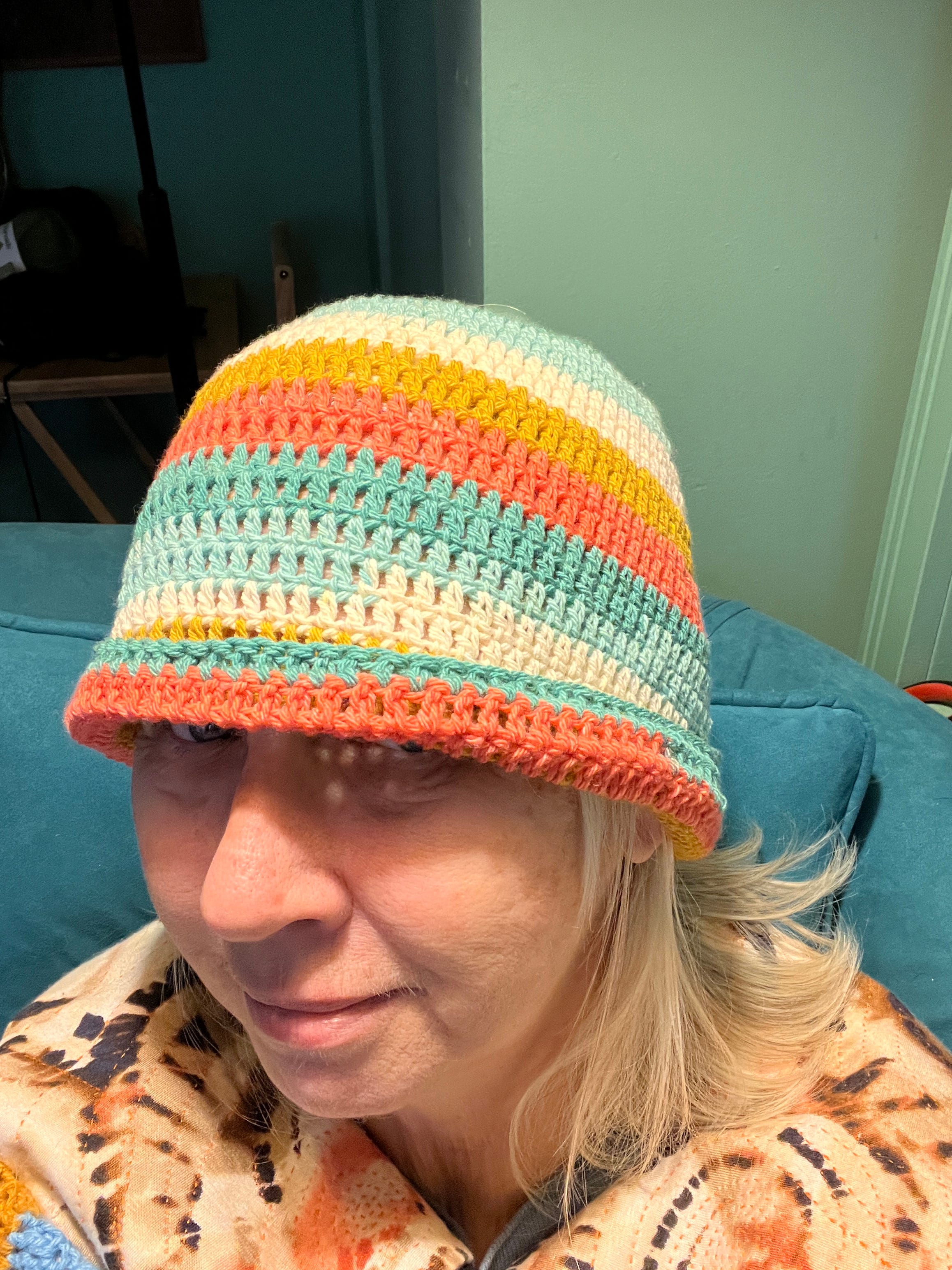
by Marta3
Last spring, when I decided to take up sewing again in order to alter some of my clothes to fit better and be more comfortable, I had no idea that decision would set in motion a series of events that led, among other things, to this new version of my newsletter: The Spiral Lab Magazine. But this is one of the main principles of chaos theory, that “a small change in one state of a deterministic nonlinear system can result in large differences in a later state (meaning there is sensitive dependence on initial conditions).”4 This is most famously cited as “the butterfly effect,” the notion that a butterfly flapping its wings in South America can cause or prevent a tornado in the USA.
I had determined many times before that I would start sewing again in order to make my clothes fit better, but when I finally did, altering old clothes became the least of it. As I scoured YouTube for tutorials about small problems I was having in my alterations, I came across a whole corner of the internet dedicated to the joys of sewing, and I quickly became hooked. I have often said that every good idea I’ve ever had came to me deep down a seemingly time-wasting rabbit hole. Often the good idea that comes to me is not directly related to the rabbit hole I am burrowing in, but the thing about rabbit holes is that one thing leads to another, leads to another, and along the way we gather bits and pieces that change us, offer insight, and eventually coalesce into something brand new.
I have described this time—which for me is often spent on YouTube obsessively watching videos about some new special interest—as gathering stardust, based on a metaphor of time as an elliptical orbit in space. But I am coming to think that mud may be a more apt metaphor for me at this moment. After all, rabbit holes are dug in dirt.
As I type, I am in a pet-friendly hotel in a small town in Texas, because for the second time during our month-long van trip to the Southwest, we got stuck in the mud and had to be pulled out. This time the van was damaged in some way we still don’t understand, and we are waiting to have it towed to a mechanics shop.
But this story isn’t about the van, really, it’s about the mud. It is everywhere. Even in the nice clean hotel room, I keep finding bits of it, now mostly dried clumps, clinging to all sorts of unexpected places: the yarn I am crocheting with, my laptop charger, clothing I wasn’t even wearing at the time. It is the nature of mud that it is messy and that it clings. Gathering stardust may be an apt metaphor for gazing at the moon rising over the desert, or the ocean rolling onto the beach where you are wild camping in the van, and I’ve certainly been doing plenty of that too lately.
What you find down rabbit holes, though, is mud, and mud is not always pleasant. When you are stuck in it, when it slimes everything you own, it’s not much fun. But the mud, too, is necessary. As Le*ah says in their essay above,
“I used to think I needed to control the chaos, to tidy it, fix it, explain it. Now I see that chaos itself is a form of intelligence. It’s life reorganizing itself. It’s a system refusing to remain what it was.”
Mud is not just chaos, it is also an ancient building material out of which humans have crafted homes for living and vessels for cooking and poultices for healing. In the midst of it though, it is often difficult to see what will emerge. Gathering stardust sounds so poetic, but as Le*ah notes, “Chaos is uncomfortable. It’s disorienting, slow, and lonely. But it’s also fertile.” And here again, the metaphor of mud feels so apt: dirt is messy, but it is also the ground out of which new life germinates and grows.
***
Down my YouTube rabbit hole, surrounded by an amazing fiber arts community, altering old clothes made way for sewing new ones. And then I taught myself to crochet, and then I discovered the Japanese embroidery handcraft called Sashiko, and the cloth often created from it, called boro, and all of these too quickly became obsessions. Before long I was falling asleep thinking about what I wanted to make, and waking up eager to get to work. I hadn’t felt so alive with a new special interest in a long long time—in fact, the last time had been when I took up painting in the wake of losing my ability to write or even read books, a time when words had failed me, and color, lines, shapes, images, texture took their place.
This time around, there wasn’t such a clear causation, and I wouldn’t say words had failed me, exactly. But they couldn’t compete with sewing, crochet, and needlework; sitting down to write came to feel so … immaterial … as compared to making objects, beautiful, useful, material creations. I know this is a false distinction. Of course, ideas are also real, words also matter deeply, but at least for a time last summer, they couldn’t compete with the satisfaction of a pretty dress I could actually wear that I made myself out of my own head and with my own hands.
I tried to think about how I could write about sewing, but it seemed like such a departure from what people expect of me, and moreover, I didn’t really want to write about sewing. I just wanted to sew. I chastised myself for once again letting a special interest take over my life and lead me down another non lucrative path and away from actually earning a living. I insisted to myself that sewing and crocheting would firmly remain a hobby outside of my “real” work time, and that I would not let them get in the way of being a responsible adult.
Ha!
At the same time, I knew in my bones that sewing wasn’t exactly the issue. Rather, I felt myself on the edge of something new, and that resistance was futile. I didn’t know quite what sewing and/or writing had to do with it, but I could feel once again that the next chapter of my story was through a portal, and I would need to give myself over to the chaos of this liminal space.. As I approached my 60th birthday (this past September) and the 10th anniversary of leaving my first marriage (this month), I started to embrace all the round numbers (which I know are actually meaningless) and leaned into the liminality. I decided not to force the writing, took a financial leap of faith, and confessed to you, dear readers, that I was away gathering stardust for a bit.
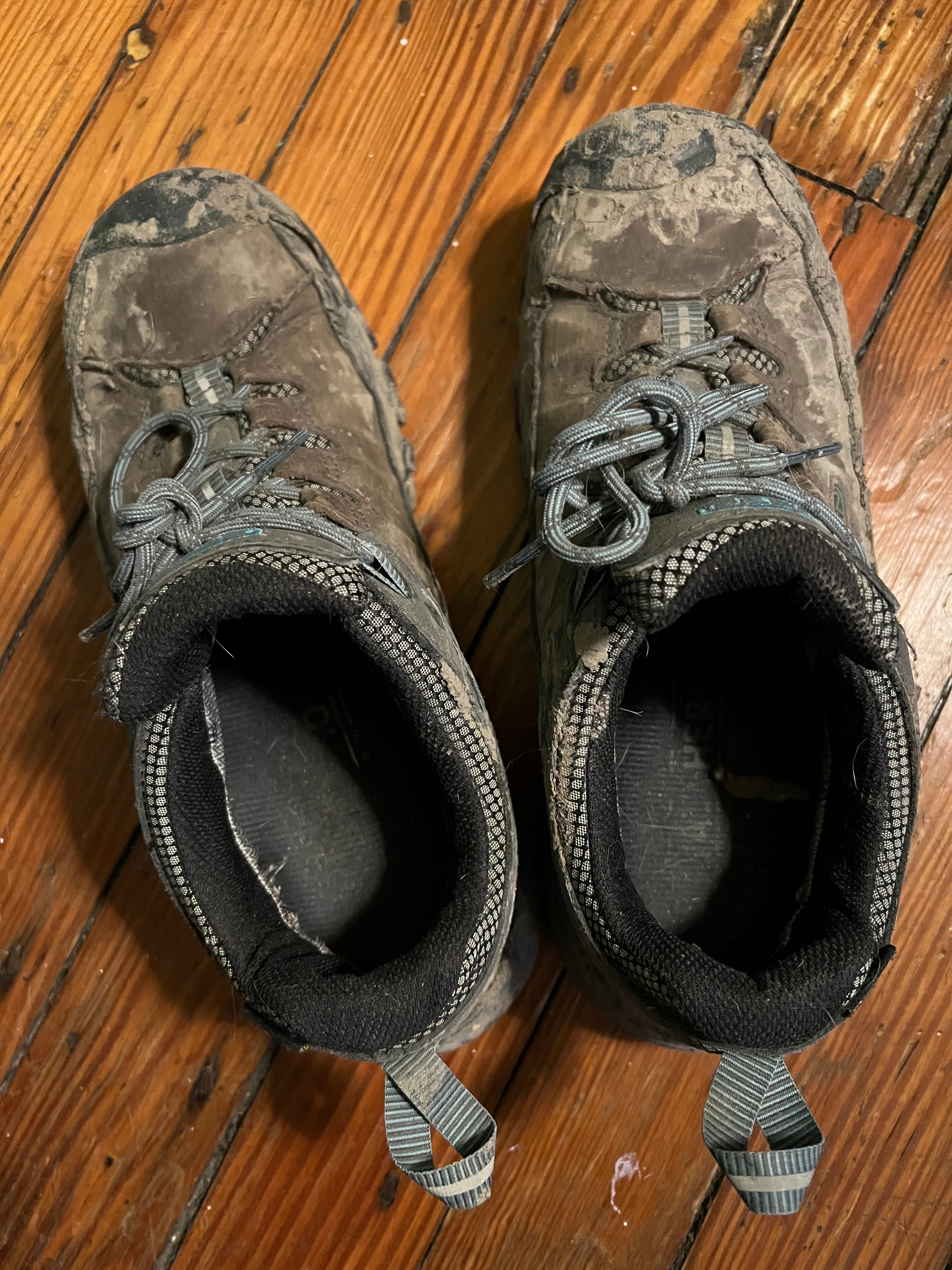
In addition to stardust, though, I was also mucking through the mud. Metaphorically speaking, but also through literal Texas mud. Home now, the mud is still with me, in the van, caked to my shoes. I sometimes wonder if it misses Texas, how it feels about joining the dirt of my gritty corner of Philadelphia. I’m doing a lot of cleaning right now—sorting and organizing and Swedish death cleaning (more on that soon!) in anticipation of a serious, full-time van life adventure. But I don’t mind the Texas mud here in my Philadelphia home. It reminds me that powerful things can emerge from chaos.
But what does that Texas mud have to do with chaos theory and butterflies and this new Spiral Lab Magazine, you ask. In true form, even this essay has become a bit chaotic! I’m not so good at keeping things simple, or drawing with straight lines, but I do like nutshells, out of which grow nut trees in the mud. So in a nutshell, part of what I learned in the anxious liminality of this past summer, while stuck in the mud this past autumn, was that I no longer want to write alone. Not only do I not feel like I have enough to say, nor the bandwidth, to churn out worthy essays on a regular basis, but it’s just really lonely. And while I love solitude, one of the great learnings of the past several years is that I also love, need, and thrive on collaboration.
Sewing and fiber arts may have thrown me into the chaos of wordlessness, of needing a break, at least, from writing; but among the things that have emerged is clarity that writing is not my only skill nor my only passion. Among those passions are not just dresses and beanies and watermelon keychains, but also marginalized people and our creative communities. I have come to understand that my part in remaking the world in these bleak times is to gather people, to support and nurture artists, and to help broadcast their brilliance outside of my own comfortable inner circle.
And so, as I prepare for a whole new vanlife/communal living adventure (more on that later too), I present to you a gorgeous group of writers and artists from my online community, Divergent Design Studios, who responded to an invitation to join me in turning my newsletter into The Spiral Lab Magazine.
by Leif5
by Mylo6
“It feels like my nervous system is broken.”
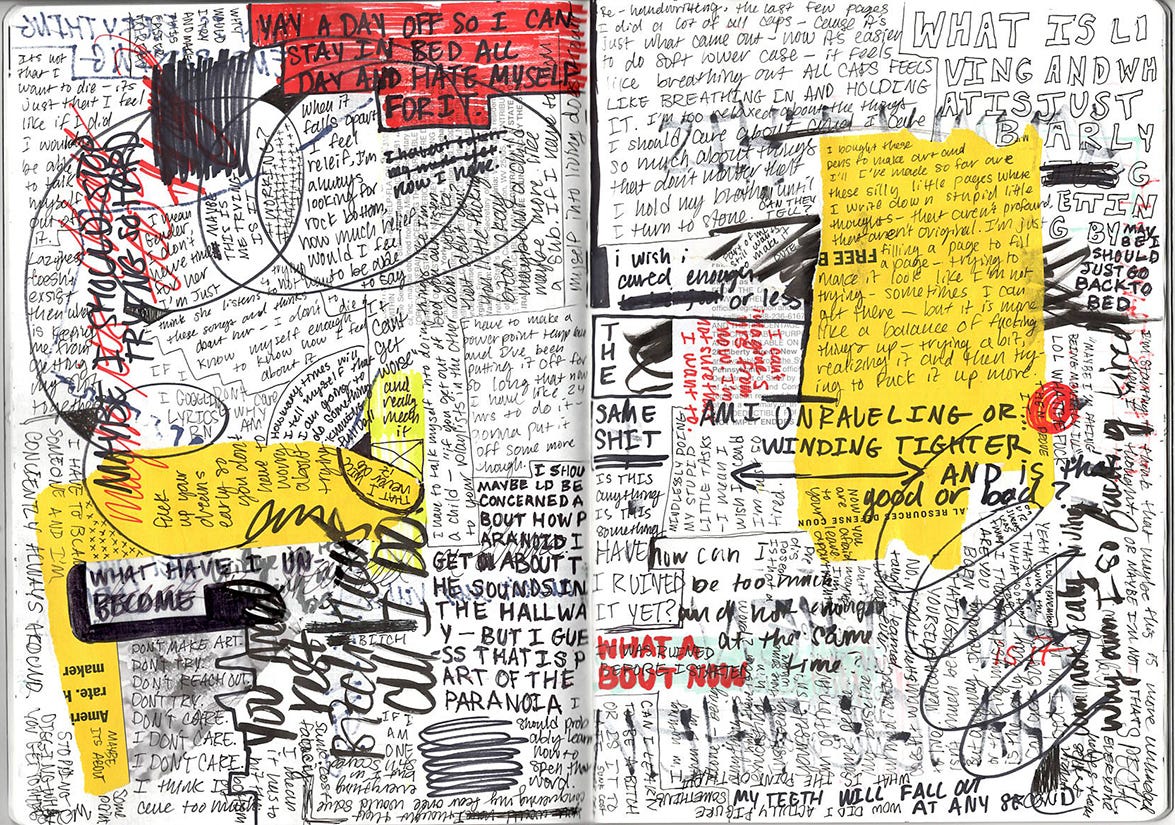
In the early days of developing my autonomic nervous system disorder (also called dysautonomia), this is all I had to go off of.7. This feeling like my nervous system wasn’t working the way it used to, wasn’t moving fluidly anymore, but rather kept getting stuck in ‘on’ mode - like a brick was jammed against the gas petal and no matter what I did I couldn’t get that brick to budge.
My heart would race and make me think I was having a heart attack. My breathing was always quick and shallow. My digestive tract started freezing up. My autistic meltdowns reached new levels and took days to recover from, leaving me with significant pain. Nothing in my body worked the way it used to.8 I felt like this desperate creature fighting for life each day - a scared little ball of chaos.
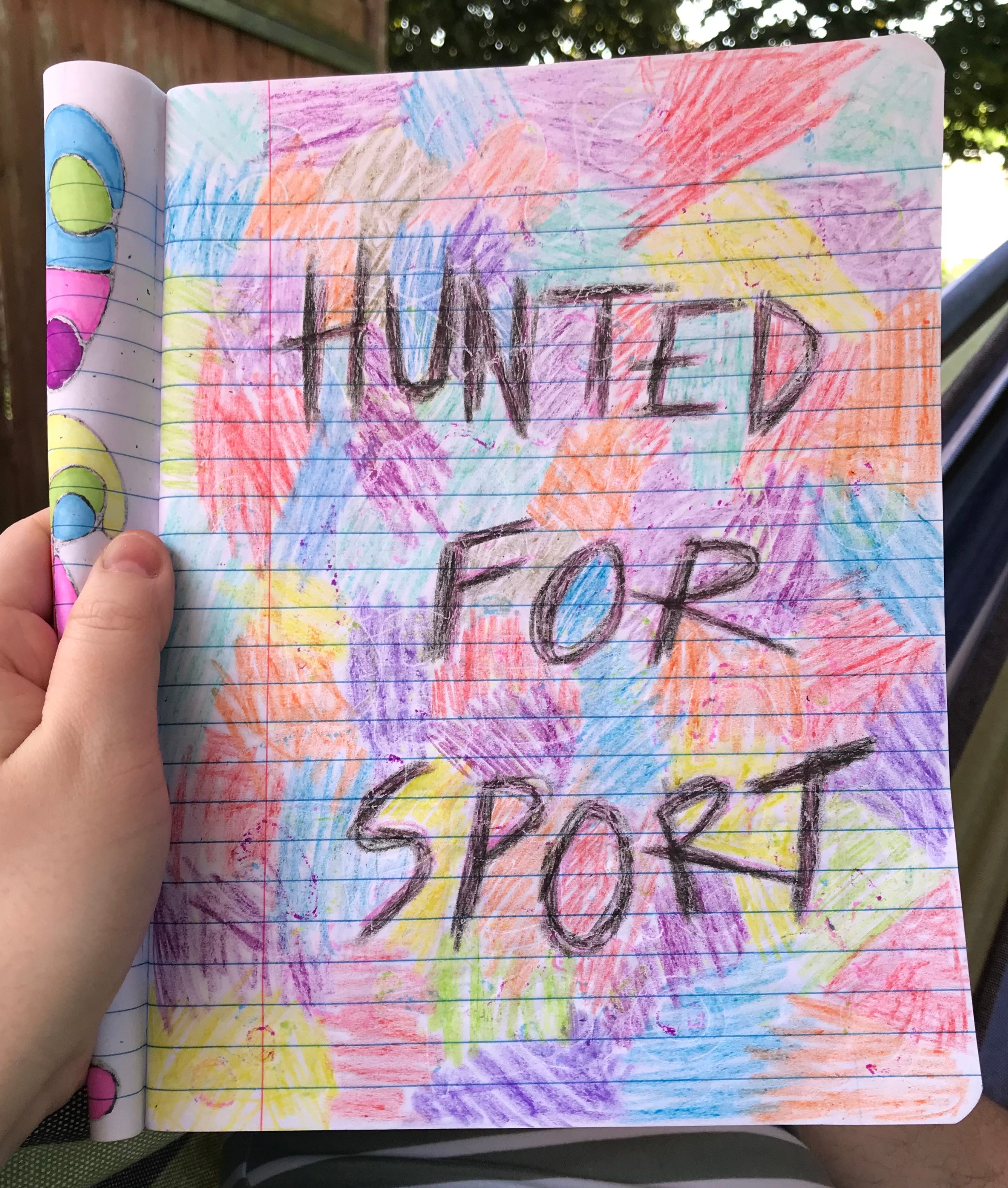
Anyone who has experienced chronic health issues knows the desperate flailing routine of trying any available remedy to feel better. You’ll do anything for symptom relief. I exhausted every SSRI, SNRI and off-label anti-anxiety medication. I repeatedly plunged my face into ice water trying to activate the mammalian diving reflex. I used bilateral stimulation, EFT tapping, vagus nerve stimulating eye movements, and breathing techniques. I scoured the internet for answers. I even pleaded with a god who I don’t fully believe in.
Utterly overwhelmed at the too-muchness of my sick body, my life was reduced to the most basic daily tasks required to keep my body alive—eating, sleeping, and hygiene. Slowing down wasn’t optional, it was just something that happened to me.
The heavy slow pace of my new life felt starkly opposed to my internal world of racing thoughts and heartbeat. Sometimes my insides would actually vibrate—a common symptom of dysautonomia called internal tremors. This fast/slow juxtaposition was disorienting. In some sort of somatic illusion, my body was moving alarmingly fast, and yet somehow also incredibly slowly. Like when hummingbird’s wings flap so quickly that they almost appear to be still.
It took about three years, but eventually I made sense of my symptoms and found my way to a time of more stability. I relied heavily on the wisdom of other chronically ill folks sharing their stories on social media, and when small pockets of energy would open up I would research the terms from these social media posts. I found a Naturopath who understood my symptoms and helped me find a little bit of symptom relief through pacing and supplements. I started using CBD to support nervous system regulation and suddenly I could eat again without massive bloating and pain.9. And the biggest shift came when after going through six other doctors I finally found a specialist to diagnose my dysautonomia and prescribe medication to help manage some of my symptoms.
This whole process was agonizingly slow and non-linear, and the whole time I felt like my symptoms were drowning me. When I reflect on where I once was, I’m pretty astonished that I managed to figure out what was going on with my body and wrestle with multiple doctors to eventually get the medical care I needed. Yet somehow, I moved through it.10 Somehow, when chaos descends, our bodies find a way to carry us through.
Now that I’ve entered into a period with more stability and had time to reflect, I find myself wanting a smaller life. Not an avoidant or apathetic life, but one where I can slow down and focus my energy. I want less—less information, less stimulation, and fewer demands. I don’t think this desire is a moral one, but rather a practical one that my body has mandated for me. The inherent non-compliance of my sick and disabled body has brought wisdom that demands I either transform my day-to-day life, or further my suffering. My body can no longer function at the rate it used to, and the rate that late-stage capitalistic society expects it to. So my options are to fight these new limitations, or accept them. I’m choosing to lean into the new rhythms of disability that I find myself in, and the chaos of illness has been the catalyst for all this.
I’ve learned that, if you are consenting, chaos is a force that can lead you to rest. It can strip you down to your most basic human functions and give you the opportunity to build something new. The painfully difficult part of all of this is that in order to make room for new, something old gets dismantled. And so it seems the work we are really left with is grief. Grief for what is lost. Grief for what we weren’t ready to let go of but were forced to nonetheless. Grief for what we can’t control, and acceptance that this is the way life is now.
 "Hi babe, I don’t think I can cook dinner anymore. Sorry, I got into working on my essay and now I’m flaring." "That’s okay love. I’ll pick up something."")
Being chronically ill has taught me to try to be less controlling over my body, and instead to respect its wildness—the currents and cycles that miraculously keep me alive, even when they’re injured. I deeply admire the defiant way my sick body says “fuck you, make me” when I want to do just one more task but my battery is empty. I’m not grateful for being ill, but I do begrudgingly see the lessons I am learning in this new sick body of mine. At my core I’m a scrappy little creature who is desperately wanting to survive and resourceful enough to make it through.
And so I’ve found that the work of yielding to a sick and chaotic body is not easy, but it is simple. You fight less. You listen. You ask, with whatever amount of tenderness your heart can muster, “Dear wild body, what are you asking me for?” And then you do your best to give that little creature what it needs.
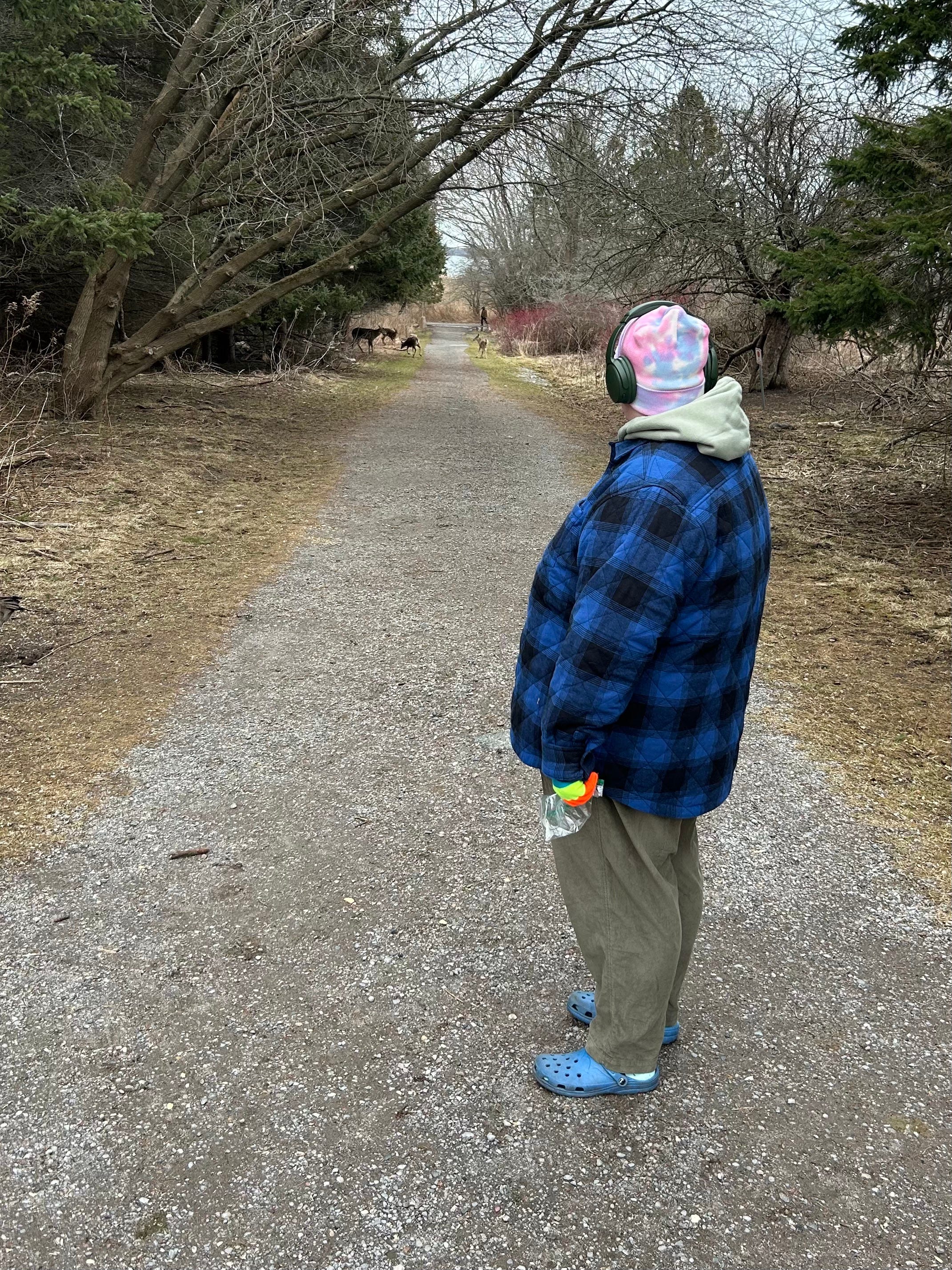
by Poornima11
After years of burnout and emotional numbness, I’ve been finally feeling emotions other than dread and sheer exhaustion. Anger is one of them. Anger has always been a chaotic emotion for me as I never learnt how to regulate myself when sitting with it. It is far too volatile for me to organize neatly and analyze, like I do with other “uncomfortable” emotions like anxiety and sadness. It is also too loud for me to quietly process it through silent tears. So I end up either having meltdowns or internalizing the anger.
Because of this, a lot of what I thought was shame was actually internalized anger, and it is finally bubbling up to the surface, introducing a new chaos in my mind and body—the chaos of forgotten anger.
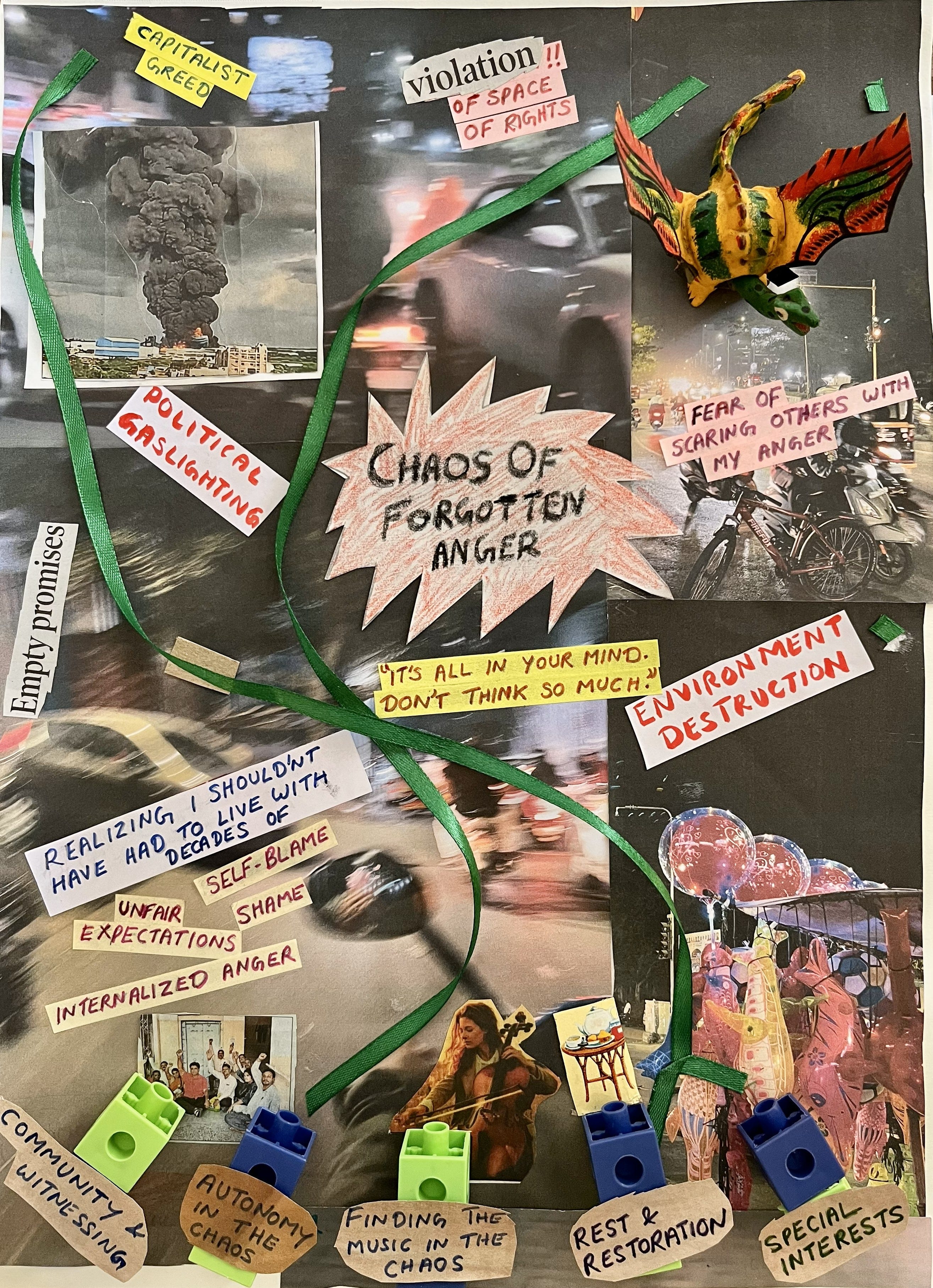
Navigating life in my chaotic city is very overwhelming for me, and recently that is one of the things I have been angry about. So I have made this collage on the backdrop of the traffic near my home. The green ribbons show a possible way of navigating the chaos I experience, using the “anchor points” shown at the bottom to ground myself.
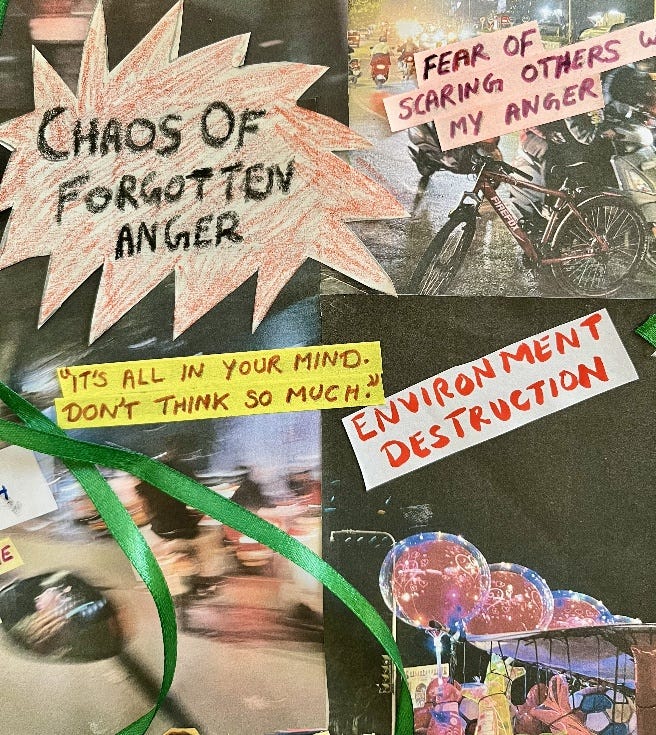
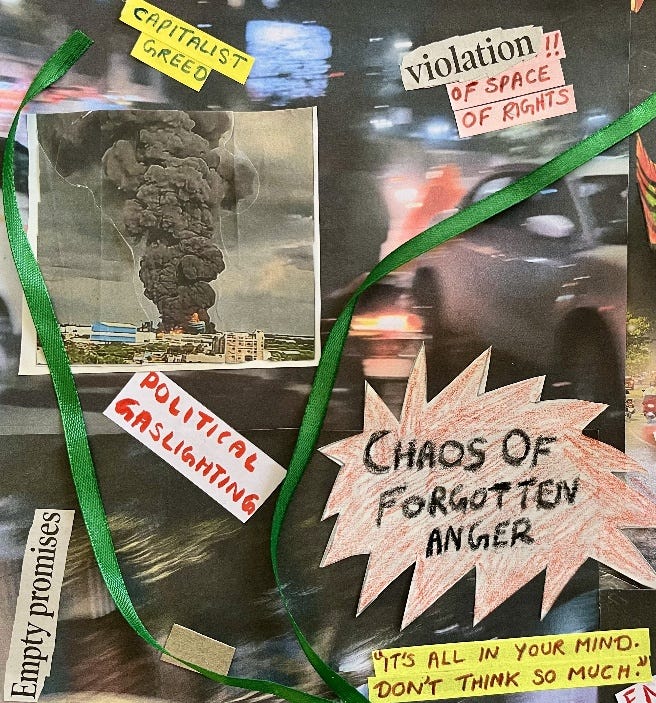
Most of the times, my feelings of anxiety, sadness, and anger have been met with the invalidating response of “It’s all in your mind. Don’t think so much.” People have said this to comfort me, to emphasize that I can stop feeling these emotions if I put my mind to it. But all it does is make it even more overwhelming to exist with these feelings, making me feel angrier and more isolated.
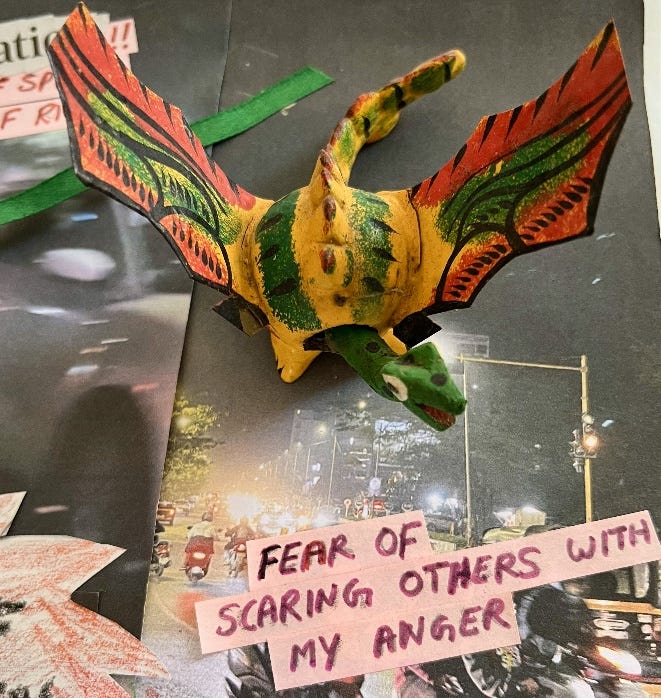
The dragon represents me holding in a lot of anger but refraining from expressing it. In addition to the fear of being judged and othered, I’m also afraid of scaring those who genuinely care about me.
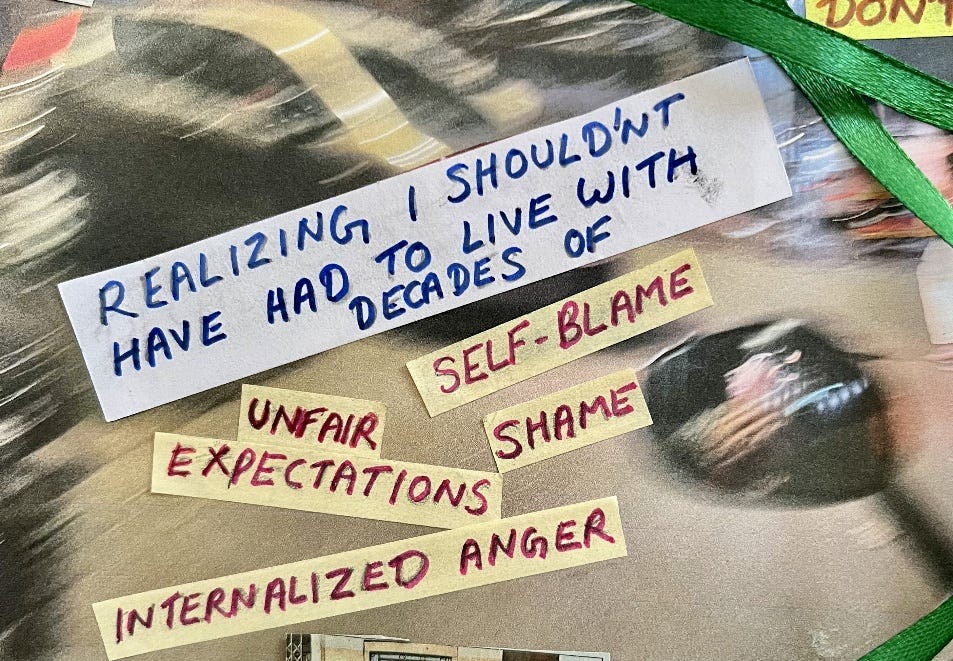
This realization has been difficult to sit with; I want to feel angry because I was so cruel to myself, but I have to remind myself that this was my twisted way of trying to find safety in this cruel, ableist, sexist world. Except that this approach backfired, and I had to learn self-compassion from scratch.
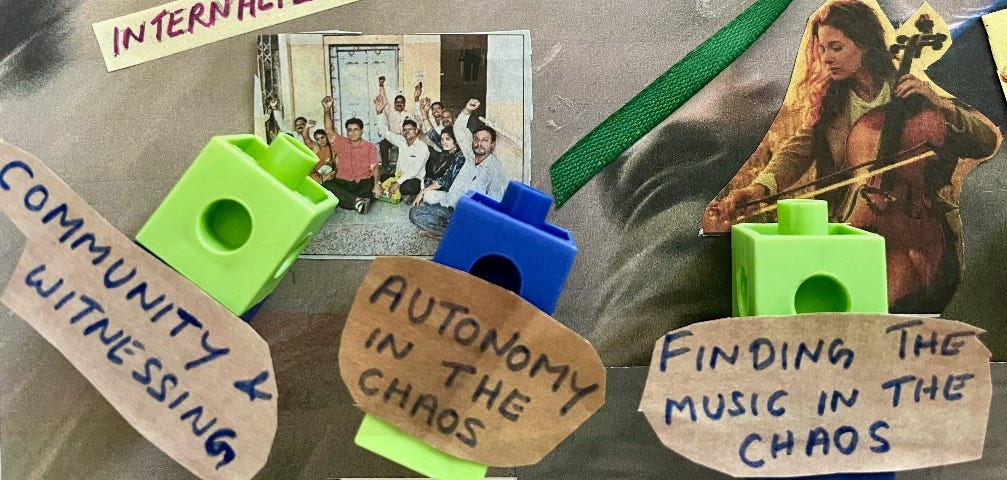
My “anchor-points”:
Community and witnessing: Engaging with like-minded people has felt very validating for my anger; volunteering within my capacity for community events has enormously helped me channel this anger.
Autonomy in the chaos: Although I might not have autonomy over the chaos I feel, I try to find small situations where I have a choice. For example, on a weekend, I ask myself what would support my body and mind better: spending time in nature with other people to feel energized or spending alone time at home to recover and re-center myself?
Finding the music in the chaos: To me, finding the music in the chaos feels like appreciating the beauty of random situations. For example, a chance conversation with a stranger that gave me a whole new perspective about a life situation. Or getting ideas for an art project while navigating traffic.
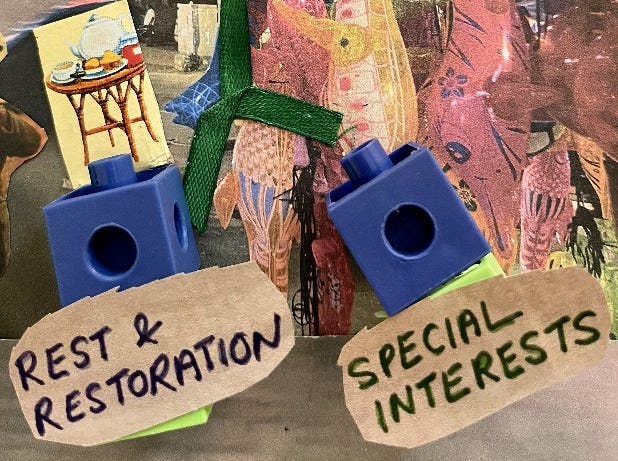
Rest and restoration: It has taken me years to give myself unconditional permission to rest. I have finally realized that rest is not a luxury to be earned but a basic human necessity, just like food and water. Rest also provides an opportunity for me to ground or regulate myself when navigating chaos.
Special interests: I now realize that engaging in special interests and rabbit holes is not a leisure activity for me but an essential grounding practice. They are the very fabric that holds my life projects together.
by Nico12
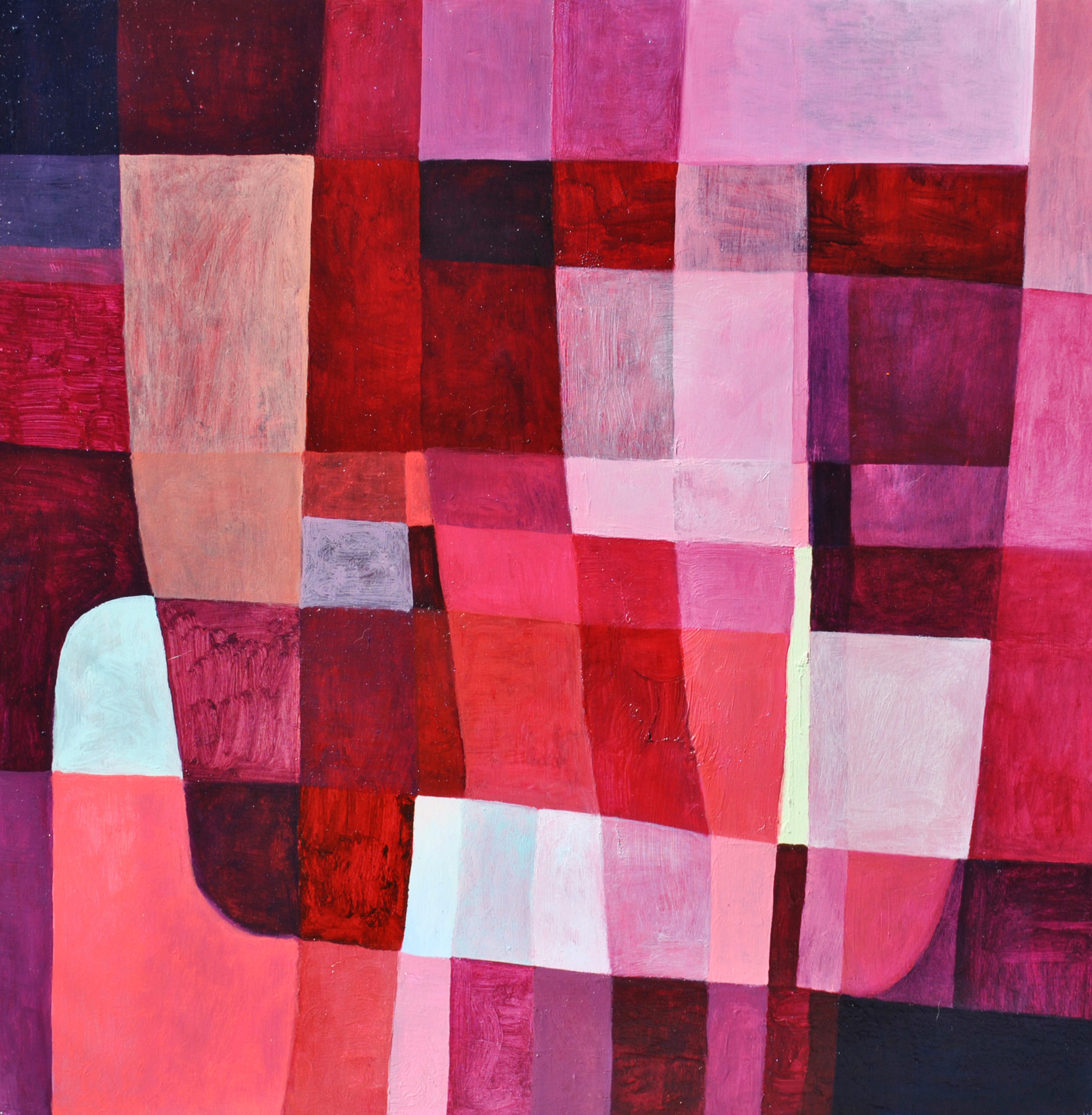
My art process is chaos, and I’m not just referring to the piles of paintbrushes, papers, fabrics, and detritus that forms a cocoon around me at nearly all times in the studio. What I mean is that when I am making a painting, it feels like a constant dance of making and then resolving “mess.” I work in an “unprofessional” quantity of styles and mediums, and it can therefore be a bit difficult to sum up my method in one way. It is certainly a main theme (of my abstract work, especially) that I am seeking a sort of meditative and repeatable process for myself to follow. Throwing a bunch of organic lines on a surface and then figuring out how they can connect and feel balanced is not unlike a Zentangle or a doodle you might make while on the telephone (back when you could hold the receiver to your head with your shoulder and still have hands free, at least!)
For me, making abstract art is sort of primal-feeling. I approach it as if the materials and composition are telling me what needs to be done. It is often a process of many layers of paint, over the course of months or even years. There is a sense of calmness that comes on when things start to feel balanced, a sense of resolution. The process feels similar to taking out all of your clothes from the closet and strewing them around the room and then spending time putting everything away precisely. The end goal is not just to have a “neat” room, the goal is also the process itself, going through each item, touching it and spending time with it, maybe trying it on and reconnecting to its value and feeling. At the end, you have a better sense of what suits you, makes you feel good and confident, and there is pleasure in the process. If I was just trying to have a “neat painting,” I might design the composition on a computer or in a sketchbook and then just copy it into the canvas. But for me, art is very much about the process of making it, not just the end result, so I value the messy middle, the chaos, the layering, and the give and take. I relish the moments where things start to come together, inside this world of my own creation, in a language that I have made up and taught myself. I start to see and feel that I have accomplished something that only I may ever really understand.
by Nada13
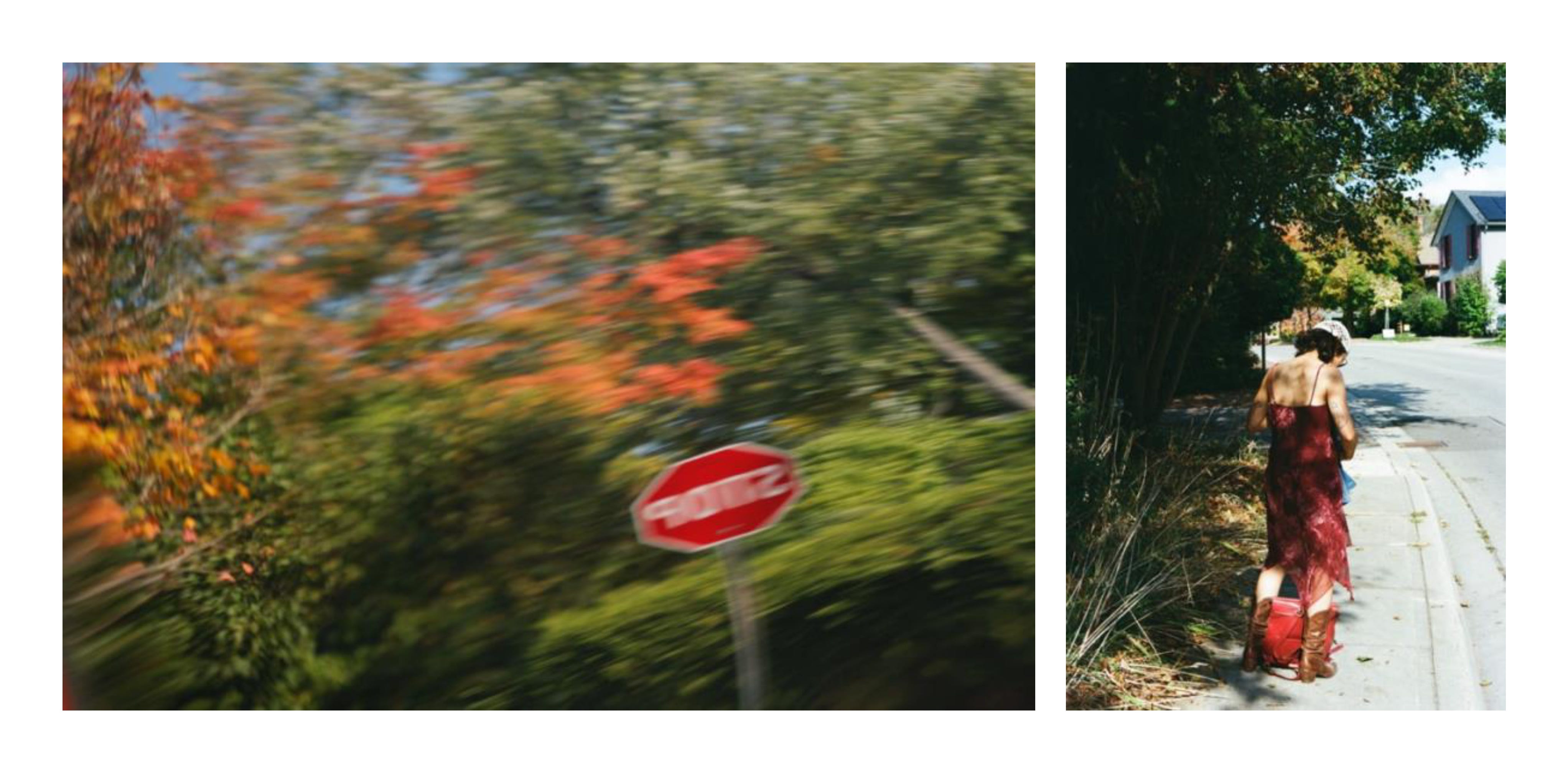
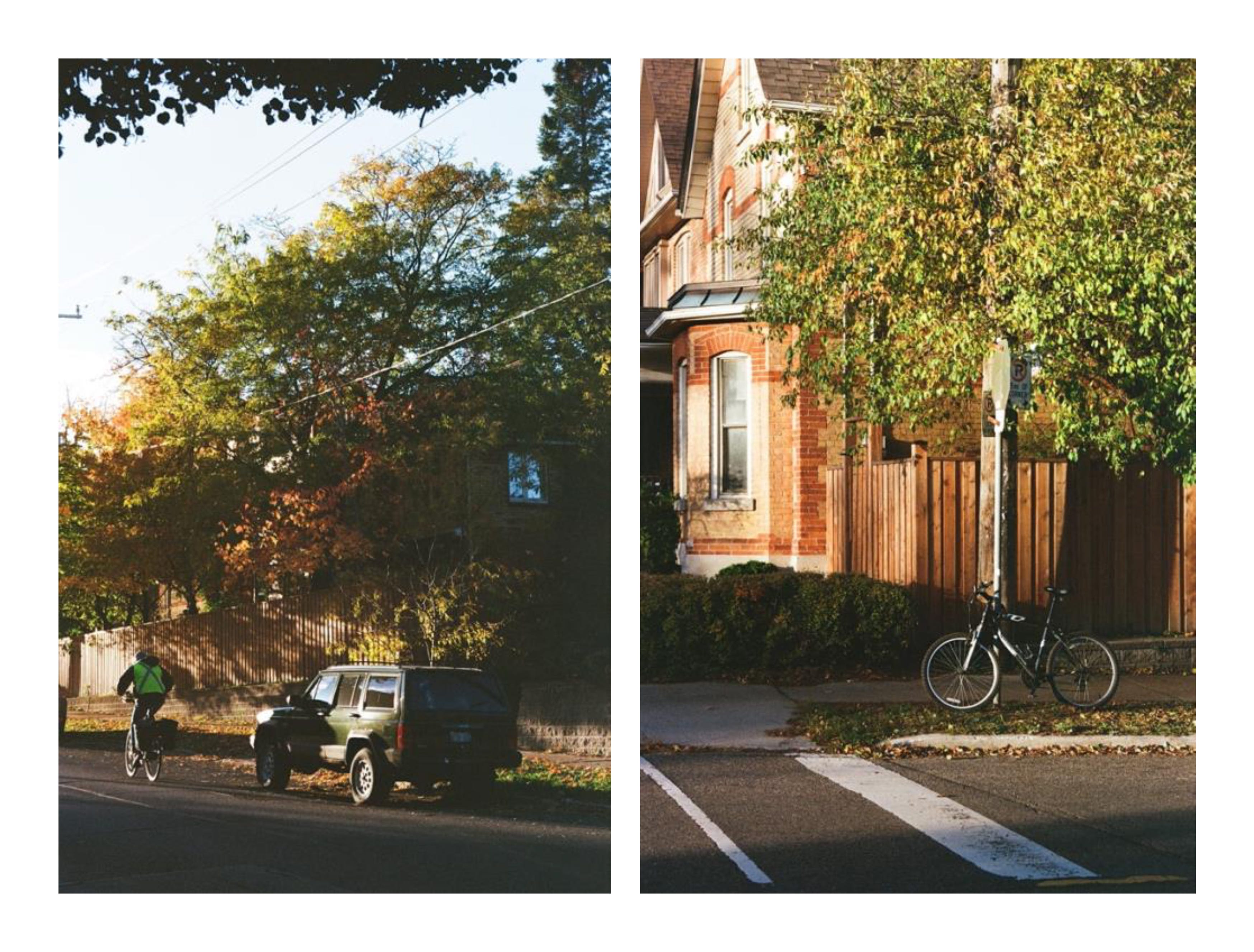
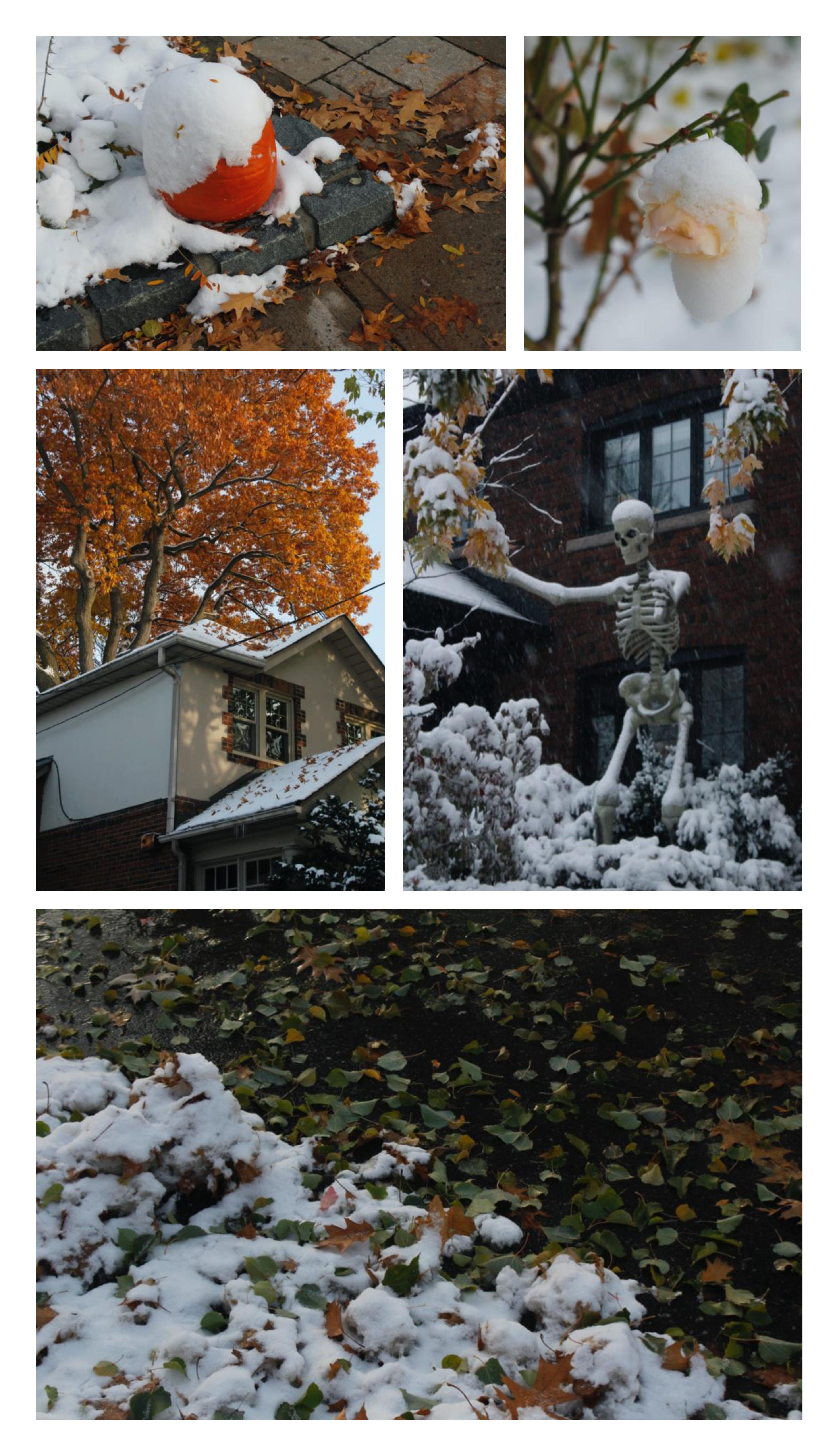
heat waves in october, it’s too hot for even a light denim jacket. I wear a sleeveless shirt out at night when I otherwise would’ve needed a hat and scarf on this particular weekend. the halloween decorations disorient me… my body tells me it’s still summer. it makes it harder than it already is for me to process the passing of time. I find it hard to be present.
the trees are changing at inconsistent rates, I wonder if they’re as unsettled as I am. everyone around me continues as usual. I feel left behind. there’s barely autumn. barely any transition. we just put away the air conditioner. it’s snowing now.
a sudden drop in temperature, an overnight blanket of snow. trees full of healthy green leaves shedding prematurely, all at once. a stunning but alarming site of sidewalks entirely covered in frozen foliage.
it’s hard to enjoy the extended warmth, it’s hard to enjoy the strange beauty. it’s unbearable that it just feels intense all year. nothing is mild, nothing is calm. I know why this is happening, and it’s going to keep getting weirder, it’s going to keep getting worse. continuously unprecedented.
by Le*ah
My first essay14 enters chaos from a point at which chaos had already been navigated, from after the event. It was written from a place where understanding had formed, where meaning and a certain kind of wisdom were already available. This text asks something different: what happens when we speak from inside chaos? From a point where it has not yet been metabolised. Where no map is at hand. Where the outcome is uncertain. Where one question inevitably emerges: Will I survive this?
Speaking from hindsight is something I have done for many years. There was a time when speaking about my experiences in mental health was my job. I was expected to perform sanity, to comfort everyone in the room by telling a story of recovery, a story that ended with me living happily ever after. It was well paid, but with every repetition it became harder, more painful. Not only because retelling my life story for others to consume was exhausting, but because I knew I was lying.
After each of these performances, I needed several days to recover, days spent in bed, much like the crises I claimed were long behind me. I wasn’t actually better. I was performing the role that was expected of me.
Much later, I began to ask myself what would have happened if I had been honest. If I had spoken not from the other side of chaos, but from within it. Most likely, I would have lost my job for being “too unstable,” for unsettling the listener, for failing to embody recovery convincingly enough. I would have been deemed not healed, not reliable, not competent. On a bad day, when my unmasked self could barely speak, I might have been ushered out in hushed voices.
What I am trying to name here is that speaking from within chaos is not always safe. Incoherence, loss of language, public stimming, or overt emotional expression can carry real consequences. They can cost a person their job, their credibility, even their autonomy. At the time, I could not afford to express myself from inside the chaos that surrounded me.
Speaking from within chaos does not fail because the speaker is unclear, but because the listener asks for resolution. Unfinished speech unsettles. It asks for patience, for restraint, for trust without guarantee. Many spaces cannot offer this. Instead, they translate uncertainty into risk, process into pathology. Once spoken, these interpretations are hard to undo. Vulnerability can harden into record, reputation, or diagnosis long after a moment has passed.
So now, when I speak, I try to be eloquent. I perform coherence. I pretend to be fine. Not because I am, but because I have learned that this performance is sometimes necessary for survival.
What follows from this is simple: I have a right to remain opaque. I have a right to tell only as much as I choose. My vulnerability, my pain, my story — my chaos — are not available for consumption. When I live inside chaos, I maintain the right not to speak, to stop, to leave, and to resist being turned into documentation, pathology, or performance.
Le*ah writes from a practice of attentive, non-extractive listening. Their work explores chaos, embodiment, and neurodivergent experience beyond capture, clarity, or completion.
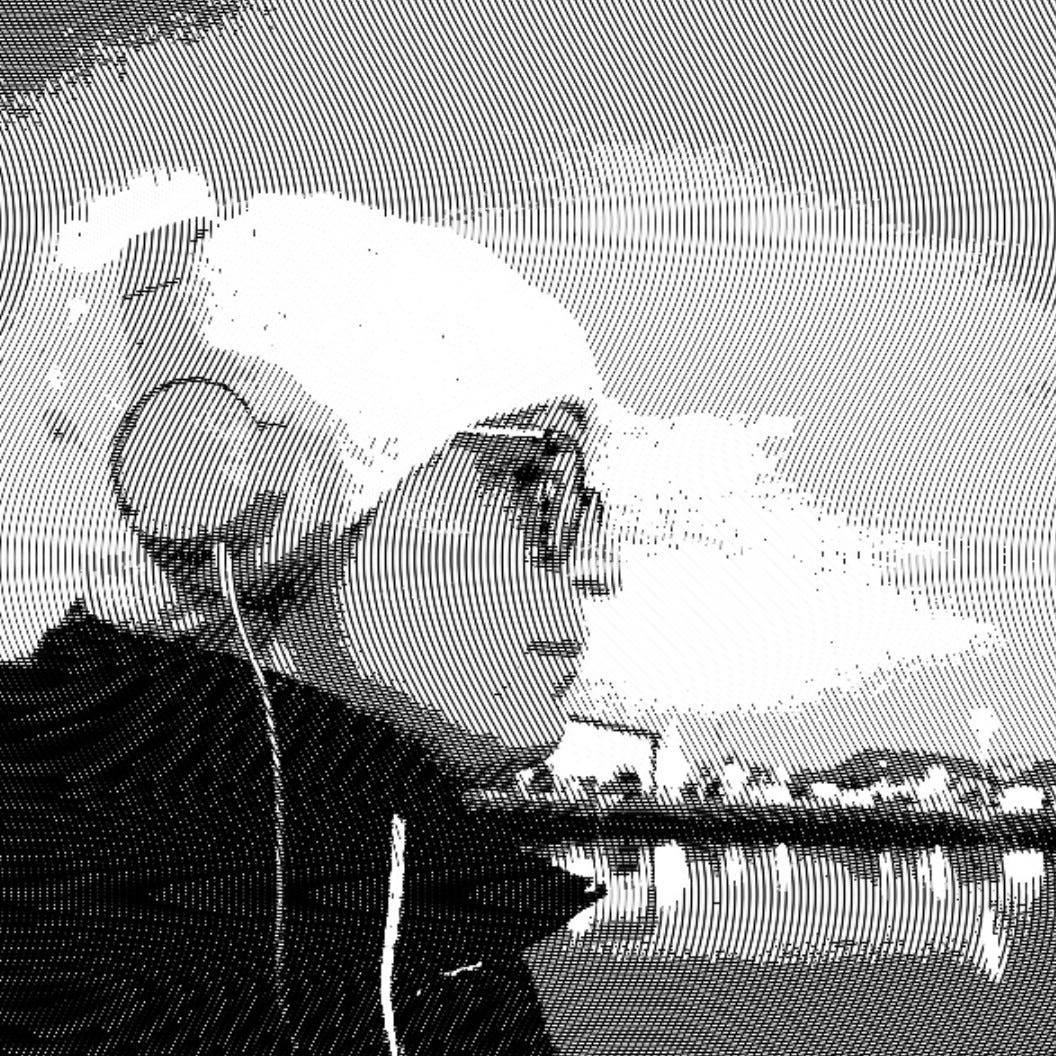
A few days ago, Céol was a kitten inside an old cat’s body, and they will probably be that again, but not today.
Marta is a writer, artist, teacher, community organizer, and editor of The Spiral Lab Magazine.
https://en.wikipedia.org/wiki/Chaos_theory
Leif is the queer Chicago-based AuDHD artist and zine maker behind It’s Weird Now Press. Their creative practice is rooted in survival, self-compassion, and finding humor in the mess of being human. Through zines and mixed media work, Leif explores the beauty and chaos of the in-between. They view art-making as an act of resistance, healing, and re-imagination.
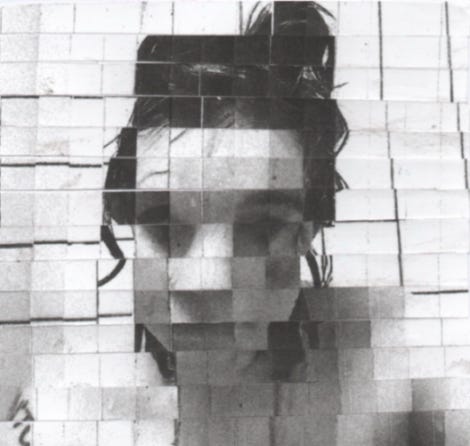
Mylo K. Oliver (they/them) is an eclectic artist and vocational human being. They are a tender-hearted and tender-bodied white fatty, and a strong-willed gender non-compliant trans queer. They’re autistic, chronically ill, and an all-round disabled cringy weirdo. They love a crisp caesar salad, watching drama mystery shows, and being overwhelmed with cuteness aggression at the little furry creature that lives in their home.
You may not have heard of dysautonomia before but I bet you’ve heard of POTS (Postural Orthostatic Tachycardia Syndrome). POTS is a very common form of dysautonomia that is popping up much more frequently since the Covid-19 pandemic began. I have a fun (read: sarcasm) combo version of autonomic nervous system dysfunction that presents mainly as another lesser known form of dysautonomia called Inappropriate Sinus Tachycardia (IST), but I also have some symptoms of POTS.
I eventually uncovered that my dysautonomia was simply one byproduct of having Long Covid. These huge crashes I’m describing were actually Post-Exertional Malaise (PEM) episodes, which is the core symptom of Myalgic Encephalomyelitis (ME), another illness I live with.
Shoutout to Dr. Miyabe Shields for providing quality education on cannabis, the endocannabinoid system, and neurodivergent brains. And thank you to Lisa from DDS who introduced me to Shields’ work.
Of course, I didn’t do this without help. My wife drove me to and advocated for me through countless medical appointments. My dad helped me pay for my Naturopath. And so many chronically ill comrades on the internet helped me crowdsource my medical care.
Poornima (she/her) is an AuDHD person living in India. After years of burnout, she is now re-remembering herself through flow, art, and community. Nature walks and stargazing are her vibe.
Nico is a multidisciplinary artist working in oil paint, fiber, silversmithing, and more. Like most of the pieces scattered around her studio, she is a work in progress. She believes strongly in lifelong learning, tenderness, and the joy of the process. Her work explores “the dream of a common language,” complex and layered emotions, and meditations of balance.
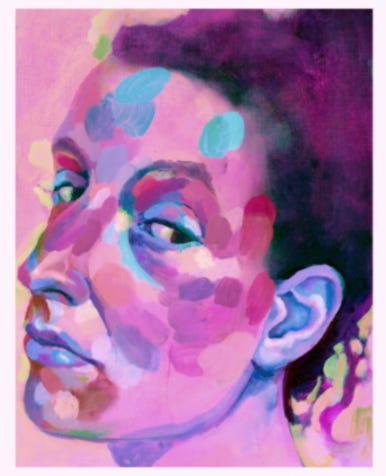
Nada is a neuroqueer multi-disciplinary artist on a spirally journey of unmasking and redefining her relationship to art, whose work evolves and shape-shifts as she does.
A fluid force with too many passions, Nada has a background in visual arts and film, a current focus in ceramics, and a life-long infatuation with photography, documentation, and storytelling.
Going by “Planet Nada,” she has a profound love for being alive and its infinite glimmers, a witchy kinship with the Earth and its creatures, and a rich inner world that translates outwardly in expressions of maximalism, whimsy, silliness, softness, and loads of colour.
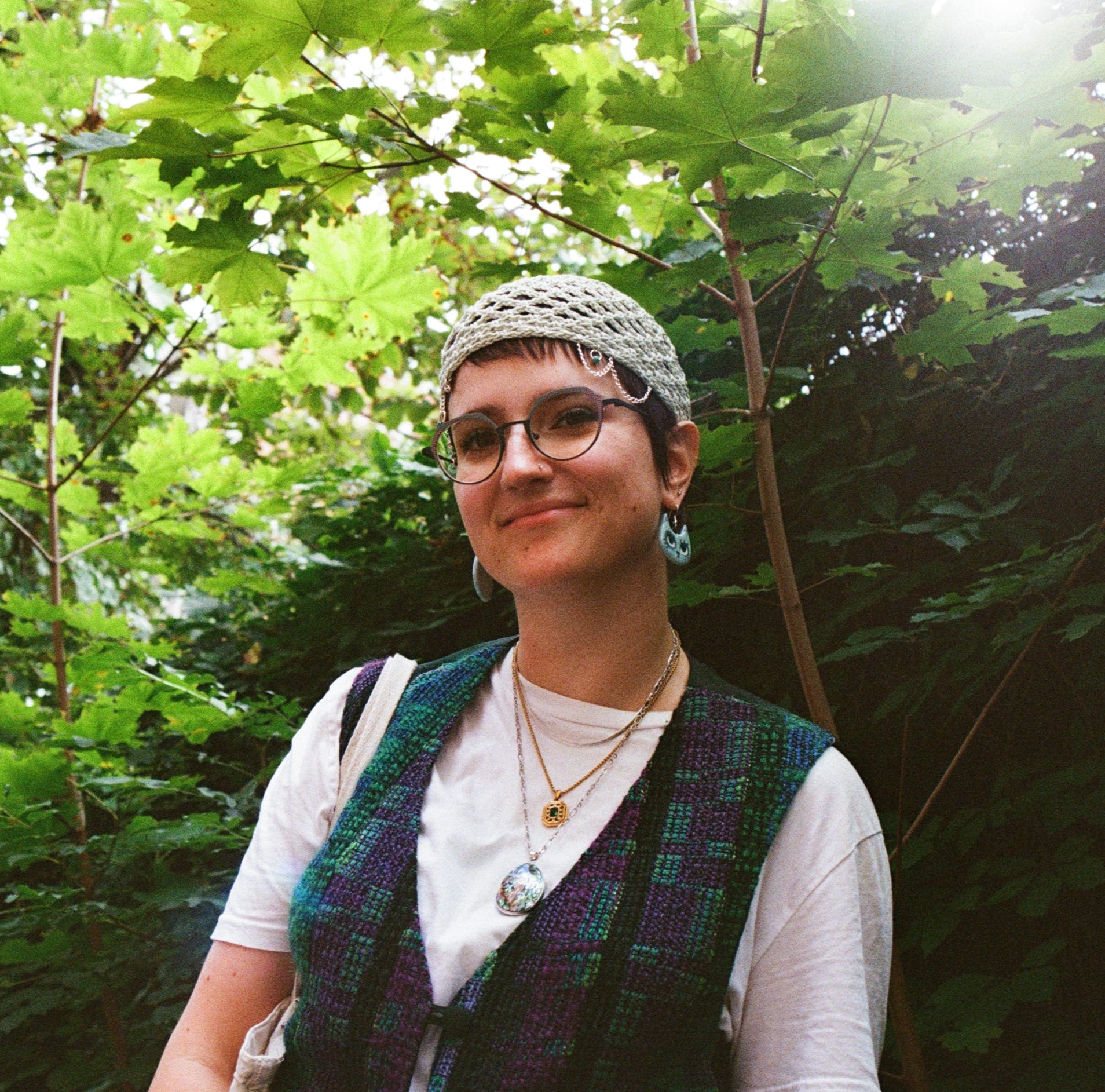
On Navigating Chaos, above (the first essay in this issue)
Comments
Nothing yet. Say the first thing.
Sign in to join the conversation.