
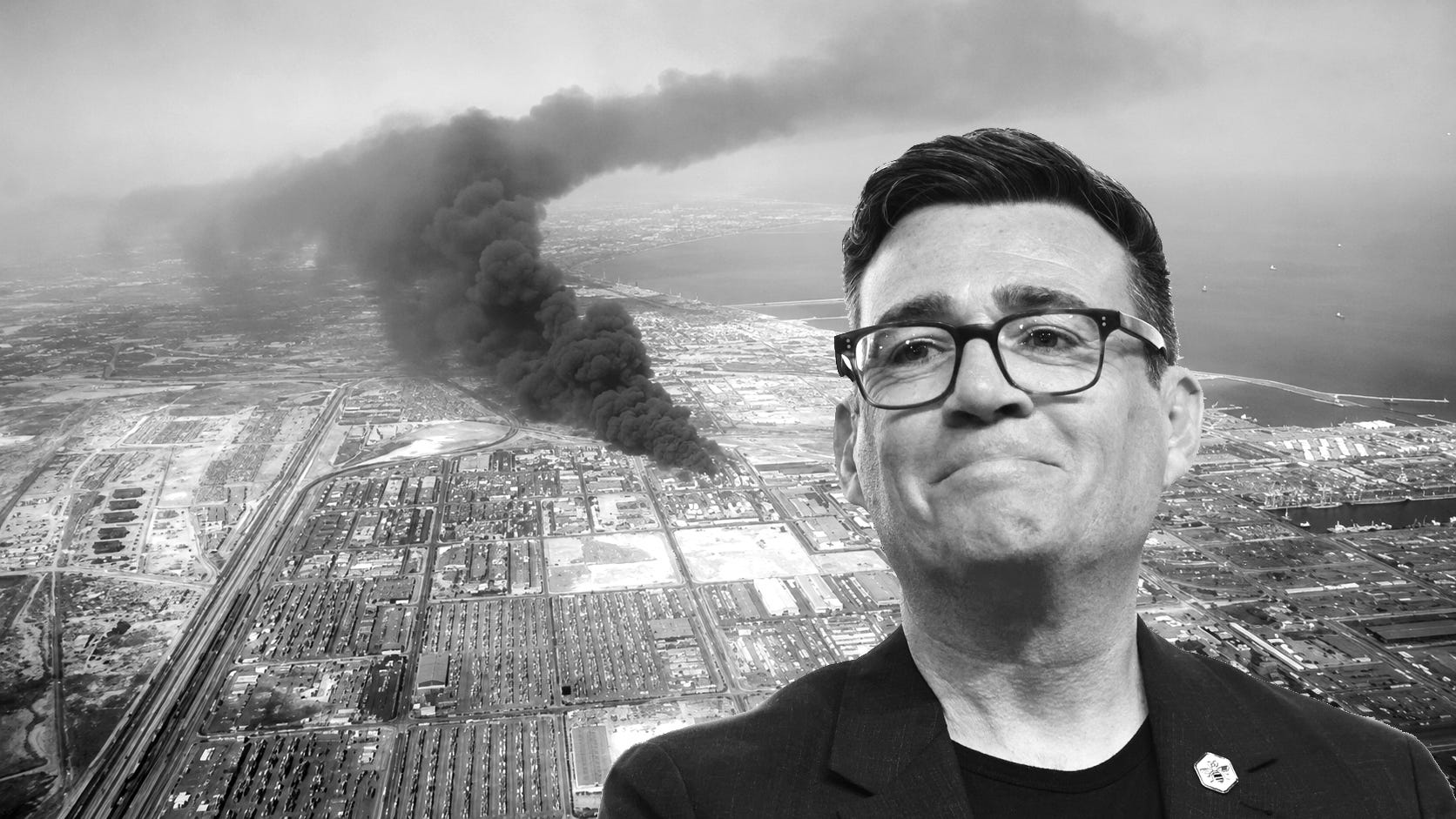
Good day, spectators,
And just three days ago, Britain’s new PM, Andy Burnham, who I wrote about a few weeks ago, promised the biggest change in British politics in forty years. He spoke convincingly of renewal and a new political model and an end to the Starmer years but unfortunately, he has very quickly shown the public exactly what he is. On his first full day as Prime Minister, Burnham quietly approved the continued use of British military bases by the United States for military operations against Iran. Diego Garcia in the Indian Ocean. RAF Fairford in Gloucestershire. That is, British soil, British bases and British complicity once again handed over to a war machine that has, in the course of this conflict alone: bombed a girls’ school and killed hundreds of children and just last week struck a hospital for children with cancer. These are well documented acts and Burnham has decided that British infrastructure will continue to service the forces responsible for them.
If you thought I was going to waste any time in skewering this man, you don’t know me at all.
The decision follows a meeting of senior ministers held before Burnham even took office, where officials agreed to maintain the policy established under Keir Starmer. Burnham was briefed after becoming Prime Minister and endorsed it without hesitation. The UK government describes the operations as defensive, framing Britain’s role as countering Iranian missile threats and protecting shipping in the Strait of Hormuz. Left-wing opposition parties have called it what it is: complicity in an illegal war of aggression. They are correct. This is not a close call. The United States launched this war without a UN mandate, without legal justification, and without the support of the international community, and Britain is providing it with the infrastructure to continue.
Burnham did purge some of Starmer’s inner circle. Rachel Reeves is gone. David Lammy is gone. And he appointed Ed Miliband as Foreign Secretary, a man who had previously helped persuade Starmer to push back against Washington’s initial requests to expand the use of British bases and this makes his presence in this cabinet and Burnham’s decision all the more telling. On the fundamental question of imperial subservience, the new Foreign Secretary’s previous reservations appear not to have survived contact with office.
Et tu, Ed?
What did survive, entirely intact, is Shabana Mahmood, reappointed as Home Secretary without apparent hesitation. The same Shabana Mahmood who is the architect of the government’s authoritarian turn on domestic dissent: the woman who proscribed Palestine Action as a terrorist organisation, generating a Streisand Effect so severe that thousands flooded the streets to declare their support and the justice system buckled under the weight of the arrests. The woman who oversaw the prosecution of the Filton Four, young activists sentenced as terrorists for criminal damage to property. The woman who is currently presiding over the proscription of Iran’s IRGC, making it de facto illegal in Britain to express support for Iran’s military resistance against the United States, while the same government uses British bases to support the American side of the same conflict. Mahmood remains in post. Wes Streeting remains as Defence Secretary. John Healey remains as Chancellor.
Let’s just take a look at this cabinet and, just as a quick Litmus test, check their links to Israel:
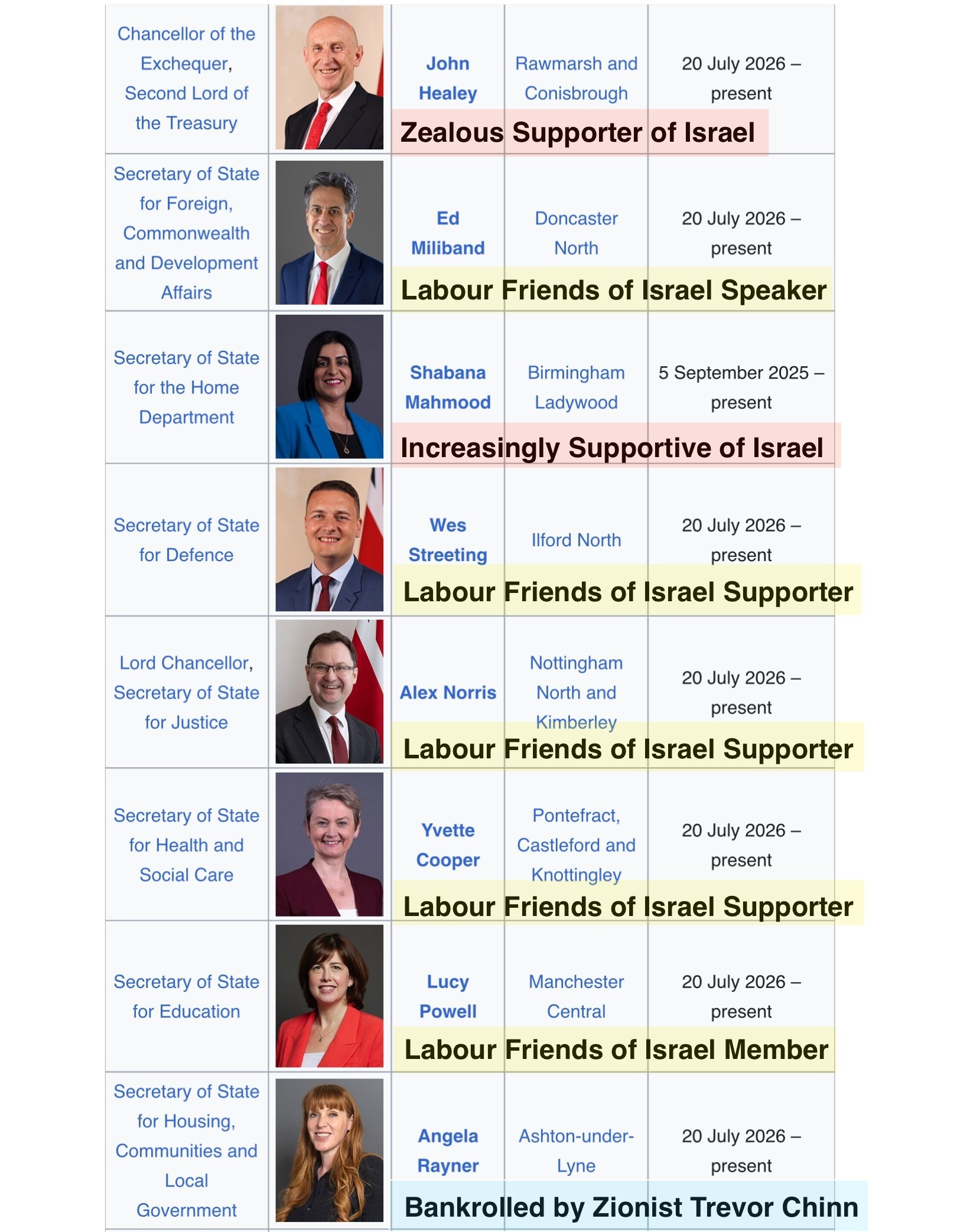
The continuity is the point.
Burnham discussed the situation with Trump in a phone call, reaffirming Britain’s commitment to ‘protecting maritime security’ in the Strait of Hormuz. Trump described the conversation as positive. because…of course he did.
It is worth being specific about what British bases are being used to support, because the government would prefer to keep the language as abstract as possible and ‘defensive operations’ and ‘maritime security’ are doing an enormous amount of work to obscure a fairly straightforward reality.
The United States began this war by bombing a girls’ school in Iran, killing hundreds of children. It has, in the weeks since, struck a hospital dedicated to treating children with cancer.
Watch: Middle East Eye documents the evacuation of the children’s cancer hospital after US bombing nearby.
These are not disputed. They are documented. They are the kinds of acts that, had they been carried out by a country the West has designated an adversary, would have generated wall-to-wall coverage, emergency UN Security Council sessions, and immediate calls for sanctions and war crimes tribunals. Because they were carried out by the United States, they have generated muted concern, careful language, and a British Prime Minister who decided, three days into the job, that the bases should stay open.
UK officials are reportedly concerned about the potential for US strikes to target Iranian civilian infrastructure more broadly. Trump has already threatened to destroy every bridge and power station in Iran. If that happens, and it may, British bases will have been used to facilitate those strikes. Burnham will have approved it. And the Home Secretary who made it illegal to express support for Iran will still be in her post, having successfully ensured that the British public’s ability to dissent from any of this has been quietly curtailed in advance.
This is not the new politics Burnham promised. It is the oldest politics there is: the powerful protecting the powerful, the empire serviced by its junior partners, and the people who might object to any of it finding that the legal tools to do so have been steadily removed. Three days. That is all it took.
The era of hope, it turns out, has the same foreign policy as the era before it. And the one before that.
And on that thought, I’ll let you go,
(As always, thanks for reading, make sure to subscribe and do please give this post a ❤️ and restack below too.)

Hello spectators, the truth is: I am struggling with money quite a bit. If you’ve enjoyed the spectacle in the past few months, please consider leaving a small tip below. If even just 10% of people reading this post ‘bought a coffee’ just *one* time a month, I could dedicate myself to this work full time and expand to bring you even more unfiltered, independent stories, every single day.
Every contribution counts and is deeply appreciated. Thank you for being part of this community.
Read more from the magazine:
No posts
Comments
Nothing yet. Say the first thing.
Sign in to join the conversation.