
Every spring, the ski industry releases its season passes for the following winter.
And every year the same thing happens.
You open the pass page, scroll for about 15 seconds, and suddenly realize:
You may need a doctorate in ski pass economics to understand what you’re buying.
Blackout dates.
Partial blackout dates.
Partner mountains.
Partner mountains but only Monday through Thursday unless it’s February.
And pricing tiers that somehow involve:
Adult
Young Adult
Teen
College
Young Adult but not that young adult
Child
Child, but only if born during a leap year.
But beneath all of the legal fine print and marketing perks, a few real changes are actually worth paying attention to this year.
Let’s break down the big ones.
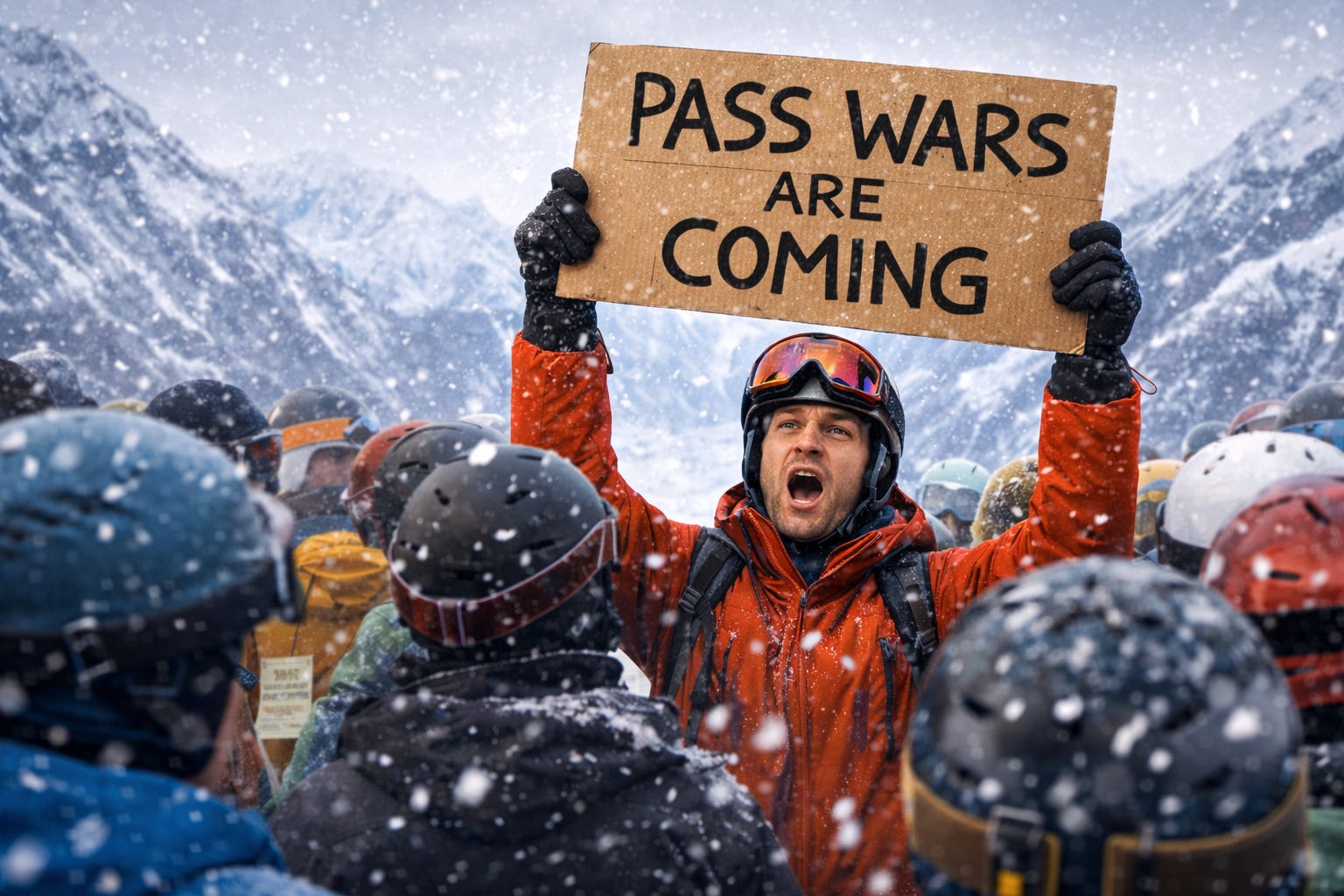
The biggest update from Vail Resorts this year is a new discounted Epic Pass tier for skiers ages 13 to 30.
That’s a pretty large demographic. Basically everyone from middle school through their late twenties.
Spring launch pricing looks roughly like this:
Epic Pass
Adult: about $1,089
Young Adult (13–30)
About $869
Child (5–12)
About $555
That’s about a $220 discount compared to the adult pass, which is clearly aimed at younger skiers who might otherwise balk at four-figure pass prices.
The Epic Pass still includes unlimited access to major Vail Resorts destinations like:
Vail
Breckenridge
Park City
Whistler Blackcomb
Stowe
Keystone
Crested Butte
Plus partner mountains around the world.
Another push from Vail is the Turn In Your Ticket program.
If you purchased a lift ticket this winter at a Vail-owned resort, you can apply that ticket toward next year’s pass.
Maximum credit: $175.
Example:
Young adult Epic Pass
$869
Lift ticket credit
– $175
Effective price
$694
The fine print is that the ticket has to be from a Vail Resorts mountain, not a partner resort.
Still, if you skied at Breckenridge, Vail, Park City, or another Vail-owned resort this winter, it’s one of the easier discounts to claim.
Shortly after Epic launched its pass lineup, Alterra followed with the Ikon Pass for next season, expanding its network to more than 70 destinations worldwide.
Ikon works a little differently than Epic. Instead of unlimited skiing everywhere, it uses a hybrid model: unlimited access at some resorts and 5 to 7 days at many destination mountains.
Unlimited Ikon resorts include places like Copper Mountain, Winter Park, and Steamboat, while destinations such as Aspen Snowmass, Jackson Hole, Alta, and Deer Valley typically offer five to seven days per season, depending on the pass tier.
The full Ikon Pass has no blackout dates, while the cheaper Ikon Base Pass does. One perk of buying in the spring is that your 2026–27 pass can be used for the rest of this season and all of next winter. Spring pricing is roughly $1,329 for the Ikon Pass and about $909 for the Ikon Base Pass.
Ikon also made a major move by expanding its footprint in Japan, adding resorts like Shiga Kogen, Furano, APPI Resort, NEKOMA Mountain, Myoko Suginohara, Mt. T, and Zao Onsen. These destinations are known for some of the deepest powder on earth thanks to cold Siberian storm cycles. Full Ikon Pass holders typically receive up to seven days at each, while Base Pass users generally get five days with no blackout dates.
Closer to home, Ikon also added a few smaller U.S. partner mountains, including Jiminy Peak in Massachusetts and Cranmore in New Hampshire, usually offering two-day access tiers for regional skiers.
The bigger trend is clear: Ikon continues leaning into destination travel and international skiing - especially Japan - while adding smaller domestic resorts to round out its network.
Both passes also continue the annual tradition of offering perks that sound exciting… but rarely affect your life.
Examples include things like:
• Lodging discounts that occasionally look suspiciously similar to the public rate.
• Food discounts that make paying for a $30 burger slightly easier to swallow.
• Access to early-morning corduroy on designated days, provided the moon is in retrograde and your name starts with the letter M.
And my personal favorite:
“Exclusive passholder experiences.”
Which probably means stickers.
To be fair, some perks are genuinely useful. Things like:
• Discounted buddy tickets
• Discounted tune-ups
• Priority access to passholder parking reservations
One perk that actually caught my eye this year is the Ikon Pass refund policy for 2026–27.
Ikon allows a partial or full cash refund depending on how many times your pass has been scanned by January 15, 2027.
Here’s how it works:
• 100% refund: If your pass has zero scans by January 15, 2027
• 50% refund: If your pass has been scanned exactly once by January 15, 2027
• No refund: If your pass has been scanned two or more times
Just make sure you choose the right pass tier — not all Ikon passes qualify for this policy, and none of the Epic Pass products offer a similar refund option.
All of this is to say that the marketing pages for ski passes are starting to resemble airline loyalty programs.
There are tiers.
And sub-tiers.
And perks inside the tiers.
Eventually you start wondering if shredding requires a spreadsheet.
Once you strip away the marketing language, the answer usually comes down to how you ski or snowboard.
Here are the typical scenarios.
Epic often works well because many resorts offer unlimited skiing and lower child pricing tiers.
Lift tickets at major resorts can now exceed $250 per day, so a multi-day family trip can quickly justify a pass.
The new Epic youth tier (13–30) is clearly designed for this group.
At about $869, it significantly lowers the cost of skiing major destination resorts.
With the trade-in lift ticket credit, it could drop closer to $700.
The Ikon Pass tends to appeal to skiers who want access to iconic mountains like:
Aspen
Jackson Hole
Alta
Revelstoke
You don’t get unlimited access at every resort, but you do get a strong collection of destination mountains.
The Indy Pass and Mountain Collective are great alternatives if you prefer independent resorts or multiple destination trips.
Indy offers two days at hundreds of independent ski areas.
Mountain Collective provides two days each at several major destination resorts, plus discounted additional days.
Then there’s the Snow Triple Play, a multi-trip card that gives you three day tickets to participating resorts. Its affordable enough to treat as a supplement to a mega-pass, if that’s your thing.
If you’re the kind of person who actually enjoys comparing blackout calendars and partner resort policies, there’s one place to go.
Stuart Winchester publishes some of the most detailed breakdowns of the ski pass ecosystem anywhere, including massive spreadsheets showing:
Participating resorts
Blackout dates
Day limits
Pricing comparisons
If you want the deep dive, that’s the place. Thank you for your service, Stuart.
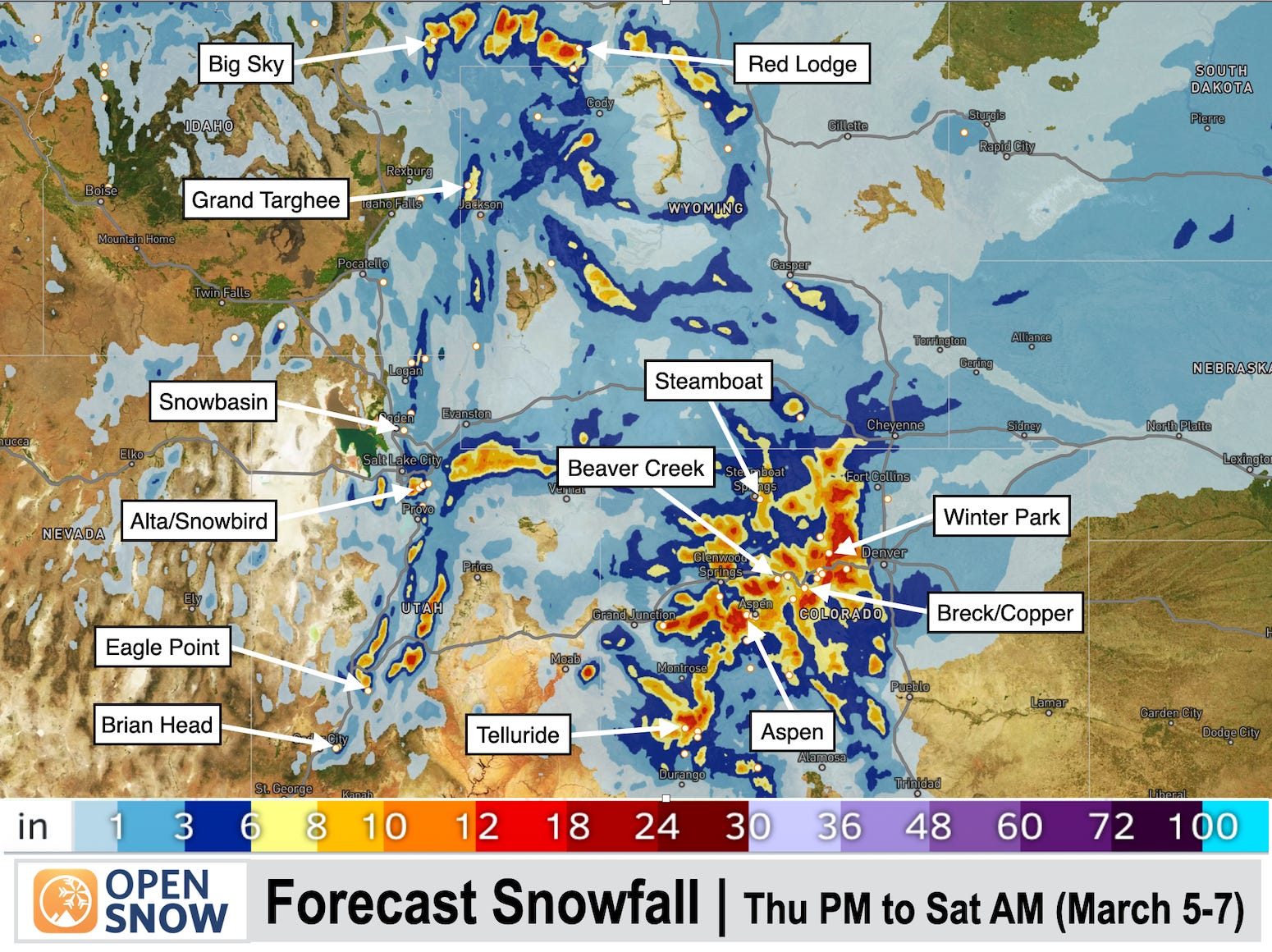
Snow! Finally! And it looks like more is in on the way for many areas, especially if you’re in the Pacific Northwest.
The storm Friday hit many areas in Colorado and Utah, giving skiers and riders a much-needed powder day. Snow should continue into the late evening hours, setting up a great weekend at many resorts.
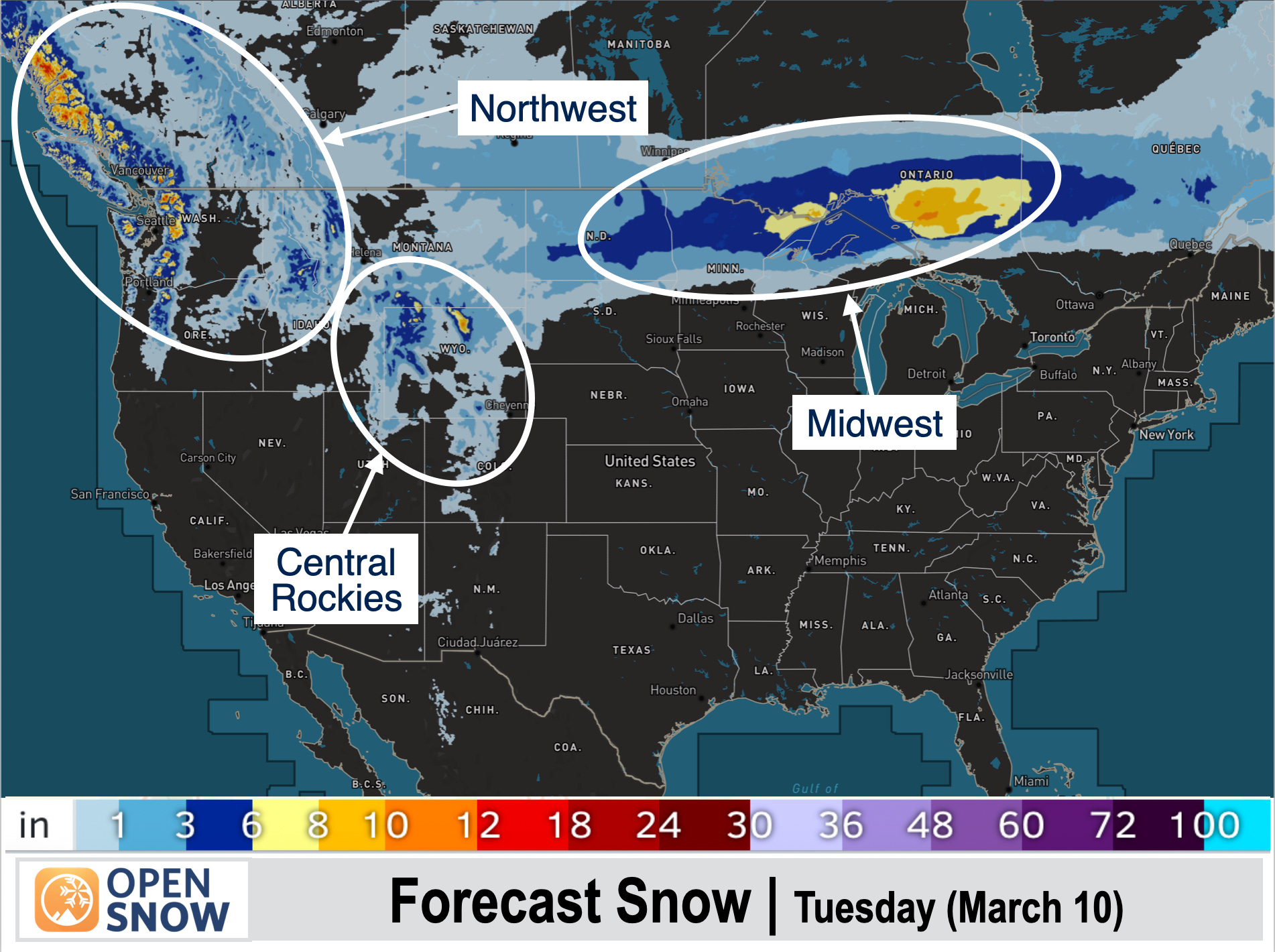
This will also bring some rain and high snow levels to the PNW & Western Canada initially, but then colder air arrives with snow from Sun-Tue. The PNW & Northern Rockies look to stay snowy from March 11-15. The Northeast will see spring warmth for now, but winter looks to return mid-month.
Comments
Nothing yet. Say the first thing.
Sign in to join the conversation.