
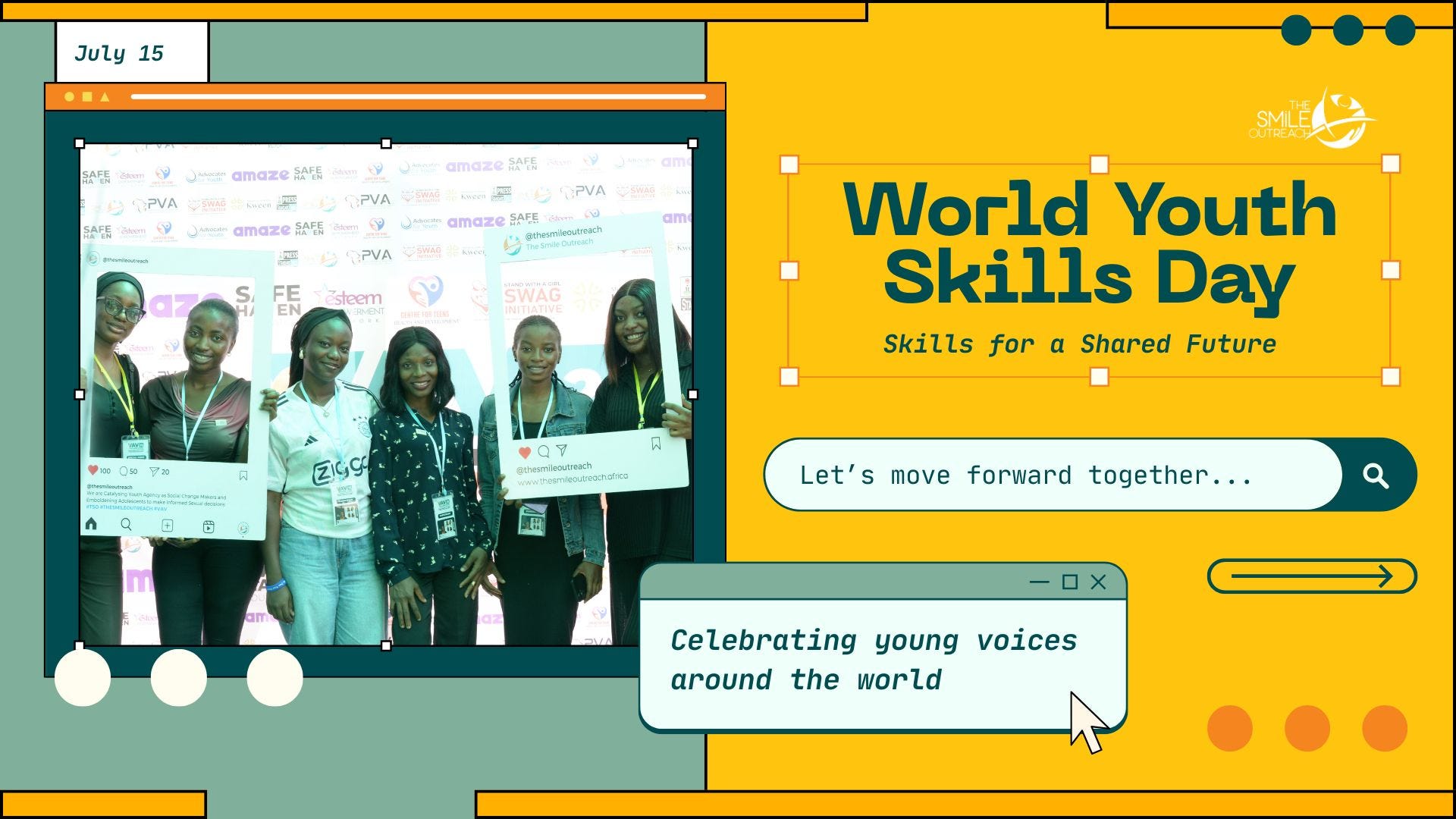
World Youth Skills Day (July 15th) reminds us that preparing young people for the future is about more than academic achievement. It requires equipping them with practical, transferable, and future-ready skills that enable them to secure decent work, adapt to changing economies, and contribute meaningfully to society.
There is a question many young people ask themselves after leaving school…I did everything right, so why does it still feel like I am unprepared?”
Every year, thousands of young people leave secondary school, colleges, universities and vocational institutions carrying certificates that represent years of dedication, sacrifice and academic achievement. These qualifications are often celebrated as the key to job opportunities. Yet, for many young people, reality tells a different story.
The excitement of graduation is frequently followed by months, and sometimes years, of searching for meaningful opportunities. Job applications go unanswered; interviews become learning experiences rather than employment opportunities. Employers praise academic qualifications but ultimately select candidates who demonstrate qualities that are not always reflected on a transcript.
Increasingly, employers are asking a different question: not, “What certificate do you have?”
but, “What can you do?”
“Can you communicate effectively with colleagues and clients?”
“Can you solve problems independently?”
“Can you adapt when circumstances change?”
“Can you work with people from different backgrounds?”
“Can you think critically when faced with uncertainty?”
“Can you learn continuously as industries evolve?”
These questions reveal the truth about today’s labour market: while academic qualifications remain important, they are no longer sufficient on their own.
The United Nations established World Youth Skills Day to draw attention to the urgent need to equip young people with skills that improve employability, support entrepreneurship and prepare them for meaningful participation in an increasingly complex global economy.
Around the world, young people continue to experience higher rates of unemployment than adults. Even those who secure employment often find themselves underemployed, working in roles that neither reflect their qualifications nor utilise their potential. In many countries, employers simultaneously report difficulties finding candidates with the competencies needed to succeed in modern workplaces.
This contradiction shows one of the defining labour market challenges of our time: the skills mismatch. On one side, we have young people who have invested years in education. On the other side, we have employers seeking capabilities that extend beyond academic knowledge.
This does not mean that education has failed; it reflects how dramatically the nature of work has changed in our day and age.
One of the greatest misconceptions about employability is that it begins when young people start applying for jobs.
For many, the conversation starts in their final year of university. Suddenly, there is pressure to build a résumé, attend career fairs, learn interview techniques, and acquire professional certifications. While these are important steps, they often represent an attempt to develop in a few months what should have been nurtured over many years.
The reality is that employability does not begin with a CV; it begins with character, habits, the everyday opportunities young people have to communicate, collaborate, solve problems, take responsibility, and make decisions. These experiences often start in adolescence.
Long before a young person enters an office, they are already learning how to interact with others, respond to challenges, manage conflict, and navigate change. Every classroom discussion, group assignment, volunteer activity, leadership role, family responsibility, and community engagement contributes to the development of skills that will one day influence how they perform in the workplace.
This is why adolescence should not be viewed simply as a transitional stage between childhood and adulthood. It is one of the most important periods for developing the competencies that shape future success.
Consider a student participating in a classroom debate: On the surface, it looks like just another academic exercise. In reality, that young person is learning how to organise thoughts, present ideas clearly, listen respectfully to opposing viewpoints, think critically under pressure, and respond with confidence. These are the same skills expected in boardrooms, client meetings, interviews, and leadership roles years later.
A young person serving as a class prefect is not only learning leadership. They are developing accountability, conflict resolution, organisation, and decision-making skills.
A teenager who volunteers at a community outreach programme is learning teamwork, empathy, adaptability, professionalism, and service.
A young person who manages a small business while in school is developing financial literacy, customer service, resilience, negotiation, and entrepreneurial thinking.
Even experiences that seem ordinary (meeting deadlines for school assignments, balancing academic responsibilities with extracurricular activities, or working collaboratively on group projects) are quietly building the habits that employers value. Employability is not a switch that is turned on after graduation; It is a lifelong process of developing competencies through consistent practice and meaningful experiences.
For decades, recruitment focused heavily on qualifications - A university degree, Professional certifications, Academic performance. These indicators remain important, particularly in specialised professions requiring technical expertise. However, employers increasingly recognise that qualifications alone do not determine workplace effectiveness.
Across industries, hiring managers consistently identify a similar set of competencies that distinguish high-performing employees.
Communication.
Critical thinking.
Problem-solving.
Adaptability.
Collaboration.
Professionalism.
Digital literacy.
Leadership potential.
Notice that most of these competencies cannot be measured through examination scores alone. A young person may graduate with excellent grades yet struggle to communicate ideas clearly during a meeting; another may possess exceptional technical knowledge but find it difficult to collaborate within diverse teams; someone else may excel academically while lacking the confidence to present ideas, negotiate solutions or adapt when unexpected challenges arise.
Employers understand this reality because organisations function through people, not certificates.
Projects require teamwork.
Customers require communication.
Innovation requires curiosity.
Leadership requires emotional intelligence.
Business growth requires problem-solving.
Technology requires continuous learning.
These capabilities increasingly determine whether individuals thrive once they secure employment.
Perhaps the most significant shift, however, is that employers are no longer recruiting solely for what applicants know today. They are recruiting for what applicants have the capacity to learn tomorrow.
In a rapidly changing economy, the ability to acquire new skills may become even more valuable than the skills someone currently possesses. That is why employability can no longer be viewed as something that begins after graduation.
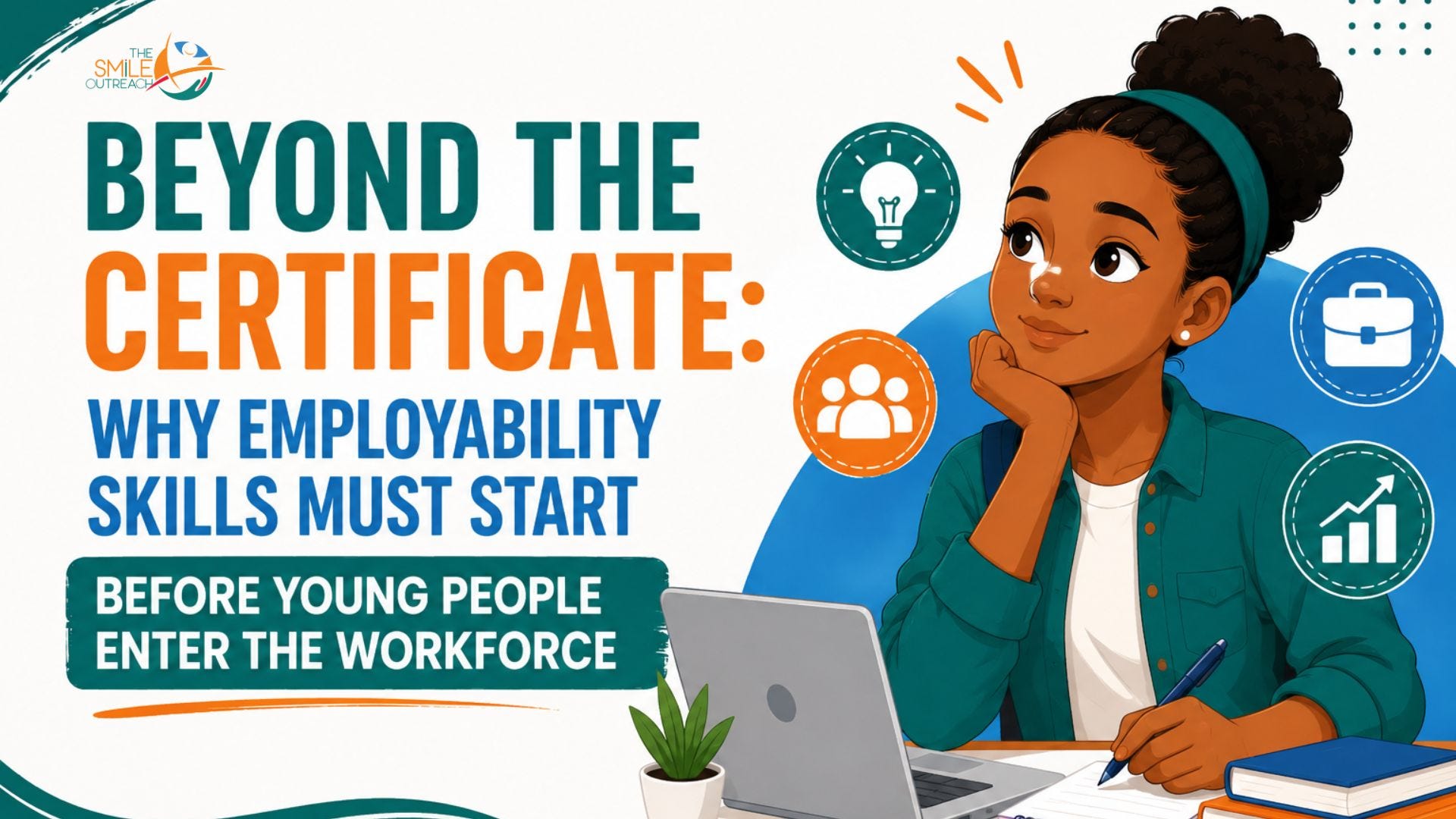
Adolescence is often described as a period of physical, emotional, and social development. It is also a period of remarkable cognitive growth.
During these years, young people begin to develop stronger reasoning abilities, greater independence, and a deeper understanding of themselves and the world around them. They become more capable of making decisions, solving problems, questioning assumptions, and taking ownership of their actions. This developmental stage presents a unique opportunity.
For Africa, this conversation carries even greater significance.
The continent has one of the youngest populations in the world. Every year, millions of young Africans enter schools, graduate from universities, complete vocational training programmes, or begin searching for employment. This growing youth population presents an extraordinary opportunity, but only if it is matched with intentional investment in skills development.
Young people are not simply tomorrow’s workforce. They are today’s innovators, volunteers, entrepreneurs, advocates, creators, and community leaders.
Across the continent, young Africans are already building technology startups, creating digital businesses, leading social enterprises, developing climate solutions, producing creative content, and driving innovation within their communities.
Their potential is evident. What they need are environments that nurture that potential. This requires more than expanding access to education. It requires ensuring that young people also have opportunities to develop confidence, leadership, digital literacy, financial capability, entrepreneurial thinking, and the adaptability required to succeed in a rapidly changing world.
When we invest in youth skills, we invest in stronger economies, more resilient communities, innovation, and ultimately, we invest in hope.
Schools play an indispensable role in preparing young people for the future, but they cannot carry this responsibility alone because education does not happen only within classroom walls.
Young people are shaped by the conversations they have at home, the relationships they build within their communities, the organisations they engage with, and the opportunities they are given to contribute meaningfully to society.
Parents and caregivers are often the first to model responsibility, integrity, empathy, and resilience. Simple experiences such as encouraging children to complete household responsibilities, teaching them to manage money wisely, involving them in decision-making, or helping them resolve disagreements respectfully, lay foundations that extend far beyond childhood.
Schools reinforce these lessons by providing environments where students learn collaboration, leadership, creativity, and discipline through academic work and extracurricular activities.
However, community organisations occupy an equally important space because they often provide experiences that formal education cannot. This is where we at The Smile Outreach become particularly significant.
While The Smile Outreach is widely recognised for advancing child protection, safeguarding, adolescent health education, and awareness of issues affecting children and young people, its work also contributes to something broader: preparing young people to become confident, informed, and responsible members of society.
Every awareness session that encourages adolescents to ask questions confidently strengthens communication skills.
Every interactive discussion that challenges harmful myths develops critical thinking.
Every opportunity for young people to participate in conversations, express opinions, and engage respectfully with others strengthens confidence and public speaking.
Every outreach that promotes decision-making, healthy boundaries, and personal responsibility contributes to the attitudes employers increasingly value.
Although these programmes may not be labelled as employability initiatives, they are helping to cultivate the very competencies that prepare young people for future workplaces and leadership roles.
This illustrates an important truth: “Employability is not built exclusively through career workshops”. It is built whenever young people are given opportunities to think independently, communicate effectively, solve problems, collaborate with others, and develop confidence in themselves.
One of the greatest challenges facing educators, policymakers, employers, and youth-focused organisations today is that we are preparing young people for a future we cannot fully predict.
A decade ago, careers such as AI prompt engineering, sustainability consulting, drone operations, climate finance, creator economy management, and digital community management were either uncommon or virtually unknown. Today, they represent growing sectors within the global economy. Likewise, advances in artificial intelligence, automation, robotics, biotechnology, renewable energy, and digital transformation continue to redefine how people work, collaborate, and create value.
The pace of change is accelerating.
This means that many of the children and adolescents in classrooms today will eventually work in occupations that have not yet been created, use technologies that have not yet been developed, and solve problems that do not yet exist.
The implication is clear: while technical knowledge will continue to evolve, transferable skills will remain relevant.
A young person who knows how to communicate effectively can apply that skill across industries.
Someone who thinks critically can adapt to new challenges as technology changes.
A problem-solver remains valuable regardless of the profession they eventually pursue.
A young person who embraces continuous learning will be better positioned to grow alongside an evolving labour market.
This is why employability should not be understood as preparing young people for one specific job. It is about preparing them to remain relevant throughout a lifetime of change.
If employability begins long before the first job interview, then our approach to youth development must also begin much earlier.
Parents can create opportunities for children to take responsibility, solve everyday problems, and participate in meaningful decision-making.
Schools can continue moving beyond examination performance by creating learning environments that encourage creativity, collaboration, leadership, innovation, and practical problem-solving.
Governments can strengthen policies that connect education with labour market needs while expanding access to technical, vocational, and digital skills training.
The private sector can provide internships, apprenticeships, mentorship opportunities, and work-based learning experiences that help young people bridge the gap between education and employment.
Civil society organisations can continue creating safe spaces where young people learn not only about their rights and wellbeing but also about leadership, resilience, civic participation, entrepreneurship, and lifelong learning.
No single institution can prepare young people for the future alone because preparing young people for decent work requires collaboration between families, schools, governments, employers, community organisations, and young people themselves. Each has a role to play, and each has a responsibility to act.
As we commemorate World Youth Skills Day, we must resist the temptation to measure success solely by examination results, graduation ceremonies, or the number of certificates awarded each year.
Those milestones matter, but they are only part of the story. The true measure of our investment in young people lies in whether they leave our schools, homes, communities, and organisations equipped to navigate uncertainty, seize opportunities, solve problems, collaborate with others, and continue learning throughout their lives.
At The Smile Outreach, we believe that empowering young people goes beyond protecting them from harm or helping them access information. It also means equipping them with the confidence, knowledge, values, and transferable skills that enable them to become active contributors to their communities and the wider world.
Every outreach, every mentorship conversation, every leadership opportunity, every volunteer experience, and every safe space where young people are encouraged to ask questions, think critically, and find their voice contributes to preparing them for a future filled with possibility.
On this World Youth Skills Day, let us move beyond celebrating qualifications alone; let us commit to raising a generation that is not only educated, but equipped - not only knowledgeable, but adaptable; not only employable, but empowered to create opportunities for themselves and for others.
No posts
Comments
Nothing yet. Say the first thing.
Sign in to join the conversation.