
0:00
-4:59
A few weeks ago, I got the first batch of advance reader copies of The Lilies in the mail!
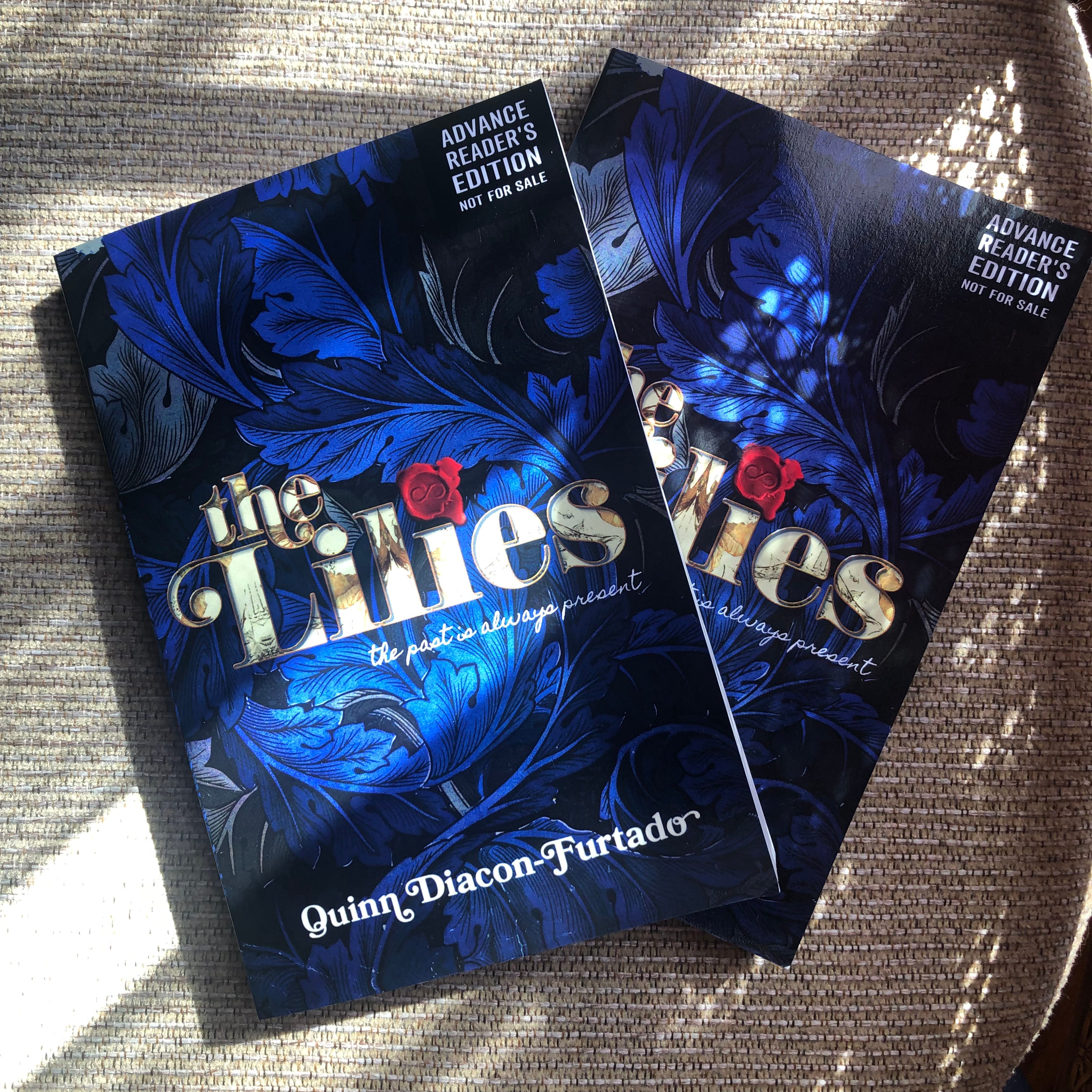
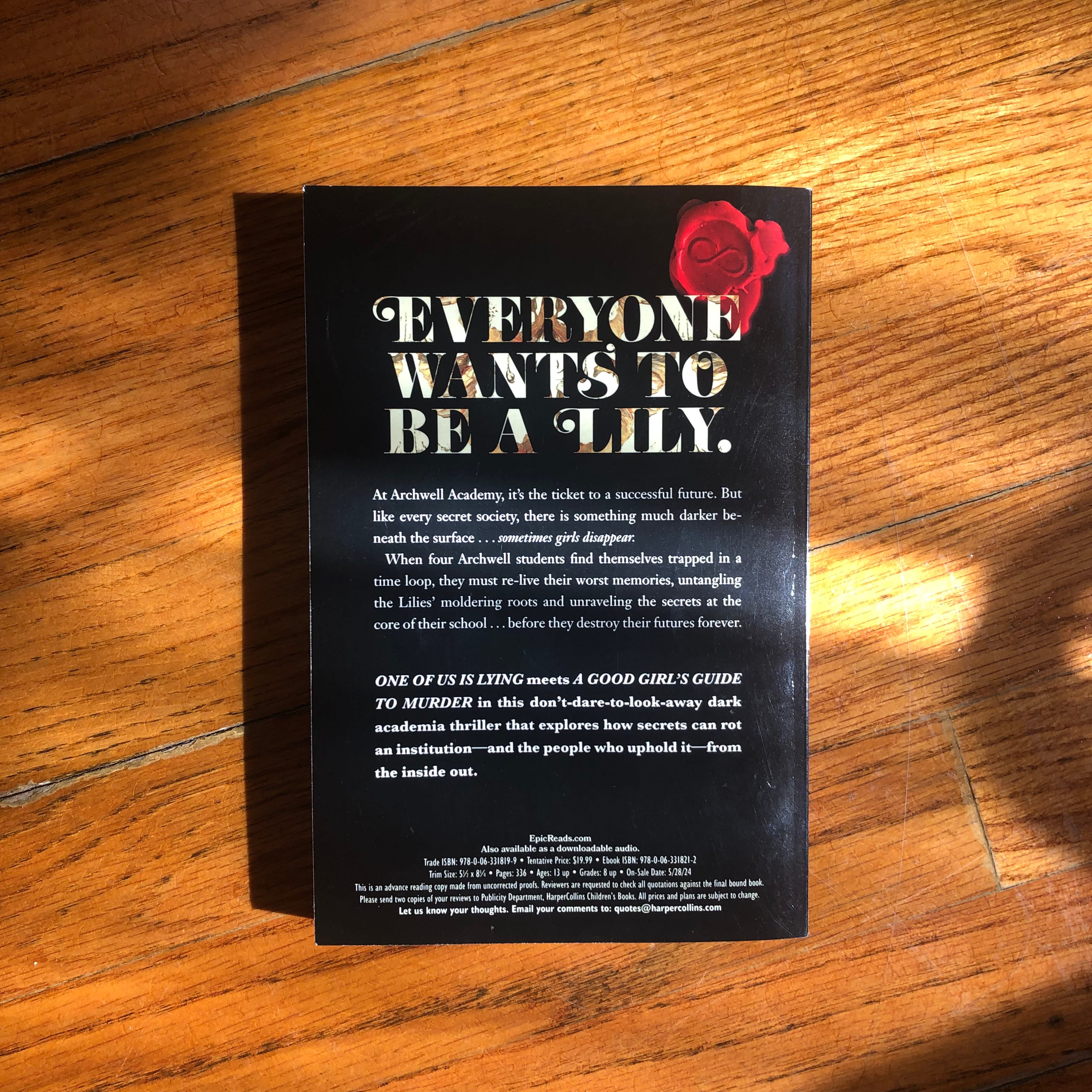
I’m told that publishers seldom provide physical copies of ARCs these days, so the fact that I got to hold the typo-ridden, pre-copy-edited edition of my very first published novel in my hands felt pretty special.
I got very few copies so very few people in my life received ARCs from me. One of them was my dad. When I handed him the book, he asked me a question that I somehow never expected: “Where do you get your ideas?”
I panicked. How dare he put me on the spot like this?! Certainly no writer has ever been asked this question! Bah! “I don’t know. Leave me alone,” I said, because the actual answer is annoyingly complicated.
But I’ll try to answer him now, here.
In this lecture from 2013, Stephen King talks about the process of how ideas become stories in a way that resonates with me: some ideas have discreet roots, others are slippery like half-remembered dreams. In King’s words, a good idea is one that “sticks around and sticks around and sticks around.” (Check out minute 5:40 to 15:31 for specific examples from Under the Dome and Mr. Mercedes).
My ideas for stories tend to center on themes. The Lilies, for example, goes deep on the topics of generational patterns, small-T trauma, and patriarchy's impact on spaces designated for women. These days, I’m working on two new projects that both touch on the relationship between high technology and spiritual technology.
But what are these things exactly?
High technology: machines that go beep and boop, the code that animates the software on your phone, the process that conveys this email to your inbox. In our culture, high technology is often shorthanded to just technology. How convenient!
But there are many other kinds of technologies, of course, including spiritual ones. There’s prayer, meditation, textual analysis…the list goes on. The idea that spiritual technology and high technology have more than their fair share of interplay has been sticking around and around for me recently.
I’m interested in the fact that people are using AI to commune with the dead, or the notion that it’s become common to use language that anthropomorphizes AI. Perhaps most interesting to me is the overlap of language that we use to talk about spiritual technology and high technology.
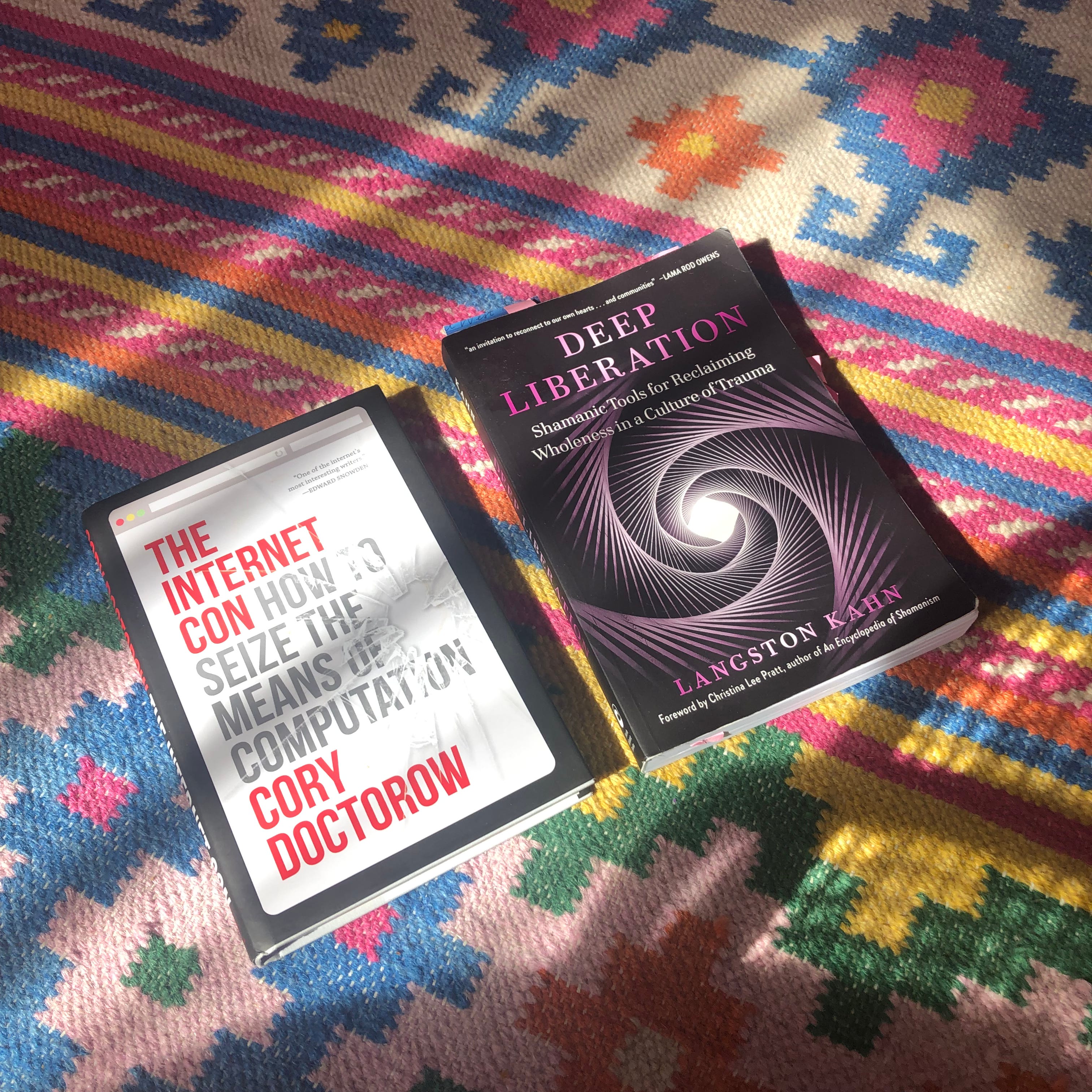
I’ve been reading-up on applied spiritual technologies for the past year or so. In books like The Awake Dreamer: A Guide to Lucid Dreaming, Astral Travel, and Mastering the Dreamscape by Samantha Fey, I ran into words more common to the high tech space: buffer, download, upload, hardware, hardwired. The same has been true for my ongoing reading of Deep Liberation: Shamanic Tools for Reclaiming Wholeness in a Culture of Trauma by Langston Kahn. There’s talk of plugging in, of switching on—mechanical metaphors to talk about experiences and knowledge that are often beyond words.
In reading more about high technology in the past few months (I’m specifically thinking of Cory Doctorow’s The Internet Con: How to Seize the Means of Computation and James Bridle’s Ways of Being: Animals, Plants, Machines: The Search for a Planetary Intelligence) there’s talk of power, intuition, hallucination, and the process of divining.
I keep thinking about this idea: the way we talk/write about high technology often mystifies it, obscuring it to the point that it feels inaccessible to the laymen. Simultaneously, the way we talk/write about spiritual technology often relies on 21st century vocabulary to ground the practices in things that are perhaps more concrete.
The stories I’m working on right now are heavily influenced by this intersection of high technology and spiritual technology both in idea and practice. On writing days, I fire up my computer, burn some sage, check my internet connection, and place a little offering in front of a picture of my grandparents. Then I get to work.
So this is all sort of describing how some of my ideas take shape, but am I really answering my dad’s question? “Where do you get your ideas?”
There’s more, of course. And I’ll write about the rest soon.
In the meantime, there’s news.
The Lilies has a new release date: April 30th!
I know…That’s VERY soon!
If you haven't pre-ordered your copy yet, please consider doing so from Massive Bookshop, an anti-profit, abolitionist, online bookstore based in western Massachusetts.
Folks have been asking about book tour details. Much of this is still in the making so consider this an I.O.U. In the meantime, you can tune in to Avon/Voyager’s Summer 2024 Author Showcase on March 19th, 7pm EST, to hear me talk a bit about The Lilies.
More soon!
Comments
Nothing yet. Say the first thing.
Sign in to join the conversation.