
***Before we go anywhere there was a howler in the last newsletter. In an overtired state and hurry to get the newsletter out, I hit play on a previous album by Logan Farmer and managed to freestyle a review of that instead of his latest album! I hope you noticed. I didn’t until he (very) kindly let me know. At least I embedded the right album for you to listen to. Ooops and apologies. ***
I’ve been a blogger for a long time, albeit in a music tipster writes pithy paragraph to encourage listening sort of way, so transitioning to a newsletter has encouraged me to up my game, start learning how to write and actually think about why I like the music rather than just vibe off it.
Consequently I now find myself with a blog and a newsletter, so what’s the difference? Well, soon after launch the newsletter became the main outlet focus for its reach, helped initially by a Notes post going viral (new newsletters play that card early whilst Notes is trying to get you hooked, and still inclined to give you a boost), then steady organic growth driven by supportive newsletters’ kind recommendations, plus my occasional appearances in Substack’s music charts, not to mention a long held burning desire to ditch social media’s pay to engage with your “fans” trap and Google’s advertising skewed search results. Blogs have also been in steady decline since their 2014 heyday for various reasons, but it appears that newsletters are the new blogs and having a “podcast moment”, with Substack leading the charge.
Consequently album reviews now hit the newsletter first, then make it to the blog and social media a few days/weeks later, something I delight in mentioning to my Instagram followers and feel slight guilty about mentioning to my decentralised Mastodon and Bluesky followers. But I also write some reviews for the blog that don’t make it to the newsletter. Here’s why.
I’ve always had a fondness for supporting alternative and independent music, but if that artist is young, shy, overlooked or dropping a debut release then I’m a particularly soft touch. Sometimes the music is genuinely great having been polished, sometimes for years, before release; but often the release is not quite fully formed, for whatever reason, but I like to think I can hear potential, and I want to tell them that they’ve been heard, are heading in the right direction and encourage them to keep at it. You can give them a leg up too. Hit play, give them a like and pop them in a playlist (pssst, play it even when you’re not listening sometimes) - all these things make a difference in our billionaires’ machine managed algorithmic dystopia.
So the newsletter has become a vehicle for albums from generally more established, fully ripe artists and labels, and the blog for singles and notable EPs/LPs which I couldn’t ignore. Well, today the worlds are colliding.
Finally, for any regular readers who’ve been peeping through the Substack keyhole into my private life and are still interested, the recent court hearing went really well. The prosecutor and judge immediately saw through, and then shot down my ex’s excuses for trying to take sole charge of our daughter. The prosecutor recommended immediate fifty fifty custody, but according to my lawyer the judge was a bit old school, and decided on sliding scale access over a three month period: initially at her mother’s every other weekend - only two more 500km round bus/train trips to go after the one that I’m on now (hooray for hotspots), then nine days a month at mine for a couple of months, and finally fifty fifty. I was initially a bit bummed at the continued delay in getting full access and the maintenance clause is like paying a kidnapper but not getting the hostage back, but on reflection the legal system came through, cut through the bitterness, selfishness and emotions, and did the right thing.
So happy days, especially for my daughter who was so excited to see me the other weekend she couldn’t stop saying “papa” and laughing for a couple of hours - I was close to tears. Also, finally, I can now make some advanced, unhindered plans and effectively schedule my work life for the rest of the year. I can’t tell you what a relief it all is. Unfortunately the case continues, but unless something untoward or particularly dastardly happens, my daughter now has a father again
Right on to the music.
I’ve been meaning to interview artists and labels for ages. As much as I want to find out more about them, their music and creative process, I also want to pick their brains about navigating the modern music landscape. The interviews in return will help put new artists on the Google SEO and LLM map, provide marketing press quotes and can even help trigger Spotify’s algorithm, and yes, I get more “content” and traffic - win, win. The interviews are quite long so will be blog only, but I’ll keep you posted.
And what an interview to start with. Not only does PILLBERT’s debut album that I plugged in the last newsletter rock (read about it here), but she’s such a thoughtful character for one so young and really went to town on the questions. It’s a great read and a fine start to the series.
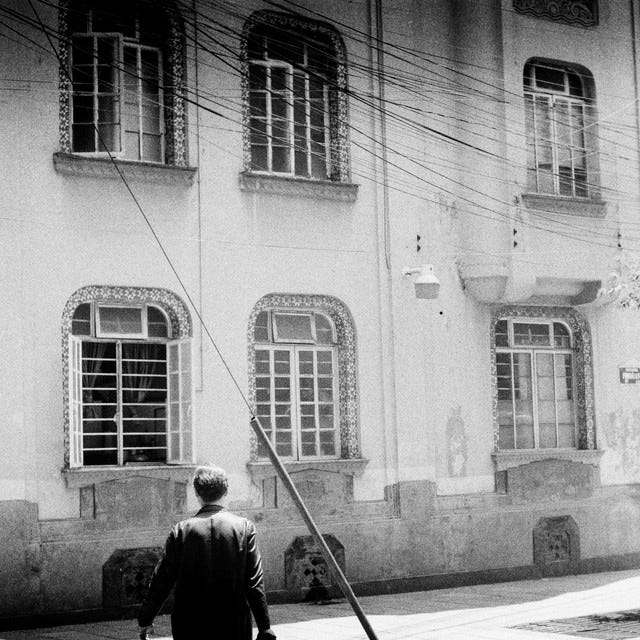
Alfred Matérn hails from Gothenburg but has ended up in New York where, in between dodging ICE agents, he lurks in the artistic underground honing his trumpet playing, compositional and black and white photography chops, whilst also dabbling in filmmaking and poetry, and, well, that’s all I know or can find out.
He’s also just released a really cool album called Solo Solo, and if minimal, quietly free jazz that sounds like it was recorded at 3am is your thing then you should definitely tune in. Credits are non-existent, so I’m presuming he had help on bass and percussion, and that he certainly chose wisely, the bass player especially - the grooves are tight, insistent and persuasive. The percussionist got an easier session ride but did the business when called on, such as the minimal percussive framework of, “Walk Don’t Walk”, their skittering addition to the free spirited, “Tre” or the evocative, far flung, more spiritually inclined shakes and rattles on “Fantasi”.
Matérn for his part largely adopts a less is more approach to the album, eschewing solo work that overstays its welcome for short sharp phrasing and succinct statements, occasionally melodic but more often than not grittier, moodier, edgier, fluttering and acerbic. He’s also got a box of electronic tricks/pedals with him, whether done live or post production who knows, but every now and then a phrase will spiral off into machine propelled cosmic realms to fine effect.
In today’s political climate silence is not an option and Matérn is saying something on every track. This is jazz with attitude, it’s jazz for dark rooms and late nights, jazz for the disenfranchised and discriminated against. It’s exactly the sort of jazz I want to hear these days.
Here’s the ablum but you can also find Matérn in the Slow Jazz Playlist.
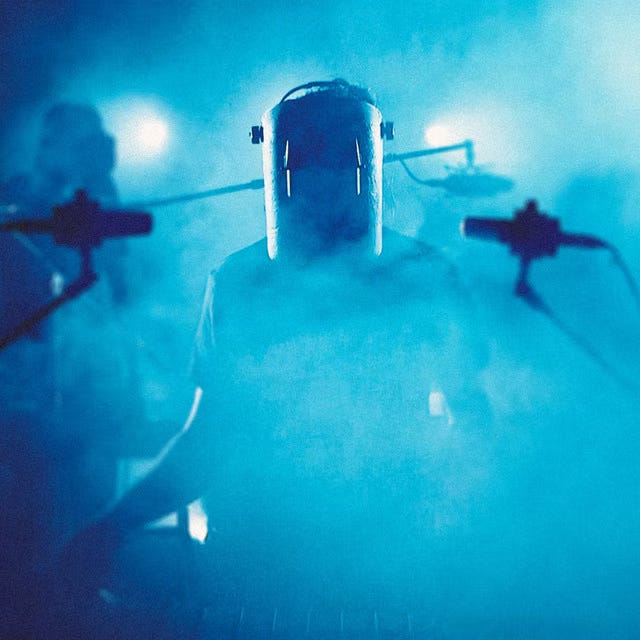
Recur is a collaborative project led by award winning composer, educator and sound designer Tim Harrison, who works across music and interactive audio experiences, most notably on the TV show Black Mirror, video game Assassin's Creed and in collaboration with Daman Albarn and Ai Weiwei over the years.
A Strange Loop is quite the epic project. Created over a nine year period with no less than fifty musicians involved, including Portico Quartet’s saxophonist Jack Wyllie and the Ligeti String Quartet. Over such an extended period and with so many moving parts things could easily have gone awry, but Harrison has done a sterling job of arranging the various talents and instruments into richly textured, cinematic soundscapes that effortlessly glide between ambient, electronic and neo-classical worlds like it’s the most natural thing in the world.
The album is best listened to as a whole, so dust off your headphones and find a quiet moment to sink into the well sequenced passages, and with its cinematic undercurrents writing your own story could also be an option. “Oscillate” opens proceedings and is a fine ambient gateway, the sax refrain wafting over the electronic ebb and flow, and with the sort of sound design that makes you wish that you’d gone for the next headphone model up. The gently introduction then takes a minimal chamber music turn with the classical musicians providing a light touch as “Id Etude” tip toes through the speakers.
Next up “Gnossienne” ushers in the albums denser cinematic body with its classy, decidedly twentieth century string arrangement patiently building as exotic percussion pitters and patters from above without dampening proceedings. Seatbelt fastening is then advised as “Nocturne” decides it’s time to look to the future, launch the tale into less gravity beholden realms and add some drama and intrigue to proceedings, whilst “Hieroglyph” would be the perfect soundtrack as you explore the first eerily abandoned spaceship that you come across.
If you make it to the escape hatch alive then “Lament” will take you on a neoclassical orbit around the neighbouring planetary mine, it’s distant heavy machinery clunking in the background as the interplanetary mining company digs deep into the hitherto unspoilt surface in search of profit. “Ode to Void” initially offers some respite, but it’s not long before the uneasy strings build and sweep you into a turbulent gravitational conflux requiring all hands on deck to make it through to the well deserved, warm and familiar glow of “Iridescent”, its rays lighting the path back home and “Drifts” dense ambient neoclassical strains tinged with melancholy that the adventure is over, but also breathing a sigh of relief that you made it through to tell the tale.
Check the album and also find Recur in the Slow Neoclassical Playlist
Willebrant has been flying the ambient flag in Australia from his Melbourne home for the last six years. He’s a bass playing musician with a fondness for field recordings who knows his way around a DAW, and is increasingly adept at combing all three disciplines into immersive ambient visions that would be equally at home soundtracking the vast, flat central expanses of his homeland, providing passive listening for contemplation, or helping to open neural pathways for those looking deep within for answers to the human condition. Quick tip, there aren’t any, just coping mechanisms.
Late last year he explored the slow and reverb phenomenon which is a fairly recent method of increasing your catalogue without too much effort and/or a valid artistic practise that effectively remixes an existing composition by way of automatically slowing down and adding reverb to create original new music, distinct from the original - delete as you see fit. As with everything, there are good and bad examples of the practise and Brant’s reworkings in this vein of The Pilgrim EP that dropped last September, and now this collection of selected tracks, both sit in the very good camp.
The collection starts with the still relatively lucid strains of, “Rivulet”. Usually the sparkle is drained out of songs during the reworking, but the chimes and sounds of our feathered friends still ring true, whilst the drones and ambient constructs drag their heels, as if trudging home from a heavy night out just as the sun is rising. “Listening Tree” and “some things considered” then bring the EP into more familiar S&R territory, casting a dulled, melancholic shadow on the release, whilst remaining relaxing rather than depressing.
“Retreat” starts with possibly the crackle of fire and a bubbling mocha pot if my ears don’t deceive me, which they probable do. The woozy, lysergic strains of a campfire guitar then enter the picture as a barely moving, gently building drone slips through the middle of the arrangement, making for quite an opiated ambient folk ode to responsible substance use. “Drift II” then reverts to more typical late night ambient form before the in your face field recordings grabbed during a storm take their time to surface but then proceed to dominate the sombre atmospherics, and see this great collection out.
If it’s value for money you’re after then Willebrant has also kindly stitched all the tracks into a seamless fifty two minute long mix, just perfect for when you need an extended and interrupted escape from reality, and whilst you’re at it check out the slightly more sombre strains of The Pilgrim (Slowed and Reverb) too.
Find Willebrant in good company at the Slow Ambient Playlist.
Lars Barnes aka Larb is another one of those enigmatic artists who prefers to let their music do the talking, but I have it on good authority that he’s a composer, musician and sound artist working in the Scottish Borders with a fondness for found sounds, field recordings, synthesis and other technologies which he utilises to create his ambient spectrum spanning soundscapes. He’s also got quite a quietly distinctive sound that eschews tired cliches and which alongside the tight production, immediately jumped out at me, and after a series of singles and EPs over the last couple of years, he’s just released his debut album. I like it.
Don’t expect to get lost in listening action and forget that you put something in the oven, the album is pretty short and with the seven tracks clocking in at eighteen minutes total probably only just qualifies for album status, but each track is perfectly formed and the album flows pretty well; you’ll get your ride, just a short one.
The answer is yes to “is this thing on”, the opening track, a nice blend of home made rattles, stuttering low frequencies and haunted pads that trump the underlying restlessness, and which dissipate all too soon, leaving us with the quivering overlapping synths of “ramping up” that get lifted by a mid-track Detroitian flourish before, and yes it’s a mild complaint, fading rather than finishing. Next up is the pleasantly industrial machine ambience of “locking up for the night” which receives a dulled, thudding, unhurried beat injection for a chopped and screwed house vibe as recorded by someone in a k-hole, but don’t sweat as “Viaduct echo” is right behind it, its odd brightness and intensity just the friendly nudge our confused state needed, but blink and that too is gone.
“Windmills” starts with parallel dimensional chimes recorded this side of the portal door, as even the rhythmic noise - another found sound I’d hazard, adds some gentle propulsion to the Asiatic temple vibes, the perfect gateway track for “waiting for your order”, a sunrise moment after the album’s largely, but pleasantly gloomy start. Hold tight though for the view from the top of the hill that is the album’s closing track, as once again those open to interpretation found sounds float around a vaguely alarm like, but not alarming, tightly looped motif.
It’s an accomplished debut “album” that bodes well for the project, as Larb effortlessly combines agitated, soothing, sleepy and conscious states into a pleasing and singular ambient whole. More please.
Larb can also be found hanging out in the Slow Ambient Playlist.


Mai Mai Mai is the uncompromising musical project of Rome’s Toni Cutrone, a shadowy multi-instrumentalist and producer working, brooding, growling and shouting in the Fourth World shadows. The project bridged the gap between ancient, trampled upon folkloric sounds and industrial and experimental electronic music, to create a fitting soundtrack for this grab all you can age of late stage capitalism and Anthropocene acceleration. Wisely he’s teamed up with Bologna’s equally obstinate, TSMM approved Maple Death Records to tell this particular story.
Cutrone is a sonic and social adventurer, who I imagine finds himself in all sorts of unusual places, but a six week artistic residence in Palestine, splitting his time between Bethlehem and Ramallah during the Gazan genocide I guess ranked as one of the more unusual, and I imagine the most poignant. This was also the period where most of this album was recorded, and where the variously beautiful, evocative and gut wrenching vocals came from.
During his time in Palestine he met with local musicians, dug deep into the local archives and soaked up the vibrations from this historic and troubled land; the six week spell long enough for him to survey the cultural and social landscape, and weave its fabric into his musical vision. Understandably, with the region’s history and shocking present, this is not the easiest of listens, but it’s far from difficult, in fact with his close proximity to this century’s greatest humanitarian horror, surprisingly so.
The album starts with a whisper carried on an ambient breeze before the voice suddenly erupts into layered prayers that ooze Middle Eastern soul; the wooden percussion keeping time as thunder rolls in from Israel’s military bases, and the machine breeze turns into swirling gusts. Hand played percussion from Jihad Shouibi gets the album’s title track moving, a rumble of heavy armour and infrastructure destroying heavy machinery in the distance, as the muted beats ape the sound of falling munitions, but amongst the shadows the stoic local musicians keep playing, and Shouibi is joined by the sounds of Karam Fares on buzuq, the two hundred year old lute a frequency of reason amongst the intensifying beats and audible unease.
And breathe (a little), “Echoes of Harvest” is here, and rather surprisingly so is Alabaster DaPlume’s saxophone playing - the jazz light was also in Palestine at the Sound Of Places residency in the Cremisan Valley, and the experience brought out the best in him. Here he digs deep into the the local wells of pain to fuel his personal cry for justice and peace, jostling with the organ refrain, obscuring the sound archive vocal sample and riding the track’s ebb and flow. Ritual, hand played percussion signals the arrival of “Old Poem Made of Sand”, another choice archival vocal sample wailing in the background as the synths tones gingerly infiltrate the low lit tribal soundscape.
“Dawn of the Cremisan Valley” starts relatively brightly with Julmud’s autotuned vocals nodding to popular music in the dark, beat pulsing shadows that are anything but popular. “Jinn of the Bethlehem Souk” makes no secret of it’s experimental intensions, quivering distortion immediately making it’s presence known before morphing into a throb, the field recordings from the Bethlehem Souk vying for business but, despite their best efforts, ultimately shouted over by the rising waves of noise and a mid-track, dark, leftfield techno eruption.
There’s a lot to absorb during this excursion amongst the Fourth World and it’s forgotten people, so fittingly the closing track encourages a moment of reflection. “Wandering Through the Crowded Paths of Al-Hisba” dials down the intensity; spoken and sung vocals harmonise, synths are turned down from eleven to one to restore ambient sanity, as the street noise of this ancient place and hardy race, bravely get on with their daily lives in the face of unimaginable hardship
This album is an uneasy, but compelling musical statement that unavoidably touches on one of history’s modern horrors that unfolded before our eyes, but it’s also a love story to a people and a place.
Find Mai Mai Mai in the Slow Jazz Playlist
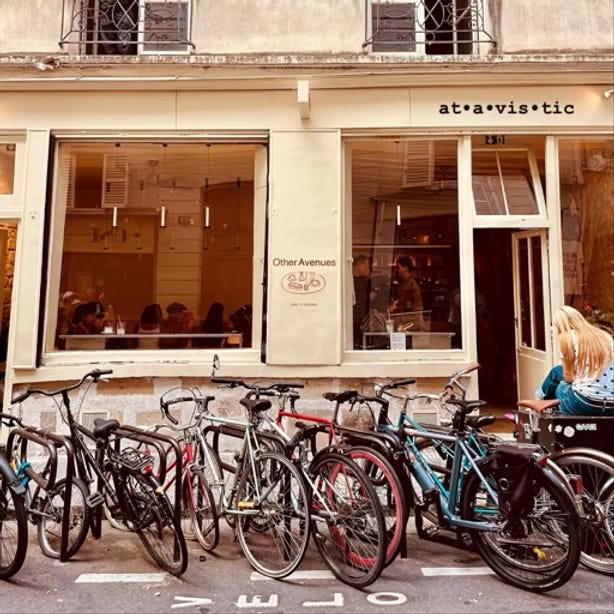

Information is thin on the ground, but Other Avenues, Eric Peterson to his family, is an enigmatic, somewhat eccentric by the look of the photo, musician and producer hailing from San Francisco who I stumbled across back in 2022 when I was smitten by his quirky, lysergic Analog Education single.
After 5 years and a few oddball singles, he’s just released Altavistic - his debut album, and it’s as idiosyncratic and wonderful an electronic music excursion as I’d hoped for. Some old school beats and a humming drone announce the journey and then comes a sultry female French vocal that should get the electronic aficionados dreaming of Parisian trysts, but just as you’re booking the ticket, the track springs into life with some loose, danceable beats that suggest the dance floor rather than international travel instead.
The broken house beats and acid squelch of “tsondoku” will keep you there too, as Robert’s microdose kicks in resulting in a gently trippy ambient house excursion that suddenly sheds its beats halfway through and descends into hazy ambience. Next up is the return of “analog education” the single that first turned me on and, well, just take a listen and try and describe it yourself.
“The Wiggle” then takes us straight back to the dance floor for a somewhat familiar but pleasingly far-out house excursion that should appeal equally to the Saturday night groovers and brain cell losers. It’s peak album now, and “apropos of the wet snow” throbs and lazily pumps through the speakers, a well judged anchor for another cosmic atmospheric voyage. “Tampolis” sees the lights of the club turned on, but eases the pain with some unhinged vocals vibes and an acid infusion to keep the party going, in your head at least, whilst a chugging four four riddim augmented with hand played drums will help propel you home.
Finally on the sofa it’s time to unwind with the classic sounding smoker friendly “comala”. Just as your eyelids are getting heavy and you start to wonder how you’re going to get up the stairs, the album then has something of a flashback as the mood lightens and the tempo gradually increases, just the uplifting vibe bed bound breeze you need.
Find Other Avenues in the Slow House Playlist.
Check out this list of notable singles via the blog links. They’re all really worth checking, and most of them are leading up to albums and EPs later in the year - so if you like them give the artists a follow:
“a flickering, broken fluorescent tube lit, heavily stoned reflection on our digital dystopian present“ - Listen/Read
“an old radio finally tuning into her gentle ambient guitar intro before her softly delivered vocals ride the alt-pop thermals” - Listen/Read
“If you need some low gravity vocal jazz to ease you into the day, or close your eyes to in the late evening then look no further.” - Listen/Read
“Starting off innocently enough with some straight ahead acoustic guitar picking, "Fruit" takes all of a few seconds before the freak folk flag is raised” - Listen/Read
“back to the future electroacoustic soundscape that nods to classy and classic twentieth century composition and fuses that orchestral vibe with DAW enabled ambient daydreams of brighter days“ - Listen/Read
“a warmly lit, jazz folk pathway towards the clear and true musings on the nature of time and connection,“ - Listen/Read
“A classic folk song about love's first days is nothing new, but when it sounds as good as this, always welcome.“ - Listen/Read
“a mighty fine, mildly theatrical, shadowy slice of lysergic alt-pop rock with genuine craft“ - Listen/Read
“the mood is one of detachment, introspection and more than a hint of that rarely discussed feeling of loneliness and melancholy that can creep up on urbanites when left on their own whilst surrounded by activity in a city that never sleeps.” Listen/Read
“head off into cosmic Americana territory - more campfire though than hoe-down“ Listen/Read
From ambient sound baths and wellness imbuing new age vibes to underground house via jazz, neoclassical, folk, dub and more, the twenty one TSMM playlists and podcast cover a lot of ground, and are updated regularly.
They’re available on Tidal, Apple Music, Amazon, Youtube Music, Youtube, Deezer, Soundcloud and Spotify (if you don’t worry about them not paying most of the artists on the playlists).
Comments
Nothing yet. Say the first thing.
Sign in to join the conversation.