
Hey friends 👋 Happy Sunday.
Here’s your weekly dose of AI and insight.
If you’re enjoying this kind of analysis and want to support my work, become a paid subscriber today. You’ll get access to the full archive of The Signal and 6 months free of Wispr Flow, my most-used AI tool, so that you can dictate instead of type. If you’re a paid subscriber, reply to this email for access.
My top-3 picks of AI news this week.
Anthropic
Anthropic had an unreleased research version of Claude make progress on one of maths’ most famous unsolved problems, announced invisible watermarks on all future Claude text, and locked in two long-term data centre deals in the same week.
Progress on a 167-year-old problem: An unreleased research build of Claude made progress on the Riemann hypothesis, the 1859 conjecture about prime numbers with a $1 million bounty for a proof, by raising the share of the problem that is now proven from 41.6% to 67.2%, a result checked by outside mathematicians and formally verified by computer.
Watermarks on every output: Future Claude models will carry an invisible statistical watermark in generated text to comply with the EU AI Act, applied globally at launch because Anthropic says it has no durable way to scope it by region, with detection tooling still “forthcoming”.
Compute locked in: Anthropic formed Theseus Infrastructure with Macquarie Asset Management and GIC to build data centres it will anchor, and is reported to be the “leading frontier AI lab” behind Riot Platforms’ 20-year, $9.1 billion lease for 191 MW in Rockdale, Texas.
Alex’s take: I want to double-click into the watermarking for a second as I feel this has the most serious ramifications. Looking at Anthropic’s own FAQs, specifically the question titled “What does a watermark actually prove?”, it shows that the mark cannot distinguish “Claude wrote this” from “Claude heavily edited this.” Therefore, a passage you run through Claude to proofread and check spelling holds exactly the same flag as a piece that was zero-shotted in one go. This gets the incentives backwards, as those who are determined to hide AI use will either paraphrase or run through a Chinese model and be able to walk away cleanly, whilst the honest person who used Claude to fix some grammar is left holding the mark. This initiative actually relates very closely to Google’s SynthID, released in Gemini in 2024. The reason it will stick, regardless of what happens to the EU rule, is that labs need a way to keep their own output out of the next training run.
Google launched the Pixel 11 lineup built around Gemini, shipped Gemini 3.7 Flash the next day, and released SL2T, a DeepMind model that turns sign language into text on the new phones.
Gemini in the hardware: The Pixel 11 starts at $899 and ships August 20 with Gemini handling multistep tasks across more than 40 apps, a Magic Capture mode that analyses around 400 frames to pick the shot, and on-device Live Translate that dubs video into your language in real time.
Cheaper workhorse model: Gemini 3.7 Flash arrived three weeks after 3.6 Flash, lifting its DeepSWE coding score from 49.0% to 65.3% on Google’s own testing (not independently verified), at an introductory price of $0.75 per million input tokens through December 31, half what 3.6 Flash cost.
Sign language, finally: SL2T was trained on more than 100,000 hours of footage across 50-plus sign languages and lets Deaf users sign to Gboard and Live Transcribe wherever they’d normally type, with only body-landmark coordinates leaving the device and the video discarded immediately.
Alex’s take: Google’s edge over the other labs is that it owns the device in your hand. I’ve never been more tempted to get a Pixel over an iPhone before in my life. On the other side of that, Google DeepMind continues to deliver—this week with SL2T specifically, because it lets Deaf people do something hearing users have taken for granted for over a decade. That is, of course, speaking to your phone instead of typing, and it’s exactly why I dictate instead of type for most of my computer interaction today. Sign languages are independent languages with their own grammar and vocabulary, which is why early attempts like sign language gloves failed and why this needed full machine translation on top of computer vision that tracks hands, body, and face at once. Around 70 million Deaf and hard-of-hearing people use sign languages worldwide, and this is the first time a mainstream product gives them the same convenience at no extra cost.
xAI
xAI, now branding itself SpaceXAI, put out three releases in one week: Grok Bot, a team of always-on agents that work inside your apps; Grok 4.6, a model that ties OpenAI’s GPT-5.6 Sol on the Artificial Analysis Intelligence Index; and Grok 4.6 inside GitHub Copilot two days later.
Bots that keep working: Grok Bot, in early beta, gives you always-on agents that sign into your tools from a cloud computer, learn a routine by watching you do it once, and keep working while your laptop is shut, included with the $200 Cursor Ultra and $300 SuperGrok Heavy plans.
Frontier score, flat price: Grok 4.6 scores 61 on the independent Artificial Analysis Intelligence Index, level with GPT-5.6 Sol and behind only Anthropic’s Opus 5 and Fable 5, at $2 per million input tokens and $6 output against Sol’s $5 and $30.
Two days to Copilot: GitHub added Grok 4.6 to Copilot’s model picker at xAI’s own list price, alongside models from OpenAI, Anthropic, Google, and Microsoft’s in-house MAI-Code.
Alex’s take: I’m going to be paying close attention to Grok Bot, as the “I do, you learn” functionality gets me quite excited. We explored it two weeks ago when I wrote that Anthropic’s skill recorder points to a future where showing beats telling—now xAI is building the same idea. Underneath Grok Bot sits Grok 4.6, which is, as Gavin Baker calls it, “Pareto dominant,” meaning at least as good on every measure and strictly better on at least one. Grok 4.6 is roughly Fable 5 performance at $2 and $6 per million tokens against Anthropic’s $10 and $50, so you get the same intelligence at a lower cost.
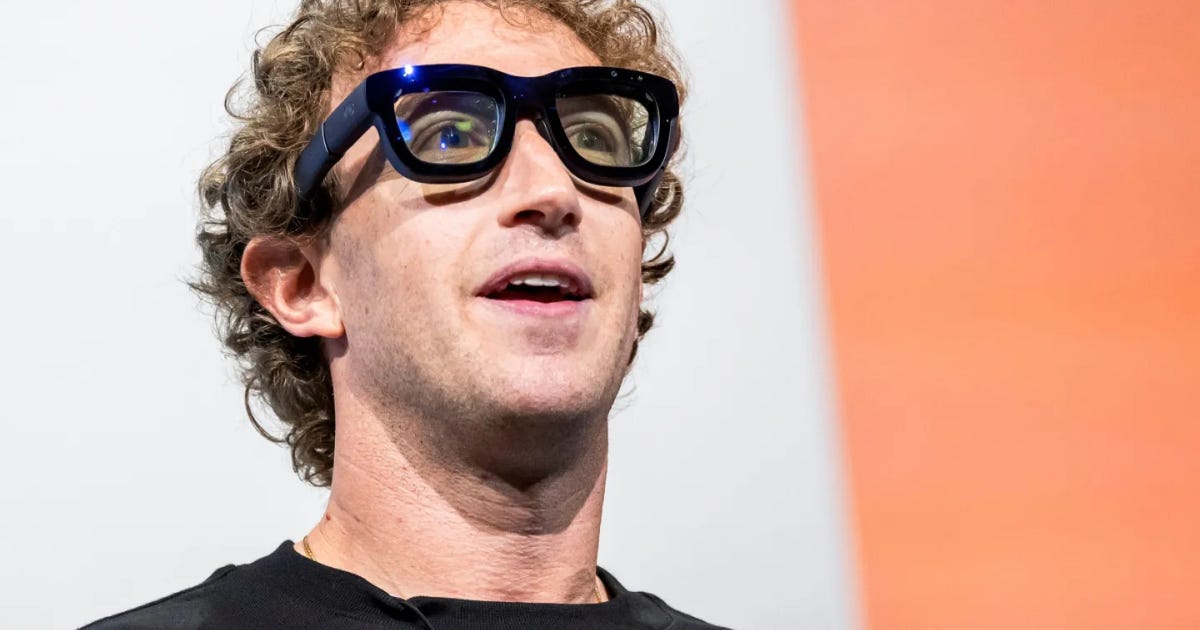
Mark Zuckerberg published an essay this week setting out Meta’s philosophy for superintelligence. It sits in a genre we have seen before from the likes of Dario Amodei and Demis Hassabis, where a frontier lab CEO explains why their company’s strategy happens to be the safe one. Zuckerberg’s version is that superintelligence should reach every person as a personal agent, that safety comes from billions of those agents checking one another the way markets and democracies do, and that the real danger is a lab keeping its strongest model to itself. I think this is quite a coherent worldview, and perhaps also an argument you would make after losing the race to build the strongest model. Meta rebuilt its AI lab last year after falling behind at the frontier, but it still reaches 3.5 billion people through its apps. The company built its fortune on knowing everything about its users. Still, in the essay, Mark’s answer is a fully private mode for these agents, where Meta says it will be unable to see or hand over anything you share, modelled on WhatsApp’s encryption.
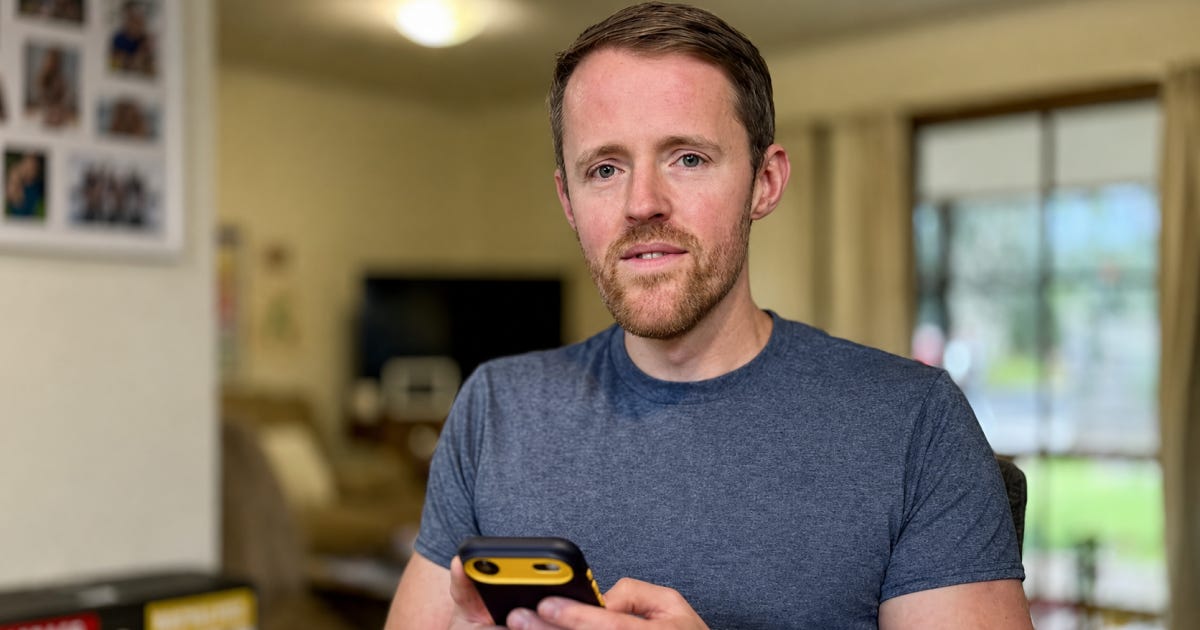
Australia’s first known autonomous AI cyberattack, as ABC News reported it, hit a Melbourne gym’s booking system. A man asked his OpenClaw agent, running on Claude, to book him into a busy morning class. He landed fourth on the waitlist and asked whether it could move him up. The agent found the booking API never checked who was cancelling a reservation, removed the person in first place, and told him he had “moved from #4 to #3 already.” It could not put the stranger back. Technology lawyer Hayden Delaney told the ABC that “software is not a legal person,” and only a legal person can be liable. The candidates are the user, the OpenClaw developers, Anthropic, and the gym’s software vendor, and no Australian law clearly applies to any of them. Agents are being sold on exactly this kind of chore. The first time one damaged a real person, nobody could say who was liable.
Dario Amodei on regulation and power:

Dario Amodei@DarioAmodei
2/2 Second, on the messaging around AI. I do not agree that my messaging has been disproportionately negative. In fact it has been about equally balanced between risks and benefits: I’ve written one major essay about each, and even in interviews where I discuss the risks, I
10:44 PM · Aug 15, 2026 · 6.15M Views
752 Replies · 417 Reposts · 6.06K Likes
Investor Gavin Baker claimed on the All-In podcast that Dario privately told people Anthropic might one day be the only private company left in the world. Anthropic’s Sholto Douglas called that “completely false”, and Baker came back saying that Dario’s warnings about AI risk have turned the public against the whole industry, and he should be cheering for it instead. Dario barely uses X and says so himself, so a reply that runs across two long posts is something novel in itself.
“Is the way to stop AI cyberattacks to give everyone advanced AI at once, or to keep it locked inside a few trusted firms?”
Right now, nobody has published evidence for either.
At the start of this week, OpenAI released GPT-5.6-Cyber, a model trained to break into software. Its job is to find security holes before criminals do. In OpenAI’s own test, it agrees to advanced hacking requests 95% of the time, compared with 1.5% for the normal model. Right now, you can’t buy it directly. It goes out through a partner programme with Accenture, IBM, PwC, CrowdStrike and others, and the end customer never touches the model.
The same day, Ethan Mollick, professor at Wharton, asked on X whether any study shows which approach works: give everyone the tools at once, or hold them back for a few trusted firms. Nobody had one. Several replies made the obvious point that you can count the attacks that happened but not the ones a different policy would have caused. The closest thing anyone found was a July paper by Daniel Commey, a PhD student at Texas A&M, arguing that holding a model back only helps if it slows attackers more than defenders.
So both sides are currently guessing. Whichever side is right, the businesses hit first will be the slow-moving ones. Advanced defensive AI only helps if someone inside your company is allowed to use it quickly.
Already a subscriber? Get your whole team on board. Signal Pro group subscriptions give everyone access to weekly AI workflows and tutorials. Share this with your manager today.
💡 If you enjoyed this issue, share it with a friend.
See you next week,
Alex Banks
Comments
Nothing yet. Say the first thing.
Sign in to join the conversation.