
Under the current prevailing winds, it seems to me that Christianity (construed corporately) has three options from which to choose. The first option is a choice to nurture the roots of the tree it believes itself to be grafted onto. The second would be to join the so-called ‘woke’ technocratic brigade and be destroyed. The third would be to join the Islamic contingent and thus be destroyed. And other choices? Some might argue there is a new-age choice I have neglected. Yet the likelihood of Christianity fusing with witches’ spells, pentagrams, black candles and the like may be taken a priori as ruled out.
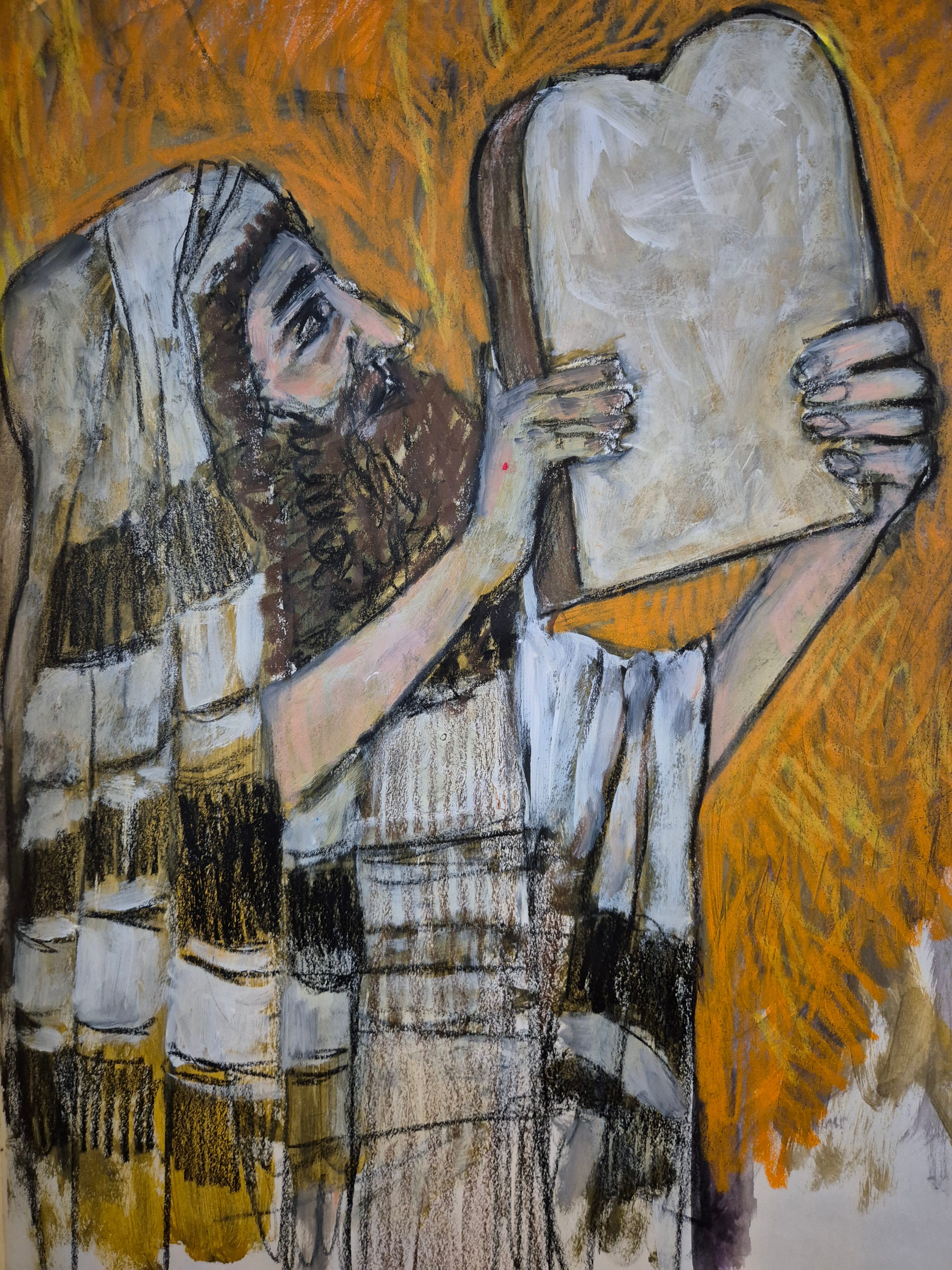
Therefore, given that the first option would require a swerve away from that niggling tendency to malign its roots (because they are Jewish), this stands to be the most difficult choice of them all. I would argue that it is the only feasible course of action left given the various forays into fashionable causes or the retreat from adulthood into immaturity we have seen over the years. Any difficulty will be a matter of pride, meant in the conventional sense. Pride always comes before a fall, and it so happens that we are currently falling into some kind of abyss. Because if ever there is a missing language within the lexicon of churchy inclusivity, that language will be Hebrew, notwithstanding the frequent iterations of key Hebrew words such as ‘Amen,’ or ‘Hallelujah.’ Additionally, all of those Hebrew names, including Jacob (Ya’akov) whose name becomes Israel (Yisra-el). Not to mention the Canaanite (and subsequently) Hebraic shorthand for God (El) nestled into so many Christian names. Think of Amelia, Elijah, Daniel, Elsie, Michael, Samuel, Gabriel, Elizabeth, Elisha, Ellen, Isobel, Elon and the like. Hebrew is the language that must endure and be endured however rarely this is acknowledged.
One example of exclusion that comes to mind is the Discovery Trail created in the reconfigured post burnt out cathedral Notre Dame. The new emphasis is placed upon the languages of Asia and Africa. Conspicuous by its absence however was Hebrew or even a mention of Israel. However, ladies and gentlemen there it is. The olive tree, the tree of Jesse, or even the tree of life, have deep Jewish roots that if attacked would surely result in any Christianised graft withering on the bough. Are we now seeing that in real time? Actually, I think we are.
It occurs to me that Christianity has been snipping away at its own roots for so long now, that the inevitable destruction we now see all around must surely now be coming into view. We now see those alternate choices being made in real time by certain aspects of the body of Christ. Whilst some are thrilled to be stitched into the woke tapestry and joyfully thud the treadmills of technocracy; others find ways to accommodate various Islamic codes. (And one might catch the scent of the current head of the Church of England in that context). If not exactly borrowing directly from the Koran, there will be (at the very least) the tacit acceptance of the disappearance of a public Christian life under some guise of tolerance or inclusivity. The priests and the pastors are forgetting in their secularised stupor that Christianity is itself inclusive and tolerant and precisely on its own terms. Yet ever mindful of the (anti) social media maelstrom, image conscious, media savvy clergy, remain content to infantilise the laity with off-the-shelf platitudes and refuse to rock the trendy boat as it sails as far away from Nineveh as it is possible to do.
It cannot go on like this.
Many have tried to cut the Jewish roots away. National Socialist Germany ached to have a Christianity that was divorced from its Jewish roots. Jesus was thus transfigured into an Aryan Norse god, blonde, blue eyed and emanating from icy white northern climes. Even today, there are some that long to see him as that figure, or something close to it. Others have insisted that the New Testament should stand alone as a singular testament. This can only result in failure. This is because trouble begins as soon as one pivots to the prophecies that cement the legitimacy of crucial Christian claims. Where to turn if not the Old Testament prophets, or even the oft cited ‘fifth Gospel’ of Isaiah? It soon becomes apparent that much of the New Testament forms a commentary upon the Old and refers back constantly to its imagery, poetry and even philosophy. There are aspects of the New that would be senseless without these references. Therefore, the Christian church, having claimed these scriptures as her own to gain credibility with Rome in ancient times, now knows she has no choice but to accept them. Ah, but perhaps she does not love them quite as much as she ought. The entire body of Scripture has been relegated to a kind of ‘warm up’ act before you get to the performance you really came to see. Akin to a support band at a rock concert, you impatiently wait for your idol to take to the stage, that is if you turn up to see the support act at all. And all the while, you look for your own vision of what the support act points to. Yet why not experience the warmup for what it, itself offers? The Old Testament, the Hebrew Bible, is the essential root and branch system of the entire tree. It is literally foundational.
In the meantime, our textual roots seem destined to be regarded as an old relative sitting in the corner, an awkward reminder of your old age to come, the one that is wise yet resented for her wisdom. The one that can sometimes catch you out with one look. Or perhaps we see an older sibling, bruised at being sidelined out of the family story. However one construes the fantasy version of the warmup act, what about taking it off the shelf, dusting it off and starting all over again? (to paraphrase a song).
Church figures have frequently misconstrued the teachings of the Old Testament and even configured some ‘Old Testament God’ as somehow different to a ‘New Testament God.’ The ‘God of the Old Testament’ being mean, aggressive, cruel and unforgiving, one who ‘damns’ you. Whereas Jesus, as the ‘God of the New Testament’ is kindly, forgiving and will save you. This has been explored in modern literature. Harold Bloom and Philip Pullman have been mischievous in their scribblings, splitting both Jesus and God into binaries. Yet wiser theologians such as Joseph Cardinal Ratzinger, (before becoming Pope Benedict XVI) saw clearly the one covenant that binds us all, in his little volume, Many Religions, One Covenant: Israel, the Church and the World. Separating the two testaments would, in Ratzinger’s words, “dissolve Christian identity which is founded on the unity of the testaments.” He goes on to infer that the connection with Israel is vital if Christians are not to comprehend the God of Israel as somehow alien.[1] Whatever arguments are to be had here, if we are agreed upon the precepts of monotheism, then there is, and can only be one God. (The Lord our God, the Lord is One as the ancient Shema prayer puts it).
Do we need reminding that essentially, all we have are the texts that have come down to us? And there are many versions. We have a range of authorised and unauthorised texts. Given the codes and mores of different denominations, there is no ‘one’ version of ‘the’ Bible that we can point to. Added to this, when newly discovered fragments and scrolls emerge from Genizahs and caves, they have the potential to alter everything. That, to some, is very frightening. But why be afraid? Have you no faith?
Notwithstanding the complexities, it is important to construe the Bible as a library rather than a book. As such, it is not a repository of facts per se. Rather, it is a range of books that teaches wisdom in all kinds of ways, making use of narrative, stories and parables. It is multi-generic and polysemic. What I mean by that is, like modern books and films, there are different genres or types of text, and lots of ways to interpret meaning.
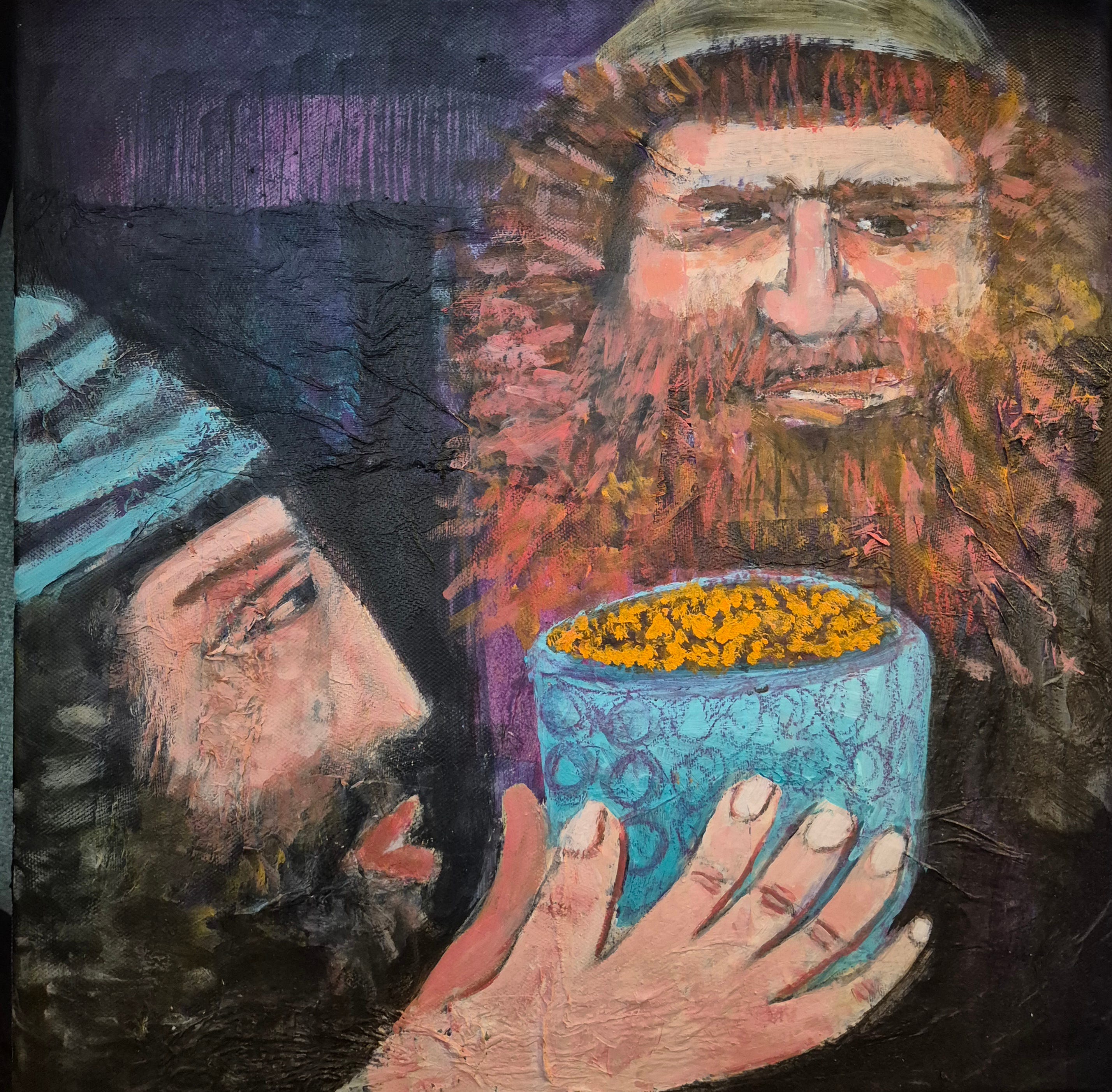
Of course, there are instances when facts as such do make themselves known. And a key one is that Jesus was fully Jewish and totally immersed in his Jewish existence. His teachings are stitched right into the fabric of 1st Century Jewish life and remain consistent with Jewish, and Pharisaic customs to boot. There is still a debate to be had about whether or not Jesus was himself a Pharisee. Whether yea or nay, there is scholarly consensus at least that his approach was highly consistent with their teachings. He believed the same things as they did, in particular concerning the afterlife. Awkward for the clergies, but there you are.
Additionally, Jesus sometimes prioritised Israelites over non-Israelites as in the example where he claimed to have only been sent to the lost sheep of Israel (Matt. 15:24). Later in Matthew’s Gospel we understand that the outgrowth of his movement is to be formed from gentiles, the nations, in what is referred to as the ‘great commission.’ Jesus’s disciples are told to go out into the world and “baptise them in the name of the Father, Son and Holy Spirit.” In this we see the genesis of a Judeo-Christian entity for once again, the directive is to “Go forth and multiply.”
Moreover, the idea that Jesus was the Messiah is a claim that cannot exist outside of a Jewish context. Essentially, there was no other type of ‘messiah’ although there were others who had made a claim to be the Messiah and been put to death by the Romans for it. Naturally, there was no Roman ‘messiah’ figure, although Caesar was considered to be ‘son of God’ which might explain some of the New Testament’s linguistic configuration of Jesus.
It occurs to me that even today, many Christians would have difficulties in explaining what a ‘messiah’ actually was or is. It is long understood in the public domain that the messiah figure as foretold was not meant to be anything other than a human being who would redeem Israel and free her from oppressive rule. The irony being that the oppression in question was coming from the Roman occupation, headed up by a supposed ‘son of God,’ in the form of Caesar. This aspect has been written about in much detail by the likes of Geza Vermes, and others. Notwithstanding the critical approach here, many find Jesus’s claim of messiahship convincing, yet many do not. It is the vitality of the debate in some respects that animates faith. We are not, after all, the anonymous builders at Babel, who not only share a language, but ‘speak the same words’ and therefore think the same thoughts.
The upshot of all this might be to conclude that although on a surface level, Jews can get along quite nicely without the additional texts of the New Testament, but Christians cannot do without the Old Testament. This may account for some Jewish scepticism for the notion of a Judeo-Christian tradition; and here we could point to Arthur Cohen and Jacob Neusner whose writings make a strong case against such a ‘tradition.’
The principal arguments against the notion of the Judeo-Christian tradition have centred upon such aspects as different philosophical outlooks and the status of the ‘messiah’ figure. (On that one, interestingly both parties anticipate some sort of ‘future appearance’). Arthur Cohen makes these points in addition to citing what he regards as the political ‘union of convenience’ that brings the two parties in line when faced with a common challenge. His concern is that Jewish identity will become subsumed into a Christian framework. Assimilation into the dominant majority threatens Jewish survival according to his thesis. He argues for respectful co-existence making the point that this is all one could hope for.[2]
The problem here is the word ‘tradition’ which Cohen assumes to refer to a continuity or common identity where (he says) there is none. For Cohen, the recourse to the phrase Judeo-Christian is a social and political ruse that is customarily mobilised when a threat emerges. Tradition, he argues means something different for each party, and on this, he may have a point. For Christians, the concept of tradition contains the seeds of the future eschatological myth, and for Jews, tradition is about the historical, the story, history, that brought us here, or quite simply, one might just say ‘the past.’ Arguably, what Cohen resents is the part assigned to Jews in the Christian eschatological end of times narrative. However, no matter how irritating it might be to find yourself cast in a drama for which you had never auditioned, this does not negate the deeply intertwined connective threads that bind the two parties together.
Rather than representing a real historical tradition, Cohen regards the ‘tradition’ as a ‘construct’ — a kind of overlaying (or gloss) that smooths out dissonance but loses the “sinew and bone of actuality” of the real lived difference and conflict. He outlines the imbalance of power between the mighty Christian presence and Judaism, forever cast to play a supernatural role on Christian terms rather than having its own identity. Moreover, Jews and Christians are obliged to reject each other’s version of history and theology, which further underpins his general argument. Given that Cohen’s renowned book was first published in 1957, only some twelve years after the end of WWII where one third of world Jewry had been extinguished by the overwhelming violence of pagan infused forces, we must read his arguments in that context.
I now turn to Jacob Neusner who develops Cohen’s critique of the Judeo-Christian concept. Neusner emphatically disavows any common ground between what he describes as two completely different religions notwithstanding the texts held in common. This is because these texts are interpreted so differently from each other that alongside other differences and historical animosities, there can be nothing substantive in common. His argument rests on an historical claim that maintains that even from the beginnings of the two traditions, the relevant communities had very little to do with one-another and as such there has never been any meaningful shared dialogue.[3] In fairness, this is true enough factually. However, the various factions of early Israelite culture and emergent modern Judaism also differed starkly from each other, as do later Christian traditions that remain markedly different in outlook, interpretations and practices. Neusner is correct when he points out that the Old Testament is interpreted via the prisms of the Talmud and the New Testament respectively. However, some forty years after his book was written, we might note in our postmodern times that the Talmud as a body of wisdom is far more accessible to Christian audiences, even if access is limited to condensed versions such as Everyman’s Talmud or semi-complete versions in the vernacular for a few pounds on kindle where a typical Amazon search brings plentiful results. Likewise, the New Testament is less of a mystery for Jews; and the possibilities for spiritual development and discovery are opened up, not to mention the healing of old wounds.
Interestingly, there are numerous world class Jewish scholars who have immersed themselves in New Testament study – only some of whom have converted to Christianity. Notwithstanding, the overriding reason given for this interest is that, well, the New Testament is so Jewish. New Testament study is frequently understood in scholarly circles as a means to comprehend Second Temple Judaism, and the first century after the Temple’s destruction. It is possible then to see New Testament developments as a continuation of the story that is set out in the Old Testament. There are important caveats of course. One of which must be the curious incongruence of Jews such as the writer of the Gospel of John taking a distinctly anti-Jewish tone, whilst writing the story of significant characters who were themselves all Jews, namely Jesus, his family, his disciples and most if not all of his followers.
Notwithstanding some of that contradictory strangeness (which has been addressed in scholarship), the entire tradition is intertwined in a way that resembles something like a knitted garment. I suppose what I am arguing is that in the attempt to retrieve the wool for the sake of Christian separateness from Judaism, or vice versa, what is a beautifully fashioned garment just falls apart when the threads are unpicked and pulled away. The garment as a garment was worth having, but a disintegrated one is difficult to put back together and is thus rendered as nothing more than a worthless tangle.
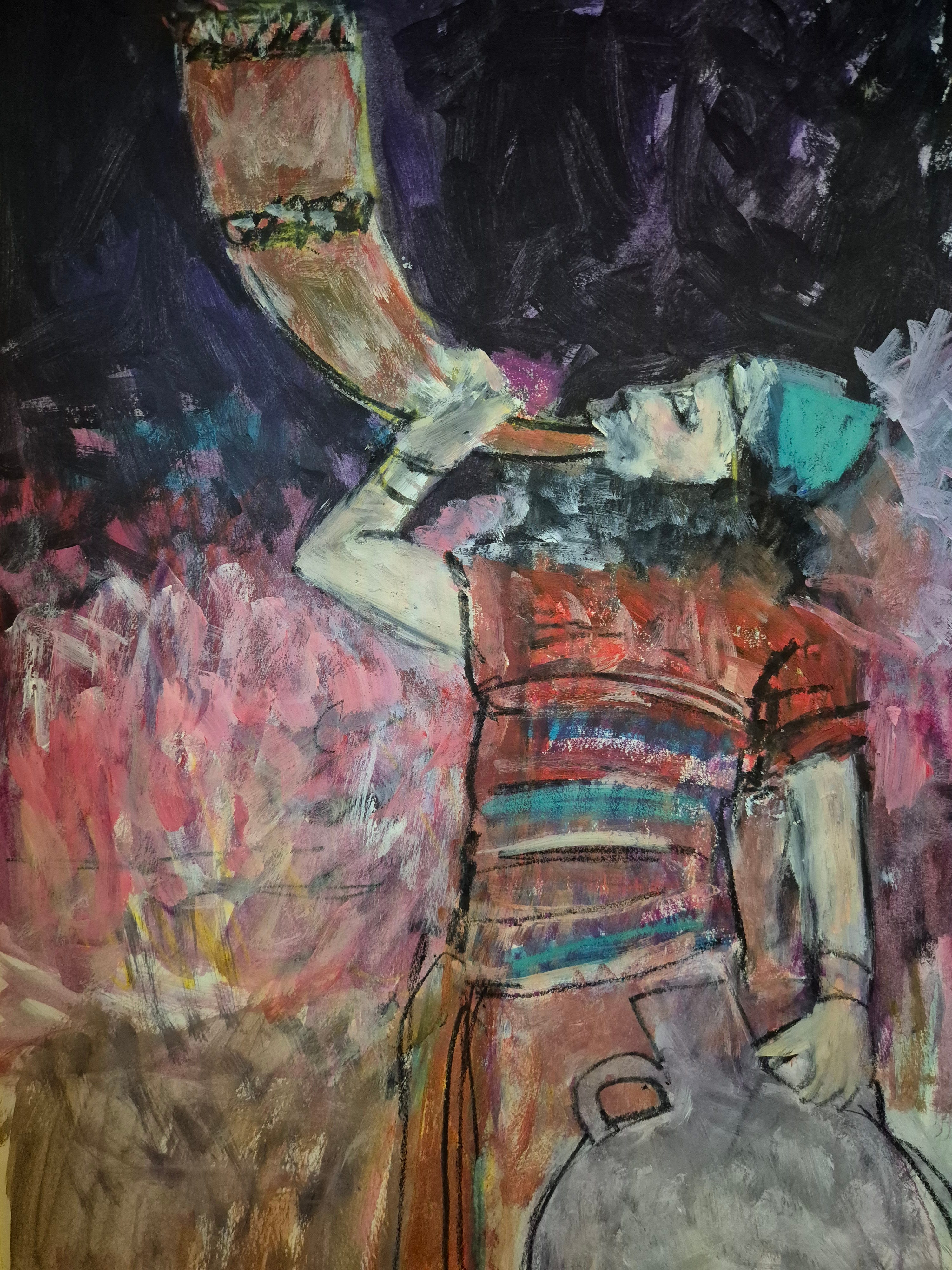
Of course, the garment to which I refer by means of analogy merely stands in for the various Biblical scriptures which have themselves become, over time, knitted together. The shared nature of the scriptures is what gives salience to debates and disagreements between Jews and Christians, as Richard Lim has argued in his book on Disputations.[4] Interestingly, as the western history of scholarship shows, debate and argument are vital ways to engage with scripture and are frequently understood as healthy mechanisms for arriving at truth. The Talmud itself is a long record of discussion, argument and debate between the Rabbonim taking place over centuries. One might even argue, that studying, questioning and discussion over scripture can itself be a form of worship. Perhaps this is one form that can be shared across faith divides. At any rate, the idea that our understanding of scripture is somehow ‘settled’ should be strenuously questioned. Nothing taken that seriously can ever be settled. The texts need to be studied and wrestled with in every generation. The lessons for every generation need to be learned and where necessary, unsettled in order to do this. It must be apparent now that in the modern world, we have neglected to do the wrestling and as such, we witness the garment being pulled apart and see the old tree of life showing signs of significant neglect.
Parts of the traditional Christian narrative position Jews as enemies in a curious swerve away from Hebraic pathways. In my view, this has always been mistaken and at any rate, clearly not working anymore. In the current prevailing winds, we notice the slide into woke, technocracy, or indulgence of Islam, or simply the ‘fashion’ of modernity. And now all compass points find reasons to censure the Jews. This does not bode well for the religion that emphatically calls us to love one’s neighbour. Who is my neighbour? the parable intones. If when discovering that the ‘other’ in question is even closer than a ‘neighbour,’ that it is in fact the long-lost sibling that has been thrown in a bloodied pit, or the one that has not been welcomed back into a father’s arms, what is revealed is little more than a badly construed reiteration on the part of many Christian clergies. And we might hear the echoes of Cohen and Neusner at this point, for what they hear is: my neighbour is anybody and everybody – except the Jews.
Given the many incremental threats to faith in a generalised sense, death by a thousand secular cuts weakens what was once our greatest strength. The negative reaction to the burgeoning resurgence of Christianity we see as a result of Jordan Peterson or Tommy Robinson’s efforts is both feared and scorned. It is as if everything is settled, so what else is there to learn?
It is time to reframe the narrative to include Jews and Christians as occupying different times and spaces of the one covenantal journey and agreeing to differ along the way as necessary. Where Christians gain a sense of satisfaction in their belief that Christianity completes Judaism, it might not have occurred to some that Judaism, likewise, completes Christianity in turn.
One might additionally make the response that both Judaism and Christianity are rooted in a deep sense and consciousness of history. No more so than the emerging first century off shoot of Judaism (as we have come to know it) in the form of the early Christian attempt to persuade Roman authorities of their deep historical roots as embodied in Hebrew scripture. Christians, as already outlined, are completely reliant on the same body of texts that additionally underpin their own New Testament corpus. The New Testament in turn relays much about Jewish life in the first century and so has proven to be worthy of engagement on the part of Jewish scholars. Moreover, the extent to which Judaism has been influenced by Christianity is frequently overlooked. Rabbi Michael Hilton has undergone extensive research that demonstrates a number of key Jewish practices that have emerged as a result of interacting with and alongside Christianity.[5] This dovetails with what we now know in that Judaism and Christianity are rather more like siblings than the parent and child they are so frequently construed to be. Both have a parental father figure in the form of God intertwined with ancient Hebraic culture. And, in reality, they have grown up alongside each other, and all parties have thus treasured those Hebrew scriptures.
Christians look forward to a time when they trust Jesus will return, just as Jews look forward to the coming of the Messiah. No, these are not the same things and have very different meanings for both parties, agreed. However, the extent to which both share the love of their Father God along with the concept of a messianic age when all will be judged and set right does bind both with a common thread. The roots may be hidden, but they are vital, nevertheless. The influence of each party has gone both ways, no matter how counter-intuitive this may seem. Ultimately, we can and should place more emphasis upon what is held in common.
Additionally, there are Jews who have valued the combined tradition. Abraham Heschel, having narrowly escaped death at Auschwitz, writes in the mid-1960s of the German National Socialist rebellion against the Bible and the God of Abraham. “Realizing that it was Christianity that implanted the attachment to the God of Abraham and involvement with the Hebrew Bible in the hearts of western man, Nazism resolved that it must both exterminate the Jews and eliminate Christianity and bring about instead a revival of Teutonic paganism.” He goes on to explain that Jews and Christians are “called upon to work together. None of us can do it alone.” He describes anti-Semitism and anti-Christianity as synonymous. He calls upon people to re-discover the ‘radiance’ of the Bible, and not in terms of ‘information’ but rather “an openness to God’s presence in the Bible.” It is therefore, not about rules and practices as such, but the “divine reality concerned with the destiny of man…(and) whether we are alive or dead to the challenge and expectation of the living God. The crisis engulfs all of us.” Being alienated from God, he asserts, is upsetting for Jews and Christians alike. In his wide ranging and thoughtful account, Heschel acknowledges the differences but stresses the importance of the focus being upon the elements held in common. Although the challenges of the 1960s may seem a lifetime away, there are comparable, if not worse challenges afoot in today’s world.[6] And the Hebrew Bible is no small thing to have in common after all.
Moreover, there has been an increase in respectful Christian engagement with Judaism. One notable example is Joseph Ratzinger, Pope Benedict XVI, whose own history of life in Nazi Germany has clearly informed his politics and theological outlook. Benedict’s engagement with Jacob Neusner’s A Rabbi Talks with Jesus in part of the acclaimed trilogy on Jesus, is respectful and absorbing. It is detailed and generous in spirit in a way one could hardly have conceived a Catholic Pope to have been towards Judaism in earlier times.[7] Neither Rabbi nor Pope will completely agree with one-another’s position, there are no surprises in that. However, the importance each places upon the other’s freedom to have his point of view and context, and to engage with it is a central element of necessary dialogue.
This encounter with the rabbi has to be contextualised within Benedict’s wider concerns about the profound attack upon western civilisation he has frequently discerned. The spiritual crisis befalling the West as it trudges ever onward towards a secularised techno-hubris has in part been fuelled by the assumption that it is always religion that underlies human conflict. Therefore, the misguided conclusion is that we must have less of it and more technocratic rationality. Yet it was a hubristic hyper-rational, technocratic thrust into modernity that brought the National Socialist project into being. Ratzinger frequently warns of the dangers of this tendency in his writing. His astonishing erudition and generosity of spirit shines out from the small volume, Many Religions – One Covenant, as he sets out the starting point for his thoughts:
“After Auschwitz the mission of reconciliation and acceptance permits no deferral.”[8]
Suffice to say at this point, that the exploration that follows in the short volume recognises the inextricable link between Judaism and Christianity, bound together with the revelation, promises and spirit of the Old Testament.
There are many high-profile Christians and Christian scholars such as Peter Enns and Scott Hahn who recognise the importance of Judaism and the Hebrew scriptures as foundational for Christianity. The oft cited claim is that things make more sense and become deeply enriched when understood in a Judeo-Christian context. In the opposite direction, we have prominent Jewish scholars such as Amy Jill (AJ) Levine and Marc Zvi Brettler, who have engaged seriously with the New Testament, further cementing a growing sense that the two ‘testaments,’ or bodies of scripture, in a very real sense belong with and are connected to both Jewish and Christian traditions.
Conclusion
The case for a Judeo-Christian tradition as such is bound to be influenced by contexts. Joseph Cardinal Ratzinger writes: “The history of the relationship between Christendom and Israel has been drenched with blood and tears. It is a history of mistrust and hostility, but – also praise be to God – a history marked again and again by attempts at forgiveness, understanding and mutual acceptance.”[9]
The reluctance to accept the idea of a joint ‘tradition’ is well accounted for on both sides. It must be said that there are strengths to the arguments as outlined principally by Cohen and Neusner. However, the many encroachments upon human freedom in their many forms, along with a generalised ignorance of the treasures contained within the body of work that has come down to us, mean that in today’s climate, there is no time to waste in strengthening the ties that bind in mutual acceptance and love. The entire tradition is ours as Westerners and forms a treasure that is both Jewish and Christian.
As Dan Burmawi asserts, “(t)he Judeo-Christian ethic is not two separate traditions artificially stitched together. It is one story, one covenantal thread. It begins with Israel’s God, revealed in covenant, law and prophecy. It comes to fullness in Christ, who universalizes that covenant and carries it to the nations. And from that root grew the moral architecture of the modern West: law, liberty, equality, and justice.”[10]
The importance of our scriptures, the many achievements arising from their wisdom, not to mention the interaction between Jewish and Christian parties is testament to an often fraught but enduring relationship. This surely amounts to the Judeo-Christian tradition as an historical reality grounded in and discovered through scripture and relationality.
In closing, it seems appropriate to return to that image of the tree of life. The outgrowth from those ancient Hebraic roots has resulted in fulsome branches and greenery. However, this lushness now appears to be at risk of turning brittle and dry. In the light of threatening developments from many sides, there is no better time to rekindle the light, to treasure the ties that bind.
We must remain bound together in a Judeo-Christian tradition quite simply because we are deeply indebted to it for all that we have and are. In my view, we have never needed the Judeo-Christian tradition more than we do right now.
[1] Joseph Cardinal Ratzinger, Many Religions – One Covenant: Israel, the Church and the World, San Francisco, Ignatius Press, 1998, 18.
[2] Arthur A. Cohen, The Myth of the Judeo-Christian Tradition, New York, Schocken Books, 1957 (reprint 1971).
[3] Jacob Neusner. Jews and Christiana: The Myth of a Common Tradition. London, SCM Press, 1991.
[4] Richard Lim, Public Disputation, Power & Social Order in Late Antiquity: 23 (Transformation of the Classical Heritage), University of California Press, 1995.
[5] Michael Hilton, The Christian Effect on Jewish Life, London, SCM Press, 1994.
[6] Abraham J. Heschel in Leo Baeck et al Ed. Fritz Rothschild, Jewish Perspectives on Christianity, New York, 1996, 310.
[7] Joseph Ratziner, Pope Benedict XVI, Jesus of Nazareth: From the Baptism in the Jordan to the Transfiguration, London, Bloomsbury, 2007, 103-127.
[8] Joseph Cardinal Ratzinger, Many Religions-One Covenant: Israel, the Church and the World, San Francisco, Ignatius Press, 1998. 22.
[9] Ratzinger, 1998, 21.
[10] Dan Burmawi, Islam, Israel and the West: A Former Muslim’s Analysis, USA, Gerasa Books (Kindle edition), 2025,155.
This essay forms a response to Chris Bateman’s challenge to me to defend the Judeo-Christian tradition - a concept with which he has expressed some difficulty. I don’t suppose I will have persuaded him, yet I hope he appreciates the sincere engagement I have made toward the question.
Thank you for reading. Please feel free to comment and share. If you find my writing interesting and worthwhile, I would be glad to receive one-off donations through the Buy me a Coffee scheme. Do subscribe if you haven’t already, subscribing alone supports my work.
https://www.buymeacoffee.com/SidewaysThm
I also edit the New Culture Forum Locals | Substack which you might also find interesting and enjoyable!
Comments
Nothing yet. Say the first thing.
Sign in to join the conversation.