
This summer, I’m guiding you through a tarot takeover of my book, THE SHADOW PATH. Each Monday, I’ll pair a key theme from the book with a tarot archetype to share fresh insights on shadow work (and play). Today, we’re diving into Week Seven: Free Your Shadow with Judgement, and I’m sharing my notes on how this card invites us closer to the Shadow below.
These brief Monday field notes are free to read. To deepen your journey through the book with access to a private chat + live & recorded Sunday journaling sessions, become a paying subscriber to The Shuffle.
Last week, we listened to our shadow’s voice and tended to its needs. In Week Seven of our tarot-informed journey through The Shadow Path, we’ll give ourselves permission to safely live our shadow desires and questions in the world outside.
Our guide this week is Judgement, a card about breathing life back into buried parts of the self.
Need to catch up? All past weekly resources and recordings can be accessed via the Summer of Shadow Playlist here.
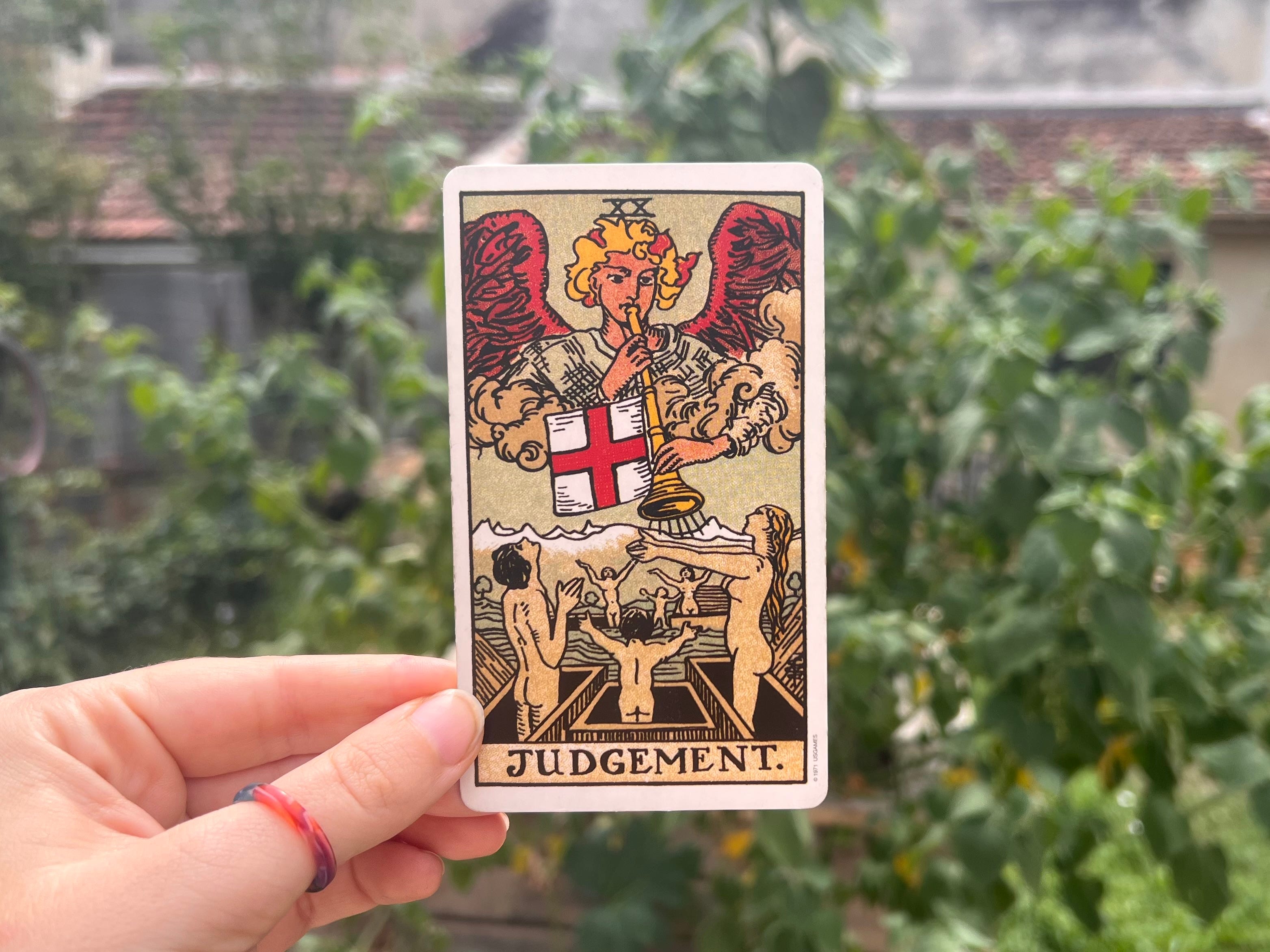
One of the most common reactions I get from clients when I pull the Judgement card is a wince. “Well, I obviously don’t want that,” people have said. What is that, exactly, I ask? The name of the card flies off their lips. “Judgement.”
But, as you might already know, this card isn’t judging you, or suggesting that other people are. Its name comes from the Christian notion of “Judgement Day”, where the faithful are resurrected after good triumphs over evil.
It’s true that in the Christian story, the resurrection follows God's decision on counts as faithful, but the imagery in the card rarely captures that moment of judgement. It focuses instead on the moment of rebirth. Its purpose isn’t to say: have you been good? Its message is: what’s good never really dies.
What’s good can come to the surface again, even if we buried it. Even when we thought it was gone forever.
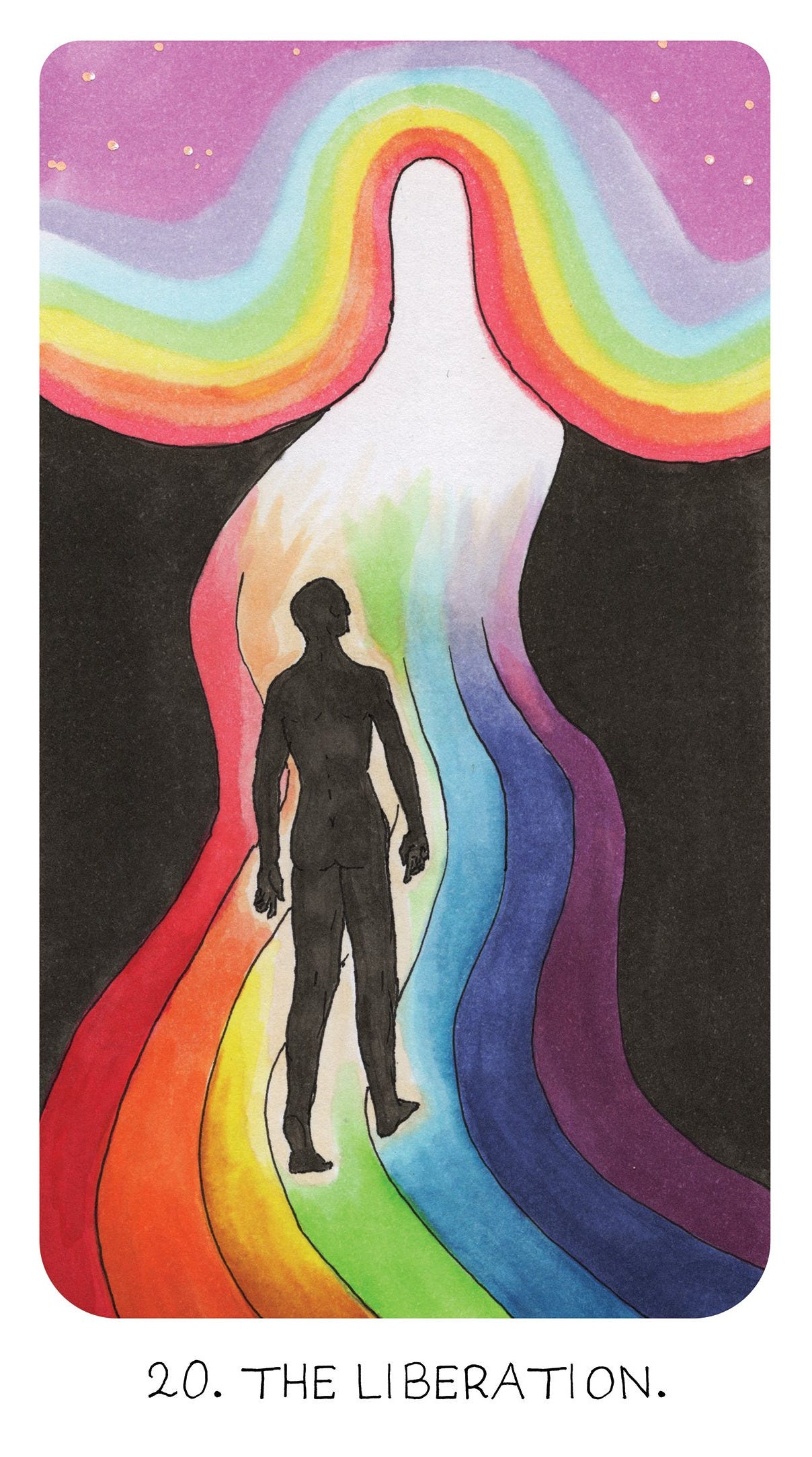
As we learned in week one of our Shadow Path read-along, names matter. “Shadow” may imply something negative, until we think about its wider context, and play around with calling it by names that feel true to us. This goes for the Judgement card, too. The word judgement itself can mean discernment, and can apply to trusting our own instincts about what’s good for us, instead of allowing external judgements from others to dictate how we live in the world.
Some decks, including the Journey Tarot pictured above, Rachel Pollack’s Shining Tribe Tarot, and the Aya Takano Tarot have given the card new names that speak to a more expansive interpretation of the card. In these artists’ hands, the card becomes Liberation, Awakening, Revival.
It’s in the spirit of Liberation that we come to the card this week.
Prompt: What would you rename the Judgement card?
For me, Judgement has always been a card about recovering what’s been buried.
When I started to explicitly think about the role of Shadow work in my personal practice, it was Judgement I thought of, and it’s a card that still, whenever I draw it for myself and clients, prompts me to say: “aha, there’s something buried that wants to come out.”
The activities in Week 7 of The Shadow Path are designed to help you breathe life back into the parts of you that have been buried in shadow.
I love the symbol of the angel’s trumpet in Pamela Colman Smith’s version - there’s something so powerful about imagining its song calling the figures out of the ground and back to life.
Last week you opened yourself up to hear your shadow’s voice, but this week, you’re singing back to it, inviting it to join you on the surface.
When I talk about freeing your shadow, I’m talking about giving those parts of yourself that have been neglected, shamed, or repressed or unexplored space out in the open. Here’s an invitation to return to things you used to love, want, or spend time with that, somewhere along the way, you convinced yourself you couldn’t have. Make the art even if you’re afraid it’s bad, go to that workshop even - especially - if you’ve got no one to go with, wear that bold outfit that’s been languishing at the back of your closet, tell that secret you’ve been keeping to someone safe.
What I’m not talking about is indulging violent or harmful impulses. This week isn’t carte blanche to stop smothering an itch to punch your brother in the face.
Rather, it’s about continuing the work of hearing your shadow’s voice and finding ways to validate and regulate the feelings and desires it brings to the surface.
Don’t punch your brother in the face. Do journal about the experience of feeling like you want to, share the feeling with a friend so that you’re not silencing yourself, write a play about someone who does punch their brother in the face, or try any number of constructive ways to let your shadow’s voice be heard instead of pushing it down and shaming yourself for having a feeling at all.
Tip: If you only do one exercise from The Shadow Path this week, aim to complete “Shadow truth or dare”
If it feels awkward to let your shadow out into the world this week, don’t close back up. Resurrecting lost parts of you is awkward - it may not flow immediately. Those things that have been long hidden may struggle to find their footing, may cringe away from the light of day.
Your work is to allow for the awkward transition. To show your shadow - and yourself - grace as you navigate the world together.
Judgement is close to the last - but not the last - tarot card in the Major Arcana sequence - you aren’t meant to have it all figured out quite yet.
Tip: Check out different versions of the Judgement card from your own deck collection, or use my favorite resource of all time: Comparative Tarot. Which version best captures the unburying that’s happening this week?
Join me live on Sunday, August 16 at 7pm UK / 2pm Eastern / 11am Pacific for a tarot journaling event where we’ll connect more deeply to our Shadows through an exclusive Judgement-themed Shadow spread.
Access to our private Telegram chat
A companion workbook with bonus spreads for reflecting on each week of the journey
A discount code for my limited edition Summer of Shadow reading
Comments
Nothing yet. Say the first thing.
Sign in to join the conversation.