
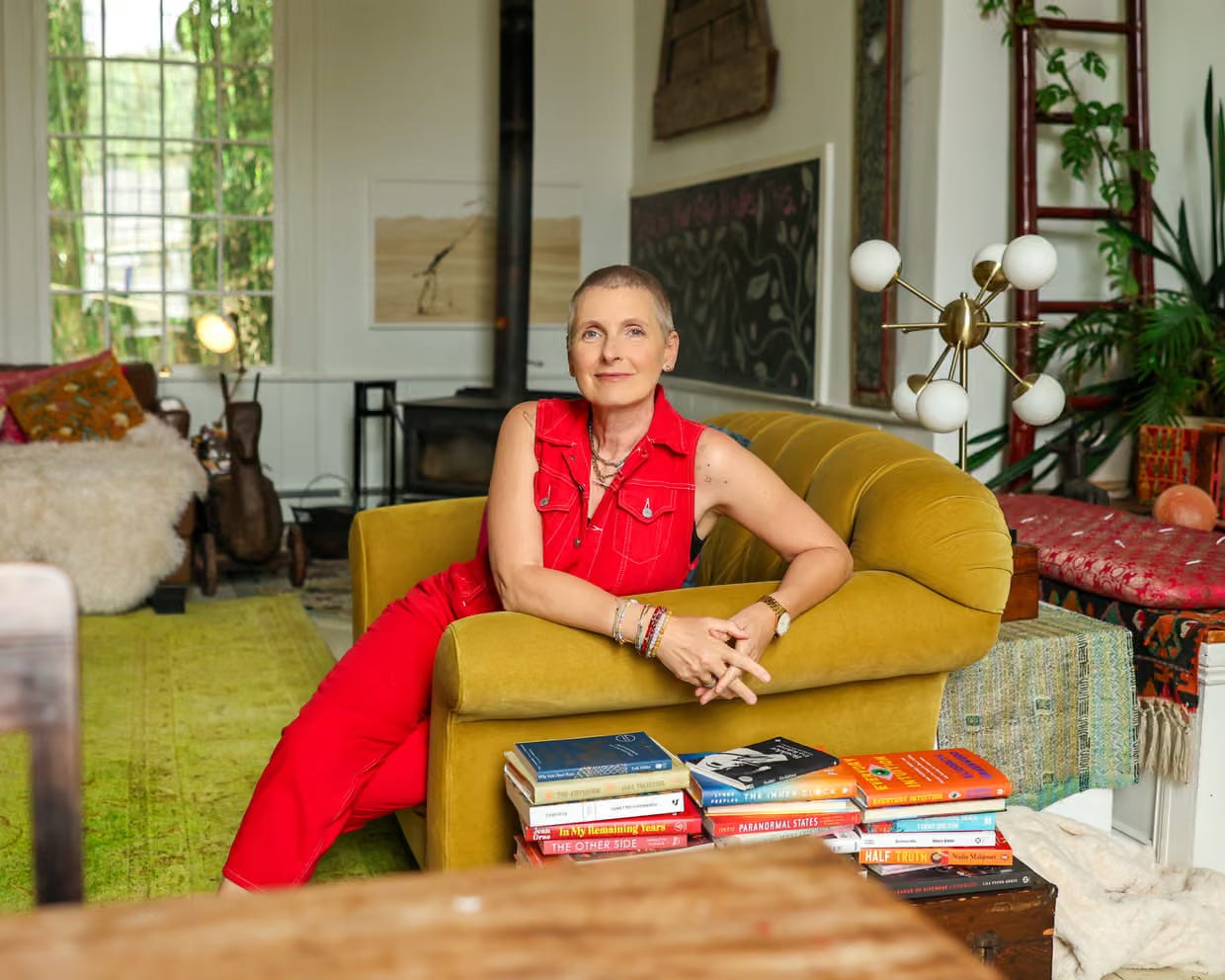
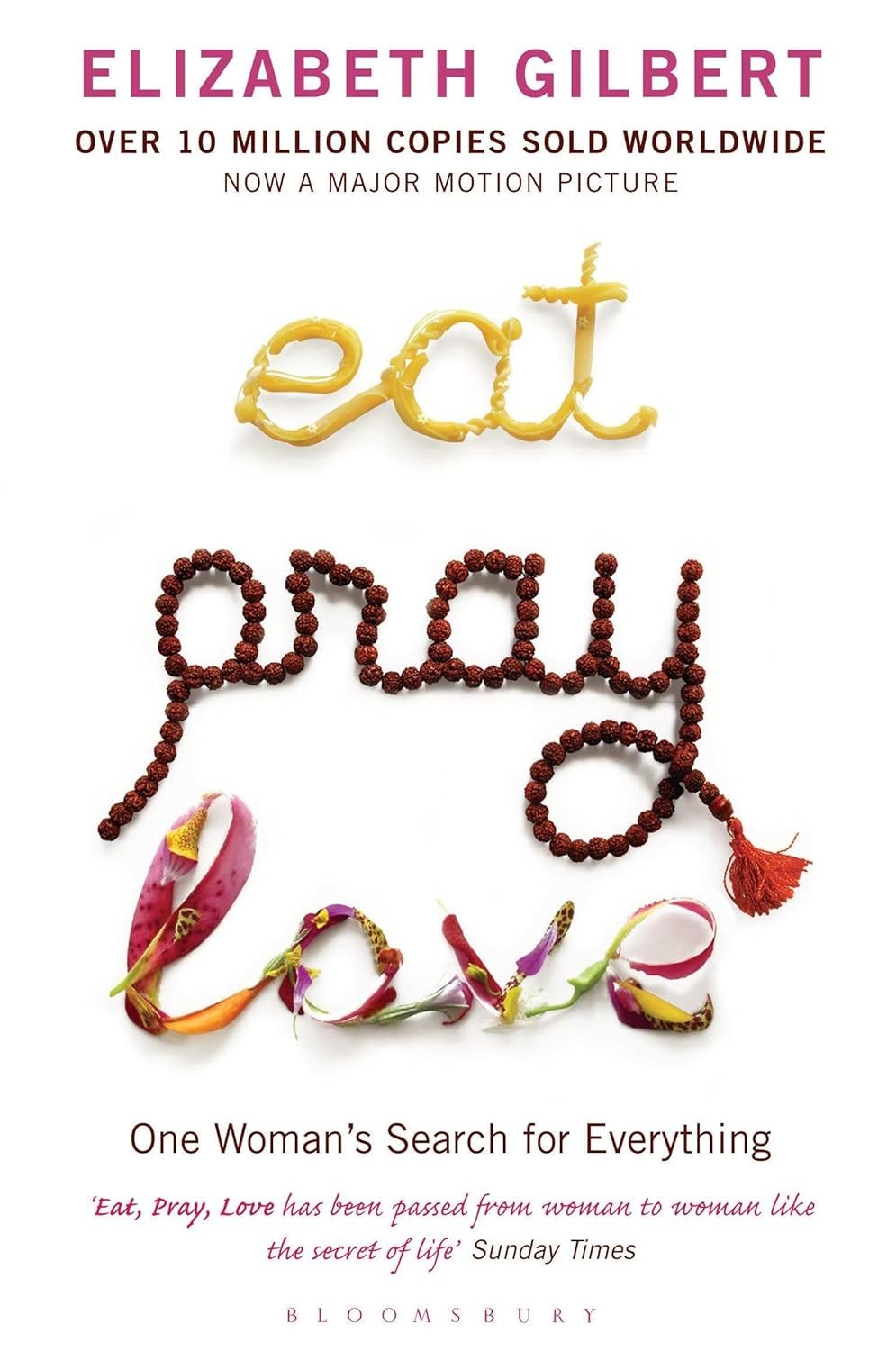
Back in February, on the 20th anniversary of the book that changed her life, Eat Pray Love, I sat down with Elizabeth Gilbert. We talked about both the impact of that book - on her life and the life of millions of women around the world who were looking for ‘a permission slip’ to reclaim their lives - and her latest memoir, All The Way To The River.
In true Liz style, All The Way To The River could hardly be more candid. Whether talking love, sex, addiction, creativity, control, cosmetic surgery, you name it, Liz practices radical - even brutal - honesty. With no one more so than herself. And the truth is, when the book came out in hardback last Autumn, plenty of people couldn’t get on board. Such uncompromising honesty tends to make people uncomfortable. It makes them look at themselves in a way they’d often rather not. And the best way to deal with that, as many of us know, is usually to shoot the messenger. Without stopping to think about the impact that might have on the messenger.
Scroll forward six months from our conversation and the paperback of All The Way To The River is published today in the UK (29/9 in the US), so it seemed like a good time to revisit our conversation and look more closely at some of the things Liz has to say about her ultimate learning decade - her 50s.
[This is an edited version of the conversation I had with Elizabeth Gilbert in February 2026. You can listen to the whole seventy minutes here.]
Sam: I just realised that today is the 20th anniversary of Eat, Pray, Love, isn’t it? 16 February 2006.
Liz: Oh, thank you for reminding me. I knew it was this month, but I hadn’t been attentive. Oh, that kind of makes me want to cry.
Was there a moment, after Eat, Pray, Love had been published, when you realised, this is not just a book publication, this is something else? This is life changing - for me, but also for thousands, millions, of others.
Well, it was a slow burn, because it didn’t do anything particularly special when it came out in hardcover. Actually, I shouldn’t say that because it did something very special. It hit the New York Times bestseller list for one week on the extended list. I think it was number 17 or something, but that was a huge deal for me, because it was my fourth book. I remember my editor calling to tell me and it felt like the pinnacle of my life. I remember saying to him, ‘does this mean that I’m a New York Times bestselling author - and I always will be? You can just put that on all my books?’ And he was like, that’s exactly what it means. It’s such a big deal. And then it just kind of drifted away.
But something was happening during that year between the hardcover and paperback publication. I was getting these emails sporadically where people were saying the same thing: ‘I just read the first chapter of your book, and it has already changed my life’. Or ‘I’m two chapters in, and I had to stop reading and write you this note to tell you that this book is going to change my life’. I found that, and still find that, really strange. Imagine interrupting your reading to write a letter to the author when you’re 30 pages into a book. It’s something I had never heard of before or since. So I guess there was an awareness that the book was having a very strong and immediate impact on these women. But it wasn’t until it came out in paperback that, literally, one day to the next that run started, that phenomenon, of what the book became.
How did it feel to realise that you were never going to be able to live a small life ever again?
I’ve never been that interested in living a small life to be honest! The person who went on that Eat, Pray, Love journey wasn’t somebody who was interested in living a small life. And moving to New York when I was 18 indicated that I did feel that the world had something bigger to offer than the small rural community that I grew up in. And, in a way, every decision that I’ve made, until very recently, has been about being in the world in a really big way. Even every love story that I’ve had has has been like, I want this to be the great, epic love story, you know?
Eat Pray Love created this capacity for me to be a financially independent female artist. I cannot overstate how glancingly rare that has been in history
Now I’m in a different phase. I’m 57 now and I’m looking for a smaller life. But it did change my life, forever. And there’s an assumption that people often make that that was a negative experience. And I want to say, although there was some adjusting that I had to do, it was an overwhelmingly positive transformation. Foremost of which was that it created this capacity for me to be a financially independent female artist. I cannot overstate how glancingly rare that has been in history, and how cognisant I am of that; for a woman who is a creative person to be able to support her own creative endeavours. I never had to have a day job again after that. I never had to work at a magazine again. It has supported me and it’s enabled me to take huge risks creatively. I felt that it’s almost like an obligation, although that sounds like too big of a word.
But I think the appropriate response as a female artist to that level of financial security is that one should swing hard and take really, really big risks because I can. And so I’ve done that, and I’ve used the legacy money of Eat, Pray, Love, to continue to do that. It’s enabled me to help a lot of other women artists and create space for them to work. It’s helped a lot of women, but me first, you know?! Even before the book came out, it had already helped me, but it continues to serve women. That book just continues to serve women. It’s incredible and I’m so grateful to it. So whatever little inconveniences might have come with it are far overshadowed by the grace that it’s given me and others.
I’ve interviewed hundreds of women and it’s so rare for anyone to really talk - voluntarily! - about money. To a certain extent that’s because women historically have less of it. But also, I think, a lot of women feel like, if they do have it, they should pretend they don’t. And it’s money that gives you the agency to take risks, whether that risk is leaving a relationship or writing a book that’s going to give your publisher a heart attack…
And your family! Truly to be able to risk familial censure or public shaming. It’s true. My friend, the novelist Ann Patchett, is the most open person that I know, about money and earning and talking about it really openly. She always says people will tell you the most intimate details about their sex lives and never, ever mention money. They will tell you the most shameful things they have ever done. And, whatever one’s relationship with money is, as a woman, it’s incredibly formative. It comes with fear, it comes with freedom, it comes with shame, it comes with complications. But it’s a big subject for people not to be talking about. I feel like it’s part of my gratitude to the millions of women who bought my book and gave me that money to continue to use it in ways that honour women, women’s lives, including my life. That just seems like that’s how you pay that forward.
When you sit down to write a new book, be it All The Way To The River or anything else. Do you think about the reader? Do you think about, as you said, familial censure? Or do you just try to be just true to the thing you want to write?
You said when I sit down to write a book like All The Way To The River, and I’ve never written a book like All The Way To The River! So this one is standing in its own category. There’s a reason it took me almost seven years after Rayya died.
So the book is about my relationship with my best friend and and subsequent partner, Rayya Elias, and her terminal cancer diagnosis, and then her relapse during her cancer diagnosis into active drug addiction. She had been a drug addict in recovery. And then my descent into the bleakest version of myself, the darkest codependency and enabling that I am capable of, and I’m capable of a lot of it. So I didn’t want to write the book. You know, somebody asked me, right when it came out, ‘why did you want to write this book?’ And I was like, ‘Bitch, I did not. I did not want to write this book.’ Not only because of how it might be received, but I didn’t want to revisit that story. That story was so awful, and there’s a part of me that still doesn’t want that story to be what that story was. I didn’t want that story to go the way it went, and I still don’t want it to have gone the way it went. And the pain of going back and doing what I knew I would have to do to tell the story with the honesty that it deserves if you’re going to tell it felt just too awful to to look at.
The writing of this book was not a comfortable experience. It wasn’t a comfortable experience to live it. It wasn’t a comfortable experience to survive it. It hasn’t been a comfortable experience to write it, and it wasn’t a comfortable experience to publish it
But I can’t talk about this without talking about it from a very spiritual and mystical framework. I wasn’t really given a choice. There are certain things that are communicated to me through my own connection with source that I’m instructed to do that I don’t have any choice but to do. The writing of this book was one of those things, and it had to be done the way that it was done, with forensic self exploration and blistering honesty. It has not been a comfortable experience. It wasn’t a comfortable experience to live it. It wasn’t a comfortable experience to survive it. It hasn’t been a comfortable experience to write it, and it wasn’t a comfortable experience to publish it. And yet, I’m just following orders, you know? And there has been a great strengthening and release that I found in the writing of it and the publishing of it, but it’s been raw
Were those orders Rayya’s orders?
Partially, but not entirely. Rayya knew the whole time that we were together, I was writing a book, and we spoke about it constantly. We talked about what the title should be. Every evening I would go into my room and write notes about what had happened that day. I read her things that I was working on. That wasn’t really the problem. Rayya lived her life from a place of incredible radical openness, and wrote her own memoir about her heroin and cocaine addiction. Wrote music about it, did a short film about it, had a filmmaker following her around toward the end of her life, making a documentary about everything that was happening. She lived her life in just full exposure.
Her instructions to me from the beyond were very clear of like. I can’t really say it without using a bunch of swear words that are very indicative to Rayya. Don’t be a fucking pussy, was clearly what she was saying. That was the instruction. And Rayya used to say to me - and she said this when she was alive - I’m not going to leave until we’re both ready, and I’m not going to leave until you have learned how to stand on your own two feet and every circumstance of your life. And I think that included this. That included standing on my my own two feet in the telling of my own truth at any cost, which is the hardest thing in the world for me to do. I think other people might not find it this hard, but that’s the scariest thing in the world for me. But the instruction also came from what I would call my higher power, or God or source, and through the writing of that book, I was very connected to that source, in meditation and in prayer and the message never faltered, and still hasn’t faltered: We’re aware that this is uncomfortable for you. You would like us to let you off the hook. Too bad. See you at your desk! There is no dodging that.
You don’t let yourself off the hook for one minute in All The Way To The River. Not for one minute. To say you hold yourself accountable would be the understatement of the century. Can you tell us a bit more about the relationship with Rayya and how it progressed, so that we can understand why you had to be so tough on yourself?
I’ll just say, first of all, that there’s no point in writing the book without that level of self examination and that level of self revelation. And also, if I’m going to be writing a lot about Rayya’s addiction, the only fair way to do that is to also write about mine, and I do identify as and am in recovery for sex and love addiction. It just was like, if you’re going to talk about this, you have to, not only because it’s ethical, but because this story doesn’t make any sense unless I talk about my long, chequered, shady history with becoming completely abandoned into somebody, completely lost in in another person, repeatedly, at depth, to the point that there’s nothing left of me by the end of that encounter.
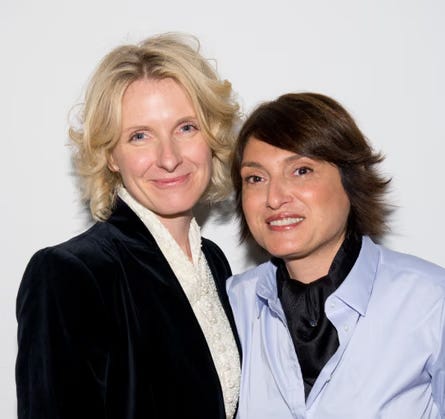
So with Rayya, our relationship began as friends. Somebody sent me to her for a haircut. Among all the other things that she did creatively, she did hair. We instantly became friends, and there was no spark of intrigue at all. I was ending my first marriage. It was a long time ago, we knew each other for a really long time. We met in early 2000 and then both had to go off and live our own destinies for a long time before we reconnected in a more intimate way. I went off and wrote Eat, Pray, Love. She married somebody. I married somebody. She got separated, we became closer. I have this old church that I live in, in New Jersey, that I offer to women to come and stay in when they’re recovering from things or need to be creative, and I offered her, in the wake of her divorce. And we became closer and closer.
And then, as the years went by, we went from acquaintance to friend to very good friend to neighbour to best friend to something that I could only call my person. She was the foremost person in my life, and I was married, so that was that was difficult. I created a lot of barriers of denial around myself and others about what was actually going on there. And what was actually going on there was that we were falling in love with each other, but never speaking of it, until she was diagnosed with terminal pancreatic and liver cancer and given six months to live. At which point the bottom utterly fell out of my life as well as hers, and it was no longer possible for me to pretend that this person was not what she was.
We were falling in love with each other, but never speaking of it, until she was diagnosed with terminal pancreatic and liver cancer and given six months to live. At which point the bottom utterly fell out of my life, as well as hers, and it was no longer possible for me to pretend that this person was not what she was to me
So I left my marriage to go and be with her, and we had an incredible six months. We were given six months and we had an incredible six months of joy and love and intimacy and honesty and bucket list adventures and passion. And she did not die after six months. She lived another year after that, and then we had the worst year in history as she grew more and more dependent upon the opioids that had been prescribed for her cancer pain, and then introduced cocaine back into the story and alcohol and this beautiful love story that we had disintegrated into basically Sid and Nancy. I mean, it was just so degraded. That would be the word that I would use for her, me and the relationship.
She managed to clean up and get sober before she died for a short time, and we had a bit of a reconciliation, but I was so gutted when she died, because, you know, the big book of Alcoholics Anonymous calls addiction ‘cunning, baffling and powerful, as well as heartbreaking’, and it’s heartbreaking for everybody involved with it. My heart was broken at so many levels, because it wasn’t just that I had lost this person who I loved. I lost her before she died, she became somebody I had never met. I’d never known Rayya when she was on drugs, and it was so bewildering. What happened and who was she? Was she this incredibly strong, courageous, brave, badass, loving, loyal person who I knew for all these years? Or was she this manipulative, disruptive addict? And the answer is yes! And that is an answer I don’t like, because I want there to be a clear binary. And that’s true of all of us. We are all of these things. So that was the nature of the relationship.
About a year after she died, I finally got myself into the rooms of 12-step recovery through the relationship programmes (Codependents Anonymous and Sex and Love Addicts Anonymous and AlAnon). And only then, as I began to get well, was I able to start to deconstruct what my role had been and the creation of that shit tornado that we ended up in.
I was at a meeting this morning, and saying, any dysfunctional relationship that I’m in, I’m in, you know? If I’m in a relationship that is dysfunctional I’m also participating in that. And I think one of the biggest healings that came out of the writing of this book was, as you said, I don’t let myself off the hook, and nor do I want to, because that’s kind of the opposite of being a victim. The victimisation of feeling wronged was healed by the forensic self examination of what was my part in this, and I don’t want to leave any stone unturned as I explore that. For my own benefit.
If you’d written the book sooner, would it have been a very different book?
If I’d written the book sooner, it would have been a book about what a nice person I am, what a terrible thing happened to me! And you know what? That’s not a book I want to read either. That’s never really the story. And going through five or six years of very rigorous work in 12 step, where you are invited to explore rigorous self examination and to do this complete and fearless moral inventory. If you want to get well, you don’t leave any stone unturned when you’re looking at your own character defects.
I remember telling a friend when I was in those steps, how thoroughly I was working that. The way my sponsor had me do it was, I inventoried all my anger and I inventoried all my fear, and I inventoried my entire history with sex and romance in great detail, like every single piece of anger, every single piece of fear, and every single interaction that I could remember ever having had with anybody in the realm of sex and love, and just breaking it down. And my friend was like, that sounds like a nightmare, to look yourself in the face that thoroughly. I’m so glad I don’t have to do that. And I said, I’m so grateful that I get to do this.
If I’d written the book sooner, it would have been a book about what a nice person I am, what a terrible thing happened to me! And you know what? That’s not a book I want to read either
It’s not about raking myself over the coals. I’ve been raking myself over the coals my whole life. Actually, the thing that healed the shame and self hatred I’ve been carrying around my whole life was doing that process and being able to map my own consciousness and be like, Oh, I’m out here acting like I’m this lovely person, but I am boiling with rage, and I am paralysed with fear and I am full of blame. And I will use anybody to try to get myself out of that, and I have used anybody to try to get myself out of that. And it’s really good to know that. Once I laid it out, and it took me almost a year to do that step, and it was so different from going to therapy and talking about what they did to me. There was an empowerment in that, in recognising, like, wow, look at how I operate. Look at this dark underworld that controls my every decision and always leads to these dramas like, Wow. Good to know, hard to know, but good to know you.
Comments
Nothing yet. Say the first thing.
Sign in to join the conversation.