
Yesterday, Lumine (ticker: LMN, listed on the TSX Venture Exchange) reported its Q2 results, showing the anticipated rebound in EBITA growth following the acquisition of Synchronoss mid-February 2026.
CEO David Nyland stated:
Our second quarter results reflect our proven ability to execute according to our domain-optimized playbook. In the first full quarter of ownership of Synchronoss, Lumine Group’s revenue grew 28% while operating income was up 20%, reflecting strengthening activities that commenced immediately post close. Our core business continues to generate positive results, as reflected in our steady organic growth, and demonstrated strong margin profile. We continue to deploy capital at high rates of return, closing two acquisitions on July 1, 2026 in Quortex and Imagine Communications. These two acquisitions deepen our presence in the media supply chain domain. This brings our total capital deployed to over $500M so far this year.
So far, FY26 will mark a record year for capital deployment, ex. the WideOrbit acquisition when Lumine got spun out early 2023.
Let’s review the quarter, the incremental performance for Synchronoss, cash performance, and updated valuation model. As per our estimates, little’s changed, yet Lumine still trades at an undemanding 14x realized (13-13.5x pro-forma) NOPAT for FY27.
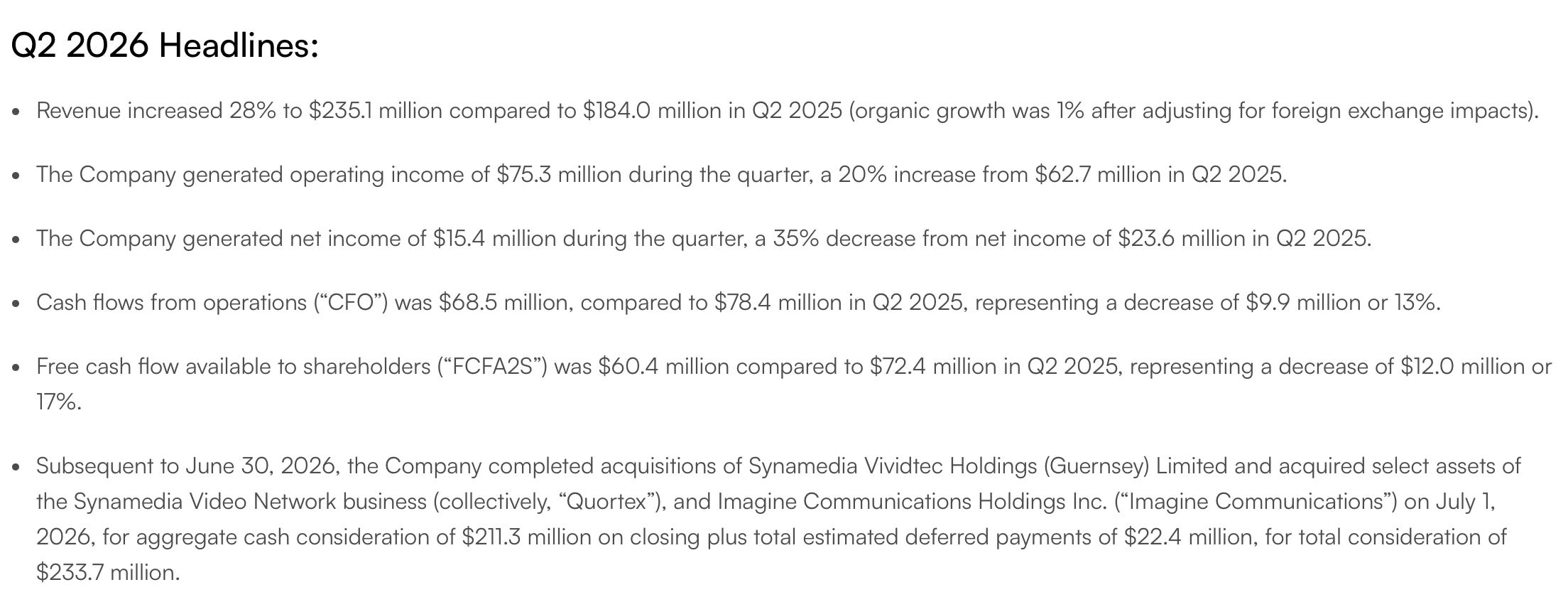
As ever, numbers may be filled with earn-out revaluation noise, one-time closing costs for M&A transactions (which Lumine discloses explicitly), and other nuances such as project and expense timing. Margins were also pressured by mix (hardware sales and lower margin).
Cash flow trends continue to be hampered by the timing and integration of acquisitions, impacting cash collection from customers and settling invoices due with vendors. Last year, Lumine started to immediately collect outstanding receivables related to its Motive (Nokia) acquisition completed in 2024.
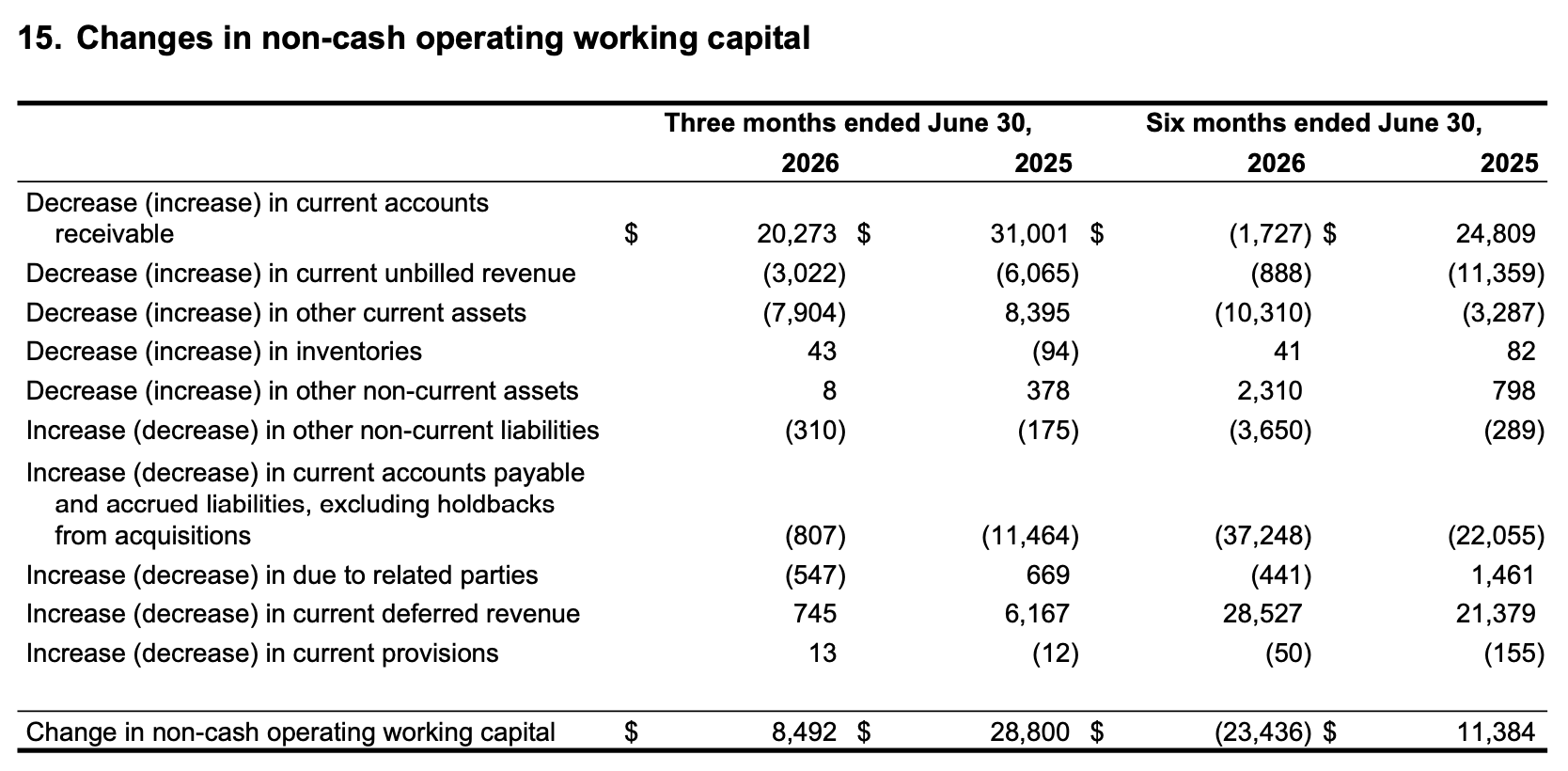
As Lumine continues to complete large carve-outs, it might create some kind of recurring burden on working capital flows over the forecast period but in the biggest scheme of things, it does not drive a significant change in the IRR. For reference, if we were to include a 250 million USD drag from working capital over the next decade, the CAGR decreases by 13 bps. All in all, we view Lumine’s working capital situation as healthy.
Comments
Nothing yet. Say the first thing.
Sign in to join the conversation.