
Welcome to The SciArt Curator, your bi-weekly window into the vibrant intersection of science, art, and society. Part treasure hunt, part investigation, it also grows with your discoveries. If you’ve created or come across a project, call, or event that bridges science and art, drop me a line. I’d love to hear from you and join forces to spread the word.

What happens when SciArt moves beyond individual laboratories to the infrastructures that enable science?
We often look for SciArt in laboratories, universities, research centers, and museums. But what if we look at the infrastructure that makes scientific research possible?
Research infrastructures are designed to enable scientific research, facilitate collaboration and foster innovation. By developing instruments and technologies, generating data, concentrating expertise and bringing together people from diverse disciplines, they create environments where researchers can access the tools, knowledge and networks needed to advance science.
These environments can also create fertile ground for artistic exploration. Research infrastructures offer artists opportunities to engage with science not only through concepts, but also through instruments, materials, data, environments and communities.
Writing this newsletter has made me increasingly interested in the conditions and environments where SciArt can emerge. My role as a scientific coordinator at the Science for Life Laboratory (SciLifeLab) gives me the unique opportunity to explore this question from inside a research infrastructure.
In this issue, I share four different models emerging within SciLifeLab. Together, these cases explore what becomes possible when a research infrastructure is open to act as a space for artistic encounters, interpretation, and experimentation.
And, as always, you will also find a curated selection of upcoming SciArt events and calls.
Enjoying this content? Subscribe for free to get new posts straight to your inbox and support the project.

SciArt has already found ways into different kinds of research infrastructures. For instance, the large-scale facilities associated with particle physics and synchrotron science.
The European Organization for Nuclear Research (CERN) engages deeply with artists, and since 2011 it has hosted the Arts at CERN programme, one of the most established art–science initiatives globally.
MAX IV, one of the world’s largest synchrotron light source facilities, is another example of an infrastructure open to hosting SciArt. In collaboration with Lund University, MAX IV has recently launched artist residencies to foster the development of artistic projects that connect and reflect on its current research. [By the way, the call for residencies is open now! Check the details in the “SciArt events and calls” section below].
SciLifeLab is a Swedish research infrastructure at the forefront of innovation in life sciences, molecular biosciences, and computational biology. The organization brings together researchers, engineers, bioinformaticians, imaging specialists, and other experts around technologies and services that support life science research. Beyond developing the technologies and expertise needed to address pressing challenges at both human and planetary scales, the centre is deeply engaged in outreach and public engagement, creating opportunities for dialogue between science and wider society.
The four cases highlighted in this issue illustrate different ways in which SciArt can take shape within the same research infrastructure: from creating encounters between artists and researchers, to opening scientific technologies and data to artistic exploration, and recognizing creative practices already present among its staff.
For collaboration to happen, people first need an opportunity to meet.
Coalescence; Scientific Research Through an Artist’s Lens created such an opportunity by bringing together 10 artists from the Royal Institute of Art and 10 researchers from SciLifeLab. The initiative was conceived and led by Fulbright student Max Frankel during his nine-month stay at SciLifeLab, connecting the art and science communities in Stockholm and creating a space for exchange and creative collaboration.
When the project began in February 2023, artists and researchers introduced each other to their respective fields, and the artists were invited into SciLifeLab’s laboratories to encounter the research environment firsthand.
These encounters became the starting point for new collaborations. The project culminated in an exhibition at SciLifeLab, where visitors encountered the results of these exchanges through sculpture, digital art and installation.
Art and science are both about exploring the world around us, just from two different angles - Physicist and artist Max Frankel, Creator of the project Coalescence; Scientific research through an artist’s lens at SciLifeLab.
Take a look at the exhibition on SciLifeLab’s YouTube channel:
In this case, the collaboration between an artist and SciLifeLab emerged around a particular technology and its possibilities.
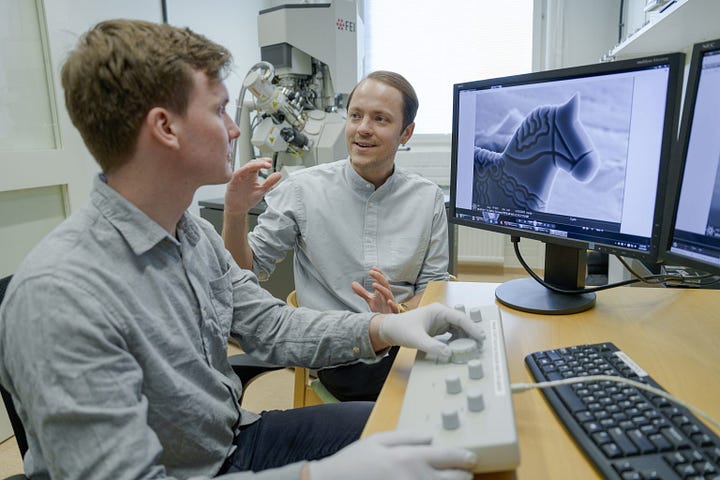
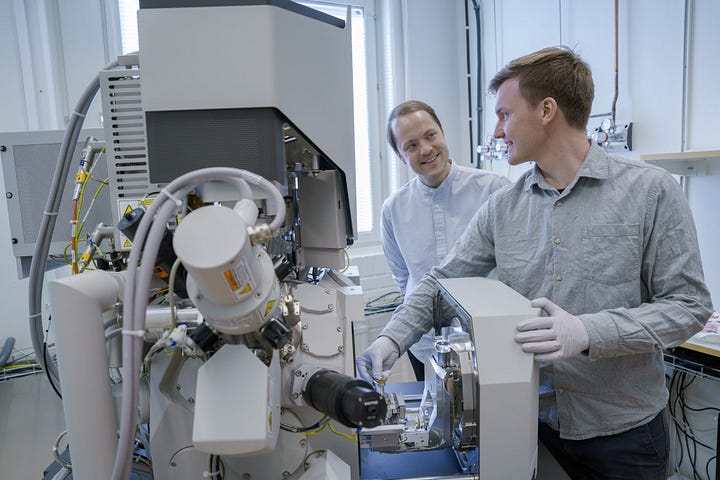
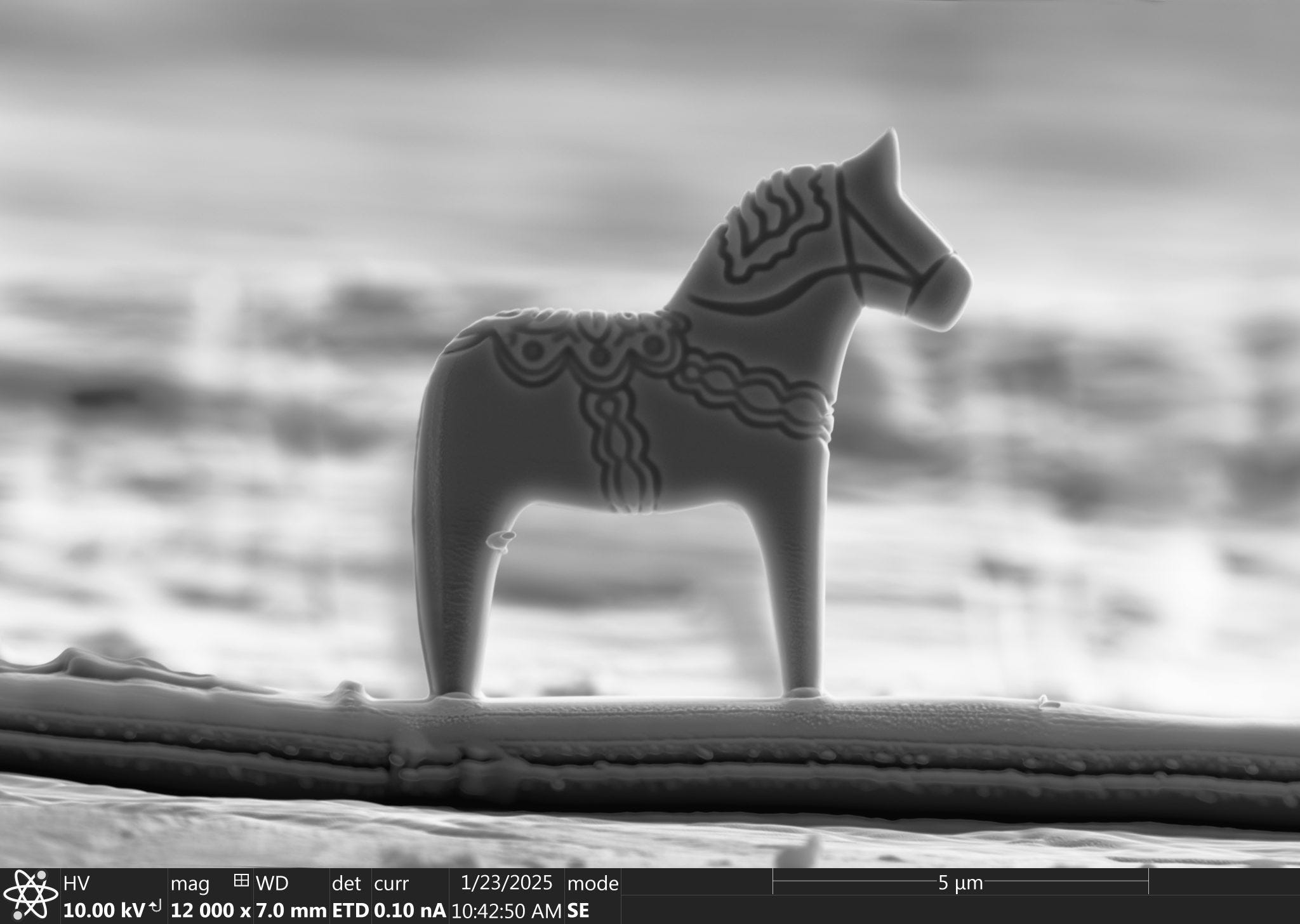
At the Umeå Centre for Electron Microscopy in northern Sweden, staff scientist Nils Hauff and artist Erik Olof Wiklund teamed up to create the world’s smallest Dala horse. Using a focused ion beam in a scanning electron microscope, they sculpted a 7 µm-long horse from a platinum block.
For both parts, the collaboration became a learning experience that highlighted the possibilities of cross-disciplinary work.
It was fascinating to see how Erik approached the electron microscopy images from an artistic perspective. He thought about angles, light, and form in ways we typically don’t when documenting research samples.
This project is a great example of how our national infrastructure can be used in novel and creative ways. It reminds us that scientific instruments don’t only belong to the lab – they can also contribute to cultural and artistic exploration - Nils Hauff, staff scientist at Umeå Centre for Electron Microscopy, a unit at SciLifeLab.1
Within research infrastructures, artists can encounter scientific concepts, instruments, datasets, materials and techniques that can become part of the artistic process itself. In this case, scientific data became artistic material.
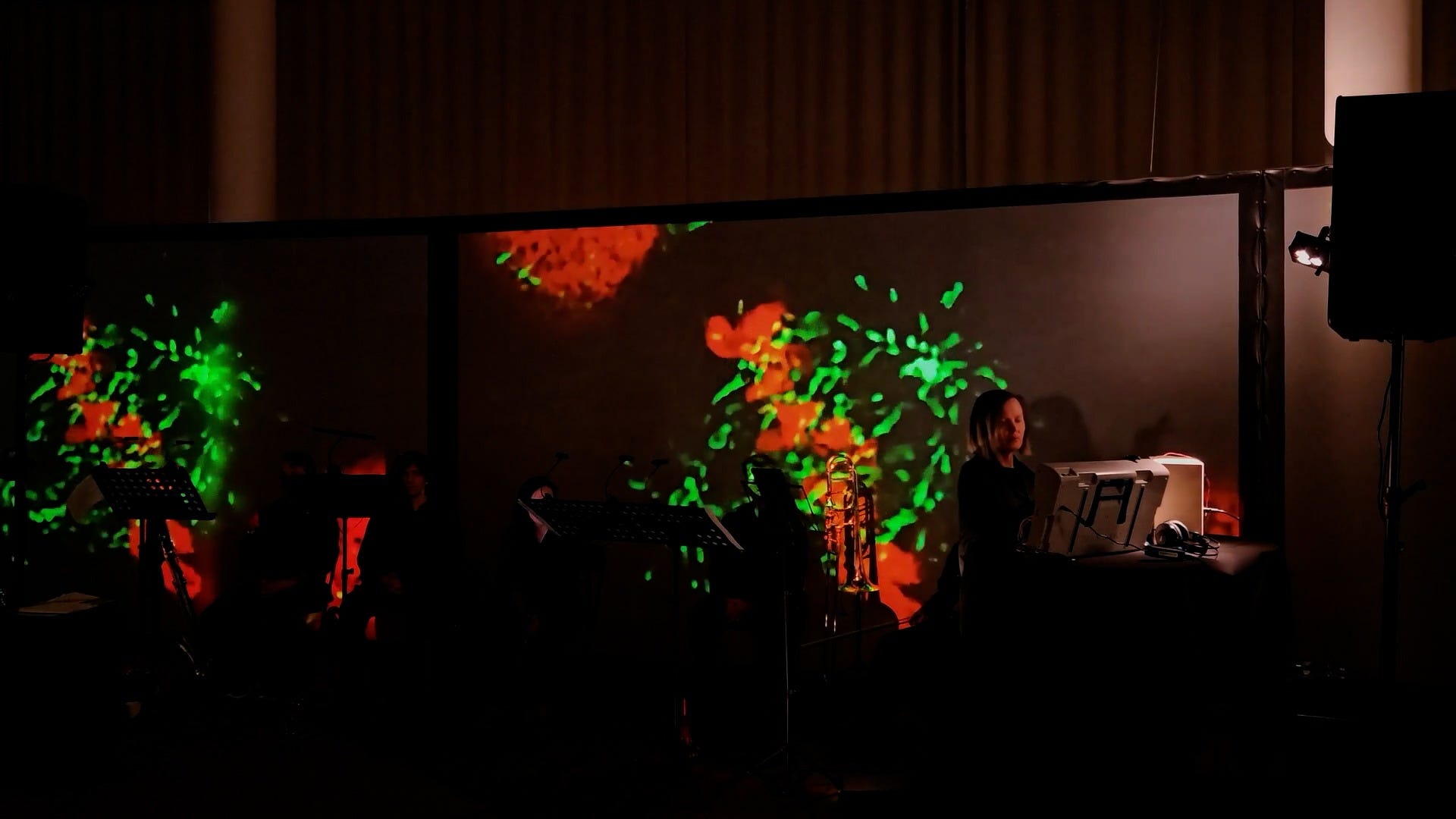
Sound artist and biotechnologist Fredrika Gullfot composes on the border between science and art. For one of her projects, she reached out to the Chemical Biology Consortium Sweden at SciLifeLab, and the staff assisted her in accessing raw data files from ion channel measurements.
Fredrika turned channel data and other cellular signals into a musical composition. The resulting piece, A Symphony of Cells, was performed together with Ensemble Getögon at The Cell during Kulturnatt Stockholm in 2025.
After all, art is a fantastic tool for interpreting our world and how we experience it, just like science. The idea of creating music with biological material is not new, but I really wanted to go deep with this. Especially when it comes to this kind of cutting-edge research, like electrophysiology or ion channel research, there is so much unexplored territory artistically. There is so much beauty at the heart of life; it is so rare and so different - Sound artist and biotechnologist Fredrika Gullfot.2
While the three previous projects involved artists entering scientific environments, the SciArt Exhibition at the Facility Forum offered a different model.
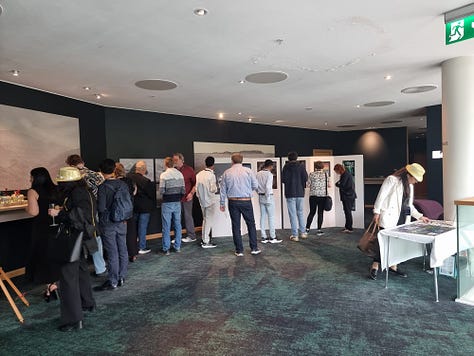
Every two years, the SciLifeLab infrastructure community comes together over two days to connect, collaborate, and discuss the future of life science infrastructures. This year, the Facility Forum brought together nearly 500 professionals from across Sweden under the theme Technology Development and Light.
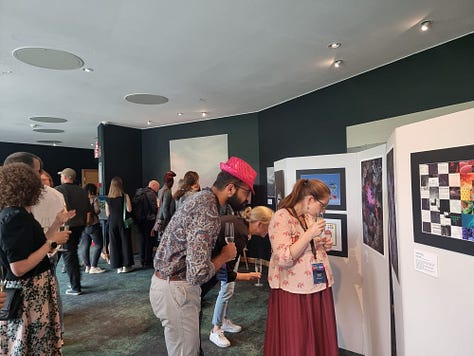
When the organizing committee began planning the Facility Forum, I suggested hosting an exhibition that invited SciLifeLab staff to interpret the year's theme through their own artistic lenses. I was convinced there were colleagues at our organization engaged in art, and this would be a chance to make visible practices that normally remain private.
The idea was very well received, and I was invited to be the main organizer. I took the opportunity to get together with a couple of colleagues who had also shown interest in science and arts, and this exhibition became the first initiative run by the newly established SciArt Committee at SciLifeLab.
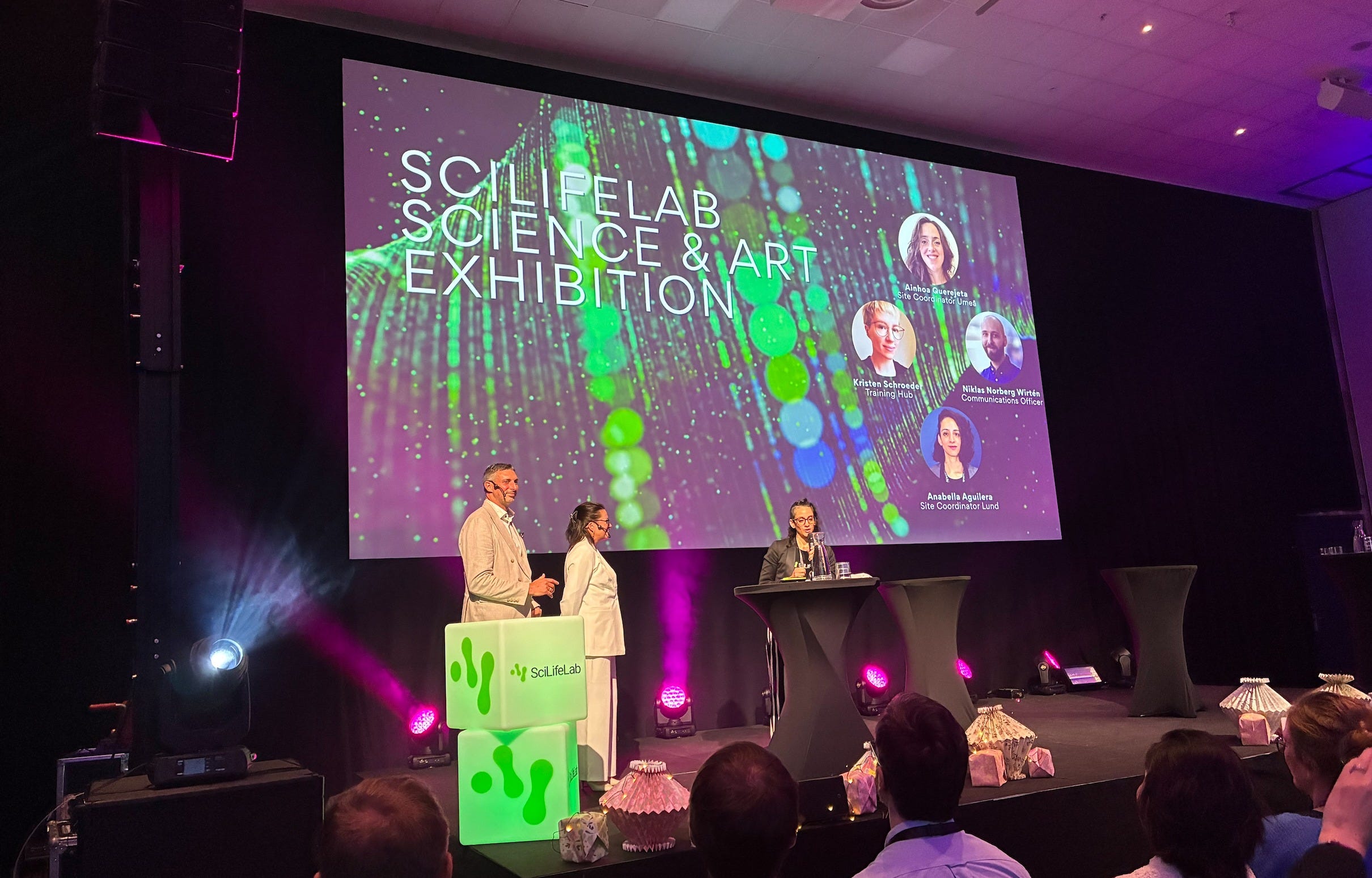
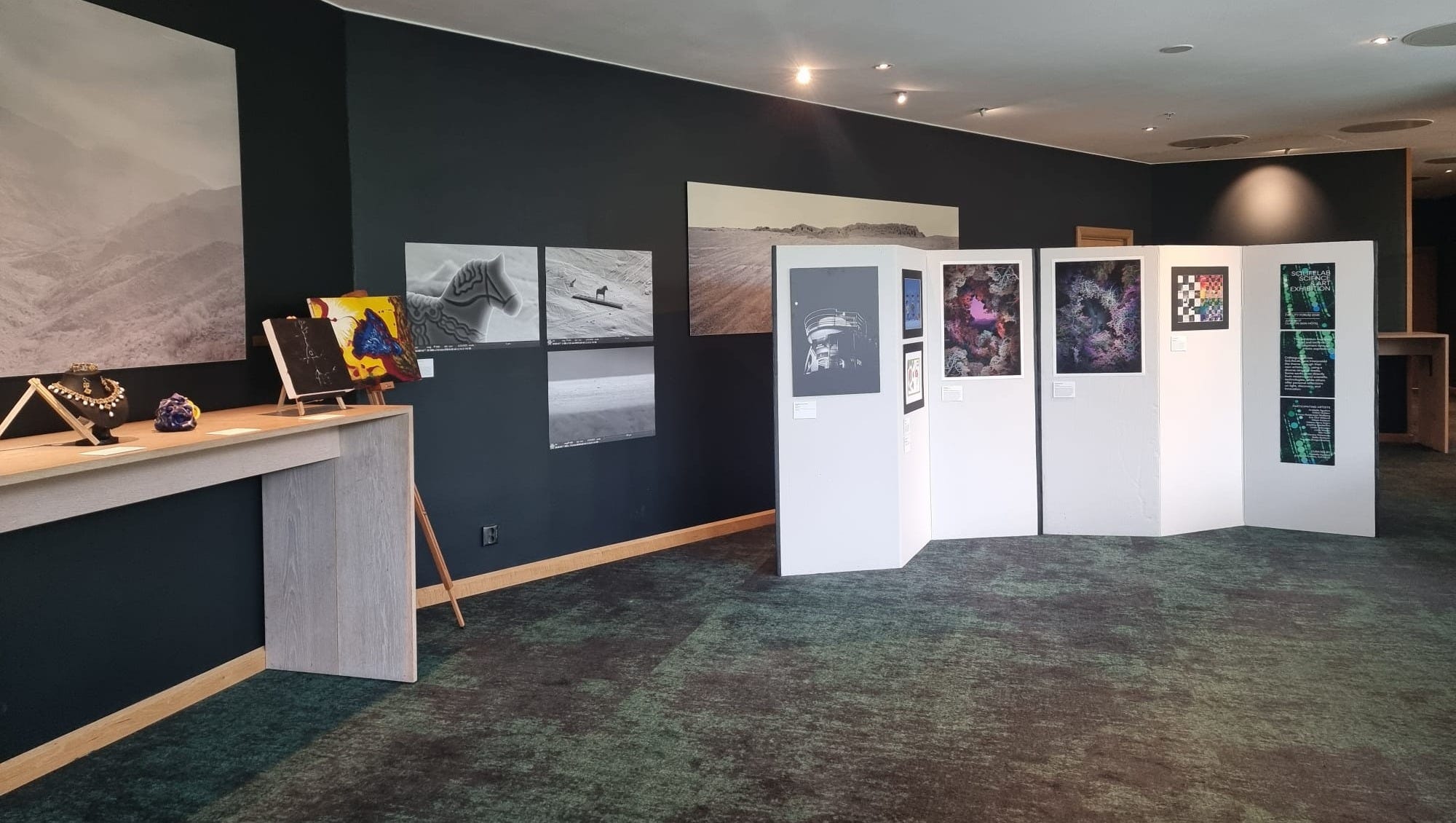
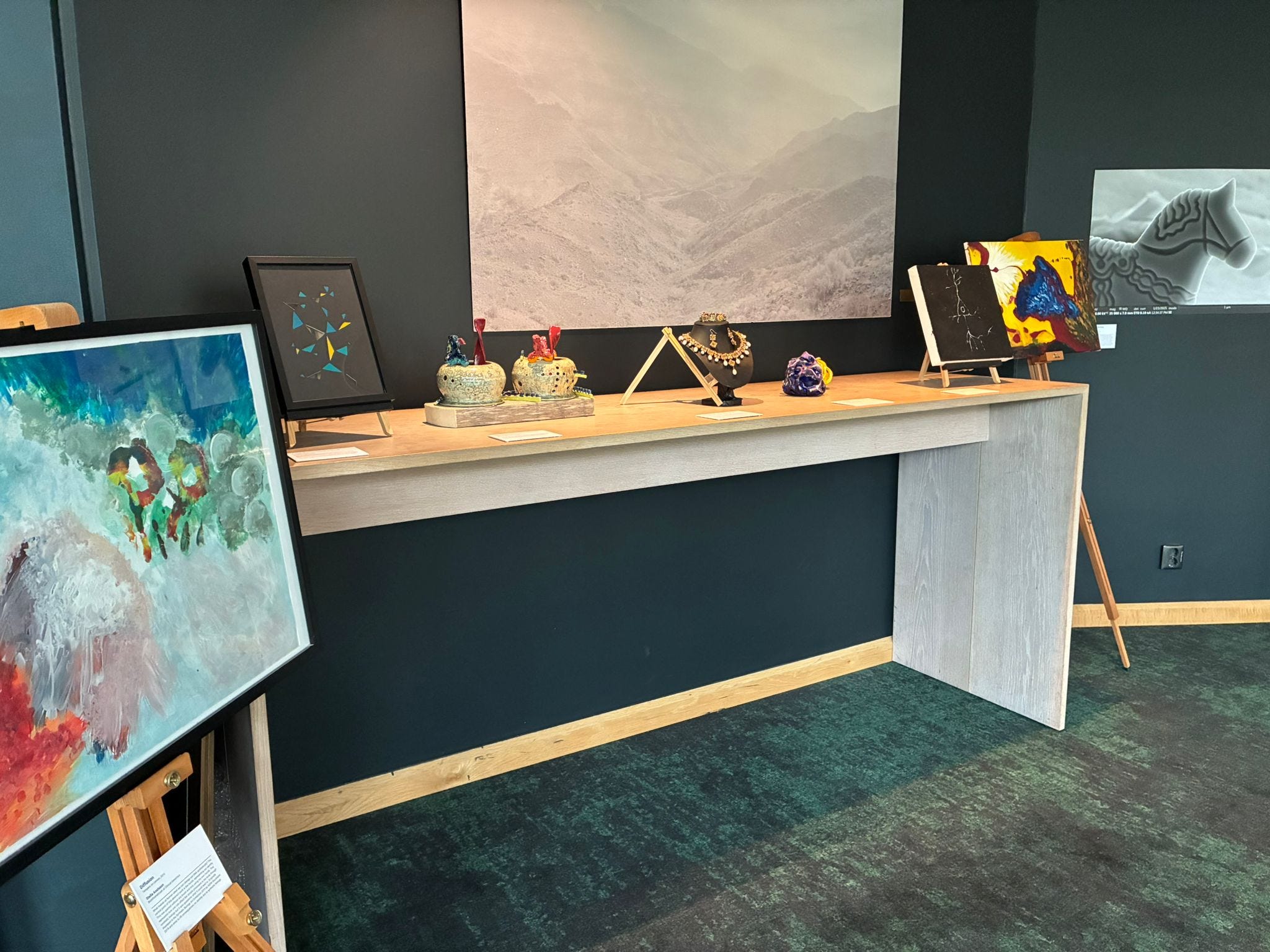
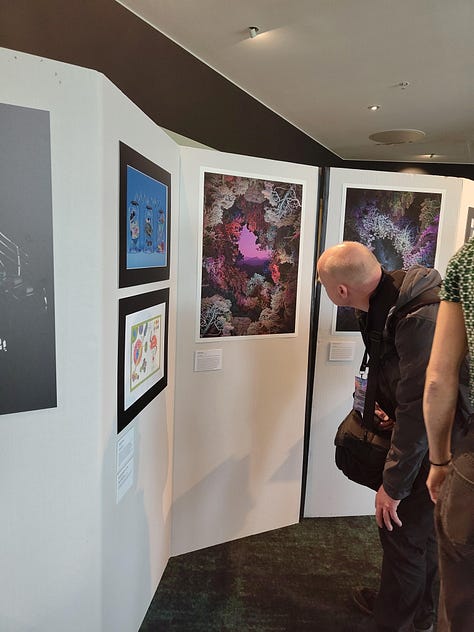
We opened a call and received 17 contributions by 12 colleagues from multiple infrastructure units, including staff at genomics Infrastructure, microscope facilities, bioinformatics, leads and coordinators from different units.
The response revealed an unexpected diversity of creative practices already present within the organization. Artworks included photography, photographic and handmade collage, ceramics, acrylic and mixed media, including glass beads, pearls and Swarovski crystals.
The exhibition was very successful and brought tons of warm comments. The exhibition and artworks sparked conversations within and among units. Visitors discovered another side of their own colleagues and got inspired to participate in (I hope!) upcoming editions.
Apart from inviting us to see our workplace and technologies differently, the exhibition was proof that creativity and artistic expression are welcomed at our organization.
There is no doubt that research infrastructures enable scientific work by generating datasets, developing technologies, and establishing collaborations. But also, these environments can do more than provide infrastructure for science. These examples at SciLifeLab show that research infrastructures can also provide fertile ground for artistic practice through technologies, data, expertise, encounters, and most importantly, institutional openness to experiment.
SciLifeLab, CERN, and MAX IV are only one part of a much larger landscape. I suspect many more examples remain scattered across institutions or maybe not visible yet.
Are you developing artist residencies, exhibitions, collaborations, commissions, data-driven artworks or other ways of opening your infrastructure to art?
I would love to hear from people working in research infrastructures who are experimenting with these possibilities. I am particularly interested in how institutional support makes these encounters possible, and also, the models that could be shared, adapted or developed across institutions.

— Artist’s residency connected to MAX IV Laboratory. Lund, Sweden. Three opportunities for artists working in time-based media, for 8 weeks between Nov 2026 and Apr 2027. Awards up to 100,000 SEK per project. Deadline to apply: 17 August.
— Open Call for Residencies at Platform Dalí. For artists from all disciplines to develop a research residency project with one of the partner scientific institutions. Deadline to apply: 7 September.
— Reality Flux: Sensing the Unseen at the Ars Electronica Campus Exhibition 2026. 9-13 Septiembre | Linz, Austria.
— Exhibition Refractions of Ice. Till 20 Sep | Copenhagen, Denmark. Visual investigation of deep ice in the Greenland Ice Sheet and Antarctica, created by Visual Science Studio in collaboration with researchers from Ice, Climate and Geophysics at the Niels Bohr Institute, University of Copenhagen.
— Open call Ars Biologica ArtXScience Residency. České Budějovice ECoC 2028 & Ars Electronica invite artists, designers, creatives, and artist collectives to apply for a fully funded program designed for direct collaboration with local scientists. Deadline to apply: 28 September.

Have you created, seen, or heard of a project that bridges science and art? Send it my way! I’d love to feature it and help spread the word.
If this post resonated with you, please consider forwarding it to a friend. Thank you for reading, commenting, suggesting, and ultimately for being part of this growing SciArt community 💛
See you in two weeks!
Excerpt from an article originally published by SciLifeLab. Available here.
No posts
Comments
Nothing yet. Say the first thing.
Sign in to join the conversation.