
Welcome to The SciArt Curator, your bi-weekly window into the vibrant intersection of science, art, and society.
Part treasure hunt, part investigation, it also grows with your discoveries. If you’ve created or come across a project, call, or event that bridges science and art, drop me a line. I’d love to hear from you and join forces to spread the word.

In a previous issue, I shared projects addressing plant blindness, our human tendency to overlook the plants that sustain life around us. If you missed it, read it here:
I also mentioned a project on plant awareness in collaboration with Sylwia Orczykowska, a transformative art curator and founder of Art Now.
This issue describes how a shared care for plants turned into Green (un)seen, and how the initiative grew into something far beyond our imagination.
I’d like to invite you not only to take part in the initiative, but to make it your own.
Finally, don’t miss the curated selection of upcoming SciArt events.

Plant blindness (recently reframed as Plant Awareness Disparity) describes how easily we overlook plants and underestimate their essential role in sustaining life on Earth.
We rarely protect what we don’t notice, and we rarely value what we don’t emotionally connect with.
Plants don’t have faces. They don’t move in ways we easily perceive. They don’t express emotions we recognize. And so, they remain in the background — in public imagination, in education, and even in conservation priorities.
Yet plants are our food, our lungs, our pleasure, our future, and our hope.
Overcoming plant blindness requires more than knowledge. It requires attention and connection. And this is where art becomes powerful.
This reflection became the seed of Green (un)seen.
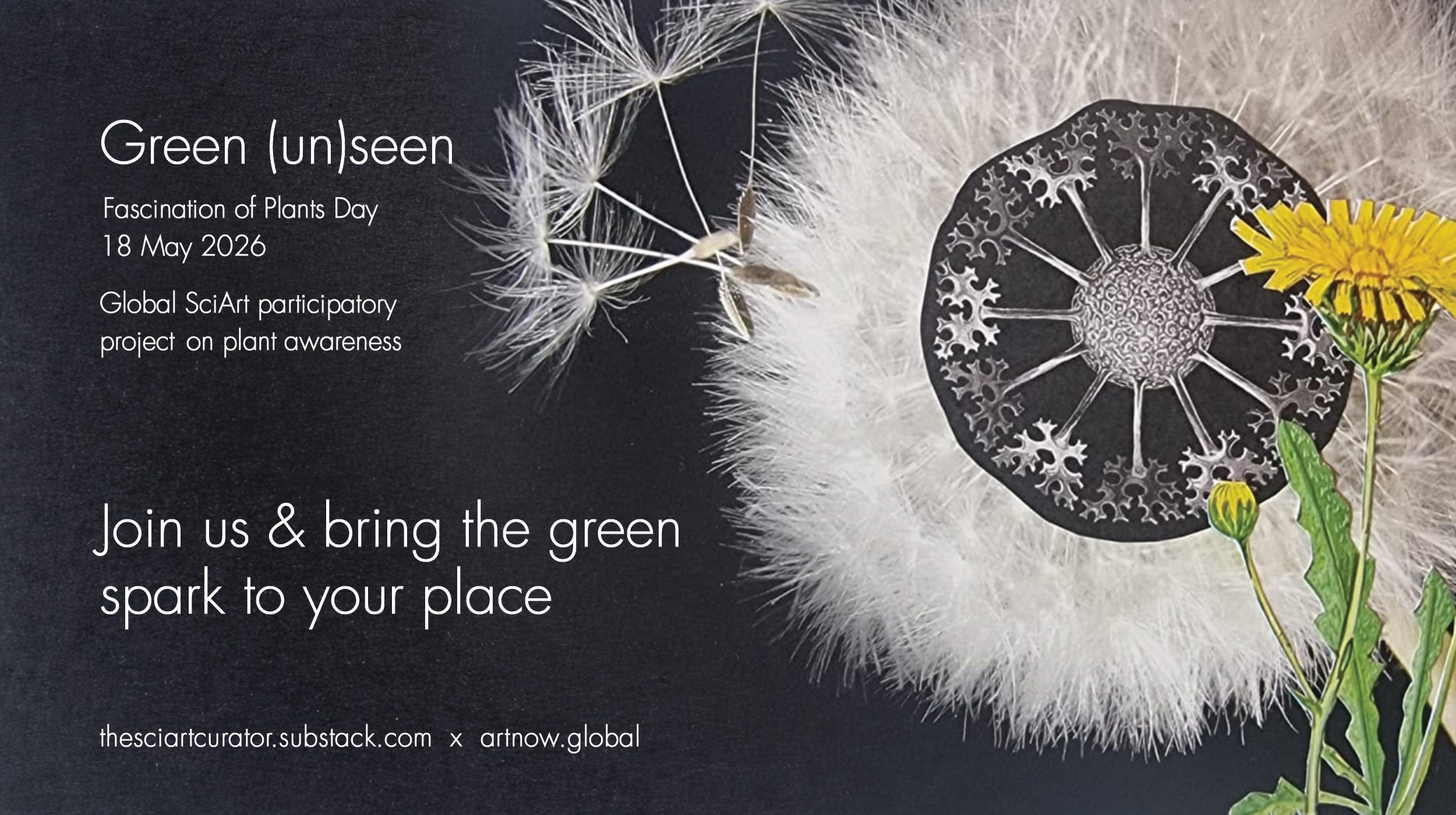
Green (un)seen is a participatory grassroots action that connects art, science, and public space through a very simple gesture.
On May 18, celebrating the Fascination of Plants Day, people across cities will share letters about the importance of plants, accompanied by small plant-themed artworks. These letters can be given to others or left in public spaces, inviting moments of curiosity, reflection, and connection with the plants around us.
Through the power of handwritten letters and the untapped potential of public spaces, Green (un)seen will open a global conversation about our relationship with the plant world, taking a concept from plant science and turning it into a participatory, creative action that anyone can reinterpret.
But when Sylwia and I were designing the project, we had many doubts. Is it too much to ask people to create artworks? Is it too much to ask them to handwrite letters? How many letters are reasonable?
We worked on the idea for days, aiming to make it as simple and inviting as possible. Finally, after setting up the details, we decided to trust the process and opened a sign-up form.
Within one week, we had 96 participants in 84 cities across 31 countries and 5 continents. And counting!
Educators, artists, researchers, and plant enthusiasts began writing us.
We were greatly surprised by colleagues and fellows who generously shared the initiative even without knowing us personally. For instance, just to mention a few, Lindsay Jean Thomson leading #The100DayProject, shared Green (un)seen with her amazing creative community. On the other hand, Lauren Daly, working at the University of Oxford Botanic Garden and Arboretum, spread the word through the Botanic Gardens Education Network.
All the doubts we had while preparing the initiative vanished when we read the comments participants left in the sign-up form. Their excitement and support renewed our energy and confidence.
For some, Green (un)seen offers a way to reconnect their scientific and artistic sides. For others, it is an opportunity to engage with their local communities and a gentle invitation to make more art. Many are excited to see their creative practice contribute to a collective action around plant awareness. And for a few, taking part brings a sense of hope in a time marked by biodiversity loss.
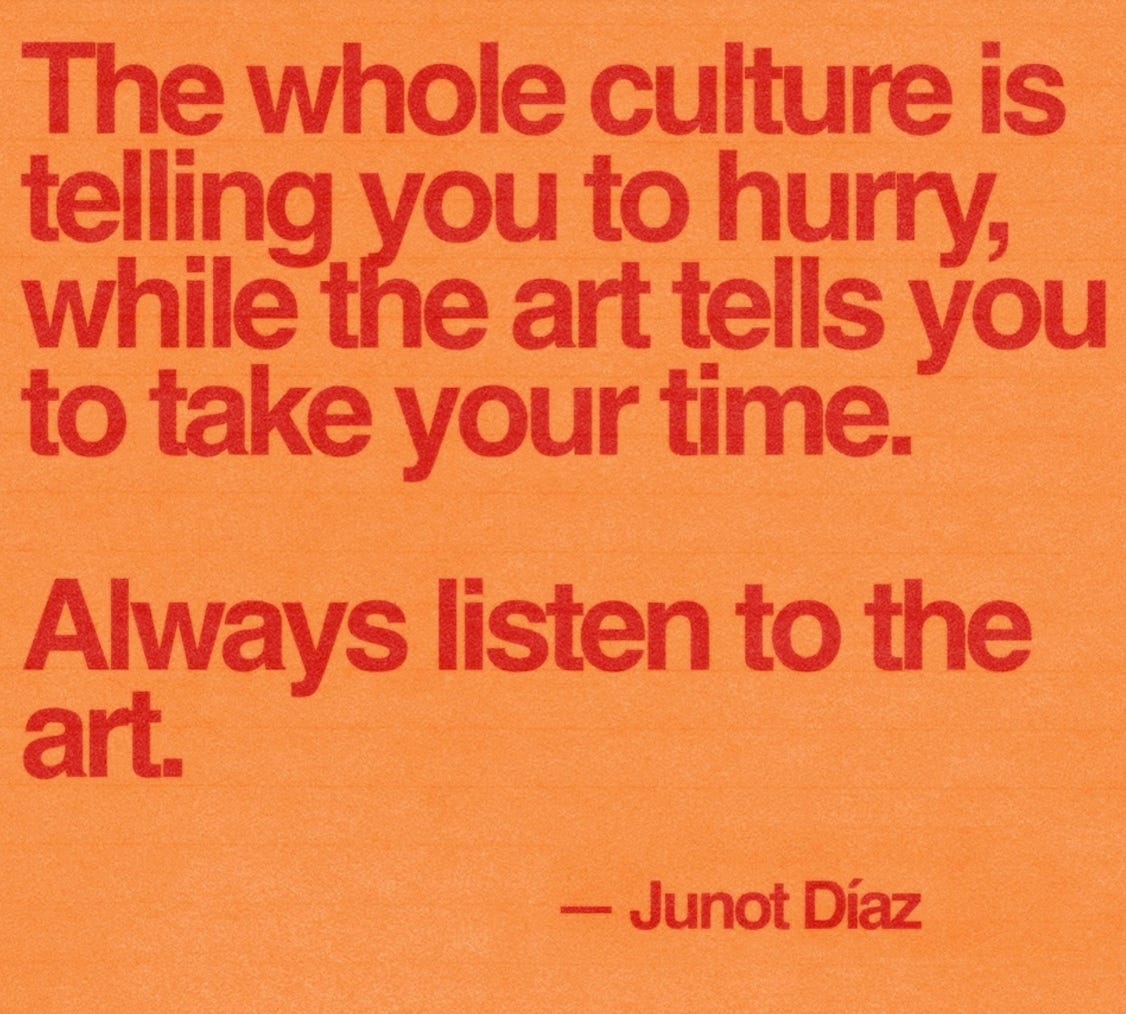
Recently, a dear friend told me something that changed how I see the project completely:
Green (un)seen doesn’t only invite us to notice plants (which is already an important thing). It invites us to slow down and create something with our hands. In a world of screens, where we are always in a hurry, this is a gift.
I hadn’t seen it that way before.
And then something even more beautiful happened. Participants started creating their own initiatives around the initiative: doing the artworks with children in schools, adapting the letters into workshops, and planning small community actions.
This is when we realized that Green (un)seen is not just an intervention. It is a framework people can reinterpret. And we are extremely happy that the initiative grew in that direction.
If you work with art, plants, science communication, or simply feel fascinated by the plant world, you are warmly invited to join.
You can follow the suggested action and adapt it to your context: a classroom activity, a community action, a small exhibition, a walk….
We provide templates and simple instructions, and the rest is yours.
1. Sign up to receive the letter template and reflective questions (https://forms.gle/TM97Hbd6aV1ru4BJA)
2. Create 5–10 small plant-themed artworks (or more if you wish!)
3. Place one letter and one artwork in an envelope
4. On May 18, give them to people, or leave them in public spaces
That’s it.
You are welcome to document and share your experience on social media with the hashtag #GreenUnSeen.
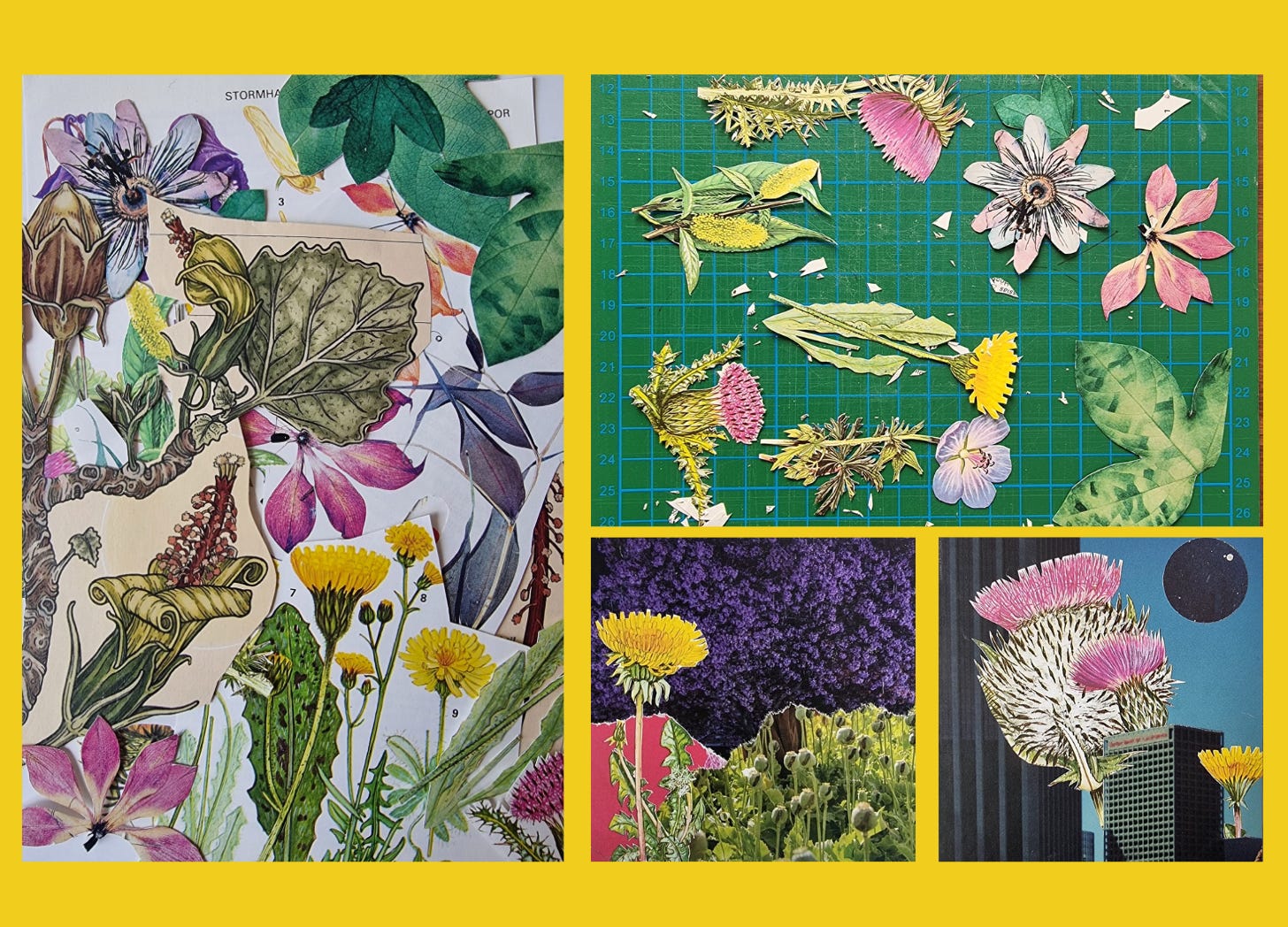
Green (un)seen is a grassroots, unfunded, collective experiment. And perhaps its most beautiful aspect is this: It grows differently wherever it lands.
We would love for it to grow in your hands, too.

— Ecological Translation: Rethinking Our Relationship with the Living World . April 28 - May 30 | Athens, Greece. A timely and thought-provoking space where art becomes a site of negotiation between worlds – human, technological, and more-than-human – urging us to rethink what it means to inhabit a shared environment.
— Science of Sci-comms E- Summit. May 3. A full-day free online conference on the science of science communication.
— Workshop Pond Codex: Of Life and Death in Berlin’s Small Water Bodies. May 10, 11:00 - 18:00 | Berlin, Germany. With Margherita Pevere & Germán Joosten, part of CHRYSALIS. ARTISTS IN LABS.
— theGATE: - Global Art- science and technology environment. May 18 - 22 | Stuttgart, Germany. A festival exploring the convergence of Science, Technology, Arts, and Society.
— Alex Adriaansens Residency 2026. Deadline to apply: June 1. For curators, organisers of festivals, art programmes, and events in the fields of media art, digital cultures, and related art and cultural fields, who are starting their professional careers.

Have you created, seen, or heard of a project that bridges science and art? Send it my way! I’d love to feature it and help spread the word.
Are you a writer? Reply to this message and let’s explore how your work might fit in.
If this post resonated with you, please consider forwarding it to a friend.
Thank you for reading, commenting, suggesting, and ultimately for being part of this growing SciArt community 💛
See you in two weeks!
No posts
Comments
Nothing yet. Say the first thing.
Sign in to join the conversation.