
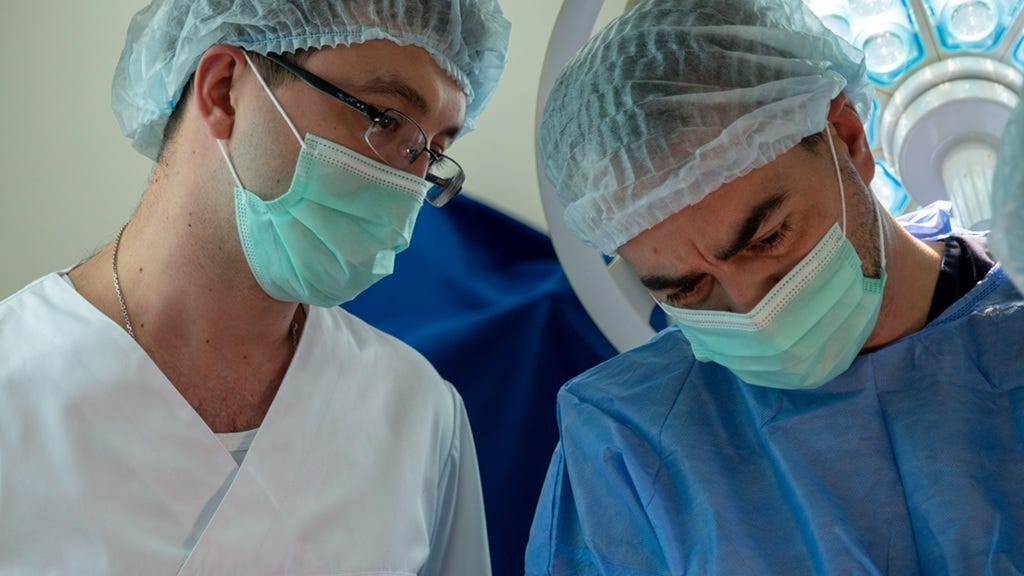
Before video libraries became part of surgical education, learning an unfamiliar operation depended as much on circumstance as effort.
Residents learned by standing beside the surgeons available to them. If a procedure was rarely performed at their hospital, opportunities to observe it could be limited to a few cases or none at all. Watching how experienced surgeons handled difficult anatomy, unexpected findings or technical decisions often depended on simply being in the right operating room on the right day.
That constraint has largely disappeared. Today, a resident preparing for tomorrow’s operation can review multiple expert demonstrations from institutions around the world before ever entering the operating room. The experience is different from standing at the table, but it offers something previous generations rarely had: repeated access to procedures that might otherwise remain out of reach.
Watching before a case: what the evidence shows
As operative video became a routine part of residency training, researchers began asking a practical question. Does watching a procedure beforehand actually improve surgical performance, or does it simply make trainees feel more prepared?
One randomized controlled trial published in the Journal of Minimally Invasive Gynecology enrolled 24 first- and second-year gynecology residents. Half spent the week before surgery reviewing an instructional video demonstrating laparoscopic salpingo-oophorectomy, while the remaining residents prepared through conventional methods.
When the residents later performed the operation, investigators assessed them using validated measures of technical performance. Those who had reviewed the video demonstrated stronger anatomical knowledge and reported greater confidence entering the operating room.
The authors were careful not to overstate the findings. Their conclusion was that instructional video should complement hands-on surgical education rather than replace it. Watching an operation ahead of time helped trainees arrive better prepared, but technical proficiency still depended on supervised experience in the operating room.
That conclusion also reflects how many surgical educators think learning occurs. Reviewing an operation beforehand allows residents to build a mental map of the anatomy, understand the sequence of critical steps and anticipate decision points before they encounter them in a patient.
Similar findings appear across surgical specialties
The randomized trial is only one piece of a much larger body of research.
In 2019, researchers led by Green reviewed 20 published studies examining the role of video technology in surgical education. Their analysis, published in the Journal of Surgical Research, found improved operative performance in 13 of the 16 studies evaluating technical skills. Every study measuring procedural knowledge reported improvement, and every study assessing learner satisfaction found favorable results.
The review also highlighted an important pattern. Videos proved most useful when they formed part of structured teaching rather than serving as passive recordings of an operation. Narration, annotations and expert explanations consistently strengthened educational value by helping learners understand not only what the surgeon was doing, but why each decision was made.
Those findings suggest that educational benefit comes less from the existence of video itself than from how the material is designed and presented.
Not every surgical video teaches equally well
That distinction becomes clearer when researchers compare curated educational videos with freely available recordings.
A 2022 review published in SICOT-J evaluated publicly accessible surgical videos and found wide differences in educational quality. Many omitted important operative steps, offered little explanation for technical decisions or failed to provide sufficient clinical context for trainees attempting to understand the procedure.
Specialized educational collections generally performed better. Videos developed specifically for teaching were more likely to explain anatomy, discuss operative strategy and highlight potential pitfalls instead of simply documenting what occurred during surgery.
The finding helps explain why surgical societies, journals and dedicated educational platforms increasingly rely on peer review before publishing operative videos. Much of the evidence supporting video-based learning comes from carefully developed teaching material rather than unfiltered recordings uploaded without educational oversight.
Extending the operating room beyond a single case
None of this changes where surgeons ultimately learn to operate. Surgical skill still develops through supervised experience, deliberate practice and direct patient care.
What recorded surgery changes is access.
A procedure that once could be observed only by the handful of people present in one operating room can now be reviewed repeatedly by residents preparing for a first case, fellows refining a familiar technique or experienced surgeons comparing alternative approaches developed elsewhere.
Many surgeons who contribute educational videos describe the motivation in similarly practical terms. Rohan Walvekar, MD, a contributor to CSurgeries, has said that sharing techniques allows experiences from one operating room to reach surgeons who may later apply those lessons to benefit their own patients.
For generations, observing a particular operation depended largely on timing and geography. Today, the opportunity to learn from that same case no longer ends when the final suture is placed.
Have a technique worth teaching? Submit your peer-reviewed surgical video at csurgeries.com.
Sources: Preoperative teaching video RCT: “Effect of a Surgical Teaching Video on Resident Performance of a Laparoscopic Salpingo-oophorectomy,” Journal of Minimally Invasive Gynecology 2020, PubMed 31982585 (NCT03230552). Systematic review of video technology in surgical education: Green JL et al, Journal of Surgical Research 2019 (20 studies), PubMed 30691792. Reliability of publicly available surgical video: “Surgical videos on the internet: Is this a reliable pedagogical tool in residency training?”, SICOT-J 2022. Contributing-surgeon quote from CSurgeries Surgeon Spotlight interview with Dr. Rohan Walvekar.
No posts
Comments
Nothing yet. Say the first thing.
Sign in to join the conversation.