
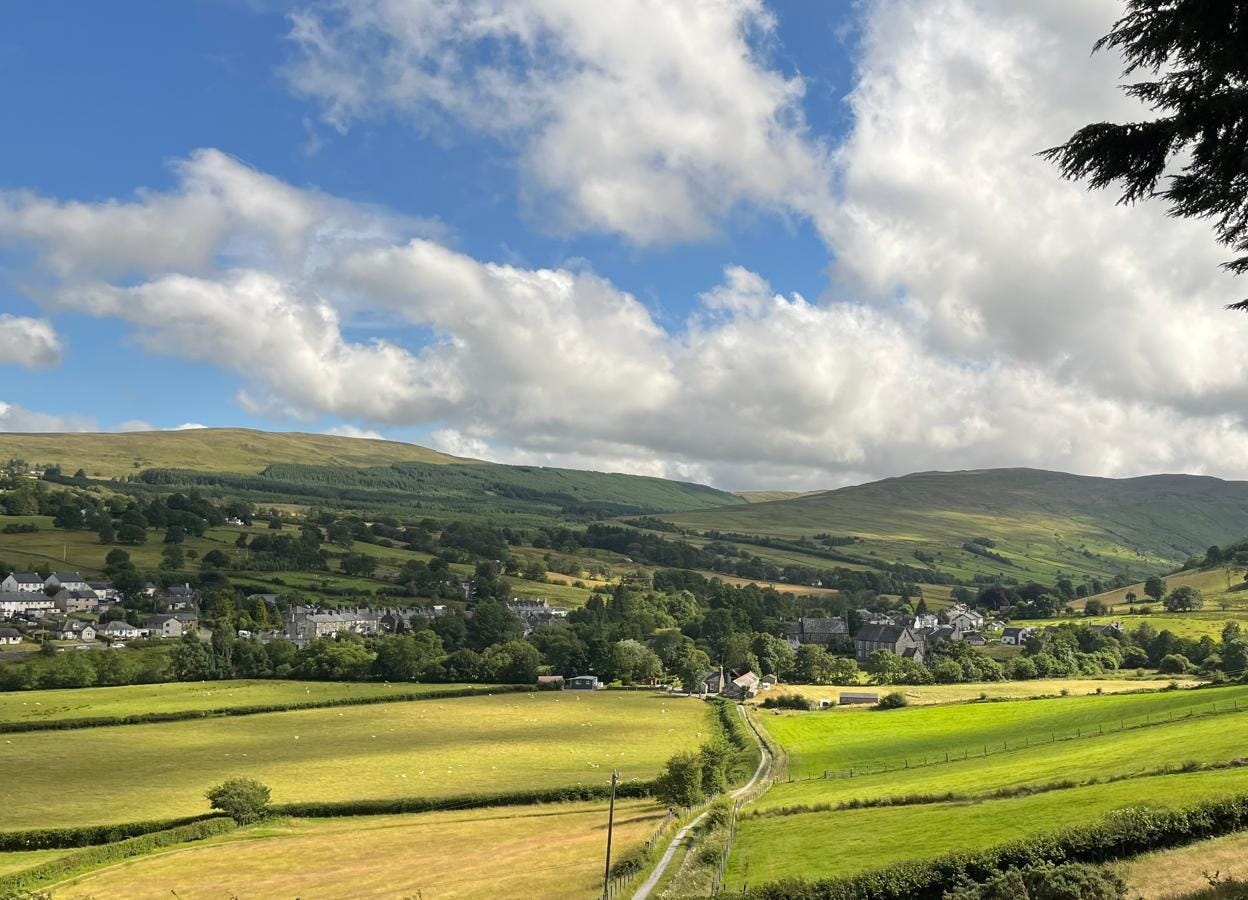
The sun rises early in North Wales. The first slivers of daylight appear around 3 am. By 6 am, it’s already bright and warm, living under a heat dome, as we have been for the last two weeks.
The light means activity starts early here. Tractors careen past my bedroom window early (so very early). Food delivery vans, both for our village shop and personal deliveries from supermarkets, start offloading from 7 am.
It’s a big difference from my quiet city centre Porto apartment — almost an oxymoron, but it was! — in a city where life never really got going before 10 am.
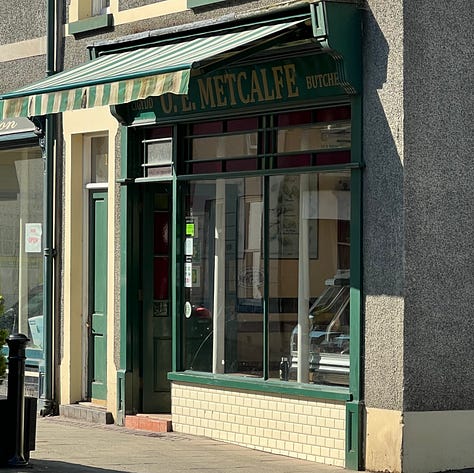
It is also what I wanted; to feel more connected to the food made around me. You can’t help but feel that, living here, with all the agricultural activity going on. At night, lambs bleat in the hills opposite the house. Some of these will eventually find their way to my local butchers, specialists in prized Welsh lamb. The lambs were also all I could hear from the local pub’s beer garden the other night. That, and a group of young lads talking about whether our village fields are home to snakes, for some reason.
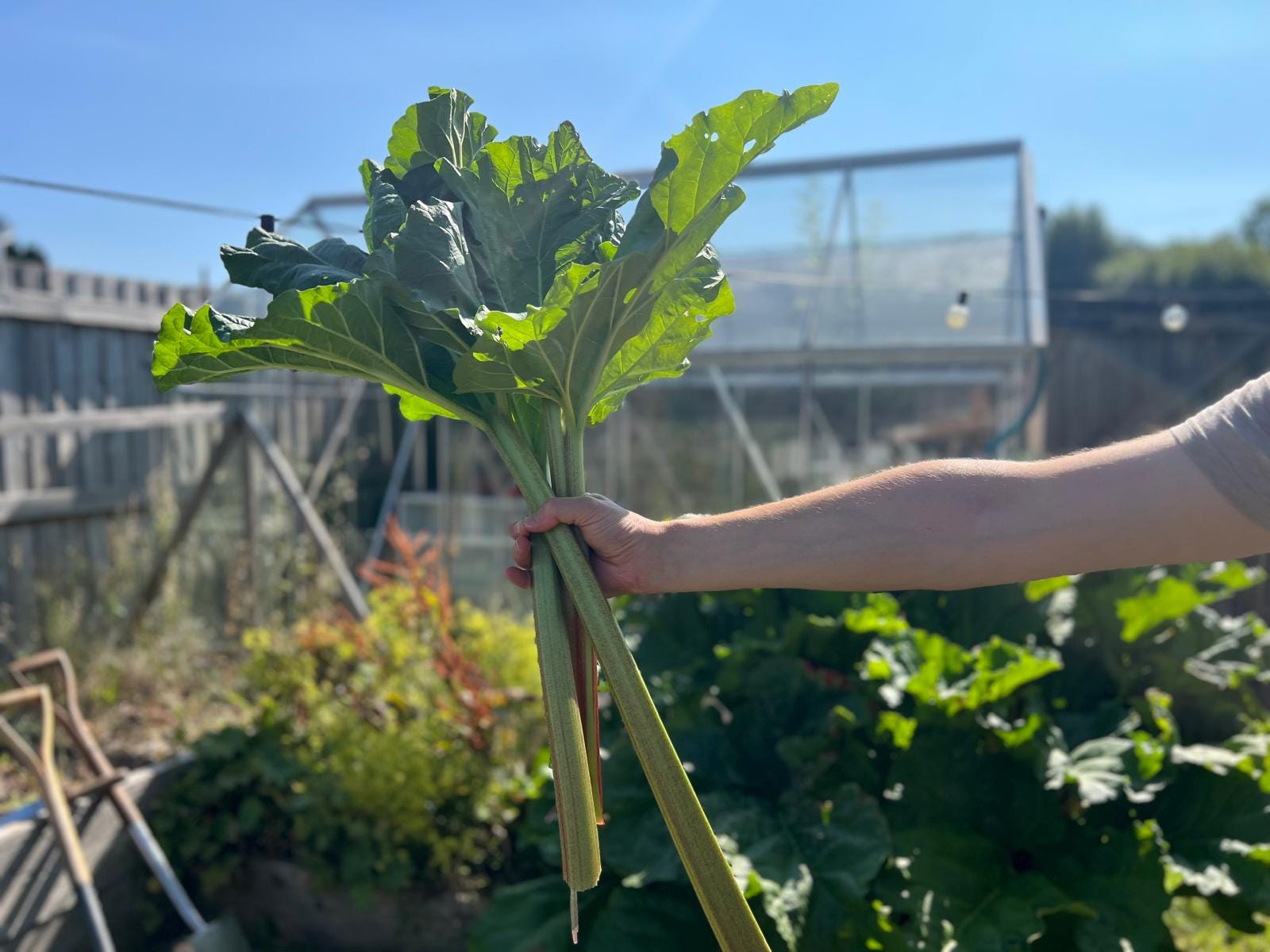
My connection to local food has also come closer to home, with the ability to grow vegetables returning, something I dearly missed during my six years of living in European apartments with little space to grow much. Our cottage comes with a decent-sized garden with raised beds that have seen better days. We’ve spent mornings digging out the weeds and prepping the not-great soils for sowing winter vegetables, a job that we must complete by the end of July if we want any chance of seeing a carrot or beetroot in 2026.
Then there are the myriad rhubarb crowns that are rather enjoying life — they are huge, and inexplicably, we have four of them. A previous occupier must have really liked rhubarb.
Good job I like it too.
A brief interruption to remind you that a paid subscription to The Sauce gets you everything from recipes to wine recommendations to travel guides. All yours for $5 a month or $50 a year.
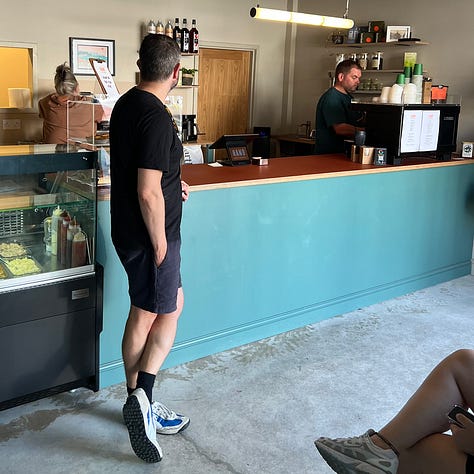
The nearest town, Llanrwst, holds a weekly produce market. We spent yesterday morning ambling around the town, buying from the market, visiting the new coffee shop featuring locally roasted speciality coffee, buying local honey from the deli, and grabbing bacon, sausages, and chicken from a generations-old butchers. The town also has a weekly livestock auction, if you needed any more proof that this is a food-producing area.
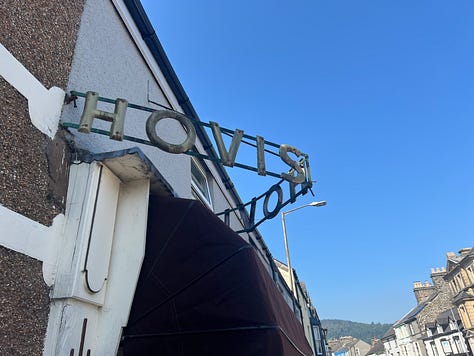
It all sounds so romantic, buying local meat reared down the road and growing our own food, but here’s the flipside. It takes SO. MUCH. EFFORT to procure decent quality food here. Either you have to grow it yourself (if you have the space, time and inclination), or you have to spend hours researching small farms, shops, and markets, then spend more hours driving to them.
I knew that North Wales, like many places in the UK, is not exactly blessed with a greengrocer’s, butchers and deli on every corner. Where my mother lives, 20 miles north of here, the only choice you have to buy food “locally” is at one of five big-box supermarkets, whose quality has been on the decline for years.
I did not come into this next chapter of my life with my eyes wide shut; I remember what procuring quality produce was like when I last lived UK-side, and things haven’t changed.
Whilst North Wales is not technically a food desert — “neighbourhoods where poverty, poor public transport and a dearth of big supermarkets severely limit access to affordable fresh fruit and vegetables” — these are on the rise. A recent study suggests that nearly 14 million people in Britain — that’s around 20% — have limited access to in-store and online grocery options. There is also a rural-urban divide, where urban areas generally benefit from better in-store and online access, which makes sense, even if it’s ironic, considering food is grown in rural areas.
I appreciate, to the core of my soul, that it’s a real privilege to have the time to mooch around a farmer’s market, have a car to get to said market, have the space to grow vegetables, and have time to research everything in my local area. This is not everyone’s reality.
As I wrote in a story a few months back:
What happens when it becomes too much effort to source good quality food? Hint: When our access is destroyed, we probably won’t do it.
And access certainly has been destroyed, despite many people’s desire for better. Back to that story:
Ninety-five per cent of shoppers say they want to shop more sustainably, and they are prepared to spend up to 10% more for the privilege.
Gen Zs and Millennials are well known for their focus on sustainability and quality, and as they slide into the number one position of spending power in the next few years, this could signal a change for food quality across the board.
I’ve got no easy answers here, because they don’t exist for systematic inequalities caused by profit-at-all-costs big business, stagnant wages, and generational poverty, amongst other things. All any of us can do is what we can do.
For me, that means prioritising quality produce over other consumer goods (Sam Dixon Brown owns just two T-shirts for cripes’ sake, and I don’t own many more), and prioritising time and effort to both find and make said food. From buying locally when I can, even if it’s annoying and time-consuming, to baking goods like pizza, flour tortillas and flatbreads, to making more rhubarb purée than anyone can reasonably eat on their own.
With all that being said, I’m kind of loving it. Whilst I adore city life, I enjoy rural living too. I love being outside, hands in the dirt, thinking about how to improve soil health, quick-composting methods and growing schedules.
And one upside of not having easy access to decent produce is that I have to make things myself. Last week I had flatbread dough, pizza dough and kimchi all doing their things on the counter. If there is one thing I know about myself, if it ferments, I’m all over it.
Yes, there is bad and a little bit ugly here. But damn, if it’s not a little bit fun too.
No posts
Comments
Nothing yet. Say the first thing.
Sign in to join the conversation.