
I was sitting in a windowless conference room, fluorescent lights humming that specific frequency that makes your molars ache, watching a manager draw circles on a whiteboard. This was early in my career, before I knew enough to question what I was seeing.
She was excited, gesturing wildly with her dry-erase marker, the squeaking sound punctuating each loop as she sketched out the company’s “aspirational goals.” The whole room smelled like burnt coffee and the kind of exhaustion that settles into fabric.
“If we can just get everyone operating at 100%,” she said, tapping the board for emphasis, “we’ll really be firing on all cylinders.”
The room murmured approval. A few people nodded, sipping from their third cup of the day, shoulders hunched forward in that universal posture of people who’ve forgotten what it feels like to sit without tension. Someone made a joke about needing an IV drip of espresso to get there. Everyone laughed, that hollow kind of laughter that’s really an admission of defeat wearing a smile.
I remember thinking, even through my own fog of depletion: Wait. When did 100% become the dream?
What no one in that room years ago could see through their collective haze of normalized exhaustion was something I’ve been chewing on for years…
It’s what a functioning system does when it’s actually... functioning.
But we’ve been lied to for so long while we were too tired to question it, and now we’re paying compound interest on that deception.
Somewhere along the way, buried under motivational posters and hustle culture memes or the gentle hum of capitalism convincing us that our worth is our output, we accepted a warped premise.
We started believing that functioning well is something you earn after exhaustion, rather than the condition you need in order to live a coherent, satisfying life.
We talk about “operating at 100%” the way we talk about vacations or promotions.
It’s a peak. Or a goal.
As if feeling at our best (not even better than our best) is something to strive for on your best day, when the stars align and you’ve had enough sleep and your inbox isn’t exploding and your children aren’t sick and your bank account looks right and Mercury isn’t in retrograde.
We’re missing a core understanding of operating systems:
When an engineer says, “The system is operating at 100%,” no one throws confetti.
They don’t applaud or give out bonuses or write think pieces about how inspirational it is. They nod. Maybe they exhale because that’s what it’s supposed to do. Anything less signals friction, leakage or strain, which are problems that need fixing.
Anything more creates surplus, overflow, room to adapt, respond, innovate and grow.
Yet when it comes to human beings, we’ve performed a spectacular sleight of hand.
We’ve inverted the entire logic, calling depletion normal. We call barely-managing “adulthood.” We call survival a personality trait, something to be proud of, and evidence of our grit and determination.
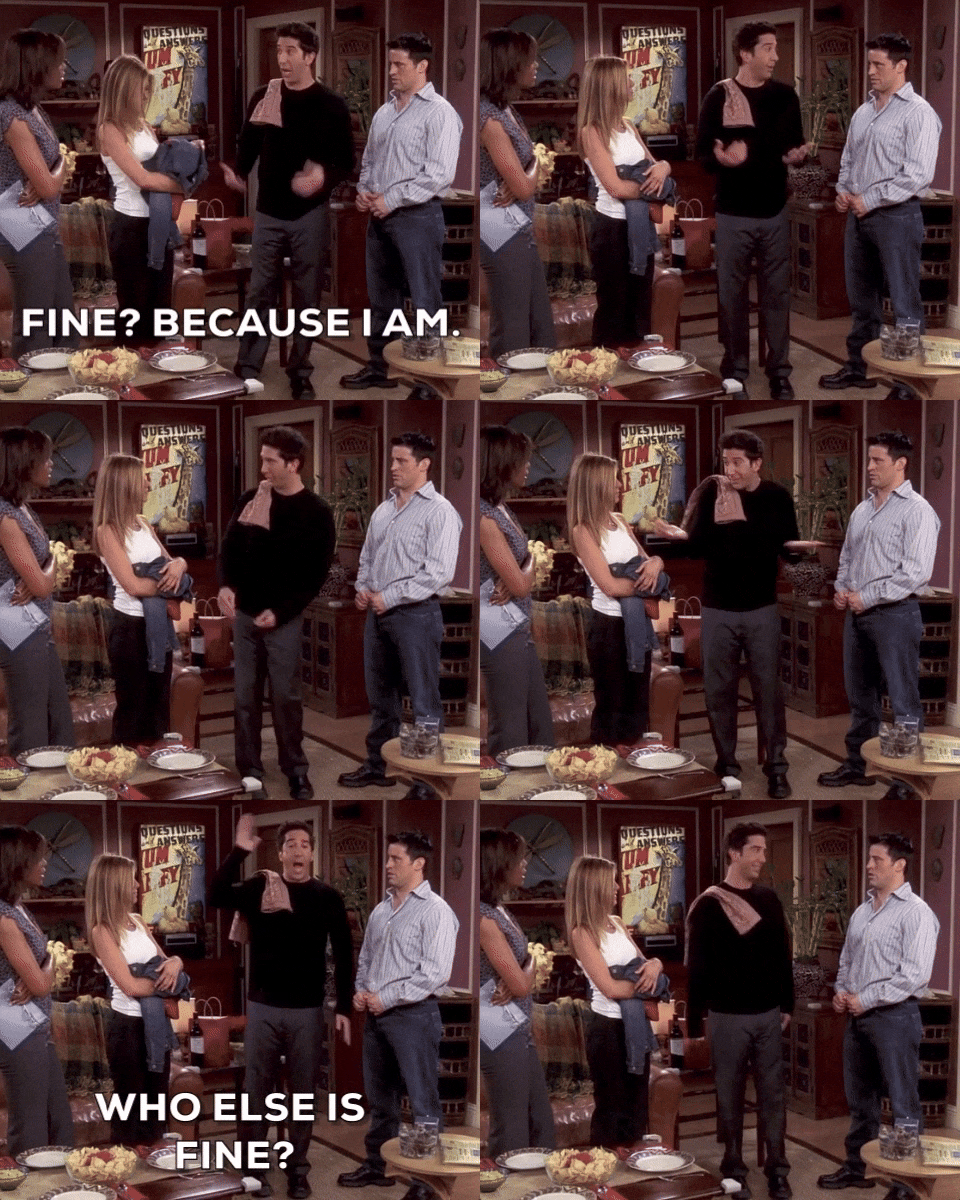
This is the same linguistic trick that gave us the phrase “minimum wage” by the way.
As if the floor of human dignity should be calibrated to the edge of collapse.
Or if livability were a bonus or luxury, something extra instead of the entire point. When you frame the minimum as the goal, everything above it feels extravagant or greedy.
Deficit has quietly become the standard.
And then we wonder why everyone is tired. Why therapy waitlists are months long and Sunday nights feel like dread settling into your bones. Or why that tightness in your chest has just become “how things are.”
Sitting beneath all the productivity hacks, morning routines and self-optimization content there’s a subtle truth starting to show in our culture.
Most people aren’t struggling because they’re incapable of operating at 100%. They’re struggling because they’ve been living at 60% for so long it feels like who they fundamentally are.
We’ve normalized deficit as an operating system everywhere:
Caffeine as breakfast. That second (or third, or fourth) cup as requirement to “get through the day” rather than the delicious enjoyment of the thing.
Hustle as virtue and discipline as means to show we’re “serious about our life” and feeling good.
Chronic tightness in the chest, jaw or shoulders. We’ve labeled it “just how things are” and moved on because there’s always another email, another deadline, another expectation to meet.
Then we idolize “Recovery Mode” through cold plunges, salt rooms and working out to “get ourselves feeling better,” rather than teaching kids and adults how to operate from that standard in the beginning and providing the resources to do so.
The body, that extraordinarily intelligent system you’re walking around in, is constantly compensating because we’re operating from deficit then constantly needing to recover only to chronically push beyond capacity.
It’s constantly buffering for systems internally and externally like work/family/cultural/economic systems that extract more than they replenish.
Your nervous system is performing miracles every single day just to keep you upright, functional and appearing normal. It’s routing energy from non-essential functions (creativity, deep thinking, libido, joy, rest, repair) to essential ones (don’t collapse in public, meet the deadline, respond to that text, and just keep moving).

It’s hard to even imagine what 100% would feel like when your reference point is years – sometimes decades – of low-grade depletion.
Of course it feels unrealistic.
Of course it feels indulgent, like something only people with trust funds or sabbaticals or mysteriously flexible schedules get to experience.
You’ve been running on emergency power and calling it life. You’ve been sipping from an empty cup and wondering why you’re still thirsty.
This is where the collapse and recovery cycle sneaks in and pretends to be “balance.”
It wears the costume of wellness while performing the same extractive pattern underneath.
Here’s how it goes:
Set a goal that feels oh so good, and put your head down, pushing until something breaks.
Collapse mode activated – maybe dramatically or quietly. Coule be just a weekend where you can’t get off the couch and you tell yourself it’s “self-care.” So you take a yoga class, book a massage and go on a vacation where you spend the first three days too wired to actually rest.
Recover just enough to re-enter the exact same conditions that caused the collapse in the first place.
We mistake this for sustainability.
We call it balance and celebrate our ability to bounce back as if resilience were the goal, rather than evidence that we keep putting ourselves in situations that require us to be resilient.
(I’ve worked with a lot of entrepreneurs and founders who experience this every time they try to scale OR they’ll engage in the pattern where they burn their business down every 2 years and call it a death/rebirth cycle. It’s “beautiful” they say.
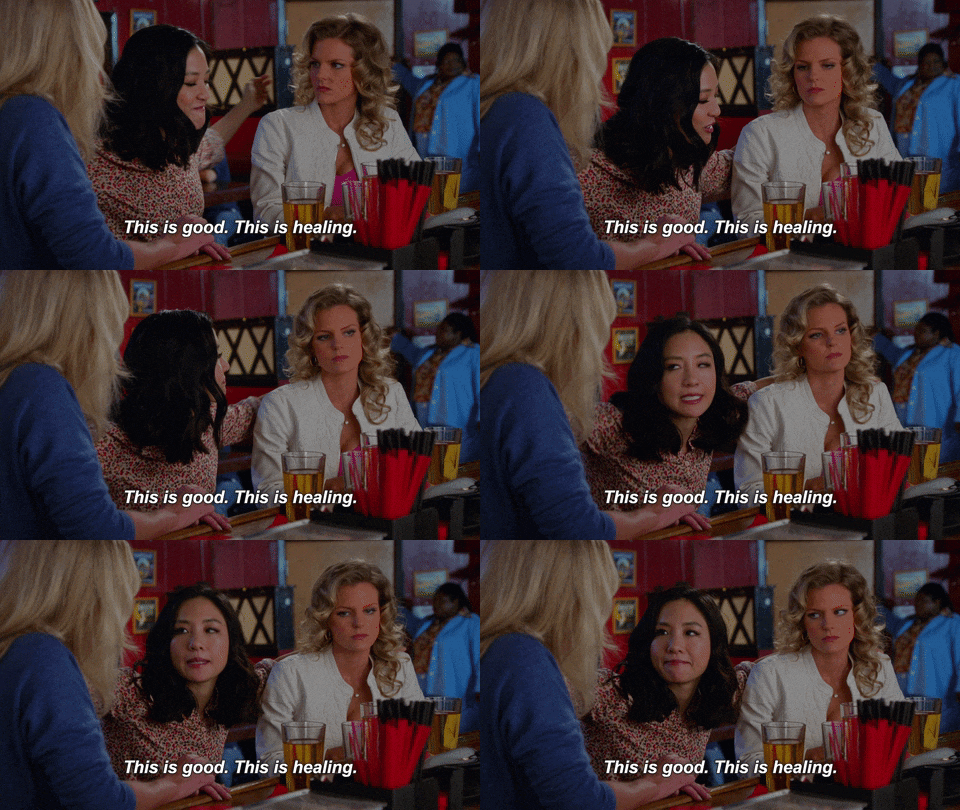
Yeah, okay so is a Pufferfish or an Ape, but that doesn’t mean we go play with them on a regular basis.)
Share this with the friend who has said this to you before! ;)
It’s a patch, not a redesign.
A system that requires periodic breakdowns to function is not healthy at all. It’s managed decay that’s systemically undermining the operation.
It’s like you’re running your like a car you drive until the check engine light comes on, then fixing just enough to turn the light off, then driving it hard again until the next warning.
Most people run their lives like they see the “check oil” light on their dashboard, pop the hood, put a teaspoon of oil, then pat themselves on the back “taking care of their car” when it needed a hell of a lot more oil than that.
Not the Instagram version or the productivity guru’s checklist, but actually you, resourced enough that life doesn’t constantly feel like you’re one bad day away from unraveling?
Thriving doesn’t come from heroic recovery. It doesn’t come from your ability to bounce back from the edge over and over again, impressive as that might look from the outside.
It comes from not needing to collapse so often. It’s often from having enough in your reserves that an unexpected expense, hard conversation, or busy week doesn’t send your entire system into shutdown mode.
I have an approach I call a Satisfaction-Based OS that makes this possible and you can play with.
After years of working with founders in my business and living this myself through my body of work at Wildly Satisfied, I’ve become obsessed with how people should enjoy their lives, not endure them.
And desire and pleasure? They’re the best fuel we have.
I spent my entire twenties trying every routine under the sun. The 5 AM wake-up club. Atomic habit stacking. Cold showers, bullet journals, time-blocking and whatever productivity hack was trending that month. I white-knuckled my way through morning routines that felt like punishment, convinced that if I just had more discipline, consistency, or more willpower, it would all click into place. (Now every time I hear one of those words I gag.)
None of those hacks worked long term.
Because I was trying to force my body into systems that had nothing to do with how I actually function. My mornings back then looked like self-inflicted chaos – alarm blaring at 5 AM when my body wanted to sleep until 7, forcing myself through a workout I hated, choking down a protein shake I didn’t want, and writing before the day while still half-asleep because that’s what “successful people” supposedly did.

I was operating at maybe 65% on a good day and wondering why I felt like I was constantly failing at life.
(Learning about my Human Design actually shifted my rhythm dramatically so let me know if you’re interested in how and I’ll write an article about it.)
A core ethos I realized over this time was “If it’s not pleasurable, it’s not sustainable,” which made me dive deeper into satisfaction as a baseline.
Now? My mornings look completely different. I wake up naturally around 7:30 without an alarm most days, in a home I’ve transformed into what I call my sanctuary. Velvet red blackout curtains, weighted blanket, pillows I actually researched instead of just buying whatever was on sale and salt lamp lighting.
I make coffee in a ritual I love with a coffee maker I saw in a visioning session. I get to grind the beans, the smell filling the kitchen, and make a caramel latte in a mug that feels good in my hands, which is paired with my morning rhythm playlist, writing and watching the light change through the window.
Same amount of time. Completely different energy.
And I started getting more done, not less, because I wasn’t starting every day already depleted or dreading what “discipline” I was chasing that day.
A Satisfaction-Based OS starts from a different assumption entirely – that humans, like any intelligent system, are meant to operate at full capacity without burning themselves out. 100% is the baseline, not the goal. It’s what happens when the conditions of your life actually match what your body needs to function and it’ll naturally compound in other ways long term.
Think of it like the best investment account you can ever have.
What if we aimed for 150%? 200%?
What if we leaned into what I call “overnourishment” to build such overflow that we never dig deep into our reserves (anything below 100%) that when you need to create or spend 40% of your energy, you’re still operating above that 100% baseline?
Think about it like this:
You start your week at 200% capacity (well-rested, resourced, satisfied)
A crisis hits and requires 40% of your energy
You’re still at 160%, which yeah tired maybe, but not depleted
You rejuvenate and resource yourself 60% which overshoots the 40% you just spent naturally without needing to collapse
The next challenge doesn’t send you into shutdown mode
Compare that to the old way:
You start your week at 80% (already behind from the weekend trying to “catch up”)
The same crisis hits and requires 40%
You’re now at 40% barely functioning, snapping at people and making poor decisions
You push through anyway because that’s what you do
By Thursday you’re at 15% and white-knuckling your way to the weekend
Saturday you collapse on the couch and call it “rest” or decide to take a cold plunge/hot sauna session which feels good immediately but still doesn’t feel enough
This is what I mean by operating from Overflow & Grow or Thriving – states on what I call the Satisfaction Spectrum – rather than Energetic Minimum or Survival. (You can read more about that here if you want to dive deeper into how those states actually show up in your nervous system and daily life.)
Overnourishment isn’t about more for the sake of more or indulgence in the way we usually think about it. It’s about building overflow so much that life’s normal turbulence doesn’t send you into crisis mode.
You have so much in the tank that you can actually live, not just survive.
One of the keys to getting there? We need to Satisfaction Stack (as I’ve coined it because I love alliteration), not just habit stack.
You don’t need to white-knuckling your way through another morning routine you read about in some productivity book. Instead make everything as pleasurable as possible, which – and this is CRUCIAL – eliminates the need for constant discipline.
When something feels good while doing it (i.e. making it a pleasurable process – something else I’ve used with myself and clients for years), you don’t need willpower to do it.
You want to do it.
That eliminates so much effort and the energy required.
I started practicing this over the last few years by making the habits that already worked for me more satisfying which looked like:
My workout went from a punishing routine I dreaded to group classes, dancing sensually and swimming laps in a heated pool because the water made my body feel incredible.
My work space went from a cluttered desk in the closet to a room with a view, plants I actually water, a chair that doesn’t make my back ache, salt lamps and mood lighting, and only a certain I get to work.
I even used my home environment to catapult this even more by making my environment work for me, reduce friction and feel so good to operate inside of.
Small shifts. Massive compounding.
Satisfaction stacking means asking how can I make this thing I’m already doing feel better? Not harder or more optimized.
And in a plot twist everyone saw coming, it turns out when something is fun, you want to do it. You don’t have to force yourself to show up like a discipline drill sergeant on a power trip. Imagine that.
Want to drink more water? Get a bottle that feels incredible in your hand, that you actually want to carry around.
Want to move your body more? Stop forcing yourself into workouts you hate and find the movement that makes you feel alive like dancing in your kitchen, walking in the park where the trees are beautiful, or swimming because you feel weightless there.
Want to journal? Use a pen that glides across the page, paper that feels like you’re in a Victorian era dark academia pinterest board, and sit somewhere that makes you feel calm.
The pleasure is what makes it stick and our brains don’t fight it as much. When something feels good in your body, you just do it because it feeds you.
Satisfaction is what makes things sustainable, while discipline runs out.
Share The Satisfaction Standard
When you’re truly resourced, not just “recovered” but actually, consistently resourced, you see a compounding effect on your life:
Decision-making sharpens. You’re not choosing from a place of depletion or panic or “what will get this over with fastest.” You can actually think clearly about what you want, not just what will stop the bleeding.
Creativity becomes accessible. It stops feeling like something you can only afford when everything else is handled. Ideas show up in the shower, during walks, in those quiet moments you’ve finally created space for and it feels like the “creative tap is back on” as I’ve been saying since the Fall of 2024.
Boundaries become simple. They stop requiring constant justification or endless explanation. They become facts: “No, that doesn’t work for me.” Period. No guilt spiral after.
The nervous system settles. That background hum of anxiety, that constant scanning for threat, that waiting-for-the-other-shoe-to-drop feeling, it quiets, which no lie, can feel unsettling and our NS may freak out a bit because it’s not used to this new normal.
You’re no longer spending your best energy compensating for what’s missing.
And when 100% becomes the baseline, compounding overflow becomes inevitable. Not something you have to chase or earn or sacrifice for.

Oh and it’s so beautiful to see how much we give to others when we feel well-resourced.
That’s the world I want to live in.
I’m interested in working with the companies, leaders, CEOs, entrepreneurs, cultures, organizations, and individuals who make this a requirement.
Because we know when you’re well-resourced, we can be of greater service and have an even greater impact when we feel it permeating in our bodies, businesses, teams and communities.
The question isn’t whether humans are capable of this. We obviously are. Our bodies are designed for it, as is Nature.
I can tell you from living on both sides of this, once you’ve experienced what it feels like to operate from overflow instead of deficit (and I’m not even talking about money), the old normal becomes unbearable.
You can’t unsee it. That conference room, those hunched shoulders, that burnt coffee and hollow laughter, it stops looking like “just how work is” and starts looking like what it actually is – a room full of people being systematically depleted and calling it normal.
100% is the baseline. Don’t let them convince you otherwise.
Don’t let the exhaustion, the cultural messaging, the systems designed to extract everything you’ve got convince you that barely-managing is success. Don’t let the deficit become so familiar that overflow feels impossible, indulgent, or unrealistic.
Your body is supposed to work at full capacity. Your mind is supposed to have room to think, create, wonder, rest. Your nervous system is supposed to feel safe enough to be present, not just constantly scanning for threats.
That’s not the dream, it’s our intuitive design.
And what might shift slowly if we stopped agreeing to anything less?
No posts
Comments
Nothing yet. Say the first thing.
Sign in to join the conversation.