
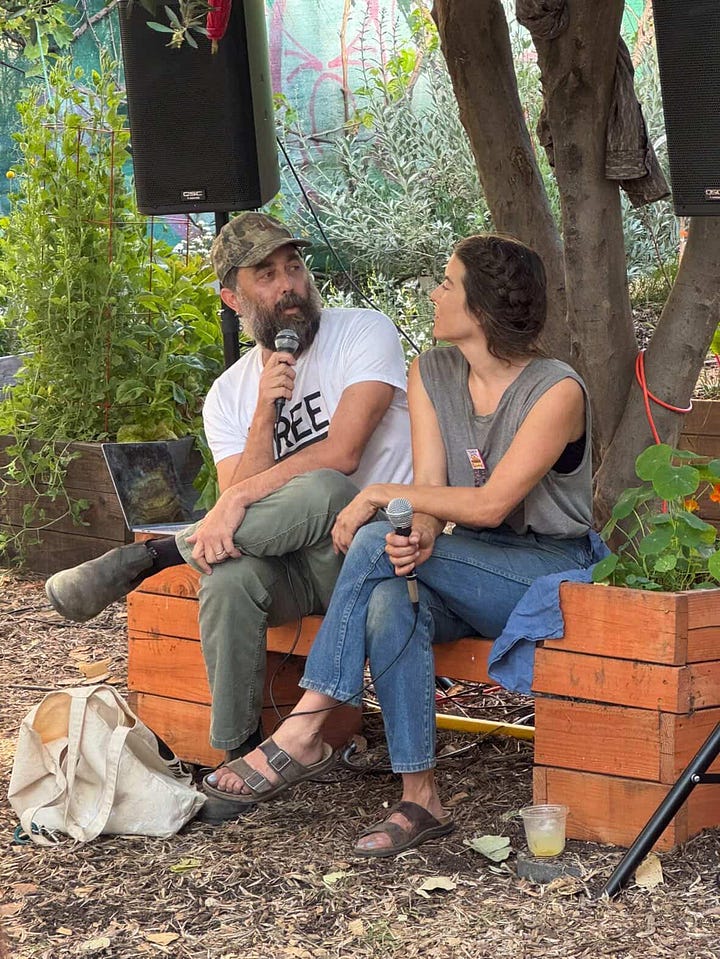
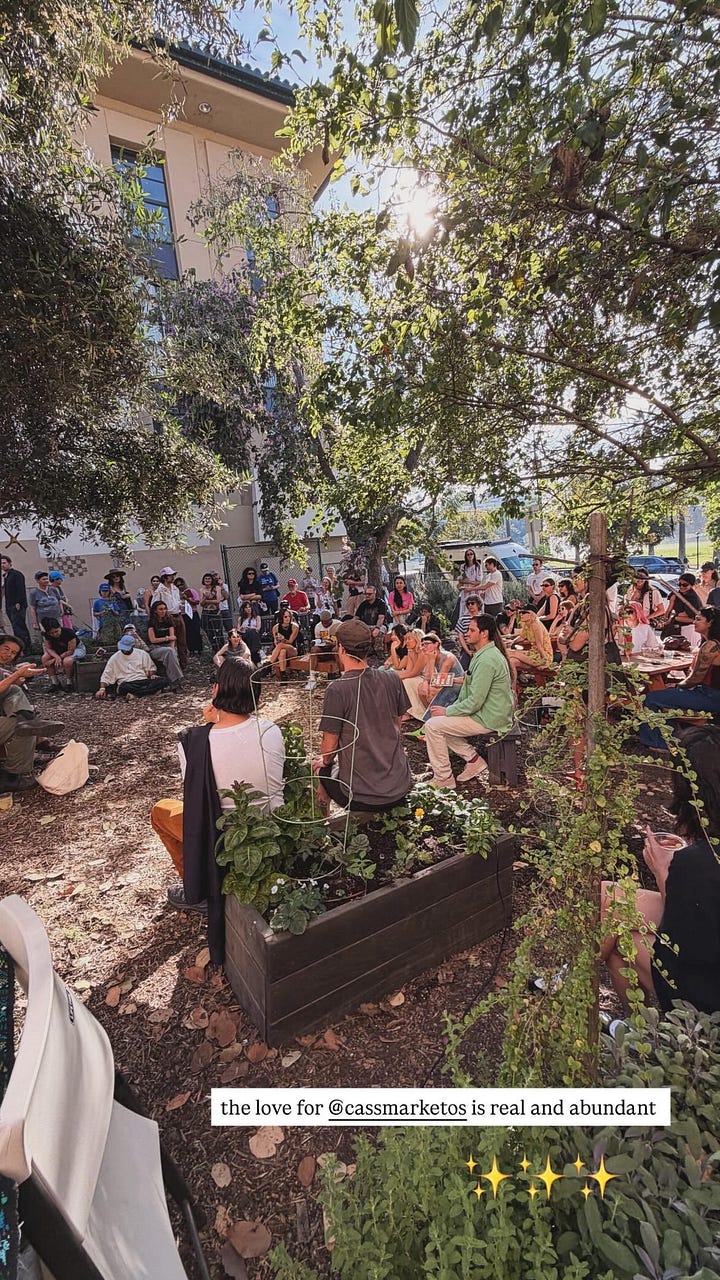
Thank you to EVERYONE who came to my book release party. We had 100+ attendees, an open bar, snacks, screen printing, free seeds, and we sold out of books. It was so much better than I could ever have dreamed, I am endlessly grateful to my friends and the community around the garden, who all pulled together to make this happen. I have never felt more special, honored, and happy in my life.
I was featured on NPR’s Science Friday last week. If you missed the live broadcast, the recording is now available here. They also published an excerpt from my book on the history of composting.
On 4/18, I will be at Everybody.World HQ for their annual Earth Market, showcasing some of my work on composting textiles, with live microscopy by Lynn Fang. I will have some books & stickers for sale there. I wrote about this work once here.
On 4/19, in partnership with KCRW and Active Cultures, I will be doing a reading from my book and a participatory writing exercise at the LA Times Festival of Books called … wait for it … Compost After Writing. ;)
You can still buy my book here. Thank you so much to everyone who has supported so far. I have loved your emails and pictures as you explore the text (or find it a copy at your local bookstore).
My love of my home garden is surpassing my ability to be functional in almost any other capacity. The only thing I ever want is to be outside, pruning or plucking, planting and mulching, turning the soil over with my hands (and, to my boyfriends’s chagrin, in my bare feet).
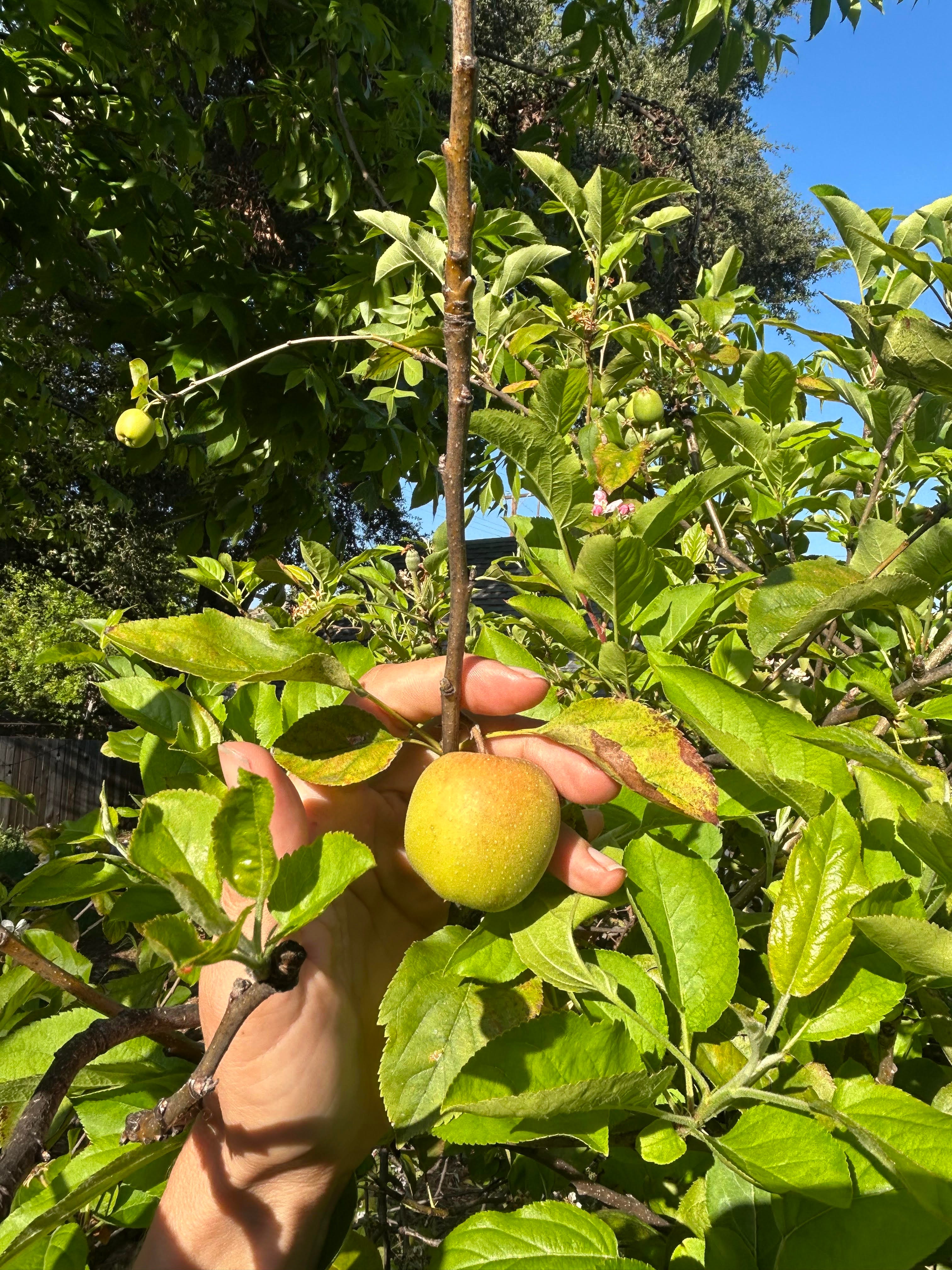
The payoff is worth it. It’s only mid-April, and I’ve only been here a few months, but my garden is already bursting at the seams. Apples budding, sunflowers opening, passion fruit exploding, and snap peas already fully mature on the vine, ripe and ready for picking. I have my compost to thank for so much of it. When I first moved into this place, the soil was bare and so hard that even the roots of the mighty oak tree—unable to penetrate further than a few inches—could be seen riding its surface. The apple trees, according to friendly neighbors, had never fruited.
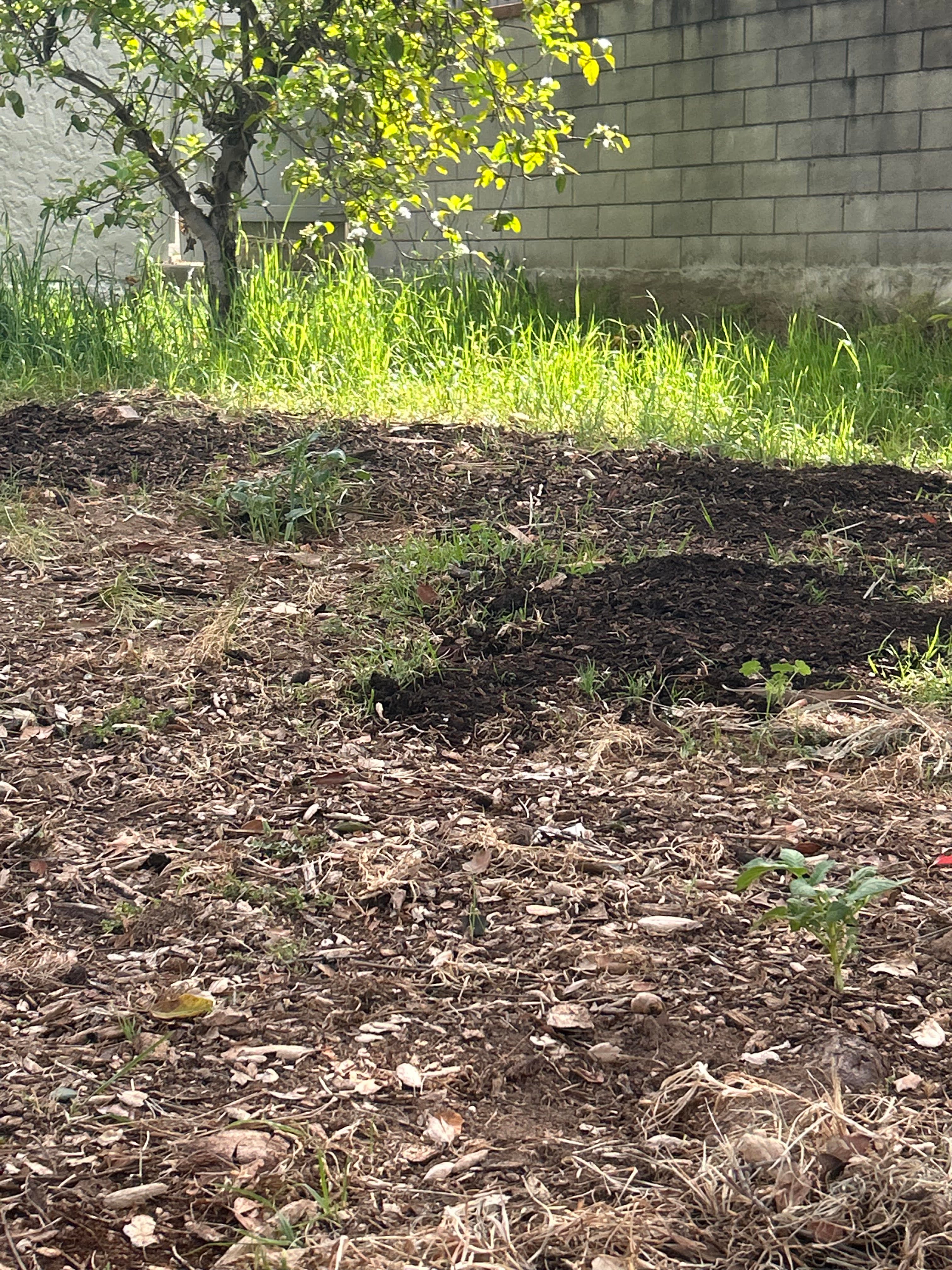
I responded by hand-carting in over 40 buckets of compost, three tote bags of mulch, seven buckets of coffee grounds, and a handful of cardboard boxes I had rescued from the recycling bin after moving. Everything went down onto the ground in truly no particular order, and then it rained.
A month later, I looked up while gardening to catch sight of a single, flushed orb in the apple tree. It was so small, but there and alive: an apple. I couldn’t believe it. Such immediate and expressive evidence that the very earth was changing beneath my feet, and all thanks to the most mild and simple of interventions: the laying down of organic matter.
So… how to use your compost in the spring?
First, just make sure it’s actually finished. Compost is ready to be utilized when it smalls and looks like good, fresh earth. It should be dark and crumbly, cool to the touch, and contain no visible signs of food waste.
Once compost is done, you’re pretty much good to use it for anything you need. Do you have a garden bed where you are getting ready to plant new vegetables? Add compost. Do you have a garden bed already growing vegetables? Add compost. Do you have a house plant you love? …Add compost. And so on, and so on.
Here are some specifics:
Amend your soil - You can always, always use your compost for this, whether or not you have plants, whether or not (just my opinion) you have permission from a landlord, etc. You can do this by tilling the compost directly into the soil, at a depth of a few inches at least, or you can just lay it down on top of everything. There is much discussion about tillage versus top-dressing soil when it comes to using compost, but the basic parameters of the arguments are that tilling is destructive to existing soil biology. Top-dressing is a less disruptive intervention. If your soil is quite degraded, like mine was, a one-time tilling event can be a good tradeoff. What you gain in soil biology outweighs what you might disturb with the digging action. Tilling is also allegedly faster. However, I top-dressed with my compost and saw great results within weeks. So you never know! If you do this, I do recommend taking advantage of storm cycles for your water needs, particularly in drought-prone areas like Los Angeles (and/or, increasingly, everywhere).
Prepare a garden bed - Till compost into a garden bed in advance of planting. This is a case where tilling versus top dressing is less of a consideration, since you’re routinely going to be digging, planting, pulling and the like in an active garden bed. The soil is in a constant state of movement. I recommend doing this a few months in advance of planting, in order to give time for the microbes to “settle in.” However, you can get away with as little time as seven days or so. Gardening books I’ve read recommend an “inch” of compost, and I even transmitted that advice into my book, but truthfully I have no idea how to measure an inch of compost as I’m dumping it into a garden bed. Just use your best judgement.
Mulch a garden bed- Even if you’ve prepared your garden bed in advance with compost, your plants can still benefit from an additional compost-y boost as they grow. You don’t need to use much. Add to the top of the soil, avoiding direct contact with stems.
Plant something - Throw a handful of finished compost into the hole where you’re about to plant something. Why not? Have fun.
Perk up a houseplant - Mix a handful of compost into your regularly purchased soil when potting or re-potting a houseplant. I’ve seen it recommended to use one part compost to three parts soil, but I’m generally imprecise and highly unscientific so I just say “a handful.
I’m often asked about sifting your compost before using it. Most people think you have to. I’ve written before—one might say “ranted“—about why you don’t have to.
How will you use your compost this spring?!
Love,
Cass
No posts
Comments
Nothing yet. Say the first thing.
Sign in to join the conversation.