
If you have ever saved a receipt for a CE course and wondered whether it actually matters at tax time, you are not overthinking it. This is one of the most common points of confusion I hear from nurses, especially from people who pay for licenses, certifications, conference travel, exam fees, and study materials out of pocket. The frustrating part is that the answer is rarely as simple as yes or no. A lot depends on how you are paid, how the expense relates to your work, and what the current tax rules allow in your specific situation.
This article will help you sort through that confusion in a practical way. You will learn how W-2 and 1099 situations are often treated differently, which expenses are worth tracking, how to organize your records throughout the year, and what questions to bring to a qualified tax professional before you file. Let’s get into it.

Most nurses ask whether continuing education is deductible.
That makes sense. CE is visible, recurring, and easy to identify. You register, you pay, and you get the email receipt that sits in your inbox until tax season when you suddenly wonder whether it can save you money.
The better question is this. Under your current work arrangement, which professional expenses should you be tracking carefully in case they matter on your return or in your broader financial planning?
That small shift matters. It gets you out of guesswork and into a process. It also helps you stop treating tax season like an annual scavenger hunt through old emails and glove-box receipts. No one needs that kind of excitement in April.
A lot of career advice online makes tax topics sound universal. They are not.
One nurse works full time in a hospital and receives a W-2. Another picks up independent contract work and receives a 1099. Another has both in the same year. Someone else had certain expenses reimbursed by an employer, while another person paid entirely out of pocket. Those details can change how an expense is viewed and whether it is even relevant for a deduction.
This is why broad statements can lead people in the wrong direction. The fact that an expense feels work related does not automatically mean it is deductible on a federal return. The fact that a colleague deducted something in a prior year does not mean the same rule applies to you now. Tax rules change, employment arrangements differ, and state rules may not mirror federal treatment.
The smartest approach is to understand the categories, track your spending well, and then confirm the current rules with a qualified tax professional who can evaluate your exact situation.
This is the part to slow down and understand clearly.
If you are a W-2 employee, you are generally treated as an employee for tax purposes. Many nurses in staff roles fall into this category. In that situation, unreimbursed job expenses such as CE courses, license renewals, uniforms, certifications, and similar professional costs may not be deductible on your federal return under current rules. This is one of the biggest surprises for nurses who have spent significant money just to stay current and employable.
If you are a 1099 independent contractor, the conversation may look different. Independent contractors and self-employed professionals may be able to deduct ordinary and necessary business expenses related to their work, depending on the facts and current tax law. That can include certain education, licensing, certification, travel, supplies, and other costs tied to maintaining or improving skills used in the existing business.
This does not mean every 1099 expense is deductible. It means the framework is different.
It also does not mean every nurse neatly fits into one category for the whole year. Some nurses hold a W-2 role and also do independent work on the side. In that case, some expenses may relate to employee work, some may relate to contract income, and some may need careful review to determine whether they are personal, mixed-use, reimbursed, or business related.
This is exactly why careful tracking matters even if you are not sure what will count.

Let’s talk about the costs that usually prompt the question in the first place.
Continuing education expenses may be relevant when they help maintain or improve skills used in your current work. That is the general concept many people hear. The problem is that people then stretch it too far and assume every educational cost qualifies automatically.
A course that supports the work you already do may be treated differently from education that qualifies you for a new profession or meets minimum entry requirements. That distinction matters. So does whether the expense was reimbursed, whether it relates to employee work or self-employment, and whether current tax rules allow a deduction in your filing situation.
This is why I would not tell any nurse that CE is always deductible or never deductible. That is too simplistic and often inaccurate.
What I would tell you is this. Track every CE expense that is reasonably connected to your professional role and keep enough detail to explain what it was for. If it turns out to be relevant for your tax professional, you are ready. If it turns out not to be deductible, you still have a clear professional spending record, which is useful for budgeting, reimbursement requests, and career planning.
This is where nurses can save themselves a lot of stress.
Do not wait until filing season to reconstruct what happened. Build one system now for every professional expense that could become important later. At minimum, track the following categories.
Save receipts for online CE modules, in-person classes, certification prep courses, workshops, and employer-required training that you paid for yourself. Keep the course title, provider, date, amount paid, and proof of completion when available.
Track license renewals, multistate license fees, and related professional registration costs. Save the payment confirmation and note which license the fee applied to.
This includes specialty certifications, renewal fees, required continuing competency expenses, and related application charges. Keep the invoice, exam registration confirmation, and any documents showing the credential relates to your current work.
Save records for board certification exams, recertification exams, and other professional testing tied to your role. If you are unsure whether an exam qualifies as maintaining current skills or entering a new line of work, flag it for your tax professional instead of guessing.
If you attend a conference, workshop, or professional event, keep the conference registration, hotel receipts, airfare or mileage log, parking, rideshare receipts, and meal records. It is especially important to document the business purpose of the trip and the event agenda. A tax professional can help determine what portion, if any, is relevant under current rules.
Track textbooks, review books, online subscriptions, question banks, journals, software, and other learning tools related to your current practice or self-employed work. If an item has personal use as well, note that clearly.
Membership dues for professional organizations may also be worth tracking. Whether they are deductible depends on your status and current rules, though they are still part of your total professional spending and should not be ignored.
This one gets missed all the time. If your employer paid you back for part of an expense, note the reimbursement amount and date. You do not want to hand a tax professional a stack of receipts without indicating which costs were already covered.

You do not need a complicated spreadsheet worthy of its own continuing education credit.
You need a system you will actually maintain.
Create one digital folder labeled Professional Expenses 2026. Inside it, make subfolders for CE, licenses, certifications, exams, travel, study materials, and reimbursements. Each time you pay for something, save the receipt immediately. If the receipt lands in email, download it that day. If it is paper, snap a photo and upload it. Keep a basic log with these columns:
Date paid
Vendor or provider
Type of expense
Amount
Work-related purpose
W-2, 1099, or unsure
Reimbursed or not reimbursed
Notes for tax professional
That last column matters. If you are uncertain whether a conference was partly personal, whether an exam qualified you for a new role, or whether a subscription was shared with school use, make a note. Good notes now can save a lot of back-and-forth later.
If you have any self-employed or contract income, keep those business-related expenses especially organized and separate from personal spending. Using a dedicated card or account for contract work can make this much easier.
Travel is one of the easiest areas to misunderstand.
A conference in another city feels professional. That does not automatically make every dollar related to the trip deductible. The purpose of the trip, the number of days devoted to the event, whether there was personal time mixed in, and whether the travel connects to self-employed work can all matter.
This is where documentation becomes your best friend. Save the event agenda. Keep proof of registration. Record why you attended and how it relates to your current role or business. Keep your transportation and lodging receipts together instead of scattered across three apps and a hotel email you swear you will be able to find later.
If the trip mixed education and vacation, say that clearly when you meet with your tax professional. Clean facts are far more helpful than optimistic interpretations.
A good tax appointment starts before the appointment.
Do not show up with a pile of receipts and the vague hope that someone else will decode your year. Bring organized information and ask direct questions tied to your actual work arrangement.
Here are smart questions to prepare.
I received W-2 income this year. Are any unreimbursed professional expenses relevant under current federal rules or state rules where I file?
I received 1099 income this year. Which of these expenses may qualify as ordinary and necessary for that work?
Are any of my CE or certification expenses considered maintaining current skills versus qualifying for a new trade or profession?
How should I handle expenses that relate to both W-2 work and 1099 work?
My employer reimbursed some costs and not others. How should those be documented?
I attended a conference with both educational and personal time. What records do you need to evaluate it correctly?
Do you want receipts only, or also proof of completion, agendas, mileage logs, and notes on business purpose?
Are there any state-specific rules I should know about in addition to federal treatment?
What recordkeeping system would make next year easier and cleaner?
These questions help the tax professional give more accurate guidance, and they help you stop relying on social media tax advice from strangers whose financial situation may have nothing to do with yours.
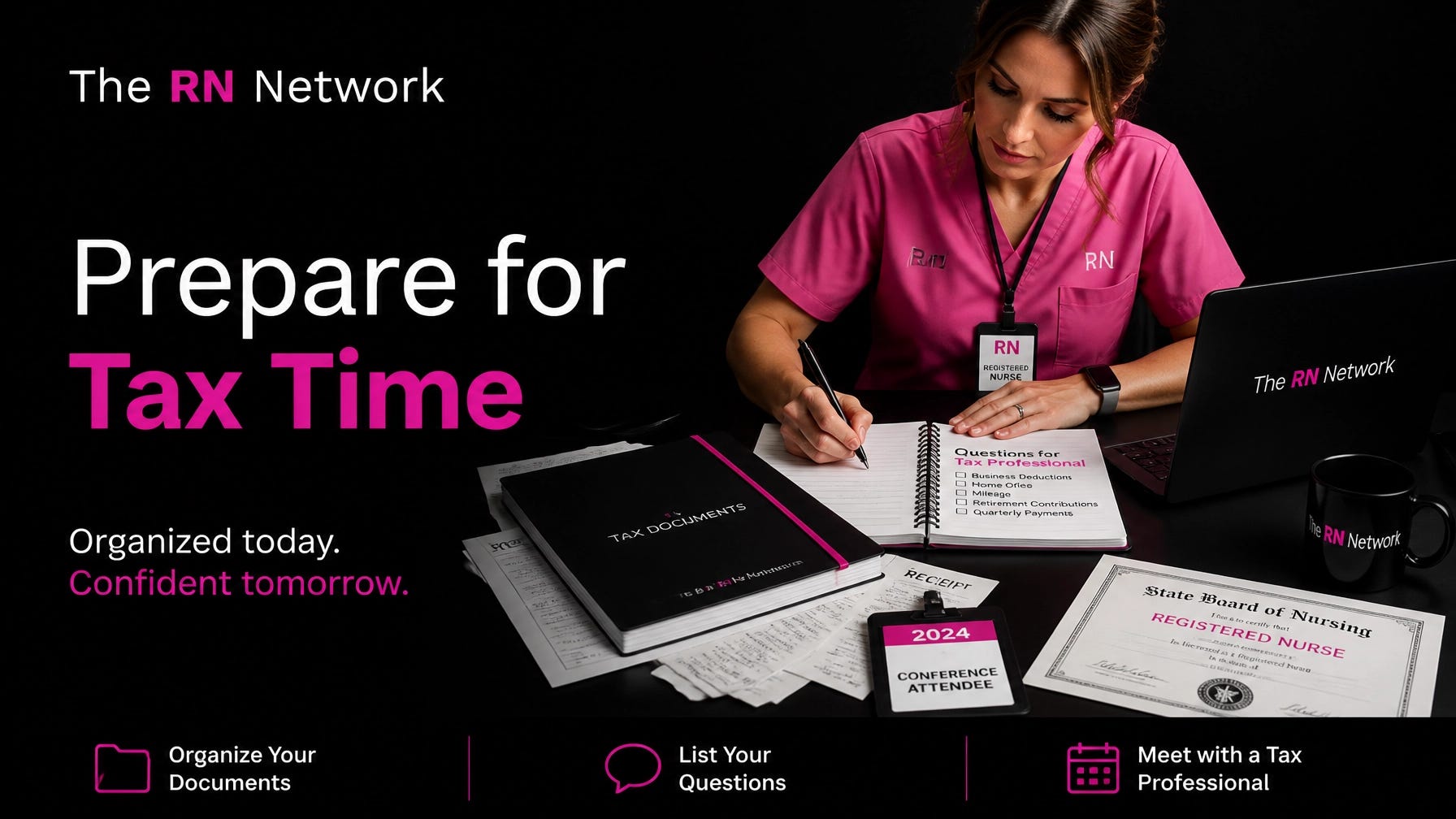
If you want a simple plan, start here.
First, identify how you were paid this year. Look at whether you received W-2 income, 1099 income, or both.
Second, gather every professional expense you have already paid. Search your email for course registrations, license renewals, conference receipts, exam confirmations, and certification payments.
Third, sort those expenses into categories. Use CE, licenses, certifications, exams, travel, study materials, memberships, and reimbursements.
Fourth, note the business purpose of each one. Keep it simple and factual. Example, ACLS renewal required for current role. National conference for specialty education. Certification renewal for current practice area.
Fifth, mark each expense as W-2 related, 1099 related, mixed, reimbursed, or unsure.
Sixth, prepare your tax questions in writing. If something feels unclear, that is not a sign to ignore it. It is a sign to ask a better question.
Seventh, confirm current rules with a qualified tax professional before assuming any expense is deductible.
That final step is the one that protects you.
This topic is not really about finding a loophole. It is about avoiding preventable mistakes and making smarter financial decisions.
If you are a W-2 nurse, the key takeaway is not to assume out-of-pocket professional expenses will reduce your federal taxes. Track them anyway, especially if reimbursements, state rules, or future planning could make those records useful.
If you earn 1099 income, the key takeaway is to treat your recordkeeping like part of the job. Save receipts, separate expenses clearly, and document how each cost relates to your work.
If you are not sure where you fall, do not guess. Employment classification and tax treatment are too important for that.
You do not need to become a tax expert to handle this well. You need a clean system, a basic understanding of the W-2 and 1099 difference, and the discipline to ask a qualified professional the right questions before you file.
That approach is less glamorous than a viral money hack - but it is far more useful.

If you found this article helpful, here are a few free resources available through The RN Network that can help you continue growing your career.
Explore verified nursing opportunities from healthcare employers across the country, with openings spanning virtually every specialty and care setting. The board is updated regularly and focuses exclusively on nursing careers. Explore Nursing Jobs
Looking for your next role? Connect with a Talent Agent who can help you identify opportunities, navigate the hiring process, and advocate for your career goals. It’s designed to give nurses an experienced partner throughout their job search. Claim your profile today!
Wondering whether you’re being paid competitively? Search nursing salary benchmarks by specialty, role, and state to better understand your market value before your next interview or salary negotiation. Search the Nurse Salary Database
Research hospitals, health systems, home health agencies, and other healthcare employers before accepting your next position. Browse hundreds of facility profiles to make more informed career decisions. Browse the Healthcare Facility Directory
Thanks for reading The RN Network - The Career Edge Every Nurse Deserves!! This post is public so feel free to share it.
Comments
Nothing yet. Say the first thing.
Sign in to join the conversation.