
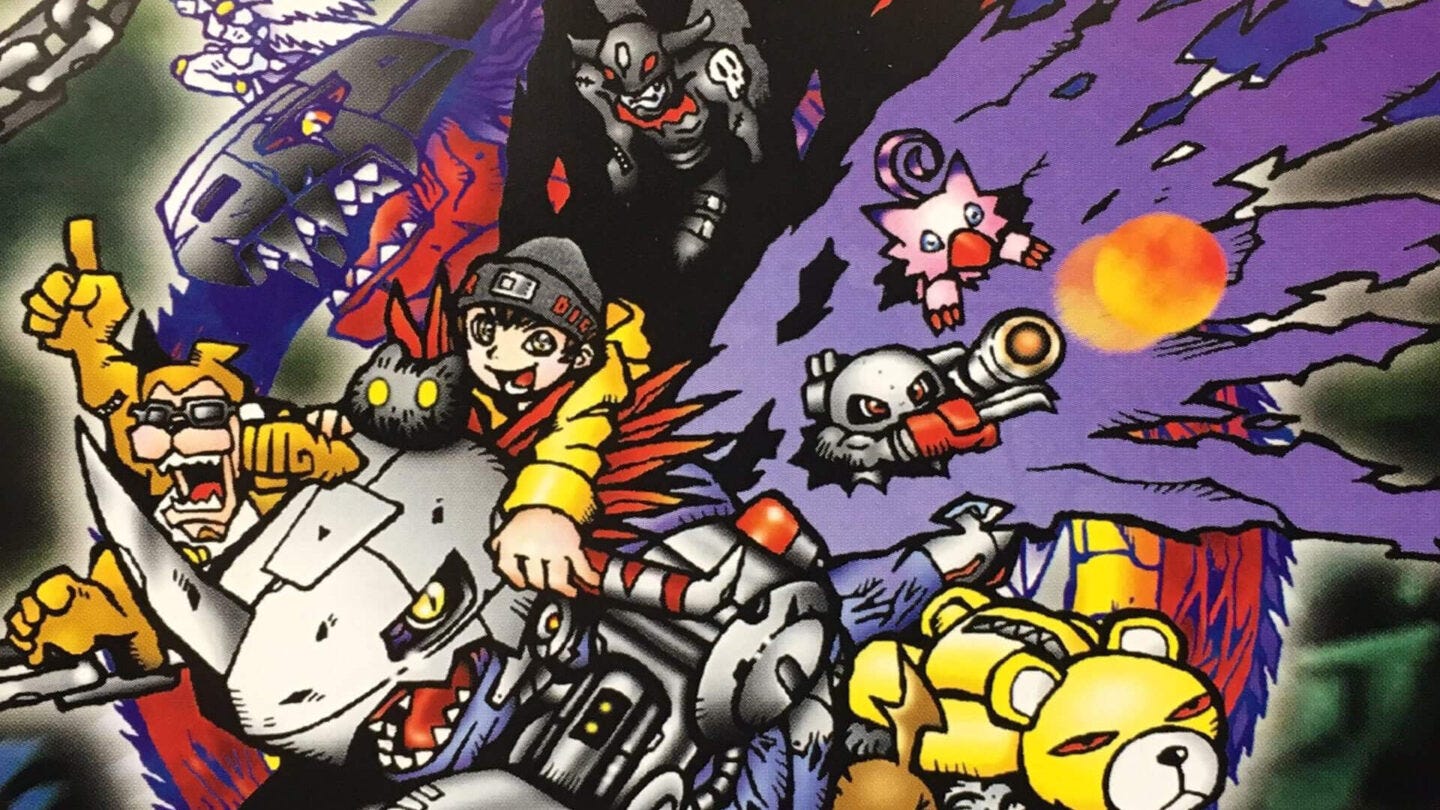
“Digimon, digital monsters, Digimon are the CHAMPIONS!”
None since Freddie Mercury have so proudly proclaimed that they are the champions of the world, albeit the digital one, but here they are. Digimon: Pokémon’s older, edgier brother. Digimon had guns, bazookas, lasers and bombs wayyyy before Palworld even existed, and Pokémon didn’t even say anything.
Digimon were created in the late 90’s by Bandai as a more masculine-marketed Tamagotchi. The OG digital pet was deemed too feminine, too cute, not “manly” enough. So they made “Digital Monsters”, featuring all the usual virtual pet hallmarks, but with an added battle feature. Because obviously all boys love fighting, what better way to get them hooked!
As with all good toys in the 90’s, Digimon needed a whole media ecosystem around it to be more marketable and sell units. We’d seen the same pattern with the likes of Transformers, Power Rangers and Teenage Mutant Ninja Turtles. And so, after the 1997 release of the Digimon Tamagotchi toys, a manga, anime and video game were created to help kids discover and love these new Digital Monsters.
“Digimon Adventure” anime released in 1999 and went on to have several well-performing seasons. I remember this arriving on UK TV screens as an after-school cartoon, its thumping theme tune sticking to my dad’s brain like glue as he sung it regularly around the house. The show was grittier than Pokémon in both colouring and topics covered. There was always a bit of Pokémon VS Digimon rivalry in the playground, but I don’t think any of my school friends would have openly admitted to being a Digimon fan. Apart from the repetitive digi-volutions animation sequences every episode, the theme tune is a solid banger and the animation style is pretty amazing. I enjoyed it, secretly.
Digimon’s first venture into the PlayStation video game space came in 1999 through Digimon World. The game follows the staple Digimon narrative format where a child is absorbed into the Digital World to partner with a Digimon and save the world. You play said child (who looks like he’s popped straight out of a Limp Bizkit video) and are given a choice between two starter Digimon: the cute Dino-mon Agumon, and scary skin-wearing Gabumon. Seriously, I thought Gabumon was a cute dog, but ohhh no.
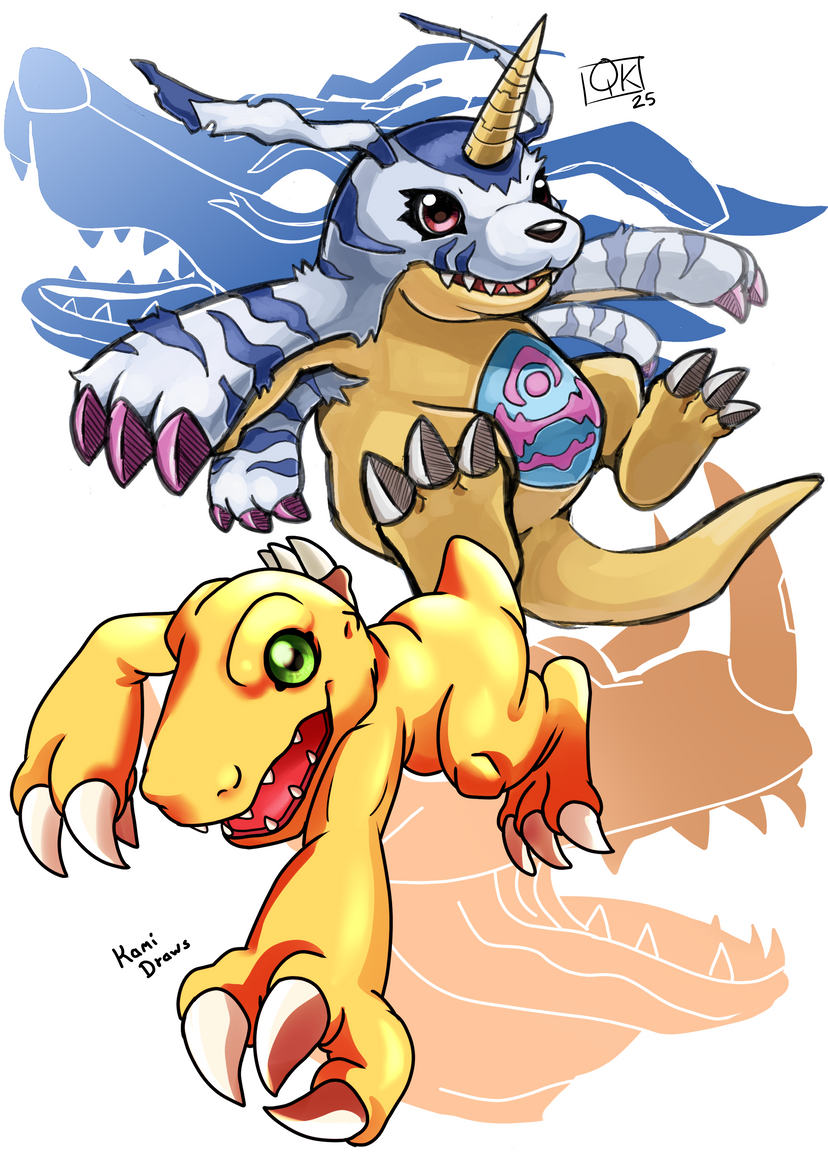
Similar to Bandai’s Digimon toys, your Digimon requires feeding, training, rest and regular toilet breaks. The overall aim of the game is to work with your digital partner to reunite the local Digimon, usually by tracking them down and beating them in battle. In the game, there’s a very fine line between long distance exploration and your Digimon’s survival. Your ‘mons require round the clock care; they’re not into wild pooing, and will be annoyed at you if you don’t provide a comfortable Japanese toilet for their number two’s. I mean, fair enough. Once you’ve used a Japanese toilet, anything else is just a hole in the ground. The Digimon can barely survive long enough to make it halfway across the island, often dying of “old age” (2 days, I swear a fly lives longer) or will be disgusted enough with your lack of care to evolve into something nasty. And I mean NASTY.
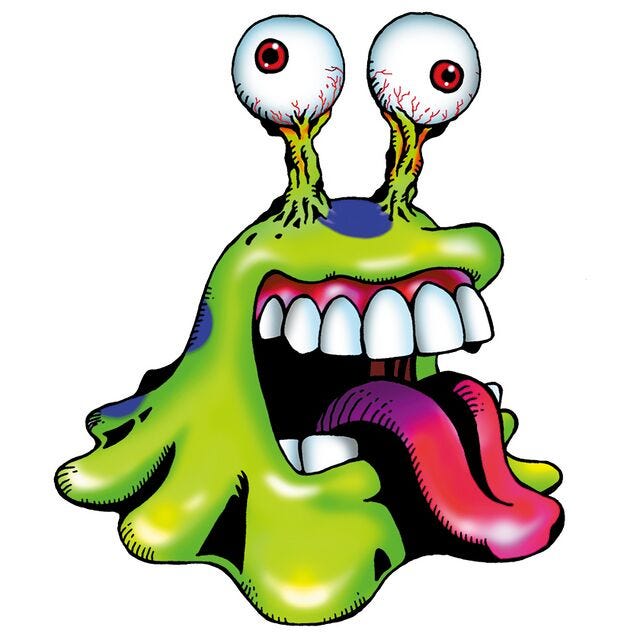
With hard work, care and regular toilet breaks, your Digimon will evolve into a more powerful form, allowing you to travel further, battle harder and discover new areas. Or, if you’re me as a child, they’ll “evolve” into the shit-throwing Numemon.
One of the worst things about Tamagotchi was waking up to find out it had grown up into an ugly little beast or died. You had to take care of this thing for days, weeks, months to get it to grow into something worth showing off. In the UK in the 90’s, they were banned in schools so my poor mum bravely volunteered to take mine to work and feed it for me. If you appeased its every whim, it would change into a bigger, cuter pet. If you neglected it, it would either die and you’d have to start again, or it would change into some horrendous monstrosity. Digimon World was no different.
Numemon, it seems, was created for this purpose. It’s described as possessing neither strength nor brains, and its attacks include “Poop throw”, “Long-range poop throw” and “Continuous poop throw”… you get the idea. I often thought this was the end when playing Digimon World. Numemon couldn’t hold its own against the other Digimon I was meant to be taming and bringing back, and it couldn’t really be trained. Sadly, it usually shuffled off this mortal coil before I could do much with it. Which is a shame, as I later learned that with a bit of training, this guy could evolve into quite a powerful dude. Ah well.
Despite the shit-throwing blob, Digimon evolutions generally felt increasingly ridiculous. Usually adding words like “metal” and “war” to existing names, sometimes both, to make long and bizarre names that sounded like you were an army general taking inventory. This makes more sense when you know the later Digimon designs were based on American comics, which to my biased brain, probably contain a lot of war, guns and missiles. Still, who doesn’t love a diva who can shoot missiles from her chest?
Compared to original Pokémon evolution lines, where the most complex one was Eevee having 3 forms easily identified by the stones used to evolve it, trying to understand Digimon evolution lines is similar to looking at Darwin’s evolutionary tree of life. Digimon World was never too forthcoming in how these evolution trees worked, and whilst I encountered strong and fearsome Digimon in the wild, I could never quite grasp how to evolve them for myself. Back in the pre-internet days, kids were just digi-destined to never know.
Similar to Pokémon, you had to fight to get stronger. The game’s battle system was a bit haphazard; you had to mash buttons to cheer your Digimon on from the sidelines until your opponent was defeated. I honestly couldn’t find much strategy apart from that. Your character opted to either yell “Attack” or “Do whatever”. Sometimes you won, sometimes you didn’t, there wasn’t any logic around it!
The game itself was great graphically, the Digimon sprites were detailed and interesting, and each area provided beautiful vistas and nature. However, this led to insanely long loading times EVERY TIME you went into a new screen. Considering a lot of the game requires you running from area to area, you spent a lot of time looking at a loading screen announcing the name of the area. There must have been some heavy lifting for the PS1 to do to even get this working.
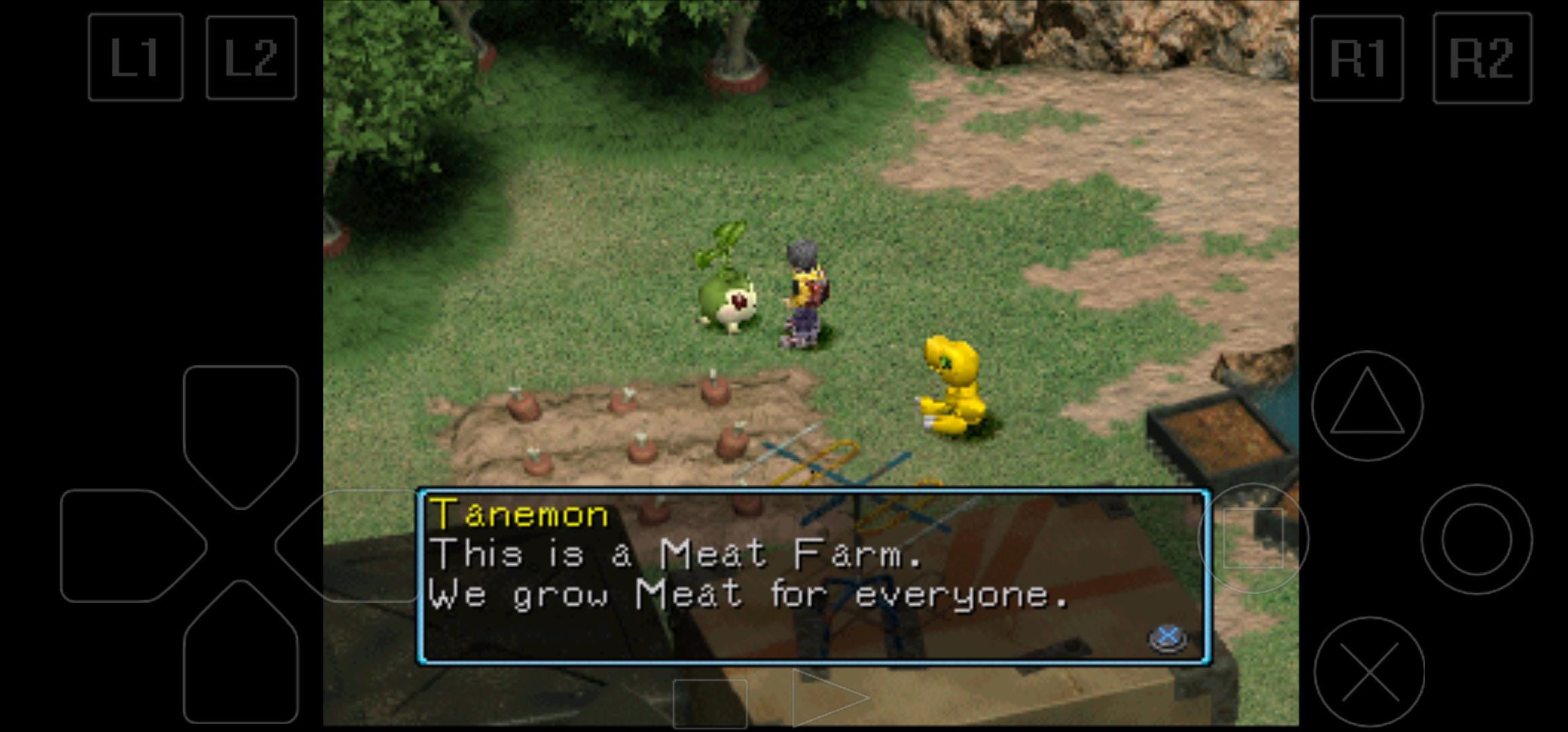
I sadly don’t have any music shout-outs for Digimon World. The soundtrack didn’t really leave an impression on me, and a lot of the areas used nature sound effects as the background “music”, so there’s not much to go on.
For a first proper foray into the home video game space, I think this was a pretty good go. Bandai definitely captured the feel of a “Tamagotchi” video game, bathroom breaks included. It was easy to play but really difficult to master. Where Pokémon was simple - fight, gain EXP, level up, evolve, progress - Digimon World suffered from overcomplexity. I can see similarities in looking after my baby; every hour of his day is accounted for in food, sleep, stimulation and, of course, nappy changes. In Digimon World, you couldn’t afford to dally or go off piste, you had to be very direct and have a plan. Otherwise, you’re Digimon’s dead or turning into Numemon. For someone like me who gets distracted by everything in an open world(ish) game, I doubt I was ever going to succeed at being a Digimon Master. I didn’t get very far into the game, and struggled to fully comprehend it at the tender age of 10. But I still enjoyed the exploration aspect and discovering new and ridiculous Digimon made it an enjoyable romp.
Whilst it stuttered in reviews at the time, gaining an aggregated review score of about 50%, and only managed a meager 250k in Japanese sales, Digimon World appears to be a bit of a cult classic among late millennials. Plenty of people like me have returned to this game and quite enjoyed it now they’re older and wiser, more appreciative of the complex gameplay. There’s a host of YouTube videos about Digimon World, with players recounting fond memories in the comments. They often recall not knowing what the hell was going on, as did I, but enjoying the feel of the game and the ability to potter about with a Digimon friend nonetheless. Sometimes I think reviewers forget that kids enjoy games too, and kids enjoy the “worst” games in the weirdest ways.
I think what’s more important is the path this game paved for the Digimon franchise. The Digimon games that followed were much more experimental, especially when compared to Pokémon, trying different art styles, different genres, different platforms. Bandai kept trying new things, building on each game and each mistake. Whilst not always hitting the mark, they have delivered some really good games in more recent years; the Digimon Story series has fantastic ratings and consistently delivers cult hits. The IP continues to experiment, with fighting games, card games, racing game, visual novels, and sticking to their tried and tested virtual pet RPGs.
I had the pleasure of playing through Digimon Story: Cyber Sleuth a few years back and was really impressed. While Pokémon continues to churn out the same game with a different hat on, Digimon quietly plugs away, steadily improving and throwing out mainline games that receive great ratings and rave reviews. But sadly to a much smaller audience.
If you’ve never dabbled, I’d definitely recommend giving a Digimon game a try. You might be scratching your head about how to get from A to Z in digi-volutions, but remember that if it gets bigger and has missile boobs, you’re probably going in the right direction.
Are you a digi-destined? Where did you start in the Digimon franchise? Or have you avoided it completely?
No posts
Comments
Nothing yet. Say the first thing.
Sign in to join the conversation.