
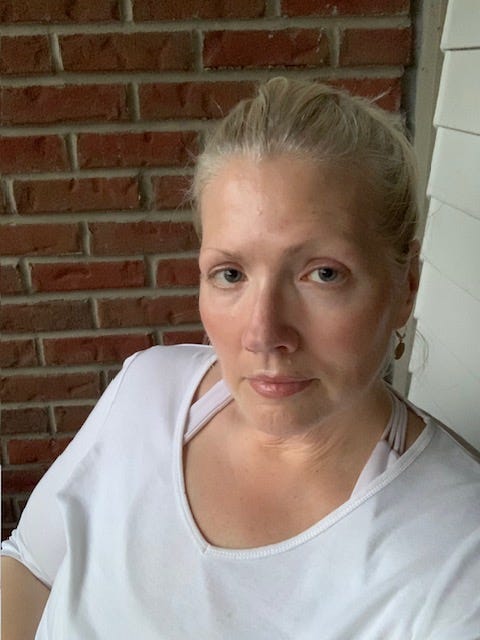
I’d just awoken from a nap, blinking to adjust to daylight after a blissful sleep. Looking around, I saw that I wasn’t alone in the second-floor guest bedroom of my aunt’s house. Glaring at me through the wooden bars of my crib was an extended family member, 10 years my senior, poised to partake in their custom of expressing disdain for me. “You are bad, Stacey…bad!” they muttered in a guttural tone laced with loathing. “Yeah, you are BAD!” They had brought a friend with them that afternoon and both continued the stare-down until they got bored and turned to leave. I was somewhere between the age of 2 and 3, and it was my earliest memory of the relative’s unquenchable deployment of their vendetta.
Our strained relationship was molded by resentment of my birth, which, according to them, spoiled this spoiled brat’s standing in the family and ‘stole’ their status as youngest. “When you were born, you took alllll the attention,” they told me with a straight face when they were graying and in middle-age, as if it were the most normal thing in the world to remark upon.
That’s how the tone was set with this seething malcontent. Their mother often babysat me, and unlike their older sibling, who always treated me with kindness and affection, the malcontent lived to crap on me whenever they could get away with it. Post-crib phase, they would amuse themselves by terrorizing me in their bedroom, insisting there was a ghost in the closet who wanted to kill me. My tearful pleas from under their bed (a haven for colonies of dust bunnies as repulsive as their owner) only made them more delighted. My cries lit them up and seemed to imbue them with vigor and joy. One afternoon during a torture session, I could take no more and made a break for it, tearing down the stairs sobbing, as I made a beeline for safety in the kitchen. When their mother put two and two together, she rebuked the sulking malcontent, who glared at me for exposing their misdeeds. It was the only time I saw my aunt hold to account her maladapted offspring – which was a huge part of the problem where the absence of character-building was concerned. There was never consequence meted out, and their unchecked self-centeredness grew like a toxic mold over the years.
As we aged, they carefully kept their resentment of me masqueraded under more socially acceptable patterns of sarcasm and deftly placed micro-aggressions. But even my siblings began to notice the disparity and how this relative singled me out for the digs. My younger siblings weren’t charged with any similar crimes, for only I had brought ruination to their life (I never said they were rational).
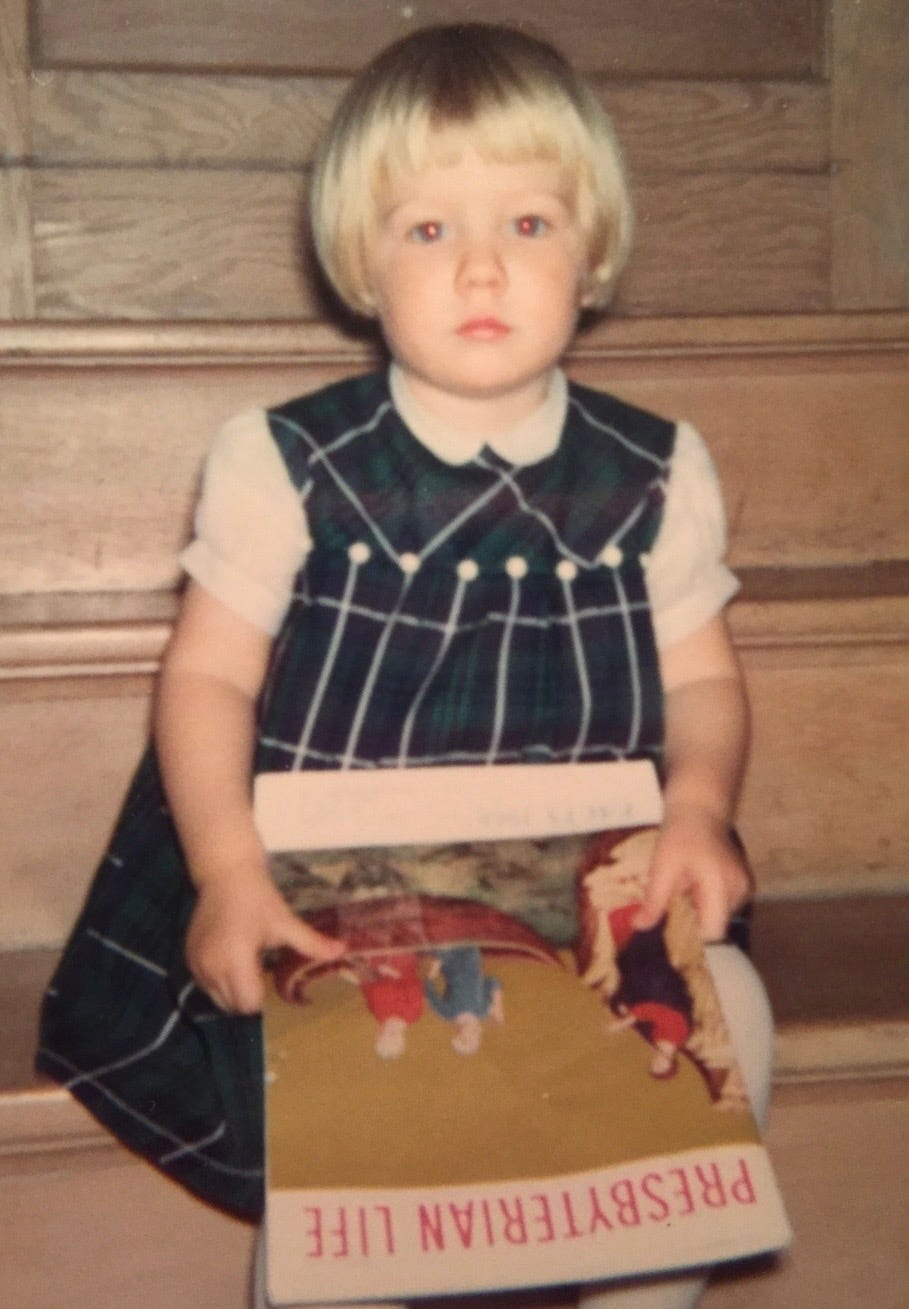
My response to it all was to become the cheerful appeaser. It’s a common survival tactic of the abused and confused, to adopt (out of desperation) the belief that if we’re just nice enough, just helpful enough, just good enough to our abuser, there will eventually come a conversion. There was never a time when I didn’t cede to their will or did their bidding when they were in need. Fully aware of my weakness and adept at exploiting the power imbalance, they ran on the warped belief that reparations toward them would be required of me in perpetuity.
The merry-go-round kept going and would probably still be spinning, if not for a turning point no one saw coming: the night the gates of whatever demonic lair they dwell in opened a little wider and they unleashed a torrent of ritual humiliation on me at a family dinner. As you may have guessed, I had not, at that point, accrued the strength to stop the abuse then and there. Please don’t tell me what I ‘should’ have done. I’m well aware of what would have been an ideal course of action, but my role and self-perception for most of my life was that of shit-taker, human dumpster, a pathetic weakling who can’t and won’t fight back. It was enforced by the adults and caretakers around me and unless you’ve lived a similar life path, solutions in retrospect and rebukes are nothing but inappropriate judgement.
So, on that fateful night, I ignored each arrow for the sake of harmony. About ¾ of the way through the tortured event came the revelation, cleansing as a sprinkling of baptismal font holy water: this miserable, unpleasable creature will never stop resenting me. The resentment only, in fact, intensified over the decades with each selfless act I performed in hopes of improving the dynamic between us: nursing them through infirmities, being there for both parents on their deathbeds, bringing care packages of food in times of need. None of it mattered. It was all forgotten the minute the goodwill was devoured, never to be thought of again. And to be clear: I was not seeking perpetual thanks or adoration, only the common respect that they gave freely to others, who did far less for them, if anything at all.
That night, as I left their house silently distraught and loaded with the humiliating pockmarks of their shrapnel, I knew it would be the very last time they would ever mistreat me. I was laser-clear on that. After a lifetime of overlooking, excusing, and feigning amnesia, I’d reached my limit. I’d more than done my time in the trenches, and it only proved the truism that appeasement of abusers never works…it only worsens their character flaws.
Eventually, they took notice of my distance and attempted to remedy it with a pity-laced smackdown, complete with sarcastic apologies for apparently being too toxic. If only it had been a moment of genuine clarity and culpability, but it was just another manipulative tug to make me feel the need to come to my senses and resume ministering to them. When I sent back a polite response indicating I wouldn’t be traveling down the appeasement road, coupled with the invitation to meet in person and attempt a hash-out, it was returned with angry rejection.
An ancient pattern had officially been destroyed. I took a stand and stuck to my position with my most longstanding abuser. And while my mind was effervescent with relief, my body was reacting much differently.
In her March 10th Substack titled “When the Body Speaks,” Paula Gibson writes of the significance of physical symptoms. Not just their existence, but what they can mean in terms of stored emotion. She stated how the function of the beleaguered body part or organ can be a major clue to the emotional patterns they hold. For example, the liver, in Chinese Medicine, is known as the storehouse of anger while the skin, said Gibson, is a metaphor for boundaries. Rashes and other visible irritations can indicate that our boundaries are being challenged.
Entire books, including the seminal “The Body Keeps The Score” by Bessel van der Kolk, M.D., have been written on the subject of the body’s role in storing trauma within its deepest chambers. Sometimes it’s released voluntarily by boundary-setting and other wake-up calls, and in more unfortunate cases, it appears as illness or an unignorable imbalance.
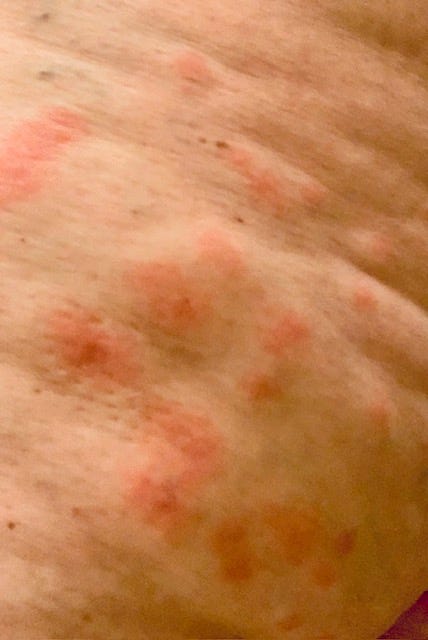
Knowing I’d reached a crossroads with this antagonistic relationship was equal parts relief and panic. My line in the sand resulted in more than just butterflies in my stomach – I broke out in a rash. It was a symptom as loud as an ambulance siren and manifested on the back of my thighs in burning red welts – almost as if I’d been struck there. The doctor prescribed cream, but instinct told me to look deeper, as it was likely connected to the stand I took and the anxiety it caused me. I finally said no to them. This meant reality as I knew it was turned upside down and I was unsure of how to handle it.
It didn’t take long for a deeply buried memory to surface from age seven featuring an episode when they came to babysit my siblings and me (a misbegotten assignment if there ever was one). It was bedtime and as seven-year-olds sometimes do, I blew off a little evening steam by jumping on my bed, trampoline-style. I was in mid-air when I felt it: a hard slap on the back of my bare thighs. They’d snuck up behind me and wordlessly let me know there’d be no more jumping on the bed. The skin on the back of my legs stung and my eyes welled with tears. I lay down and faced the wall to avoid their hateful gaze. My parents never hit me that way, nor had any other babysitter. I was stunned and humiliated. The rotten relative didn’t bat an eye or show a shred of remorse.
Decades after the fact, red, stinging welts popped up on the same region. I knew what was happening, the wounds simply wanted to be seen – and maybe a little bit heard - after all that time in lockdown. And the memory reassured me that taking a stand for my dignity was not only the right thing, but long overdue. In the end, it wasn’t over any singular incident that caused our relationship to topple – it was one incident too many. The bough broke, and I instantly had the courage to become my own knight in shining armor.
My body was both glad and terrified because I conquered something that scared and overwhelmed me my entire life. Soon enough, the red welts disappeared, never to return. And I’d like to think the same is true of my willingness to look with other way in the face of inexcusable behavior.
In retrospect, I’m glad they fired hard artillery at me that night. Shifting from under-the-radar micro-aggressions to belittling me in front of an audience woke me up and dislodged the ancient and completely ineffective defense mechanism of submissiveness. The perma-smile I wore reflexively in their presence was sent packing as well. In its place, I now work on being true to myself and retraining my psyche - misaligned from years of energy-draining people pleasing – to greenlight a smile when I genuinely feel it, not because of delusions of winning over that which is unwinnable.
To an outsider, or to one who had self-esteem conscientiously nailed in place by their caretakers, it may have seemed like no-brainer that I should have done this long ago. The reasons we tolerate abuse are mysterious, misunderstood, and multi-layered. Almost always, the abuse takes place at the hand of someone close to us. There are bloodlines and emotional dynamics, social ties, power structures, and entrenched attachments involved.
To say it’s complicated is an understatement. But listening to that small-but-powerful schism in your heart telling you that something isn’t right is the beginning. Keep listening and allow those distress signals to guide you. They are utterly pure in their trustworthiness and will never lead you astray.
And, if at all possible, don’t follow my lead and wait too long. Take control, realize what you don’t deserve, and slam down the gavel on an unhealthy relationship. The only one who pays the price of appeasement is you.
Comments
Nothing yet. Say the first thing.
Sign in to join the conversation.